
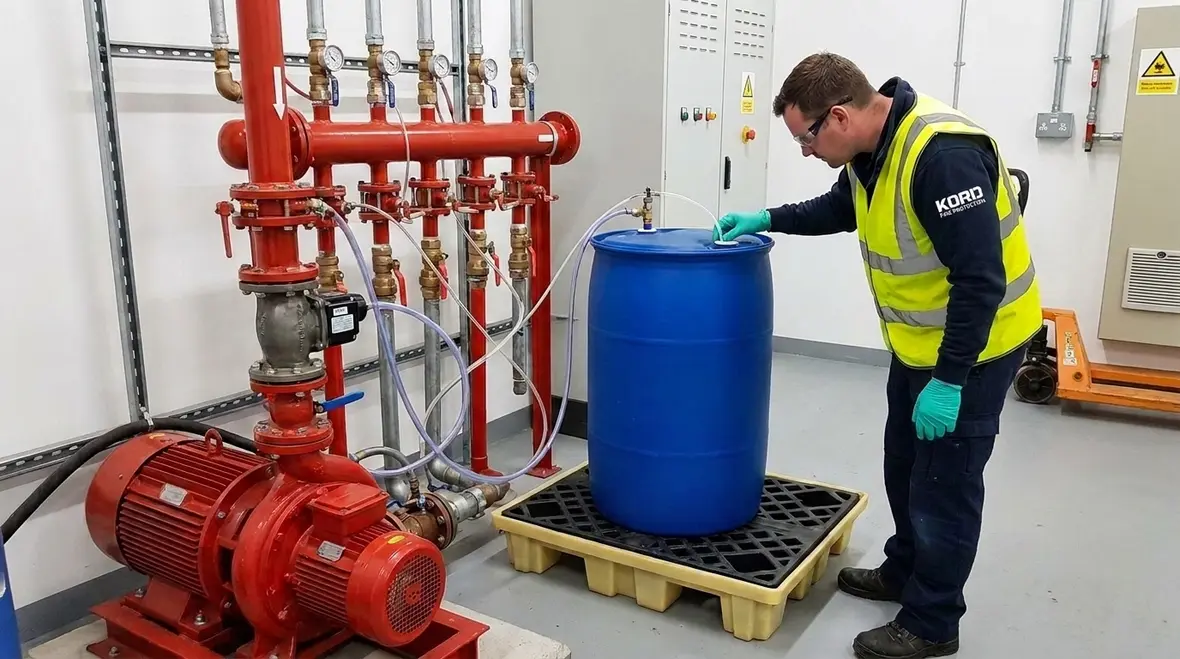
NFPA 18 Section 4.5: Health, Safety, and Environmental Considerations for Wetting Agents
Quick Answer: NFPA 18 section 4.5 sets practical expectations for wetting agent selection, handling, storage, and use to protect responders and prevent environmental harm. The section emphasizes hazard awareness, safe maintenance of application systems, and controls that reduce exposure and release risks.
For facilities looking to connect code expectations to real maintenance planning, fire sprinkler system service is a natural fit here because system reliability depends on more than having the right concentrate on paper. It depends on keeping the equipment, documentation, and testing routines ready when the building needs them most.
What NFPA 18 section 4.5 wetting agent health safety environmental considerations require
NFPA 18 section 4.5 wetting agent health safety environmental considerations focus on preventing injury, limiting harmful exposure, and reducing environmental impacts associated with wetting agent products and their delivery methods. In commercial, industrial, and retail facilities, compliance often fails not because teams do not understand intent, but because day to day practices drift: chemical handling procedures are not current, application equipment is not maintained, and inspection records do not prove system readiness under real conditions.
How wetting agents create health and exposure risks in real operations
Wetting agents are used to improve water penetration and reduce surface tension, especially where materials resist wetting. However, responders and facility staff may be exposed through splash, aerosolization, accidental releases, and residue contact during maintenance. Section 4.5 health and safety considerations typically drive a facility toward a controlled exposure model:
- Product hazard awareness: Teams must understand the chemical’s hazards, including skin and eye irritation potential, respiratory risks, and any special handling constraints.
- Controlled handling and transfer: Pouring, decanting, and topping off are common exposure points when containers are not managed with appropriate PPE, labeling, and spill control.
- Accidental release prevention: Hose connections, injection points, and day tank interfaces can leak if seals, clamps, or valves degrade.
- Responder interface: Incident operations can involve poor ventilation, confined spaces, or high stress, so product safety information must remain accessible and current.
Operationally, the most preventable failures involve maintenance and testing. If technicians do not verify injector components, check valves, and suction lines, small seepage can become a measurable exposure and a cleanup cost. Facilities that maintain wetting agent systems with documented procedures tend to demonstrate stronger control of both exposure risk and environmental release risk.
Safety controls for storage, labeling, and on site chemical management
Commercial facilities often store wetting agents near suppression equipment, pump rooms, or service corridors. NFPA 18 section 4.5 expectations translate into site controls that a fire protection program should align with:
Storage and compatibility management
- Container integrity and segregation: Wetting agent containers should remain in good condition, stored to prevent chemical damage or unintended mixing.
- Environmental exposure control: Secondary containment and leak detection planning reduce the chance of a release reaching drainage or soil.
- Temperature and degradation considerations: Extreme temperatures can affect concentrate properties and tank performance, leading to inconsistent dosing.
Labeling and documentation
- Current safety data availability: Safety data sheets and product labeling should match the installed concentration and formulation.
- Traceability: Records should connect the product delivered to the system inventory used by inspection and maintenance teams.
These controls matter because wetting agent “concentrate drift” can occur when the wrong product is substituted or the concentration is not verified. That is a safety issue because it can change hazard profile and performance, and it is an environmental issue because the wrong chemistry can behave differently on containment and cleanup.
If a facility needs a structured compliance approach for installation and ongoing sprinkler service work, Kord Fire Protection supports commercial and industrial stakeholders with inspection readiness and maintenance planning. For program context, see this overview: NFPA 18 overview on wetting agents.
Environmental considerations: preventing release, limiting runoff, and managing residues
Health safety and environmental considerations are tightly linked because the same failure modes create both exposure and environmental release risk. In practice, NFPA 18 section 4.5 drives attention to how wetting agents can reach stormwater systems, drainage networks, and soil if leaks or incorrect discharge occur.
Common environmental risk points
- Injection system leakage: Dosing pumps, injection lines, check valves, and seals can leak during normal operation or when isolated incorrectly.
- Maintenance residue: Residual wetting agent can remain in strainers, filters, suction lines, and off take components after servicing.
- Flushing and test discharge: Testing procedures must define where discharged chemicals go and how clean up is performed.
- Overflow or overfill scenarios: Tank venting and fill procedures require controls to prevent accidental releases.
Operational controls that support environmental compliance
- Containment planning: Facilities should plan for spill response that matches chemical hazards and system discharge pathways.
- Waste handling: Used absorbents, contaminated materials, and residues must be managed according to product hazard classification and local requirements.
- Proof of system integrity: Regular inspection of injector components reduces the chance of chronic seepage that becomes a regulatory problem later.
Commercial stakeholders typically expect written procedures that define test discharge handling and spill cleanup steps. Kord Fire Protection helps facilities connect maintenance routines to documentation requirements so that testing results, service actions, and inventory controls remain consistent over time. For related service capabilities, refer to Australian fire sprinkler services.
Maintenance and inspection: what to verify so wetting agents stay safe and compliant
Wetting agent systems are not “install and forget.” Even when product hazards and environmental controls are understood, noncompliance often shows up during maintenance and inspections. The goal is to keep the wetting agent application system dosing reliably while controlling exposure and release risks.
Equipment mechanisms that need focus
- Injection pump and metering components: Miscalibration or worn pump components can produce incorrect dosing and increase cleanup needs after service.
- Check valves and backflow prevention: Failed check valves can allow unintended migration of chemicals into unintended piping sections.
- Filters and strainers: Clogging can trigger inconsistent flow conditions and may lead to repeat testing discharges.
- Hoses, couplings, and connection points: Frequent handling points generate leak risk if seals and fittings are not inspected and replaced on schedule.
Inspection and service documentation that typically matters
- Calibration and dosing verification records: Evidence of correct concentration and flow performance supports both safety and environmental outcomes.
- Valve and seal condition documentation: Records show proactive replacement and reduce unexpected leaks during demand.
- Test procedure traceability: Facilities should capture what was done, where discharge went, and how residues were controlled.
Facility teams also benefit from external reference points for pump and fire system engineering concepts. For technical background related to fire pumps and water supply performance fundamentals, see NFPA 20 fire pump performance requirements guide.
Implementation checklist: aligning day to day practices with NFPA 18 section 4.5
Below is a practical compliance checklist that commercial facilities often use to translate NFPA expectations into on site actions. It supports safer handling, reduces environmental releases, and improves readiness of the wetting agent application system.
- Confirm product and concentration: Verify the installed wetting agent matches the system specification and the current hazard documentation.
- Review safety data and PPE requirements: Keep information accessible to responders and technicians and ensure training covers likely exposure routes.
- Control storage and transfer: Require labeled containers, controlled transfer practices, and appropriate spill prevention measures.
- Inspect injection components routinely: Evaluate pump condition, check valves, seals, and connection points for leakage risk.
- Plan discharge and testing controls: Define where any test discharge goes and how cleanup and waste removal will be performed.
- Maintain inspection records: Keep clear evidence of service actions, dosing verification, and component condition changes.
- Run a facility spill response alignment: Ensure incident response procedures reflect wetting agent hazards and system discharge realities.
Frequently Asked Questions
Call to action
Commercial facilities can reduce compliance risk by treating wetting agent systems as engineered life safety assets, not routine chemical storage. Kord Fire Protection can support ongoing inspection, testing, and maintenance planning aligned to NFPA 18 expectations, helping manage exposure risk, environmental release risk, and documentation quality. Contact Kord Fire Protection today to review your wetting agent system readiness and maintenance schedule.

Join Our Newsletter!
Get the latest fire safety tips delivered straight to your inbox From our Newsletter.



