
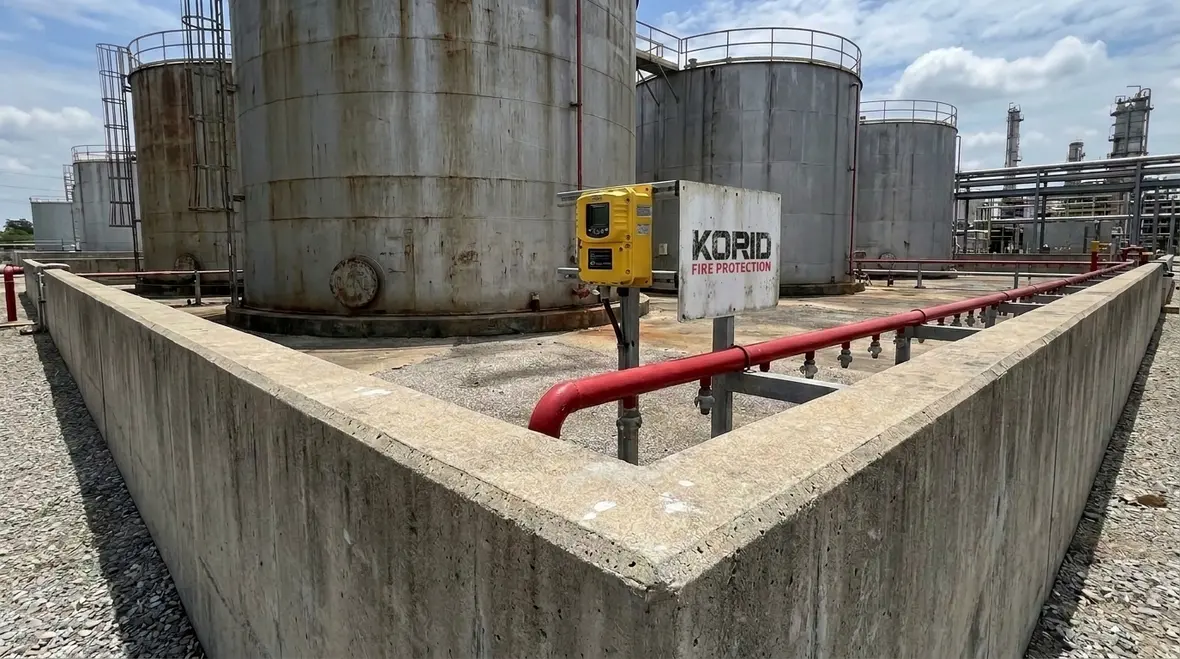
NFPA 15 Section 7.5 Flammable Vapor Mitigation Design Requirements
Quick Answer: NFPA 15 Section 7.5 sets design expectations for mitigating ignitable flammable vapor release hazards using fire protection systems, including dike spill scenarios. Effective compliance requires a vapor risk evaluation, reliable detection, properly designed water application, and verified performance through inspection and maintenance.
Why NFPA 15 Section 7.5 changes how facilities design and prove mitigation
NFPA 15 7.5 flammable vapor mitigation dike spill gas detection fire risk analysis focuses attention on real release behaviors, not generic fire protection assumptions. For commercial, industrial, and retail occupancies handling volatile liquids, compliance often fails when facilities treat dike protection as a static requirement instead of an integrated design that links spill dynamics, detection, and water application performance.
Design teams typically must translate the facility’s process and spill conditions into a defensible fire risk analysis, then confirm the system can detect, activate, and apply water in a way that mitigates vapor hazards during the credible window of release and ignition potential. Kord Fire Protection supports this operational bridge by aligning design intent with testable field performance, inspection, and ongoing maintenance. For facilities that need stronger system readiness near the top of the process, fire suppression system services can fit naturally into the planning conversation before small assumptions turn into large compliance headaches.
What Section 7.5 requires for flammable vapor mitigation
Section 7.5 is part of NFPA 15’s broader water-based system framework, but it narrows attention to vapor mitigation where flammable vapors can form and ignite. The design expectation is not only to “have sprinklers or water” but to manage ignition risk associated with vapor generation from a spill, including dike spill conditions where liquid can pool and release vapors for long enough to challenge ignition control.
In practice, facilities must show the following design intent elements work together:
- Credible spill and vapor release basis: dike geometry, drainage behavior, containment volume, and the properties of the liquids in question.
- Detection and alarm strategy: gas detection or equivalent means of identifying hazardous vapor conditions within time to support mitigation.
- Water application design: water distribution method and operating parameters aligned with the credible fire hazard and the location of vapor generation.
- System reliability and verification: demonstrated capability through inspection, testing, and maintenance procedures.
Because the consequence pathway often includes vapor formation before ignition, the system’s value depends on activation timing and coverage effectiveness, not only nozzle presence.
How the dike spill gas detection fire risk analysis is typically built
A defensible risk analysis is the backbone of compliance for NFPA 15 7.5 scenarios. The key operational question becomes: during a credible release, will the facility detect vapor conditions early enough and apply water effectively enough to mitigate the vapor hazard before ignition results in catastrophic escalation?
Facilities typically build the analysis using site specific inputs such as:
- Liquid hazard characteristics: volatility, vapor pressure, evaporation rate, and flammability limits.
- Spill configuration: likely release rate, spill location relative to dikes, and whether containment will drain or overflow.
- Containment behavior: dike volume, surface area of pooled liquid, and time-to-mitigation assumptions.
- Environmental conditions: ventilation, wind, ambient temperature, and outdoor versus indoor pooling.
- Activation logic: the detection setpoints and how the system transitions from “normal” to “mitigation mode.”
Common compliance gaps include using generic detection assumptions, oversimplifying dike drainage, and failing to reflect how wind and ventilation can change the hazard zone. A frequent root cause is a mismatch between the design narrative and the actual field layout, including detector placement, cable routing, and control valve interfaces.
To support water delivery and vapor mitigation intent, Kord Fire Protection often coordinates with clients on a verification approach that includes how water spray systems are inspected and tested under real operating constraints.
Detection to water application: where systems succeed or fail
In NFPA 15 7.5 flammable vapor mitigation designs, detection acts as the trigger that links the hazard to the mitigation action. The facility must demonstrate that gas detection and the mitigation control scheme align with the credible hazard timeline, including nuisance resistance and fail safe response behaviors.
Common detection and activation integration requirements
- Detector placement and coverage: detectors should represent the potential vapor accumulation areas associated with dike spill scenarios, accounting for airflow patterns.
- Setpoints and response time: setpoints must support early mitigation. Response time must be compatible with the expected vapor formation and ignition likelihood window.
- Control valve and pump interface: the mitigation water system should start reliably when detection and control logic demand it.
- Alarm management: alarms must support timely operator action or automatic initiation depending on the design basis.
Water spray performance and coverage verification
Even when detection is adequate, mitigation can underperform if the water application design does not match the hazard distribution. Operationally, the facility must confirm:
- Coverage pattern and throw characteristics: nozzle spacing, spray angle, and obstructions that can reduce effectiveness.
- Pressure and flow capability at demand conditions: ensuring the system can deliver required flow and pressure when it matters.
- Water supply reliability: pump performance, suction conditions, and standby capability.
For broader water spray fixed system alignment topics, facilities often reference practical guidance like NFPA 15 enhancing fire safety with water spray fixed systems to connect design intent with typical implementation considerations.
Inspection, testing, and maintenance: keeping the mitigation design credible
NFPA 15 compliance does not stop at acceptance testing. For Section 7.5 vapor mitigation scenarios, the most common operational failures involve degraded performance over time. These failures often stem from water supply issues, control system drift, blocked nozzles, and detector reliability changes.
What to verify during ongoing compliance cycles
- Detection health: calibrations, sensor drift checks, and verification of alarm and control signaling paths.
- Water system integrity: unobstructed nozzles, correct spray patterns after inspections, and validation that valves and actuators operate as designed.
- Water supply readiness: pump tests, controller functionality, power availability, and ensuring water delivery remains within design tolerances.
- Documentation accuracy: as-built alignment, maintained risk analysis assumptions, and updated drawings reflecting site changes.
Commercial and industrial facilities frequently change process conditions, add small tanks, modify dike grading, or reroute piping. If those changes alter the spill behavior or vapor distribution, the original NFPA 15 7.5 flammable vapor mitigation dike spill gas detection fire risk analysis may no longer reflect current reality. A maintenance program should include a compliance trigger for process change reviews.
Where pump and system performance verification is a recurring concern, third-party resources such as firepumps.org can help teams evaluate pump-related maintenance and testing best practices alongside NFPA requirements.
Practical compliance challenges in real facilities
Even with well-prepared design documentation, field conditions can create gaps. Senior fire safety reviewers often see the same recurring issues across warehouses, retail fuel handling areas, and industrial chemical service sites:
- Site layout constraints: obstructions, architectural changes, or added equipment can reduce water distribution effectiveness.
- Detector nuisance alarms: operational adjustments to reduce nuisance trips can unintentionally delay mitigation response.
- As-built drift: renovation and small scope piping changes can cause mismatch between hazard zone assumptions and detection coverage.
- Control logic misunderstandings: technicians may test alarms but not exercise the full mitigation actuation path.
- Limited evidence of water coverage: systems sometimes rely on commissioning reports without later functional verification.
Kord Fire Protection helps close these gaps by treating NFPA 15 7.5 as an integrated system of hazard assumptions, detection, and mitigation delivery. This includes aligning commercial maintenance practices with technical verification expectations, supported by ongoing service and documentation control.
For clients who prefer a vendor partner aligned with practical water spray system expectations, Kord Fire Protection also maintains resources across related regions, including kordelectric.com and kordfire.com.au, to support consistent implementation and service planning.
Frequently Asked Questions
Ready to validate your Section 7.5 design as built and as maintained?
Facilities should not wait for an audit to discover gaps between vapor risk assumptions, gas detection operation, and water application performance. Kord Fire Protection can support compliance through documentation review, inspection and testing planning, and ongoing maintenance verification so your NFPA 15 7.5 flammable vapor mitigation design stays defensible in real operating conditions. Contact Kord Fire Protection today to schedule a focused mitigation readiness assessment and maintenance alignment review.

Join Our Newsletter!
Get the latest fire safety tips delivered straight to your inbox From our Newsletter.



