
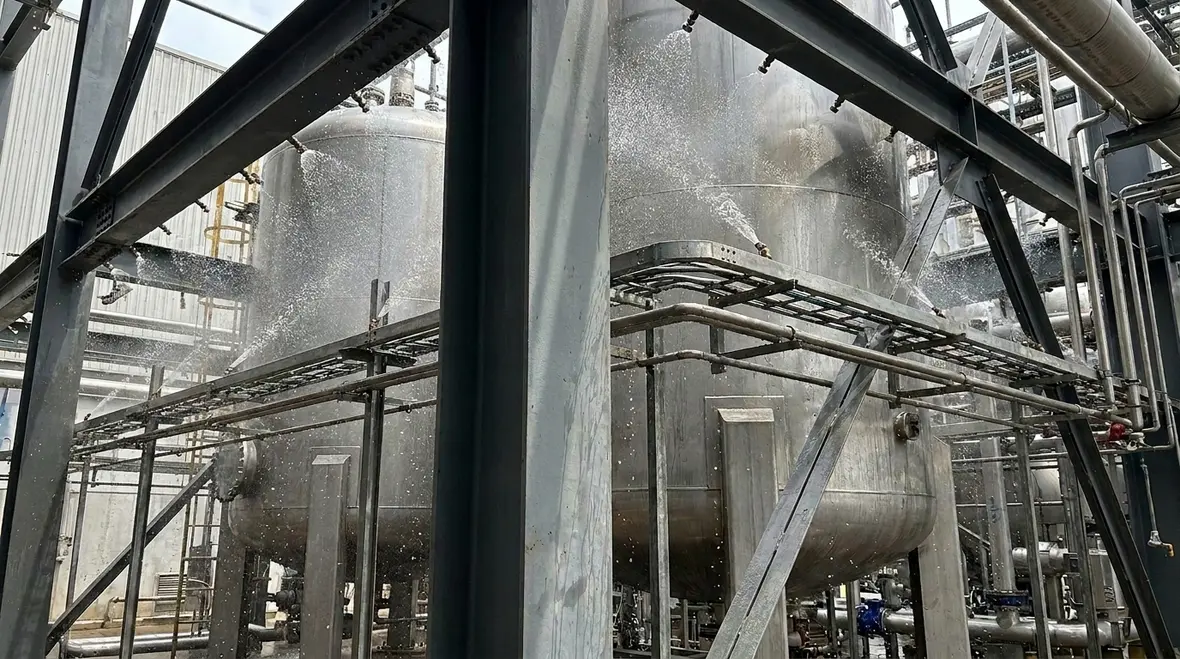
NFPA 15 Section 7.4 Exposure Protection Densities for Vessels, Structural Steel, and Piping Racks
Quick Answer: NFPA 15 Section 7.4 sets minimum water exposure protection densities for specific hazard items, including vessels, structural steel, and piping racks. The correct densities depend on the system type, layout, and obstruction risk. Proper design and ongoing maintenance help prevent underprotection and corrosion.
For facilities reviewing water delivery performance alongside broader system readiness, it also helps to look at fire pump inspection and testing services so the supply side supports the exposure protection intent all the way to discharge hardware.
Why NFPA 15 7.4 exposure protection densities drive real design outcomes
NFPA 15 Section 7.4 focuses on water application performance when hazards include items that do not behave like clean, open surfaces. In commercial, industrial, and retail facilities, the most frequent field issues occur when designers treat exposure protection as a uniform problem, then installation details, reroutes, and obstructions reduce actual discharge coverage at the intended surfaces. This can lead to local dry areas around vessel shells, structural steel, and piping rack members.
Fire protection teams typically reference NFPA 15 7.4 exposure protection vessels steel pipe racks transformers densities when validating design basis assumptions for water spray systems, especially where hydrocarbon, transformer, or adjacent combustible load exposure is present. The goal is not only meeting a theoretical density number, but ensuring the system hardware can deliver that density to the right place, at the right time, during the life of the facility.
What Section 7.4 is actually trying to protect
Section 7.4 exposure protection addresses scenarios where burning material threatens to expose adjacent assets rather than directly ignite the hazard as a primary fire source. For vessels, structural steel, and piping racks, the concern is heat impact and flame impingement that can compromise integrity, cause failure, or accelerate fire spread.
In practice, the protected “surfaces” are often not flat. They include geometry, shielding, and spacing effects. For example, piping racks create a layered exposure field where spray may be deflected by pipe runs, clamps, insulation edges, and rack cross members. Structural steel beams and columns can be partially shielded by platforms and equipment skirts. Vessel geometry plus nearby supports creates zones where water reach declines.
Compliance failures often start during the “coverage intent to reality” gap: the design assumes specific distances, spray patterns, and nozzle positions, while the installed condition includes revisions, additional components, and maintenance changes that shift water reach away from the intended surfaces.
How exposure protection densities get applied to vessels, steel, and pipe racks
NFPA 15 7.4 exposure protection densities set the minimum water application rate for the protected item category. The system design methodology determines how those rates translate into nozzle selection, spacing, elevation, and discharge distribution.
Vessels: the density must reach the shell and appurtenances
Vessel exposure protection commonly focuses on the vessel shell and critical adjacent surfaces where radiant heat and flame can compromise the vessel or its supports. Practical challenges include:
- Adjustments after construction that move nozzle elevations or change spray direction.
- Skirt and support shielding that blocks water application at lower or rearward surfaces.
- Process insulation repairs that introduce new obstructions or alter spray accessibility.
During verification, contractors should not only measure discharge, but confirm coverage reach by checking nozzle alignment, obstruction clearance, and spray pattern behavior under the actual installed configuration.
Structural steel: protect the load bearing elements, not just the nearest face
For structural steel, exposure protection considers that heat can concentrate on members, connections, and localized weak points. Common issues include:
- Inadequate water reach behind beams where connections and bolts collect heat.
- Spray blockage caused by platforms, gratings, or ladder structures.
- Improper nozzle orientation during retrofit work, particularly around column lines.
Practical field verification should include confirming that steel protection coverage intent aligns with beam geometry and the actual obstruction map from the current as built condition.
Piping racks: density delivery must overcome rack shielding and layering
Piping racks create a complex “shadow effect” for water spray. The rack contains multiple elevations and pipe rows that partially block the spray path. For NFPA 15 7.4 exposure protection vessels steel pipe racks transformers densities related design intent, piping racks often demand careful evaluation of:
- Nozzle placement distance and elevation relative to the rack members.
- Spray angle selection to improve penetration into rack layers.
- Pipe insulation condition, clamps, and supports that form water deflectors.
- Hydraulic balance across branches feeding rack zones.
When systems underperform, the typical symptom is uneven density delivery, especially on deeper rack rows. That unevenness can be missed when inspection only checks general coverage or flow rate at a remote test connection.
Where transformer exposure protection fits into the density conversation
Transformers present a common exposure protection requirement in commercial and industrial substations, switchgear rooms, and adjacent electrical enclosures. Even when transformers are treated as separate fire scenarios, crews frequently evaluate them using the same exposure protection density logic for nearby assets that can be exposed to radiant heat or direct flame spread.
In the field, transformer protection compliance challenges often include enclosure geometry, nonuniform combustible proximity, and water runoff behavior. If water is delivered but fails to wet intended surfaces due to runoff or spray misdirection, the effective exposure protection density decreases. This problem becomes worse when rack piping, cable trays, or architectural soffits redirect water flow.
To reduce the risk of underprotection, facilities should document transformer layout changes and inspection findings, then update the effective water coverage plan as maintenance adds or removes components near protected areas.
Common failure points during installation, testing, and maintenance
Even when the designed density meets the requirements on paper, systems can fall out of compliance due to physical changes over time. The highest frequency failure points in exposure protection water spray systems include:
- Hydraulic imbalance across zones: Improper valve settings, clogged strainers, or incorrect branch routing can reduce flow where rack or vessel coverage is most needed.
- Nozzle misalignment and drift: Installers sometimes rotate or reposition nozzles during retrofit work, impacting spray pattern reach and coverage.
- Obstructions introduced after occupancy: Additional pipe supports, modifications to trays, temporary storage, and maintenance upgrades can block spray.
- Corrosion and partial blockage: Mineral buildup, corrosion products, and debris can reduce discharge and effective density.
- Inadequate drainage and runoff conditions: Water that does not remain on target surfaces can lead to lower practical protection.
Operational procedures should require system checks that go beyond “flow exists.” A robust program verifies zone performance, nozzle condition, strainer condition, and obstruction changes against the original design basis.
For additional guidance on water spray fixed systems and how facilities enhance fire safety planning through proper system design and upkeep, refer to NFPA 15 enhancing fire safety with water spray fixed systems.
Inspection and compliance strategy for ongoing exposure protection assurance
A practical compliance approach aligns inspection scope with the real density delivery risks for vessels, structural steel, and piping racks. Facilities typically succeed when they create a living “exposure map” that matches today’s asset layout and obstructions.
Recommended verification steps tied to density performance
- As built review: Confirm nozzle locations, elevations, and orientations match the current field configuration, not only the original drawings.
- Zone flow and pressure verification: Validate that each protected zone can deliver the designed discharge characteristics and adequate residual pressure.
- Nozzle condition assessment: Inspect for clogging, corrosion, impact damage, and incorrect replacements after maintenance.
- Strainer and filtration check: Verify strainer cleanliness and confirm that maintenance schedules prevent density loss due to partial blockage.
- Obstruction walkdown: Identify new barriers that block spray to vessel shells, steel members, or deeper rack rows.
- Records and corrective actions: Document findings, time stamps, and changes, then track corrective actions to completion.
Kord Fire Protection teams support commercial operators by integrating design review, commissioning oversight, and maintenance execution practices that keep exposure protection systems aligned with NFPA expectations over time. For engineering and operations collaboration concepts and fire pump and water supply considerations that influence system performance, facilities can also consult this fire pump water supply guide.
Operators can also benefit from local service coordination through kordelectric.com and kordfire.com.au, especially when corporate standards require consistent inspection and documentation formats across multiple sites.
Frequently Asked Questions
Conclusion and call to action
NFPA 15 7.4 exposure protection densities only protect what the system can actually wet. Facilities should verify zone performance, nozzle condition, and rack or steel shielding effects during inspections, then update coverage after any layout or maintenance changes. Contact Kord Fire Protection to support compliance reviews, commissioning verification, and ongoing water spray maintenance so your vessels, structural steel, and piping racks maintain the intended exposure protection throughout the facility lifecycle.

Join Our Newsletter!
Get the latest fire safety tips delivered straight to your inbox From our Newsletter.



