NFPA 25C Section 15.3: Tag Impairment System Setup and Best Practices
Quick Answer: NFPA 25C Section 15.3 requires an impairment system that clearly identifies out of service fire protection components, controls access to impaired status, and tracks return to service. The highest performing setups use written procedures, standardized tags, disciplined inspection workflows, and documented restoration verification.
Why NFPA 25C Section 15.3 matters in commercial operations
Commercial, industrial, and retail facilities rely on water based and related fire protection systems to perform under emergency conditions. When a system, zone, or component becomes impaired for maintenance, repair, inspection, or construction, the impairment must be managed in a way that protects life safety and preserves regulatory compliance. NFPA 25C Section 15.3 tag impairment system setup best practices focus on traceability, controlled authorization, and verification that impairments are ended and systems are restored before normal occupancy risk returns.
In practice, the biggest compliance risks come from informal tagging, incomplete tracking, unclear responsibility during shift changes, and failure to confirm restoration. A well designed impairment system reduces those risks by making the impaired status visible, auditable, and time bound. It also supports coordinated safety operations with maintenance teams, contractors, fire watch, operations leadership, and local authorities having jurisdiction.
For owners who want related field support near the top of this discussion, Kord Fire Protection also covers fire suppression impairment prevention, which fits naturally with how facilities plan outages, reduce documentation gaps, and restore readiness after service work.
What Section 15.3 expects: how the impairment system is structured
NFPA 25C Section 15.3 addresses how facilities set up a tagging impairment system that identifies fire protection components that are taken out of service. The intent is straightforward: once a component is impaired, the facility needs a reliable process to ensure (1) the impairment is authorized, (2) the impaired condition is documented and communicated, and (3) the impaired condition is removed through a controlled restoration process.
Core elements of a compliant impairment tagging program
- Authorized issuance: Only designated personnel should be able to tag impairment status, ensuring accountability and reducing unauthorized out of service conditions.
- Clear identification: Tags must clearly indicate what is impaired, where it is located, and when impairment begins and ends.
- System level visibility: The program must support facility wide awareness so operations, contractors, and safety leadership understand what is not available.
- Controlled return to service: Removal of impairment status should be tied to verified restoration, not merely completion of work.
- Documentation: Records should show what was impaired, why, who authorized, what compensatory measures were used, and the restoration verification method.
Facilities that already manage water based system maintenance under NFPA 25 workflows often find that impairment tagging becomes the missing link between inspection results and field repairs. Integrating the tagging program with the facility’s maintenance management system typically improves audit readiness and reduces missed handoffs.
NFPA 25C tag impairment system setup best practices for real field use
Effective NFPA 25C Section 15.3 tag impairment system setup best practices focus on how people actually work during maintenance windows. The setup must be operationally usable, not only technically correct.
1) Establish written procedures that match day to day maintenance
Written procedures should define roles and steps for tagging, authorizing, and clearing impairments. Procedures should also address common scenarios, including contractor work, weekend outages, partial zone shutdowns, and emergency repairs. When procedures do not address real field scenarios, teams improvise, and improvisation often leads to audit findings.
For water based fire protection systems context, see Kord Fire Protection’s broader guidance on water based maintenance workflows: NFPA 25 overview and water based fire protection maintenance breakdown. While that page focuses on maintenance and inspection expectations, it helps align impairment processes with the system lifecycle.
2) Use standardized tags and consistent information fields
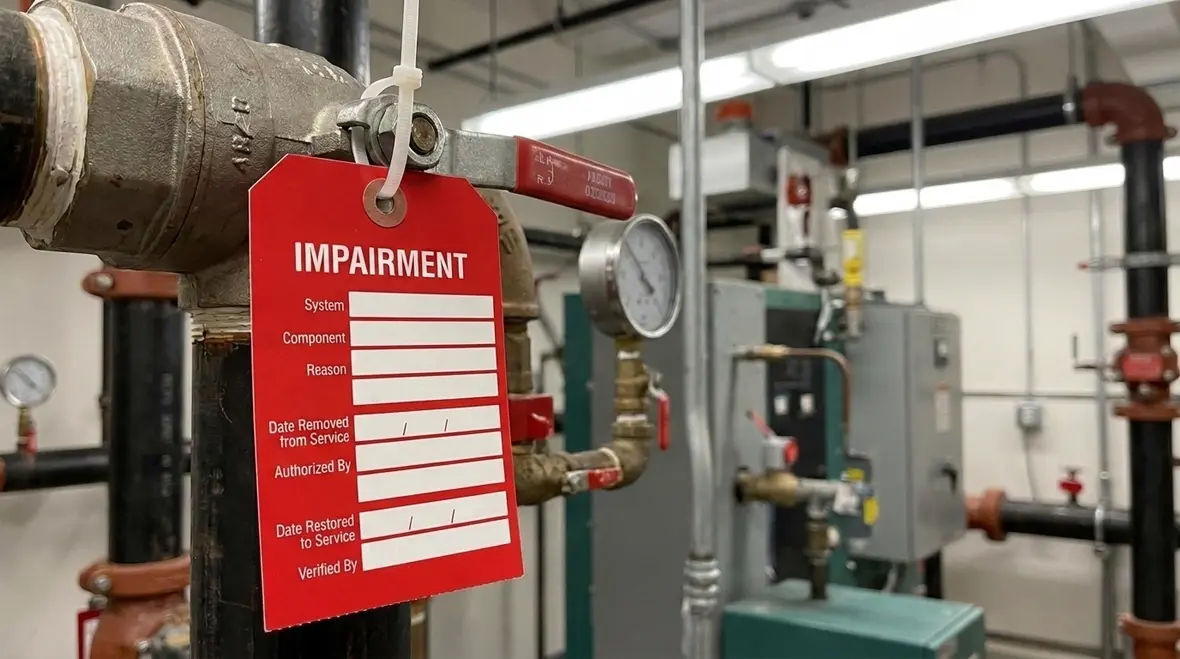
Tags should be standardized across the facility so inspectors and responders immediately understand status. The tag content typically includes the impaired system or component identification, location, impairment start time, the responsible party, and the reason for impairment. A consistent naming convention aligned with drawings and device labeling reduces confusion during emergencies and during record review.
Standardization also prevents the most common failure point: “incomplete tags.” Incomplete tags make it impossible to verify what was actually impaired and for how long, which becomes a major compliance gap during internal audits or AHJ review.
3) Create an impairment decision workflow that triggers compensatory measures
When a component becomes impaired, the facility should follow an impairment decision workflow to determine whether additional protective actions are required, such as fire watch, notification protocols, or operational constraints. The workflow should include who decides, what inputs are required, and what documentation must be produced.
Because requirements can vary by project scope, occupancy, and AHJ expectations, facilities should treat compensatory measures as part of the impairment system, not an afterthought. This alignment reduces the risk of performing work without appropriate interim risk controls.
4) Lock impairment status to verification, not “work completion”
Clearing a tag should require verification that the system or component is fully returned to service. Verification must be documented and linked to the impairment record. Common failure points include removal of a tag because repairs are “done,” without confirming that valves are returned to normal, supervisory signals are restored, control panels report normal status, or the system piping configuration matches the as installed condition.
To strengthen the verification mindset for sprinkler related systems, reference this related installation orientation: NFPA 13 overview and automatic fire sprinkler system installation. Installation and labeling discipline often impacts how easily restoration can be verified later.
5) Integrate tagging with inspections, testing, and maintenance scheduling
Facilities reduce impairment errors when they plan work windows and coordinate testing with impairment operations. Integrating impairment workflow into the maintenance schedule enables proper staffing, reduces unscheduled shutdowns, and supports predictable documentation.
Practical integration steps include:
- Pre planning meetings for multi trade outages, including contractors, operations, and fire protection service providers.
- Pre job device walkdowns that confirm equipment status before tagging begins.
- Post job functional checks tied to the impairment record closure steps.
Common compliance challenges and how strong programs prevent them
Shift handoff gaps and unclear responsibility
Impairments often span shifts, weekends, or contractor arrival schedules. Without clear named responsibilities for tag issuance and clearance, a facility can experience “orphaned impairments” where no one can prove the impairment end date or restoration verification method. Best practice is to define alternates, maintain a controlled tag log, and require signature based clearance.
Partial impairment misunderstandings
Facilities frequently confuse component impairment with system impairment. For example, a single zone valve outage may affect detection or water delivery pathways depending on arrangement. Tagging best practices require tagging at the correct scope and ensuring the affected area matches the facility’s hazard plan and layout.
Failure to align tag locations with drawings and device labeling
When tags identify a component inconsistently with the fire protection drawings, responders cannot quickly interpret what is impaired. The remedy is labeling discipline: confirm tag identifiers match the device names on as built documentation and inspection records.
Restoration verification performed without functional evidence
Restoration without confirmation is one of the most common failure points. Strong programs require functional verification that the impaired component returns to normal supervisory and operational status. Depending on system type, this may include control panel status checks, valve position confirmation, flow related checks, and documented test results where appropriate.
In practice, service providers can help by bringing standardized checklists and repeatable verification methods. Kord Fire Protection supports commercial facilities through compliant maintenance workflows, testing coordination, and documented impairment management as part of long term system reliability planning.
Operational checklist: implementing the setup without gaps
The following operational checklist helps teams implement NFPA 25C Section 15.3 tag impairment system setup best practices in a way that supports audits and daily field execution.
| Phase | Action | What to document |
|---|---|---|
| Before work | Confirm scope of impairment, affected devices, and required compensatory measures. | Work order, impairment scope, authorization, and planned risk controls. |
| Tag issuance | Apply standardized tags to the impaired component and record tag details. | Tag ID, component location, start time, responsible person. |
| During outage | Maintain visibility of status for operations and safety stakeholders. | Communication log, tag audit checks, any scope changes. |
| Restoration | Verify normal status using functional evidence and device position checks. | Restoration verification method, results, signatures. |
| Tag clearance | Remove impairment tags only after verification and record updates. | Clearance time, restored configuration, record closure. |
| Post job review | Update procedures if recurring issues appear. | Lessons learned, procedure revision notes. |
For additional context on water based system reliability and compliance practices, Kord Fire Protection also provides regional and system level resources at kordfire.com.au. For broader discussion of fire pump systems and related maintenance planning, see firepumps.org. While not a substitute for NFPA 25C Section 15.3 requirements, these resources support an integrated compliance culture.
How Kord Fire Protection supports ongoing compliance
Many facilities treat impairment tagging as a short term field task. High maturity programs treat it as an operational control that must align with maintenance planning, documentation, and system restoration verification. Kord Fire Protection works with commercial facilities to strengthen that alignment through documented workflows, testing coordination, and ongoing service that reduces the likelihood of incomplete records or unverified restorations.
By pairing tagging discipline with routine maintenance and inspection programs, facilities reduce downtime risk, improve audit readiness, and preserve the intended reliability of water based fire protection systems. The result is a system that supports both code compliance and operational continuity.
Frequently Asked Questions
Call to action
Facilities can strengthen NFPA 25C Section 15.3 tag impairment system setup best practices quickly by standardizing tags, formalizing authorization and clearance steps, and requiring restoration verification evidence. Kord Fire Protection can help align impairment workflows with your maintenance plan, documentation needs, and ongoing system reliability goals. Contact Kord Fire Protection to review current practices, close compliance gaps, and implement an impairment process that stands up to internal audits and AHJ expectations.

Join Our Newsletter!
Get the latest fire safety tips delivered straight to your inbox From our Newsletter.