
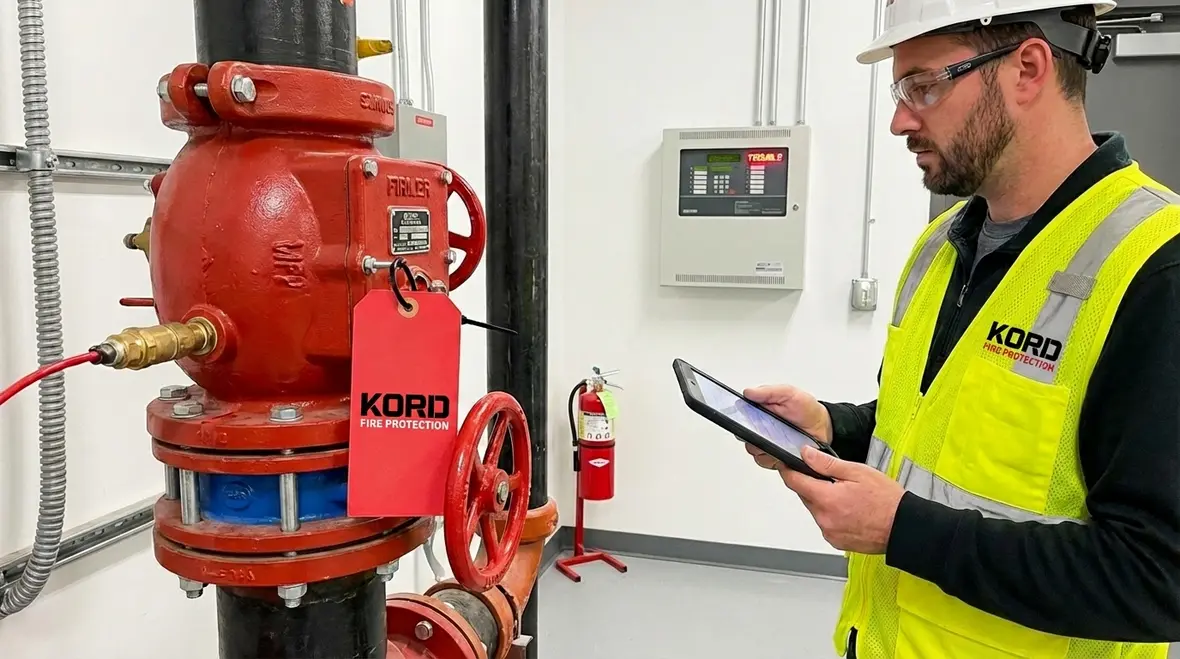
Fire Protection Impairment Management Guide
Impairment Management: What to Do When Sprinklers or Alarms Are Out of Service
When a fire sprinkler system or alarm goes silent, the clock starts ticking. That is why every facility should follow a clear fire protection impairment management procedure the moment protection is reduced. First, identify the scope of the impairment. Next, notify internal leadership and the monitoring company. Then, implement temporary safety measures such as fire watch or removing hazards. Finally, restore the system as quickly as possible and document every step. Kord Fire Protection technicians explain it simply: when protection drops, awareness must rise. This article walks through exactly what that means and how to do it right.
Understanding Impairment in Fire Protection Systems
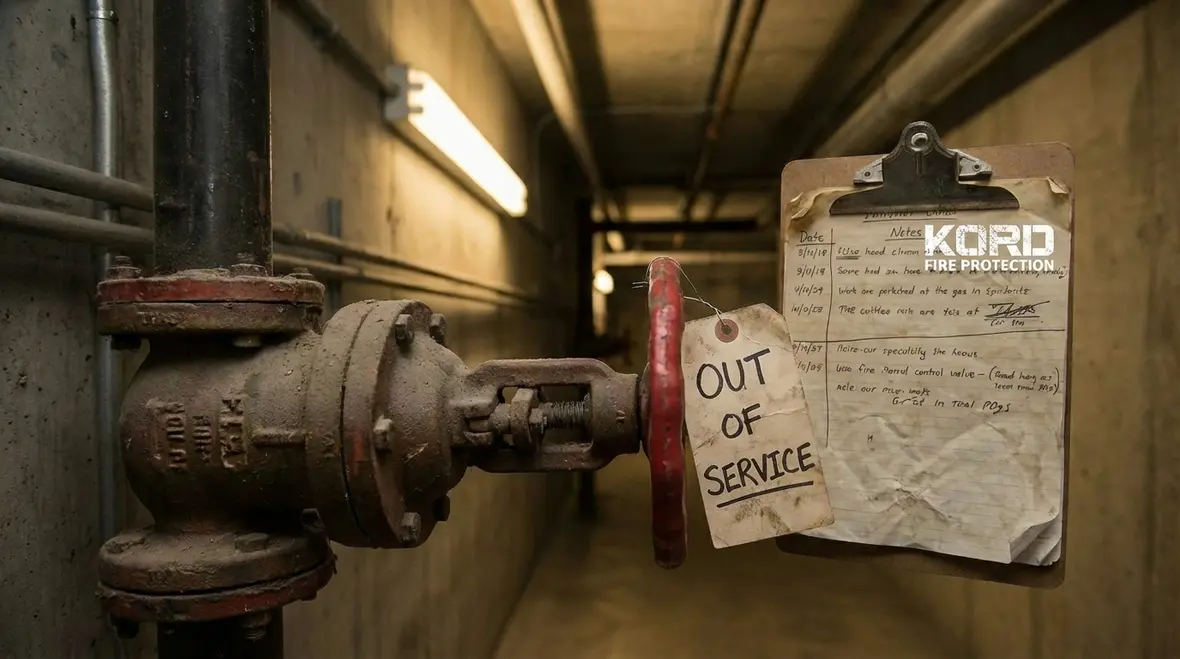
Impairment sounds like a technical word, but in plain terms, it means something that should work is not working as designed. A closed control valve. A drained sprinkler line. A disabled alarm panel. Even a blocked fire pump room door can qualify.
However, not all impairments carry the same level of risk. Some are planned, such as during renovations. Others happen without warning, like a frozen pipe in winter or accidental damage from construction. Regardless of the cause, each situation demands structure and discipline.
Kord fire protection technicians often remind building owners that fire systems are like seatbelts. Nobody plans to crash, but everyone wants protection ready. When that protection goes offline, even for a few hours, the risk increases sharply. Therefore, impairment management is not paperwork for the sake of paperwork. It is a controlled response to prevent small issues from becoming headlines.
Moreover, codes and insurance carriers expect facilities to maintain and document impairments carefully. Failure to do so can lead to fines, denied claims, or worse. In short, impairment management protects both people and property, as well as reputations.
For facilities with sensitive assets, such as IT environments or data centers, impairment management aligns closely with standards like NFPA 75 for IT environments and data centers, which emphasizes keeping fire protection ready even when systems are undergoing work or upgrades.
Why a Fire Protection Impairment Management Procedure Matters
A structured fire protection impairment management procedure ensures no one panics and no step is missed. Instead of guessing what to do, teams follow a defined path. That path reduces confusion, especially during high stress situations.
First, it establishes accountability. Someone must own the impairment from start to finish. Without clear responsibility, systems can remain offline longer than expected. Second, it improves communication. Fire departments, monitoring companies, insurance providers, and facility managers may all need updates. Third, it creates documentation. And documentation, as dull as it sounds, becomes priceless if an incident occurs.
Think of it like a movie set. When one actor misses a cue, the director steps in and resets the scene. Without direction, chaos takes over. Likewise, when a sprinkler system goes down, leadership must take control immediately.
Kord fire protection technicians emphasize that most losses happen not because a system failed, but because people failed to respond correctly after the failure. That distinction matters. The impairment itself may be unavoidable. A poor response is not.

What Should a Facility Do Immediately When Sprinklers or Alarms Go Down
The first hour is critical. Therefore, action must be deliberate and swift.
1. Confirm the impairment. Determine what is out of service and why. Is it a single zone, the entire building, or just the monitoring connection? Accurate information shapes the response.
2. Notify key parties. Contact internal management, the alarm monitoring company, and if required, the local fire department. Transparency builds trust and ensures help is available if needed.
3. Evaluate risk conditions. Are hazardous processes operating? Is hot work scheduled? Are combustible materials present? If so, suspend or limit these activities until protection returns.
4. Implement temporary safeguards. This may include establishing a fire watch, increasing patrol frequency, ensuring portable extinguishers are accessible, and keeping exits clear.
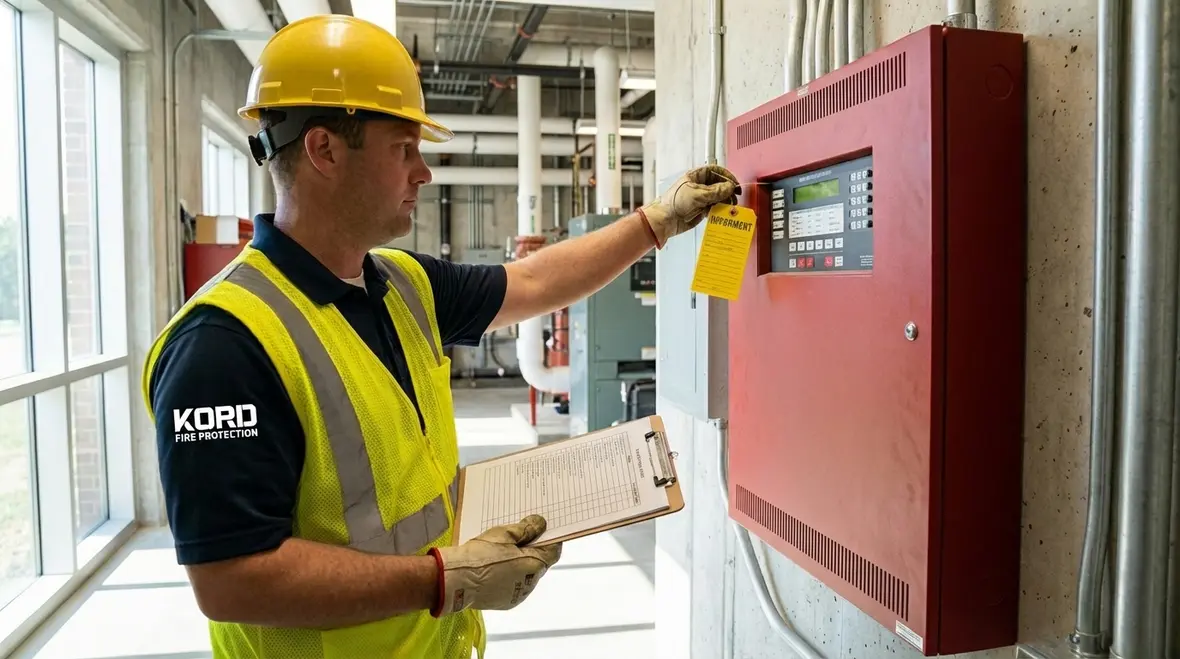
5. Tag and document the impairment. Post visible tags at affected valves or panels. Record the time, reason, and expected duration.
Although this may sound procedural, it works. A calm, step by step approach keeps small disruptions from escalating. As one Kord technician likes to say, “When in doubt, slow down and follow the plan. Fire does not care about guesswork.”
If that impairment involves your alarm system, pairing your response with clear awareness of common fire alarm trouble signal meanings helps your team distinguish between nuisance alerts and genuine system problems that demand immediate action.
Key Components of an Effective Impairment Plan
An effective impairment plan is more than a checklist taped to a wall. It includes structure, training, and follow through.
Clear Roles and Authority
Someone must have the authority to shut down operations if risk becomes unacceptable. Without that authority, safety recommendations turn into suggestions. And suggestions, as history shows, are easy to ignore.
Preplanned Communication Channels
Before an impairment occurs, facilities should know who to call and in what order. Consequently, response time shortens and confusion decreases. A current contact list prevents delays when minutes matter.
Risk Assessment Protocol
Each impairment should trigger a brief risk review. For example, a warehouse storing paper products carries different risk than a concrete parking garage. Therefore, temporary measures must reflect the actual hazard level.
Documentation and Close Out Procedures
When the system returns to service, confirmation testing should occur. Only then should documentation close the impairment. Kord fire protection technicians routinely test valves, alarms, and supervisory signals to ensure everything operates properly before declaring the building fully protected.
Because systems can appear restored while hidden issues remain, verification is not optional. It is essential.
Common Causes of Sprinkler and Alarm Impairments
Understanding the root causes helps facilities prevent repeat events.
Planned Construction or Renovation
Contractors often need to drain or modify piping. However, without proper coordination, valves remain closed longer than intended. Therefore, impairment procedures must start before work begins.
Mechanical Damage
Forklifts and sprinkler heads rarely get along. A single impact can disable a section of piping. Similarly, alarm devices can suffer accidental damage during remodeling.
Weather Related Issues
Freezing temperatures can burst pipes, while lightning can disrupt alarm panels. Although weather cannot be controlled, preparation can reduce impact.
Lack of Maintenance
Ironically, neglect remains one of the biggest causes of impairment. Regular inspections identify problems early. Skipping them invites surprises.
Kord fire protection technicians often compare maintenance to dental checkups. Skip them long enough and something painful eventually happens. No one enjoys it, and it always costs more than prevention.
Dual Perspective: Facility Leadership and Technical Response
Facility Leadership Focus
- Authorize shutdowns and temporary safety measures
- Communicate with occupants and stakeholders
- Allocate resources for repair and fire watch staffing
- Ensure documentation aligns with policy and insurance requirements
Kord Fire Protection Technicians Focus
- Diagnose and isolate the affected system components
- Provide clear explanation of risk and repair timeline
- Recommend code compliant temporary safeguards
- Test and verify system performance after restoration
Together, these roles form a complete response. Leadership manages exposure and communication. Technicians manage the technical solution. When both sides collaborate, impairments resolve faster and with fewer complications.

How Long Can a Fire System Be Out of Service?
This is the question everyone asks, often with hopeful optimism. The honest answer is simple: as short a time as possible.
Codes generally require immediate action and continuous mitigation until protection is restored. Extended impairments increase risk significantly. Therefore, repairs should receive priority status.
If a system must remain offline overnight, facilities should increase fire watch patrols and restrict hazardous activities. Moreover, they should reassess risk daily. Conditions change, and so should response plans.
Kord fire protection technicians frequently explain that time multiplies risk. A one hour outage during low occupancy carries different weight than a three day shutdown during peak operations. Consequently, leadership must treat each hour intentionally.
It is not about fear. It is about math. Less protection plus more time equals higher exposure. Even Hollywood disaster films respect that equation.
Training Staff to Handle Impairments with Confidence
Even the best procedure fails without trained people. Therefore, facilities should conduct periodic training on impairment response.
Training should cover:
- How to recognize and report impairments
- Who has authority to initiate the response plan
- How to perform a basic fire watch
- Where documentation forms are located
- When to contact external partners
Additionally, tabletop exercises help teams practice decision making. During these sessions, leaders can walk through scenarios such as a main control valve closure or a panel communication failure. As a result, real events feel less overwhelming.
Kord fire protection technicians often participate in these exercises, explaining system behavior in plain language. They avoid jargon and focus on practical guidance. After all, no one wants to decode technical manuals during an emergency.
When staff feel prepared, they act decisively. And decisive action reduces loss.
FAQ: Impairment Management for Fire Protection Systems
Restoring Protection and Moving Forward
When sprinklers or alarms go out of service, the response must be immediate, structured, and documented. A disciplined approach protects lives, limits property damage, and safeguards business continuity. Kord fire protection technicians stand ready to guide facilities through every step, from assessment to restoration. Do not leave safety to chance. Instead, build a clear impairment strategy today and ensure that when systems pause, protection does not.
If your building is due for inspections, testing, or help creating a formal impairment plan, explore Kord Fire’s full range of services on their Los Angeles fire protection services page. From sprinkler testing and flushing to alarm diagnostics and early warning assessments, they help facilities stay compliant, prepared, and confident long before the next impairment occurs.
Know Your Weapon Before You Fight the Flame
Kord Fire Protection is your go-to when it comes to all things fire protection. For over 20 years, we’ve been serving Southern California with the quality service and equipment to keep your home or business safe at all times. Our competitive prices reflect our unwavering commitment to protecting what matters most in the event of a fire emergency. Give us a call, send an email, or use that form!

Join Our Newsletter!
Get the latest fire safety tips delivered straight to your inbox From our Newsletter.


