
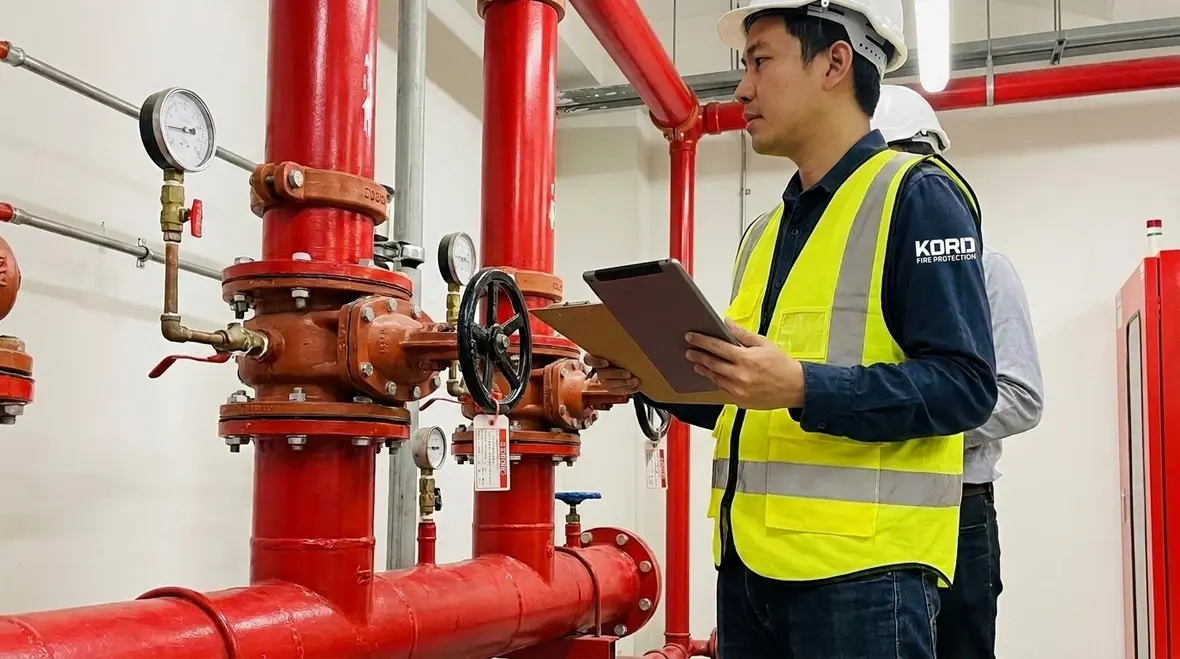
NFPA 25C Section 15.2: Impairment Coordinator Responsibilities and Qualifications
Quick Answer
NFPA 25C Section 15.2 impairment coordinator responsibilities qualifications require a trained, documented, and competent person to manage system impairments, coordinate safety controls, and ensure impairments are properly authorized, tracked, and verified. The coordinator must understand water based fire protection maintenance impacts, temporary measures, and communication with stakeholders.
What NFPA 25C Section 15.2 Requires in Plain Terms
NFPA 25C Section 15.2 establishes who takes ownership of fire protection impairment controls and what that person must be able to do. In commercial, industrial, and retail environments, impairments occur when maintenance, inspections, repairs, or construction work affects water based fire protection systems, such as sprinkler systems, water supplies, and related fire protection components. The impairment coordinator ensures those impairments do not unintentionally reduce life safety coverage without proper authorization, compensating measures, and clear communication.
Because impairment events are high risk operational moments, the coordinator role focuses on three outcomes: controlled authorization, documented tracking, and verification that the system returns to service in the expected condition. For facilities adopting coordinated safety workflows, this aligns with broader commercial maintenance practices described in Kord Fire Protection content, including ongoing water based system maintenance planning NFPA 25 overview and maintenance breakdown.
A practical related read near the top of this conversation is NFPA 25 fire protection system impairment procedures, which fits naturally if your team is trying to connect coordinator responsibilities to how impairment workflows actually run in the field.
Impairment Coordinator Responsibilities Under NFPA 25C Section 15.2
The impairment coordinator responsibilities under NFPA 25C Section 15.2 impairment coordinator responsibilities qualifications are not limited to paperwork. They require operational control before, during, and after any impairment that can affect fire protection performance.
1) Confirm the impairment scope and system impact
The coordinator begins by confirming what equipment is impacted, what mode of impairment applies, and what functional coverage changes during the maintenance window. Common impairment triggers in commercial facilities include:
- Isolating sprinkler zones for pipe repairs or valve replacements
- Shutting down pumps, controllers, or jockey pump systems during service
- Taking water supplies out of service for testing or plumbing work
- Maintaining alarm signaling components that interface with water based systems
A frequent failure point is mischaracterizing the degree of impairment, especially when partial areas remain protected but response time or pressure delivery is reduced. The coordinator must evaluate impact using system knowledge, not assumptions.
2) Ensure impairment authorization and documented control
NFPA 25C Section 15.2 centers on the idea that impairments must be formally controlled. The coordinator ensures the impairment is authorized by the appropriate facility authority, using the facility’s impairment process. That includes documenting:
- Dates and times of impairment start and end
- Which valves, zones, pumps, tanks, or components are impaired
- The maintenance activity and why it requires the impairment
- Who performs the work and who verifies completion
In practice, commercial facility standards often require that the coordinator also confirms that site management has acknowledged risk and accepted compensating measures during the impairment window.
3) Implement and verify compensating measures
Compensating measures prevent a temporary system reduction from becoming a life safety gap. The impairment coordinator must coordinate compensating measures consistent with the facility impairment plan and applicable authorities. Depending on scope, this can include heightened surveillance, temporary fire watch staffing, and restrictions on hot work.
Where impairments affect sprinkler performance or water supply reliability, compensating measures become critical. For example, taking a pump out of service without confirmed standby capacity or verified pressure continuity can change system reliability in ways that are not obvious to non technical teams.
4) Coordinate communication across trades and facility operations
An impairment creates an interdepartmental event. The impairment coordinator responsibilities include ensuring that maintenance contractors, operations staff, security, and any relevant emergency response contacts are aligned. This reduces confusion, prevents accidental return to service before work completion, and ensures that现场 teams understand what coverage is temporarily unavailable.
Commercial environments that rely on multiple vendors benefit from a structured impairment communication checklist, tied to system drawings, valve maps, and equipment naming conventions.
5) Maintain impairment logs and verification records
During impairments, the coordinator tracks the status and ensures the system remains controlled. After work finishes, the coordinator confirms the impairment is ended correctly. That typically includes:
- Restoring valves and equipment to the normal position or condition
- Confirming electrical and controller states are correct
- Obtaining verification from competent personnel that the system performance is restored
Many compliance issues arise from incomplete closeout steps, such as a valve not fully reopened, a controller left in a maintenance mode, or a pump not returned to automatic operation.
Qualifications and Competency: What the Coordinator Must Know
NFPA 25C Section 15.2 impairment coordinator responsibilities qualifications emphasize competency rather than job titles. The coordinator must understand water based fire protection systems enough to manage impairment risk with accuracy and authority.
Core qualification expectations
An impairment coordinator should demonstrate ability in the following areas:
- System fundamentals: understanding how sprinkler systems, water supply components, pumps, and related devices deliver protection
- Impairment effects: knowledge of how specific valves, zones, and equipment states change system performance
- Inspection and testing awareness: familiarity with testing and maintenance outcomes that influence system readiness
- Documentation discipline: capability to maintain accurate logs, authorization records, and closeout verification
- Coordination skills: ability to manage contractors and facility operations during controlled risk windows
Training and experience tied to real commercial failure modes
Competency improves when training reflects how systems actually fail during maintenance events. Typical real world failure modes include:
- Incorrect valve identification due to labeling drift or outdated valve maps
- Pressure and pump mode changes that are not detected until later testing
- Systems restored to “local” operation while controllers remain in an inhibited state
- Partial area assumptions that ignore downstream dependencies in water flow and pressure delivery
Facilities that maintain a strong commissioning and maintenance culture usually have fewer impairment mistakes because documentation and equipment naming remain consistent from installation to service. For teams building that baseline during new work, Kord Fire Protection offers installation context for sprinkler systems at NFPA 13 overview for automatic fire sprinkler system installation.
Operational Procedure: How Impairments Should Run in a Commercial Facility
Implementing NFPA 25C Section 15.2 impairment coordinator responsibilities qualifications effectively requires a repeatable procedure. Below is a practical workflow used in many commercial facilities to reduce errors and speed up compliant closeout.
Step 1: Pre job briefing and system mapping
The coordinator confirms the affected system boundary using current drawings and site valve maps. The briefing aligns the maintenance scope with the impairment plan, including who will perform isolation, who will verify, and what compensating measures will activate.
Step 2: Authorization before any isolation
Authorization and documentation occur before impairment begins. This prevents “informal start” situations where work begins but the impairment status is not logged or understood across the site.
Step 3: Controlled impairment and continuous status checks
During the impairment, the coordinator ensures the impaired state is maintained as planned, that access and hot work controls match risk, and that security and operations understand the temporary condition.
Step 4: Restoration and verification to normal condition
Closeout includes restoring normal valve positions and equipment states. Verification should include functional confirmation appropriate to the impairment scope, consistent with the facility maintenance expectations and the service organization’s testing practices.
Commercial pump system reliability often depends on components that interface with inspections and preventive maintenance. For facility teams that want to understand the larger pump and water supply ecosystem, fire pump resources at firepumps.org support background knowledge for operating reliability and maintenance planning.
Compliance Challenges in Real Buildings (and How to Address Them)
Even well intentioned teams can struggle with impairment compliance because the coordinator role crosses boundaries between maintenance, operations, and contractors. Common challenges include incomplete documentation, unclear valve identification, and inconsistent return to service practices.
Challenge: Outdated valve maps and inconsistent labeling
When construction changes occur, valve labeling and maps can fall out of sync. The coordinator should require a verification step using field confirmations before any impairment authorization is finalized.
Challenge: Short maintenance windows and rushed handoffs
Impairments often occur during early shifts or tight shutdown windows. This increases the risk of skipped steps in authorization, compensating measures, and closeout verification. Kord Fire Protection supports commercial service readiness through structured maintenance workflows aligned with comprehensive NFPA maintenance expectations discussed here NFPA 25 overview and maintenance breakdown.
Challenge: Misunderstanding impairment severity
People sometimes treat partial isolation as low risk. The coordinator must evaluate whether dependencies remain fully functional, especially for water supply and pump control logic.
For California facilities specifically, code interpretation and coordination with local enforcement can add complexity. Kord Fire Protection addresses planning considerations in fire sprinkler code California explained. Facility teams should ensure impairment documentation aligns with local expectations and internal risk acceptance criteria.
Why Partnering With Kord Fire Protection Helps Maintain Impairment Compliance
Impairments require technical accuracy and procedural discipline. Kord Fire Protection supports commercial, industrial, and retail facilities with ongoing testing, inspection readiness, maintenance coordination, and service execution that reduces the chance of incomplete closeout. By integrating impairment control into a broader maintenance plan, facilities improve audit outcomes and system reliability.
Teams can reference supporting service perspectives from Kord Fire Protection and related electrical coordination resources at kordelectric.com and Australia based implementation support at kordfire.com.au.
Frequently Asked Questions
Next Step: Confirm Your Impairment Coordinator Plan
Review who currently performs impairment coordination, whether their qualifications match NFPA 25C Section 15.2 impairment coordinator responsibilities qualifications, and whether your valve maps, authorization steps, and closeout verification are consistently executed. Kord Fire Protection can help facilities tighten impairment workflows through maintenance planning, testing readiness support, and service execution. Contact Kord Fire Protection today to align your impairment process with real commercial operating conditions.

Join Our Newsletter!
Get the latest fire safety tips delivered straight to your inbox From our Newsletter.


