NFPA 36 Section 8.10: Process Controls for Extraction Equipment
Quick Answer: NFPA 36 Section 8.10 establishes expectations for how extraction equipment is controlled to prevent abnormal operation, ignition sources, and unsafe process conditions. It emphasizes reliable interlocks, monitoring, safe shutdown behavior, and maintenance practices that keep controls functional throughout the facility lifecycle.
Facilities building out safer inspection and maintenance routines often benefit from a broader fire protection services program in Southern California, especially when documentation, corrective actions, and recurring deficiencies need tighter control.
Why NFPA 36 process controls extraction equipment requirements matter in real operations
Extraction processes in commercial, industrial, and some retail settings rely on precise control of temperature, pressure, solvent handling, flow, and purge behavior. When controls drift out of spec or fail, the risk shifts quickly from nuisance trips to hazardous conditions such as overheating, improper venting, unsafe solvent concentrations, or uncontrolled mechanical operation. That is why NFPA 36 process controls extraction equipment requirements focus on both functional performance and long term reliability, not just initial installation.
In practice, compliance teams often find that the hardest parts to maintain are not the control philosophy documents, but the operational reality: sensors get fouled, relays age, purge timers get bypassed during troubleshooting, and setpoints change without a documented change control path. A fire safety program that treats process control integrity as a living system is far more likely to pass inspection and perform safely.
What Section 8.10 expects from process controls and protective logic
NFPA 36 Section 8.10 centers on ensuring extraction equipment is controlled in a way that limits the likelihood and severity of unsafe conditions. While facility designs vary, process control systems for extraction equipment typically must demonstrate that the equipment can detect unsafe states, execute predefined corrective actions, and transition to a safe state when needed.
1) Control functions must match the hazards of extraction
Extraction equipment hazards often include ignition risk from hot surfaces or electrical faults, combustible vapor release, and unsafe solvent vapor concentrations. Process controls should therefore be aligned to critical hazards, which usually means controlling or monitoring parameters such as:
- Temperature and heat input to prevent overheating of solvent and surrounding components
- Pressure or differential pressure to confirm stable operating conditions
- Flow verification for solvent and carrier streams where required
- Ventilation and purge conditions to ensure safe solvent removal before ignition-prone operations
- Start up and shutdown sequencing to prevent operation under improper conditions
2) Interlocks and sequences must prevent unsafe operation
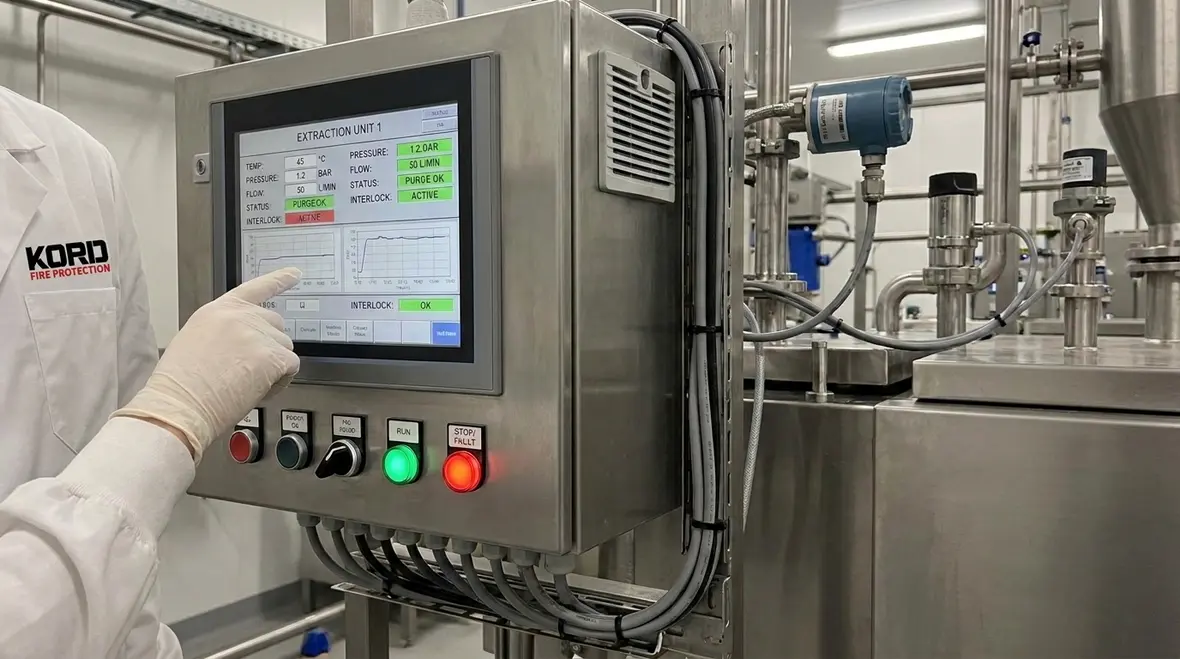
Controls commonly rely on interlocks that stop, inhibit, or allow operation based on proven safe states. Examples of the type of logic many facilities implement include:
- Allowing heat application only after verified purge or safe atmosphere conditions
- Stopping equipment when abnormal temperature, pressure, or flow is detected
- Forcing a safe shutdown sequence when critical signals are lost or out of range
From an inspection standpoint, the goal is not that interlocks exist on paper, but that they function in the field under real operating constraints. That requires documented testing, calibrated instruments, and disciplined maintenance practices.
How extraction equipment control mechanisms work during normal and upset conditions
To stay compliant and reduce fire loss risk, process control systems should be evaluated across operating states. Most failures become visible during transitions rather than steady running.
Normal operations: sequencing that avoids unsafe conditions
Typical operating sequences include solvent introduction, heat application, extraction operation, and final purge. NFPA 36 process control expectations drive design decisions such as:
- Start up permissives that confirm proven-safe conditions before initiating heat or solvent vapor handling steps
- Closed loop control where appropriate (for example, temperature regulation) to prevent drift
- Monitoring and alarms for operator response, including thresholds that align with engineering hazard analysis
Upset conditions: the control system must react predictably
When sensors report abnormal readings, control logic should execute predefined actions rather than leaving the system in an indeterminate state. Predictable upset handling often includes:
- Timed or immediate shutdown based on severity classification
- Automatic safe shutdown sequences that maintain ventilation or purge long enough to return conditions to safe levels
- Lockout states that prevent restart until conditions are verified
Common failure points that drive noncompliance
Commercial and industrial facilities frequently encounter repeat issues:
- Sensor degradation: fouled temperature probes, drifting pressure transducers, and blocked sampling lines
- Setpoint drift: changes made during troubleshooting without updating documentation or validating interlock thresholds
- Bypassed protections: temporary jumpers or disabled interlocks that become permanent
- Weak alarm management: alarm fatigue that delays corrective action
- Stale test records: testing exists, but does not verify the current logic and component state as installed
Inspection, testing, and documentation practices that hold up under scrutiny
Compliance success depends on the ability to show that process controls for extraction equipment are maintained in a functional condition. Inspectors usually look for evidence of performance, not just equipment presence.
What to test (and how to prove it)
Facilities should confirm that critical functions operate correctly during scheduled tests. Typical testing targets include:
- Interlock verification: demonstrate that permissives and trips respond correctly to simulated unsafe conditions
- Shutdown sequence verification: confirm that the system transitions to safe mode as intended
- Sensor calibration status: document instrument calibration and check for functional equivalency
- Alarm verification: confirm alarm setpoints, annunciation, and operator response pathways
Documentation that reduces compliance friction
Strong documentation typically includes:
- Current control narratives and logic descriptions tied to installed equipment
- As-built drawings, including setpoints and interlock mappings
- Test procedures, test results, and corrective action records
- Change management records for control logic modifications and sensor replacements
If documentation does not match the field configuration, testing results may lose their credibility. That gap is a major cause of inspection findings.
For an organized approach to fire and life safety documentation, review Kord Fire Protection resources for practical guidance that supports ongoing compliance readiness.
Maintenance and change control: the controls you do not maintain eventually fail
NFPA 36 process controls extraction equipment requirements effectively extend into maintenance planning. Most control failures originate from the work that happens between inspections: cleaning, calibration, component replacement, and troubleshooting.
Maintenance practices that protect control integrity
- Instrument care and cleaning: ensure sensors are protected against contamination that alters readings
- Calibration discipline: maintain calibration intervals and verify performance after replacement
- Component aging monitoring: track relay contact wear, controller power supplies, and aging electronics
- Functional retesting: retest interlocks and sequences after any logic change, sensor swap, or wiring modifications
Change control that prevents unintentional bypasses
Many extraction systems evolve over time. Even minor changes can impact permissives, trip points, and sequencing timers. A robust change control process should include:
- Updated risk assessment or at minimum documentation review for the affected control functions
- Approval workflow for logic changes and setpoint modifications
- Verification testing to confirm the updated logic performs as intended
- Revalidation of alarm thresholds and operator notification behavior
Kord Fire Protection supports commercial facilities with ongoing testing and maintenance coordination so process controls remain aligned to NFPA 36 expectations over time. This reduces the chance that an equipment “fix” becomes a hidden protection gap.
To understand how a maintenance and inspection partner can fit into an overall fire safety program, see Kord Fire Protection contact options.
Frequently Asked Questions
Call to action
Commercial operators should treat NFPA 36 process controls extraction equipment compliance as an ongoing program, not a one time review. Kord Fire Protection can help validate control functionality, testing readiness, and maintenance documentation so extraction equipment operates safely between inspections. Schedule an assessment to identify control gaps, verify interlock performance, and build a defensible compliance plan aligned with NFPA 36 expectations.

Join Our Newsletter!
Get the latest fire safety tips delivered straight to your inbox From our Newsletter.