
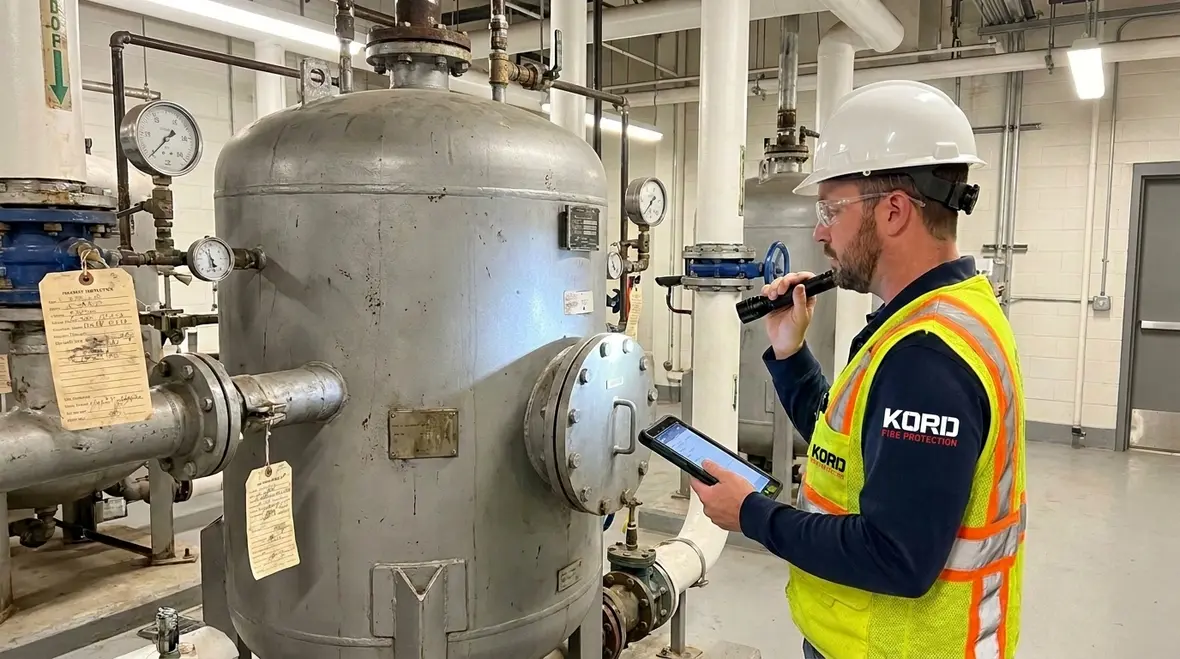
NFPA 36 Section 8.8: Pressure Vessels and Tanks
Quick Answer
NFPA 36 Section 8.8 sets the minimum safety requirements for pressure vessels and tanks used in protected processes. It addresses design intent, installation safeguards, operational controls, inspection fundamentals, and the maintenance needed to keep these systems safe and compliant over time.
Facilities that need broader scheduling, documentation, and correction support can also review fire protection services in Southern California to connect this requirement with practical inspection and maintenance planning.
What does NFPA 36 Section 8.8 cover for pressure vessels and tanks?
NFPA 36 pressure vessels tanks requirements focus on preventing overpressure and unsafe release of contents from pressure vessels and tanks. Section 8.8 emphasizes that these systems must operate within specified limits and remain protected through appropriate safeguards, ongoing inspection, and documented maintenance practices suitable for the hazard level and operating conditions.
For commercial facilities, the most common compliance gap is not the original installation. It is the erosion of the inspection and maintenance program over time due to changing operations, staffing constraints, and deferred repairs. This is where formal compliance support becomes essential.
Key compliance outcomes facilities must achieve
NFPA 36 Section 8.8 is designed to ensure pressure and tank systems maintain integrity and safety throughout their service life. Facilities typically must achieve the following outcomes to demonstrate compliance to insurers, auditors, and enforcement authorities:
- Controlled overpressure risk through properly managed pressure relief arrangements and limits that reflect actual operating conditions.
- Safe installation and configuration including spacing, protection from impact damage, and placement that supports safe access for inspection and maintenance.
- Recognition of deterioration mechanisms such as corrosion, fatigue, coating failure, gasket aging, and damage to valves and fittings.
- Reliable ongoing inspection and testing with documented records tied to the system’s risk and service conditions.
Commercial, industrial, and retail properties often integrate these systems into shared utility spaces. That raises practical challenges for NFPA 36 pressure vessels tanks requirements, including coordination with maintenance windows, confined access, and keeping third party testing equipment available.
Operational safeguards and how systems actually fail in the field
Pressure vessels and tanks typically fail in predictable ways. Section 8.8 requirements are intended to interrupt those failure modes before they create life safety hazards. Common failure points include:
- Overpressure events caused by relief valve impairment, blocked discharge paths, or setpoint drift due to corrosion and contamination.
- Leak paths at flanges, threaded connections, instrument ports, and valve stems, often driven by vibration, thermal cycling, and improper tightening practices.
- Corrosion and thinning inside tanks and on external surfaces where coatings fail or where condensate and process residues remain trapped.
- Valve and instrumentation degradation including sticking shut or failing to reseat, which prevents pressure relief from functioning as intended.
- Mechanical damage from vehicle impacts, misuse during material handling, or insufficient physical protection in warehouse and loading areas.
Operational controls are where many facilities struggle. For example, a relief device may pass an initial inspection but fail later if discharge lines become routed incorrectly, if maintenance swaps in non matched components, or if process changes alter expected behavior.
Inspection, testing, and maintenance: the compliance workflow
NFPA 36 Section 8.8 drives a practical message: systems must be inspected and maintained so that the protective function remains reliable between service intervals. A robust compliance workflow typically includes the steps below.
1) Baseline documentation and system identification
Start by confirming each vessel and tank is uniquely identified and matched to current operating conditions. Facilities should maintain equipment datasheets, marked drawings, relief device information, and the inspection history for each unit.
2) Periodic inspection planning based on hazard and service
Inspection frequency should reflect risk factors such as service severity, material condition, external exposure, and consequences of release. For example, systems subject to frequent temperature swings often require more attention to gaskets and instrument connections.
3) Testing and verification of protective functions
Testing commonly focuses on ensuring pressure relief and control devices remain within safe limits. Facilities must also verify that discharge routes remain unobstructed and that protective devices are accessible for inspection and servicing.
4) Maintenance execution tied to defect severity
When defects occur, the facility should categorize them by risk and implement corrective actions with clear documentation. Low severity issues can become high severity if leakage continues or if corrosion spreads underneath failed coatings.
5) Recordkeeping that withstands audits
Compliance depends on records that show what was inspected, what was found, what corrective action occurred, and who performed the work. A recurring issue in commercial settings is incomplete tagging of work orders and missing evidence for tested components.
To support ongoing compliance, Kord Fire Protection works with commercial facilities to build inspection and testing support that aligns with operational realities, scheduling constraints, and documentation expectations.
Common commercial compliance challenges (and how to address them)
Even well run properties can fall behind on NFPA 36 pressure vessels tanks requirements due to operational and staffing pressures. Typical challenges include:
- Shared maintenance access where safety inspections compete with production needs, leading to incomplete closure of findings.
- Change management gaps when process equipment or operating ranges shift without updating inspection priorities.
- Inconsistent contractor handoffs when work is performed by different vendors who do not maintain unified records.
- Documentation drift where equipment tags or labeling no longer match as built conditions.
Practical solutions include using a maintained equipment register, integrating inspection calendars into maintenance planning, and conducting periodic internal audits of documentation quality. Kord Fire Protection assists facilities with compliance readiness planning, field verification, and ongoing support so pressure and tank systems remain within safe operating intent.
If your organization needs a broader safety framework approach across fire protection systems, refer to Kord Fire Protection for service support and compliance planning resources. Teams that want a stronger documentation-first approach can also review the fire protection compliance auditing guide by Kord for added context around records, corrective actions, and inspection readiness.
Frequently Asked Questions
Conclusion and Call to Action
NFPA 36 Section 8.8 requires more than initial compliance. Pressure vessels and tanks must stay protected through disciplined inspection, testing, maintenance, and recordkeeping that reflects real operating conditions. If your facility needs a defensible compliance program and ongoing support to reduce inspection gaps, contact Kord Fire Protection to evaluate your current processes and build a maintenance and documentation approach aligned with your risk and operational schedule.

Join Our Newsletter!
Get the latest fire safety tips delivered straight to your inbox From our Newsletter.



