
Fire Suppression Impairment Prevention With Kord
Fire suppression systems save lives, protect property, and buy time when seconds feel like hours. Yet fire suppression impairment can slip in quietly. A valve that sticks, a pressure that drifts, or a sensor that goes out of range can turn a well built system into something closer to a “maybe.” In the real world, owners do not lose protection because they “hate safety.” They lose it because maintenance gets delayed, documentation is missing, or contractors get paid but not followed up. And then the system fails its test, the alarm panel acts weird, and everyone suddenly becomes a part time detective.
This guide explains fire suppression impairment in plain language, what it looks like, how owners can reduce risk, and why Kord Fire Protection can become a vital partner for this service job. Consider it the difference between “we meant to check” and “we confirmed it was ready.”
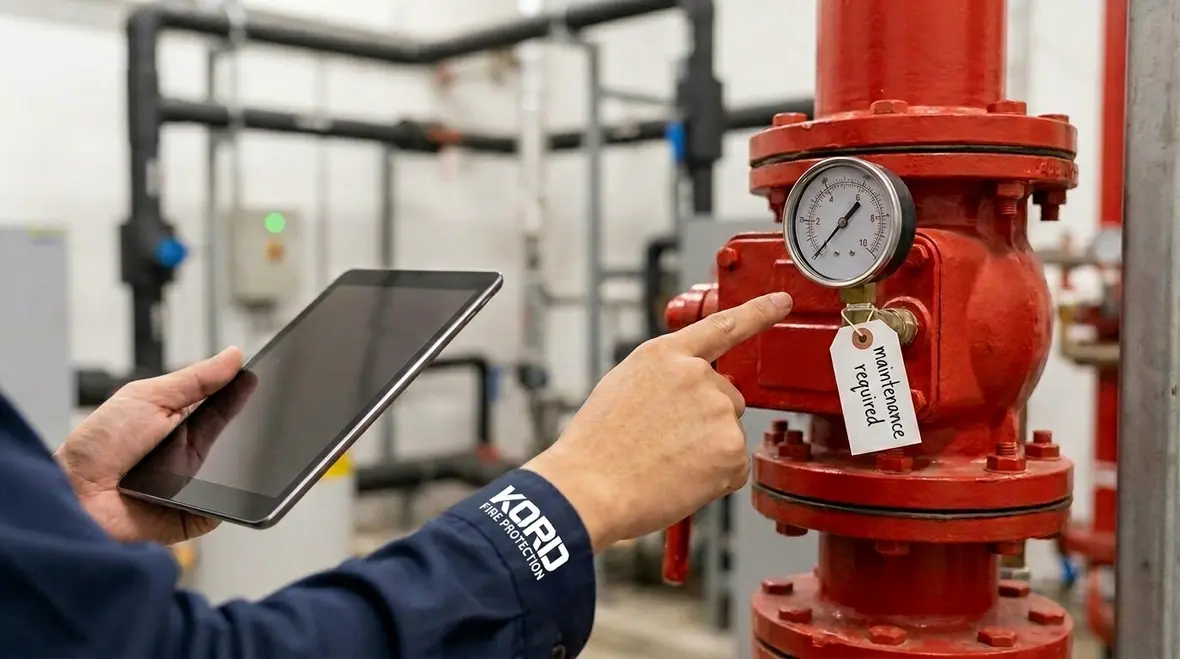
Spotting early signs of fire suppression impairment
Fire suppression impairment does not always show up as dramatic smoke and flames. In many buildings, it shows up as small mismatches between what the system should do and what it actually does. Therefore owners should train teams to notice patterns and act early. Small trouble conditions have a way of aging badly when nobody owns them. What starts as a blinking signal on a panel can eventually become a gap in readiness, and that gap is exactly what building owners cannot afford.
Common warning signs teams should not ignore
- Recurring trouble signals on the fire panel or monitoring device
- Low or fluctuating pressure in the suppression or detection components
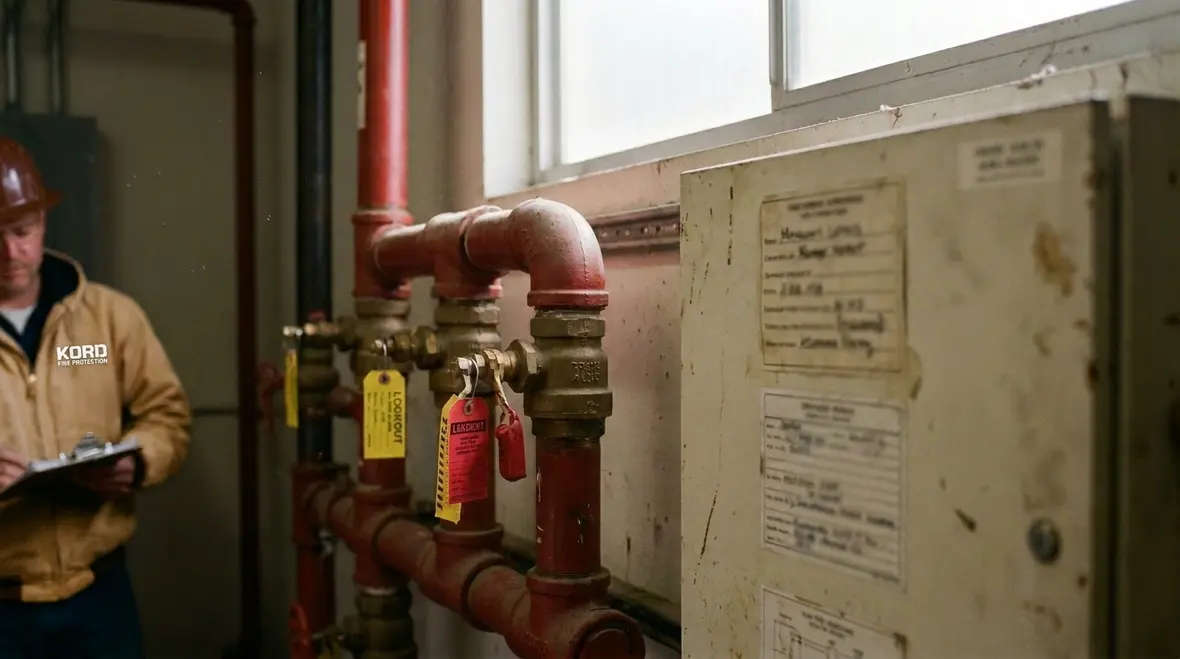
- Supervisory switches that indicate tamper, open, or off normal positions
- Missing inspection tags or outdated test records
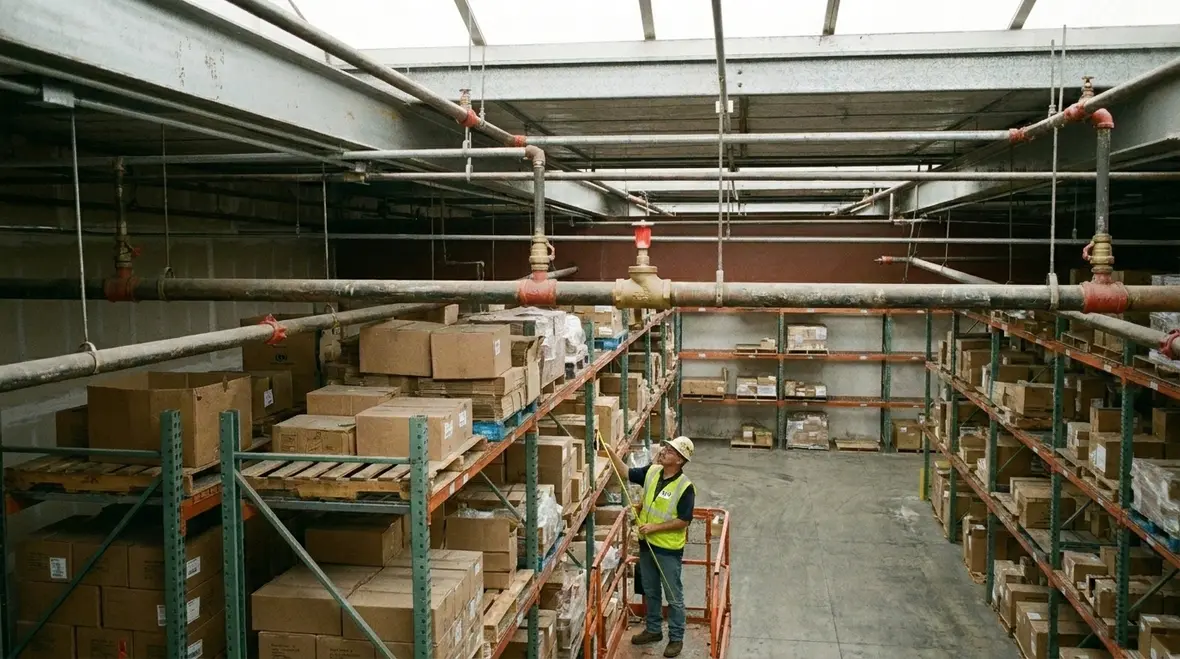
- Changes in layout such as new walls, storage racks, or ceiling modifications that block coverage
Also, if the building team recently moved equipment, renovated a room, or changed how a space gets used, that matters. Even a “temporary” change can create a permanent risk if it impacts nozzles, detection pathways, or access clearances. And yes, paint overspray and dust do not help either. They never do.
How owners should track impairments without losing their minds
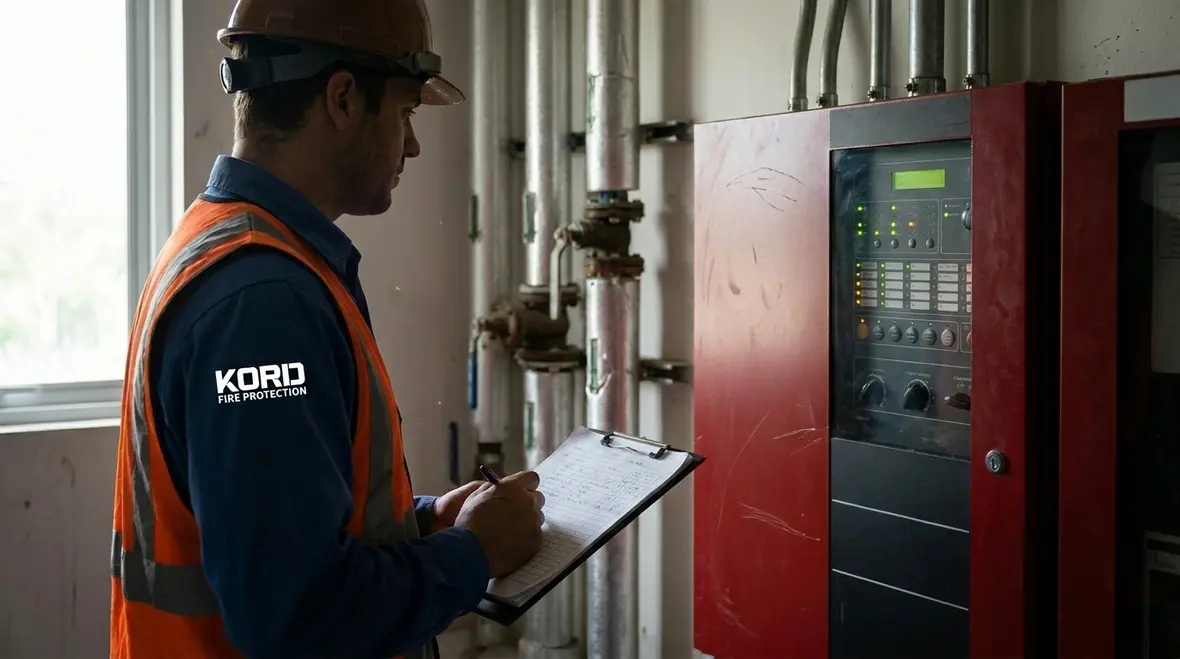
Owners often feel stuck between safety rules and daily operations. However, a simple tracking process can prevent surprises. First, they should require clear, written results from every inspection and service visit. Then they should store those records where the right person can find them fast. If information lives in three inboxes, one truck folder, and somebody’s memory, it is not a system. It is a scavenger hunt.
A practical process that keeps the paper trail useful
- Create a system map that lists each suppression zone, device, and control panel
- Set inspection intervals based on the system type and local requirements
- Track “impairment events” with dates, findings, and corrective actions
- Assign an owner rep who approves repairs and verifies completion
- Use a single folder for inspection reports, diagrams, and maintenance logs
Next, owners should require that each service report explains what changed. If a technician replaces a part, they should note the part, serial number if available, and why it was needed. Additionally, the report should state whether the system returned to normal and how it was verified. Nobody wants a file that says, “All good,” like that is a magic spell.
A stronger tracking routine also helps leadership make faster decisions. When owners can see repeat deficiencies, delayed repairs, and areas that keep drifting out of normal, they can budget intelligently instead of reacting in a panic. That means fewer emergency calls, fewer confused phone trees, and a much better chance of keeping the system ready when it counts.
If your team also manages alarms and related readiness issues, Kord’s La Puente Fire Alarm Inspection Guide is a useful companion piece because it shows how detailed inspection reporting should connect to real action on site. Kord also explains in What Is Fire Alarm Monitoring and How It Works why signal oversight matters when conditions shift between service visits. ([kordfire.com](https://kordfire.com/la-puente-fire-alarm-inspection-guide/?utm_source=openai))
What usually causes impairment and why it matters
Fire suppression impairment often comes from predictable issues. Over time, systems face wear, environmental exposure, and human error. Therefore, owners should focus on the most common root causes and fix them before they escalate. There is nothing especially glamorous about a sticky valve, dirty detector, or damaged connection, but those ordinary failures are exactly how reliability erodes in the real world.
Typical causes owners see again and again
- Valve position issues caused by maintenance activity, incorrect hand positions, or leaks
- Mechanical obstructions such as storage placed too close to nozzles
- Detector problems from dust, corrosion, age, or misalignment
- Inaccurate pressure readings from faulty gauges, blocked ports, or calibration needs
- Damaged wiring or connections due to construction, pests, or poor routing
When impairment happens, the real threat is not just that a device breaks. The threat is that the system might not discharge when it should, or it might discharge when it should not. And either outcome costs money, disrupts operations, and increases risk to people inside the building. Fire protection is not a “set it and forget it” product. It behaves like equipment that must stay ready, every day.
Owners should also remember that impairments stack. A minor obstruction, a delayed repair, and a vague service note may each look manageable on their own. Together, they can create a system that appears available on paper while drifting away from actual readiness. That is the kind of risk that sneaks up quietly and then invoices loudly.
Service jobs: the steps that separate checks from true readiness
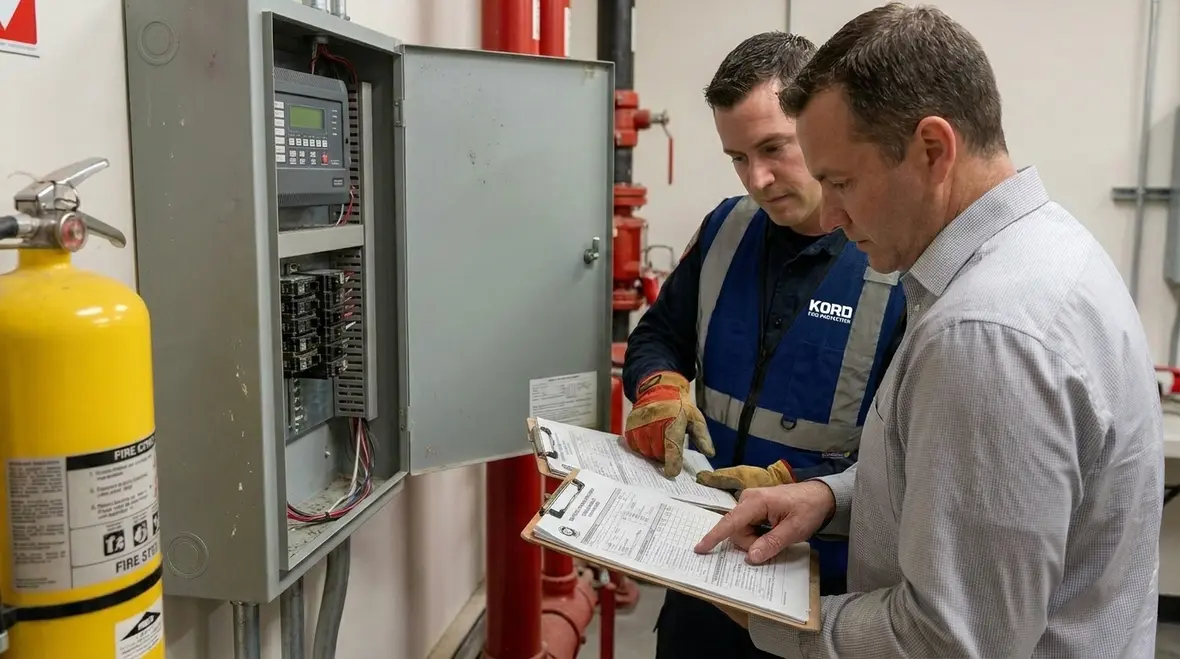
Some inspections look busy but do not confirm readiness. A strong service job should include both field verification and documentation that matches what is installed on site. Consequently, owners should ask for a clear method, not vague promises. A clipboard is not a strategy, and a quick nod near the panel is not proof that the system is prepared to perform under stress.
What a quality service visit should typically include
- Inspect actuators, valves, and connected equipment for condition and correct positions
- Verify detection and monitoring behavior so trouble signals reflect real device status
- Check supervision circuits and confirm they restore to normal after testing
- Review obstruction risks in each protected area
- Confirm access and clearance for maintenance and discharge components
- Document findings and corrective actions with dates and measurable results
Then, after repairs, owners should confirm the system is restored and tested properly. In other words, the work should end with verification, not just a handshake. If the system returns to normal, the records should prove it. If not, the owner should receive a clear path, including timelines and next steps. The goal is to keep impairment from becoming a recurring episode on the “things to fix later” list. That list never gets shorter, does it?
This is also where a broader partner matters. Kord’s full service overview highlights inspection, testing, repairs, and readiness support across sprinklers, alarms, and extinguishers, which is exactly the kind of continuity owners need when a single issue affects more than one life safety system. ([kordfire.com](https://kordfire.com/full-fire-protection-services/?utm_source=openai))
How Kord Fire Protection supports owners on impairment prevention
Fire suppression systems require steady attention, and owners need more than a one time visit. That is where Kord Fire Protection can become a vital partner with this service job. Instead of treating each call as an isolated event, Kord helps teams build continuity between inspections, corrections, and operational changes.
For owners, that matters because buildings evolve. Tenants remodel, storage patterns change, and maintenance workflows shift. Therefore, Kord focuses on keeping suppression systems aligned with real site conditions. They also help owners understand what the results mean in business terms: readiness, risk reduction, and compliance support.
Where Kord’s value tends to show up most clearly
- Clear reporting that translates test results into action items
- Impairment focused follow through to reduce repeat issues
- System awareness across service visits so history matters
- Coordination support when site changes impact coverage or access
- Owner friendly communication so decisions stay timely
And if the owner has ever tried to interpret a technical report at 11:00 p.m., staring at it like it is a foreign language, then you already know why this partnership helps. Kord brings clarity, structure, and a steady hand so fire suppression impairment does not get to linger in the shadows like a villain with no deadline.
Kord also presents its suppression capabilities as part of a broader fire protection offering that includes restaurant, clean agent, CO2, kitchen hood, dry chemical, foam, and vehicle suppression related work, giving owners a partner that understands how different suppression environments can create different readiness concerns. ([kordfire.com](https://kordfire.com/about-fire-protection/?utm_source=openai))
Fire suppression impairment FAQ for building owners
Featured snippet answers: quick guidance
- How can owners reduce fire suppression impairment? Maintain inspection schedules, remove obstructions, document findings, and verify repairs are completed and tested.
- Does renovation cause impairment? Yes. Layout changes can block nozzles, affect detection, or alter access and supervision circuits.
- What documents should owners keep? Inspection reports, diagrams, test records, repair work orders, and any final verification notes.
- Can a “temporary” storage change be a problem? Absolutely. If it reduces coverage or blocks access, it can create an impairment scenario.
- Why partner with a protection company? A specialist helps owners stay consistent across time, interpret results, and follow through on corrections.
Conclusion and call to action
Fire suppression impairment can start small and grow into a serious risk, especially when inspections slip or site changes get ignored. Owners can protect themselves by tracking impairments clearly, demanding verification after repairs, and removing coverage barriers early. The best prevention programs are not dramatic. They are consistent, documented, and boring in the most beautiful way possible.
If you want a calm, consistent partner for this service job, Kord Fire Protection can help ensure systems stay ready for the moment that matters. Explore Kord’s full fire protection services to connect inspection, maintenance, and readiness support in one place, then schedule a review or request a current condition check that matches how your site is really being used. ([kordfire.com](https://kordfire.com/full-fire-protection-services/?utm_source=openai))

Join Our Newsletter!
Get the latest fire safety tips delivered straight to your inbox From our Newsletter.



