
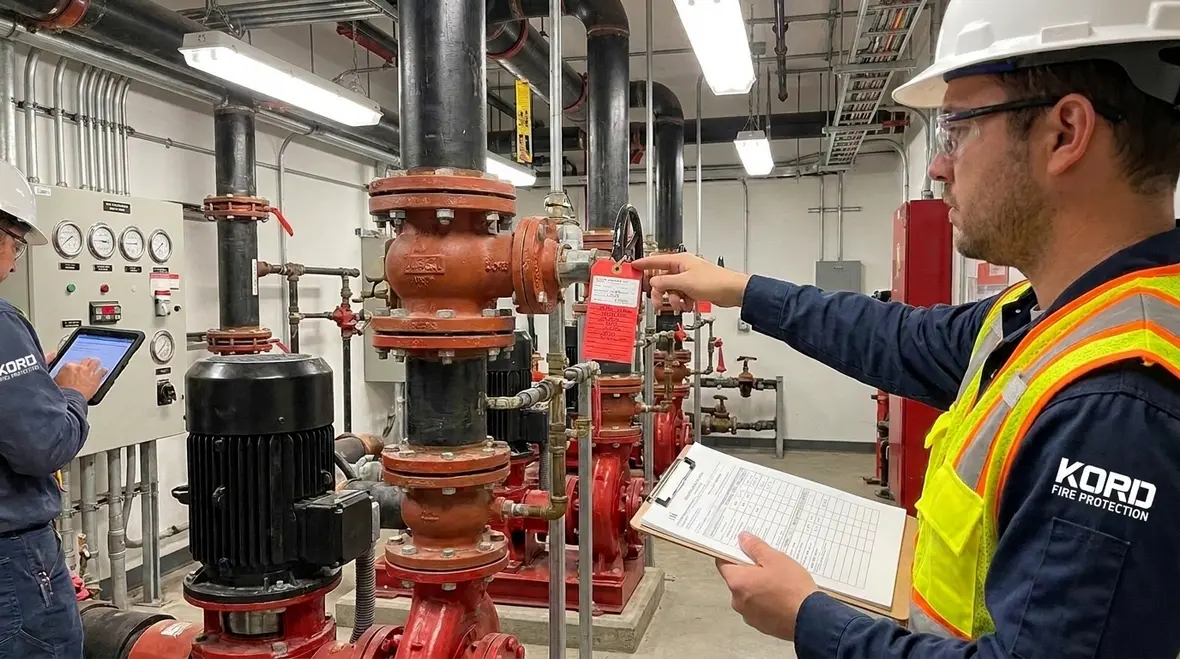
NFPA 25C Chapter 15: Complete Fire System Impairment Management Guide
Quick Answer: NFPA 25C Chapter 15 fire system impairment management procedures define how facilities identify, approve, and control impairments to sprinkler, standpipe, and other water based systems. The process includes risk awareness, formal notification, safe work coordination, documentation, and restoring protection back to full service.
For facilities planning shutdowns, repairs, or testing, it also helps to understand how this work connects to actual fire sprinkler service and repair support so impairment controls are not treated like a side quest with paperwork.
What NFPA 25C Chapter 15 Impairment Management Is Really About
Impairment management in NFPA 25C is not a paperwork exercise. It is a structured operational method to ensure a facility does not unknowingly operate with reduced or non functional fire protection. Chapter 15 focuses on controlling conditions where a fire protection system is partially or fully out of service, such as during repairs, testing, modifications, construction work, or component replacement.
Commercial facilities face real-world pressure during shutdowns and active maintenance windows. While contractors may be focused on completing work quickly, facility leadership must manage life safety risk across the entire building. This is why NFPA 25C impairment management procedures emphasize authorization, coordination, compensating measures, and return to service. For many owners, the compliance challenge becomes aligning maintenance schedules, permit controls, and site safety operations with the continuity of fire protection.
For facilities that also need to understand the underlying system installation and maintenance scope, Kord Fire Protection provides helpful context on related code requirements and system behavior: NFPA 13 overview and automatic fire sprinkler system installation.
Step by Step: NFPA 25C Chapter 15 Fire System Impairment Management Procedures
NFPA 25C Chapter 15 establishes a practical sequence that facilities can standardize. While exact implementation details vary by jurisdiction and site policies, the operational logic remains consistent: detect the impairment, evaluate risk, authorize the condition, add safeguards, control access and work, and restore service with verification.
1) Identify and classify the impairment
Systems may be impaired because a valve is closed, a control device is disabled, a section of pipe is drained, a pump is taken out, or a monitoring function is suspended. Impairments can be full or partial. The facility must identify what is out of service, where it is affected, and what time the condition will last.
Common commercial failure points include vague impairment descriptions, missing location details, and unclear duration estimates. If the facility cannot answer “which floors, which zones, which devices” the risk review becomes unreliable and approvals slow down.
2) Notify and obtain authorization before work starts
Before any impairment begins, the responsible authority should approve the impairment based on established site procedures. Chapter 15 requires the facility to ensure proper coordination between facility operations, the fire protection contractor, and any supervising authority that controls fire alarm, monitoring, and emergency response.
In retail and industrial settings, a frequent obstacle occurs when maintenance work is planned through generic work orders without linking to fire system status. Effective impairment control requires a defined “fire impairment trigger” in the work planning process, so the system status is known before the first lockout is applied.
3) Perform a risk review and implement compensating measures
Compensating measures may include increased fire watch coverage, additional patrols of at risk areas, hot work controls, temporary detection or monitoring adjustments, and operational changes that reduce ignition sources or delay factors. The purpose is not to replace the fire protection system, but to reduce the probability of fire and improve the likelihood of early detection and response while the system is impaired.
Risk review must consider occupancy type, open hazards, construction activity, severity of impairment, time of day, and whether water supply or detection functions are also impacted. Kord Fire Protection commonly helps facilities translate these variables into actionable on site controls, especially for maintenance windows that overlap with peak operating hours.
4) Coordinate with water based system maintenance and testing
Water based systems often require controlled testing steps, such as draining, flow testing, valve manipulation, and pump verification. During these actions, impairment management procedures should already cover how long each test step will cause reduced capability and how notification will occur.
Facilities that want a maintenance focused breakdown of complete water based systems can reference: NFPA 25 overview for complete water based fire protection system maintenance breakdown.
5) Control access, maintain documentation, and manage continuity
Impairment controls should include clear labeling of the impaired condition, restricted access to affected valves or control panels, and controlled handoff between the contractor and facility representative. Documentation should capture what was impaired, the authorization details, the compensating measures in place, and the exact return to service steps.
In practice, the most common compliance breakdown occurs during transition. The system may be “mostly restored” but a valve position is left incorrect, a pump supervisory signal remains altered, or a test mode is not cleared. Chapter 15 expectations require the facility to treat restoration as a verified return to full service, not a visual assumption.
6) Restore service and verify operation before closure
After the work completes, NFPA 25C impairment management procedures require verification that the system is back to normal operating conditions. This includes confirming valve positions, restoring power or control functions, clearing supervisory conditions, and ensuring monitoring functions are operating as intended.
Verification should align with the specific system component affected. For example, after pump related work, the facility should confirm pump status, supervisory indications, and correct controller behavior. When impairment touched sprinkler sections, return to normal water supply conditions must be verified for all affected areas.
How Chapter 15 Applies to Commercial Sprinkler, Water Supply, Standpipe, and Related Systems
Chapter 15 impairment management applies broadly, but most facility teams feel the impact through sprinkler system service work and water supply maintenance. A robust impairment program treats each water based component as a potential risk multiplier when taken out of service.
Automatic sprinkler systems and affected building zones
When a sprinkler control valve is closed, a riser is isolated, or a section is drained for piping work, the impairment may affect a portion of the building. Even when only one floor is impacted, the risk review should consider whether the remaining system provides equivalent coverage and whether the work introduces ignition hazards.
Many commercial owners also ask how impairment interfaces with local code expectations. If the facility operates in California, technical requirements can be layered with local adoption details. Kord Fire Protection provides background via: Fire sprinkler code California explained.
Pumps, tanks, and water supply impairment considerations
Fire pumps represent critical capability. Pump testing, controller adjustments, and flow or pressure checks can create temporary impairments. Chapter 15 expects facilities to account for how quickly the system returns to readiness and whether supervisory signals remain reliable during the work.
Facilities that rely on pumping infrastructure frequently also benefit from industry technical resources focused on pump systems and reliability strategies. For example, Fire Pumps resources can support operational understanding, especially when aligning maintenance practices with expected system performance.
Valves, sectionalization, and the trap of “partial restoration”
Water based systems are often sectionalized to limit downtime. That improves maintenance practicality, but it can create a compliance trap if valve positions or supervisory indications are not restored precisely. NFPA 25C impairment management procedures should require a structured return to service checklist that matches the impairment scope.
Contractors and facilities typically reduce this risk when they standardize valve tagging, use camera verified valve positions when appropriate, and require supervisory signal verification as part of closure.
Integration with fire alarm and monitoring operations
Impairment events frequently involve supervisory signals for pumps, water flow detection, tamper switches, and control panel states. The facility should ensure that the monitoring and notification path remains accurate during the impaired condition. If monitoring is adjusted, compensating measures and authorization must reflect the monitoring change.
Common Compliance Gaps During Impairment Events (and How to Fix Them)
Even well intentioned teams can struggle with impairment management. Chapter 15 expectations are stringent enough that small process failures can lead to noncompliance findings, delayed approvals, or unsafe conditions. The following gaps appear repeatedly in commercial, industrial, and retail environments.
Missing clarity on what is impaired and where
Problem: Work orders describe “sprinkler repair” without identifying affected risers, valves, or zones. Reviewers cannot evaluate risk properly.
Fix: Require a scope field in every impairment permit that references affected areas, system components, and isolation points.
Uncontrolled duration creep
Problem: The permit is issued with an estimated time, then the work extends, sometimes without an update to the authorized authority.
Fix: Establish a clock driven reauthorization step. If duration changes beyond the threshold in the site procedure, the facility repeats risk review and updates compensating measures.
Compensating measures that do not match the risk
Problem: Fire watch is assigned without defining patrol locations, frequency, documentation requirements, or escalation triggers.
Fix: Define patrol routes, triggers for calling emergency services, and required documentation. For hot work areas, align with hot work permits and ignition source controls.
Return to service treated as a single action
Problem: The contractor “opens the valve” and the permit closes, but supervisory conditions, controller modes, or related monitoring remain altered.
Fix: Use a closure verification checklist that includes supervisory indication confirmation, valve position verification, and functional confirmation for the affected components.
Coordination breakdown between building operations and contractors
Problem: Facility staff do not receive timely status updates during transitions, causing confusion during the shift change or when multiple trades are active.
Fix: Schedule impairment briefings at shift boundaries and include contractor reps in the communication chain. Kord Fire Protection often supports these workflows to keep operations aligned with life safety requirements.
Building an Impairment Program That Survives Real Operations
NFPA 25C Chapter 15 works best when a facility treats impairment management as a repeatable operational system. The goal is to reduce uncertainty, increase accountability, and protect life safety during necessary maintenance and construction.
Standardize forms, checklists, and authorization roles
Facilities should maintain a documented impairment permit process with defined roles for authorization, risk review, compensating measure approvals, and return to service verification. The process should require minimum information every time, including the specific scope and the verification steps on closure.
Link impairment permits to maintenance management workflows
Impairments must be scheduled and controlled from the earliest planning stages. When building teams plan work without tying it to fire system status, the facility often faces last minute approvals or rushed compensating measures.
Kord Fire Protection frequently supports clients with process alignment for water based systems, including how impairment events relate to routine inspection, testing, and maintenance cycles. Understanding the maintenance structure helps teams avoid conflicts and improve readiness.
Train teams and test the process
Training should cover how impairments start, how they are communicated, how compensating measures are executed, and how restoration is verified. Facilities benefit from periodic drills using realistic scenarios, such as valve closures during piping work or pump controller interventions.
Use a qualified service partner for verification and documentation
Commercial facilities often need consistent, documented compliance support across many impairment events each year. Partnering with a qualified fire protection provider improves reliability of restoration verification, reduces closure errors, and strengthens audit readiness.
Kord Fire Protection positions itself as a practical compliance partner for ongoing testing, maintenance, and impairment verification support, with the documentation detail that commercial stakeholders expect.
Frequently Asked Questions
Conclusion and Call to Action
NFPA 25C Chapter 15 fire system impairment management procedures help commercial, industrial, and retail facilities control life safety risk during necessary maintenance and testing. The difference between compliance and a noncompliance finding usually comes down to scope clarity, authorization control, properly matched compensating measures, and verified return to service. Kord Fire Protection can support impairment planning, testing coordination, documentation quality, and broader full fire protection services when facilities want one partner for ongoing readiness. Schedule a compliance review now so the next impairment event follows a proven process from permit to closure.

Join Our Newsletter!
Get the latest fire safety tips delivered straight to your inbox From our Newsletter.


