NFPA 25 Fire Protection System Impairment Procedures
Quick Answer
NFPA 25 §§ 15.1 to 15.7 guide how a fire protection system impairment should be planned, tagged, watched, and restored. In plain terms, the rules help facilities stay safe while work is underway. Kord Fire Protection can support this process by helping with planning, coordination, testing, and clean restoration.
In busy industrial, retail, and commercial sites across Australia, fire protection work must move with care. The NFPA 25 fire protection system impairment procedures set the path for safe shutdowns, clear tagging, close watch, and proper return to service. That matters because even a short outage can leave a site exposed. And no one wants a sprinkler system acting like it called in sick on a Monday.
This guide explains the core steps in NFPA 25 §§ 15.1 to 15.7, with a practical view for facilities teams, contractors, and site leaders. If your site needs broader support beyond one isolated shutdown, Kord Fire Protection’s full fire protection services can fit naturally into an ongoing compliance and maintenance plan. It also shows where Kord Fire Protection can become a vital partner in the job.
What NFPA 25 Means for Impairment Planning

NFPA 25 treats impairment as any condition that limits a fire protection system’s ability to do its job. That may include repairs, inspections, pipe replacement, valve work, alarm issues, or full system shutdowns. The standard pushes teams to plan before work starts, not after the system has already gone quiet.
Good planning reduces risk. It also keeps the site in control. First, the team should define the scope of the work. Then it should decide which zones, valves, pumps, or alarms will be affected. After that, it should set a time window, assign people, and decide what fire watch or temporary protection is needed.
Why planning matters
It helps avoid surprise outages. It also protects people, stock, equipment, and operations. In a large warehouse or retail centre, that difference can be huge. One missed valve can turn a routine repair into a full drama, and nobody wants that sequel.
Strong planning also creates a cleaner handoff between facilities staff, contractors, operations leaders, and emergency contacts. Everyone knows what will be touched, what stays protected, what gets shut down, and what safeguards are active while the work is underway. That kind of clarity tends to prevent the classic site problem where three people think someone else handled the critical step.
For teams that want the bigger maintenance picture, Kord Fire Protection’s NFPA 25 overview for water-based fire protection systems gives helpful context on how impairment procedures fit into the broader inspection, testing, and maintenance framework.
How Tagging and Notifications Keep Control

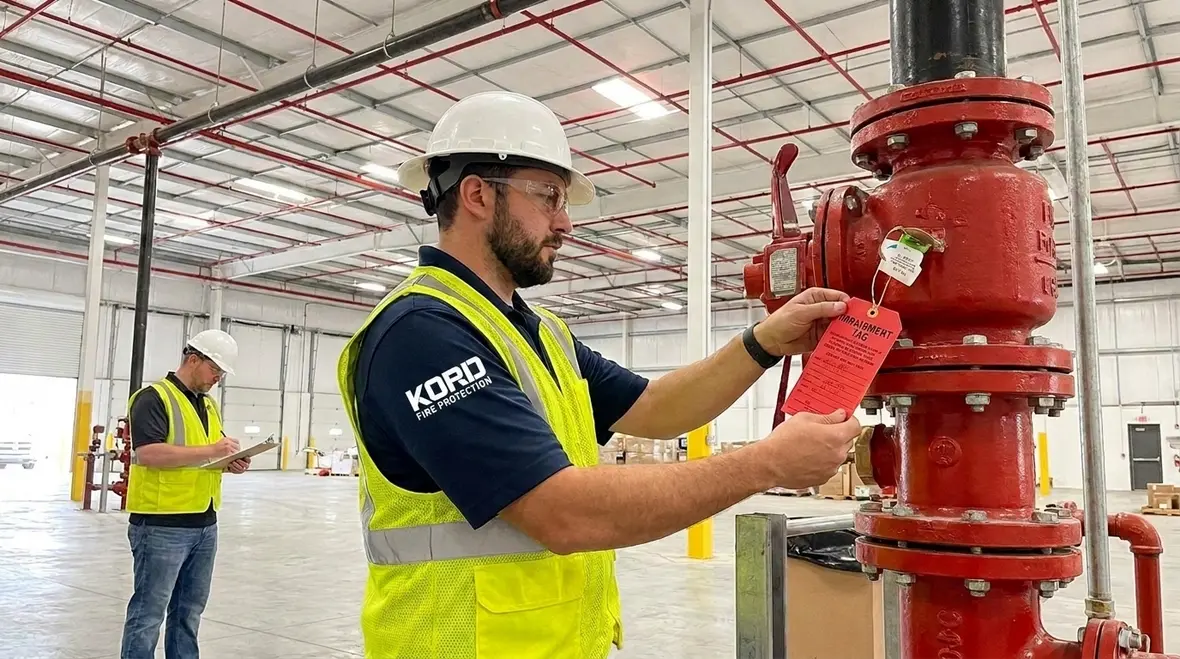
Once an impairment begins, NFPA 25 calls for clear tagging and notice. The system or component must be identified so everyone on site knows what is out of service. The tag should show the date, time, reason, and who is responsible. Just as important, the right people must be told. That usually includes facility managers, security, insurers, contractors, and anyone tied to emergency response.
Here, the rule is simple. If people cannot see the problem, they may assume the protection still works. That is a risky guess. Clear tags and fast communication stop that confusion. They also help teams answer the question every compliance officer asks sooner or later: “What is offline, who approved it, and when does it come back?”
Planning side
Define the work, assess the risk, and set protection steps before shutdown.
Field side
Tag the affected equipment, notify the right people, and keep the site informed until restoration is complete.
Tagging works best when it is paired with disciplined notification. A tag on a valve matters, but so does a message to the shift supervisor, the building manager, security staff, and any contractor working nearby. The safest sites do not rely on a single label or one casual verbal mention. They layer communication so the chance of misunderstanding drops fast.
This is especially important in larger commercial and industrial properties where one impairment can affect multiple zones, tenants, or operational teams. In those environments, a short service interruption can ripple outward in ways that are annoying at best and dangerous at worst. Good notice keeps the site from learning about an outage the hard way.
Fire Watch and Temporary Protection During Shutdown

When a fire protection system is impaired, the site may need a fire watch or other temporary safeguards. NFPA 25 expects the risk to stay controlled until the system returns to service. The exact response depends on the size of the impairment, the hazard in the area, and the time the system will remain offline.
A fire watch is not just someone wandering around with a clipboard and a heroic attitude. It is a planned safeguard with clear duties. The watch should know the site layout, reporting steps, and emergency contacts. In some cases, extra extinguishers, isolation of hot work, or changes to operations may also be needed.
What a solid temporary protection plan should include
- Defined patrol areas and frequencies
- Clear escalation and emergency reporting steps
- Access to extinguishers or temporary suppression support where appropriate
- Coordination with operations to reduce ignition risks during the outage
- Documentation showing who is covering the watch and for how long
For industrial and commercial sites, this step is often where good service partners prove their worth. A skilled contractor helps match the level of protection to the level of risk. That keeps the site compliant without turning the whole operation upside down.
Temporary protection measures also buy time for the site to work sensibly instead of rushing through restoration. That matters because hurried restarts can create their own problems, especially when valves, alarms, pumps, and monitoring links all need to line up properly again. Calm, controlled protection is always better than crossed fingers and optimistic shrugging.
Why Restoration Must Be Verified
Restoration is not complete just because the work crew has packed up and gone home. NFPA 25 expects the system to be returned to full service with care and proof. The team should remove tags only after the system is ready. Then it should confirm valves are open, pumps are set, alarms are active, and any test results show normal operation.
After that, the site should close the loop. The right people must get final notice that the impairment has ended. Records should show what was done, how long the system was offline, and what actions restored it. This paperwork may sound dull, yet it can save a business from major grief later. Bureaucracy, for once, earns its keep.
Verification steps worth treating seriously
- Confirm every affected valve is back in the correct position
- Verify fire pumps, alarms, and monitoring signals are active again
- Complete any required testing before normal operations resume
- Remove impairment tags only after the system is truly back in service
- Send final notice and close the documentation loop
This verification stage is where disciplined teams stand apart. A clean restart protects more than code compliance. It protects confidence. Operations staff can get back to work knowing the system is actually ready, not merely assumed to be ready because the van pulled away and the paperwork looked busy.
How Kord Fire Protection Supports Compliant Impairment Work
Kord Fire Protection can play a vital role from start to finish. They can help plan the outage, assess risk, prepare notice, manage tagging, and support testing before return to service. Just as importantly, they can help facilities coordinate with operations so work happens with less disruption and fewer surprises.
For Australian industrial, retail, and commercial sites, that support matters. Sites often run long hours, hold high value goods, and manage complex layouts. A partner like Kord Fire Protection brings practical know how that keeps the process tight, safe, and documented. In other words, they help the system behave like a professional, not an improv actor.
That practical support also fits neatly into Kord Fire Protection’s broader approach to fire protection compliance and readiness in Australia, where documentation, coordinated service, and operational awareness all work together instead of competing for attention.
What Facilities Should Keep in Their Impairment Procedure
Every site should keep a clear internal process for impairment events. That process should cover approval, risk review, tags, notice, fire watch, testing, and restoration. It should also name who can shut down equipment, who can restart it, and who signs off on closure.
Use this checklist as a starting point
- Confirm the reason for the impairment.
- Assess the fire risk in the affected area.
- Notify all required site contacts.
- Tag the system or component clearly.
- Set fire watch or temporary protection if needed.
- Test and verify restoration before return to service.
- Record the event and keep the file complete.
A written process should be easy to find, easy to follow, and specific enough that the site does not invent procedures under pressure. That means clear approvals, defined responsibilities, named contacts, and practical records. If the plan only makes sense after three meetings and a whiteboard session, it probably needs work.
The best impairment procedure is the one that people actually use when the day gets busy. Simple language, strong steps, and consistent records beat a beautiful policy document that spends its whole life unread in a folder.
Conclusion
NFPA 25 fire protection system impairment procedures protect people, property, and operations when a system goes offline. For facilities that want fewer delays and cleaner compliance, the right partner matters. Kord Fire Protection can help manage the process from first notice to final restart.
For industrial, retail, and commercial sites across Australia, that support is not just useful. It is smart business. A well managed impairment keeps risk controlled, communication clear, and restoration dependable, which is exactly what facilities need when protection systems temporarily step off the stage.
FAQ

Join Our Newsletter!
Get the latest fire safety tips delivered straight to your inbox From our Newsletter.