NFPA 12 Section 9.1: Marine CO2 System Special Definitions
NFPA 12 Section 9.1 Marine CO2 System Special Definitions
Quick Answer: NFPA 12 marine CO2 definitions define shipboard terms and criteria that guide design, actuation, discharge, and maintenance of carbon dioxide systems. Understanding these special definitions ensures compliant installation, reliable operation, and safe maintenance in commercial vessels and facilities serving marine fire protection.
For operators planning service, installation, or long-term support, marine fire suppression services from Kord Fire Protection fit naturally into this discussion because they address the shipboard realities that make these definitions matter in the first place.
Context and Scope of Section 9.1
Section 9.1 within NFPA 12 focuses on marine specific terminology used throughout the standard. The marine CO2 definitions clarify how terms are interpreted in shipboard environments, where space constraints, crew safety, and access challenges differ from fixed facilities. For commercial facilities that operate fleets or support marine installations, aligning with these definitions reduces ambiguity during design reviews, inspections, and regulatory audits. Practitioners should treat these definitions as a foundation for all subsequent design and maintenance activities.
Key Terms in NFPA 12 Marine CO2 Definitions
- Space to be Protected refers to the specific compartments or rooms designated to receive CO2 protection. In marine contexts this may include machinery spaces, cargo holds, engine rooms, and other enclosed volumes with defined volumes and occupancy patterns.
- Design Concentration is the target amount of CO2 required to achieve the intended fire suppression in a protected space without compromising crew safety during controlled discharge operations.
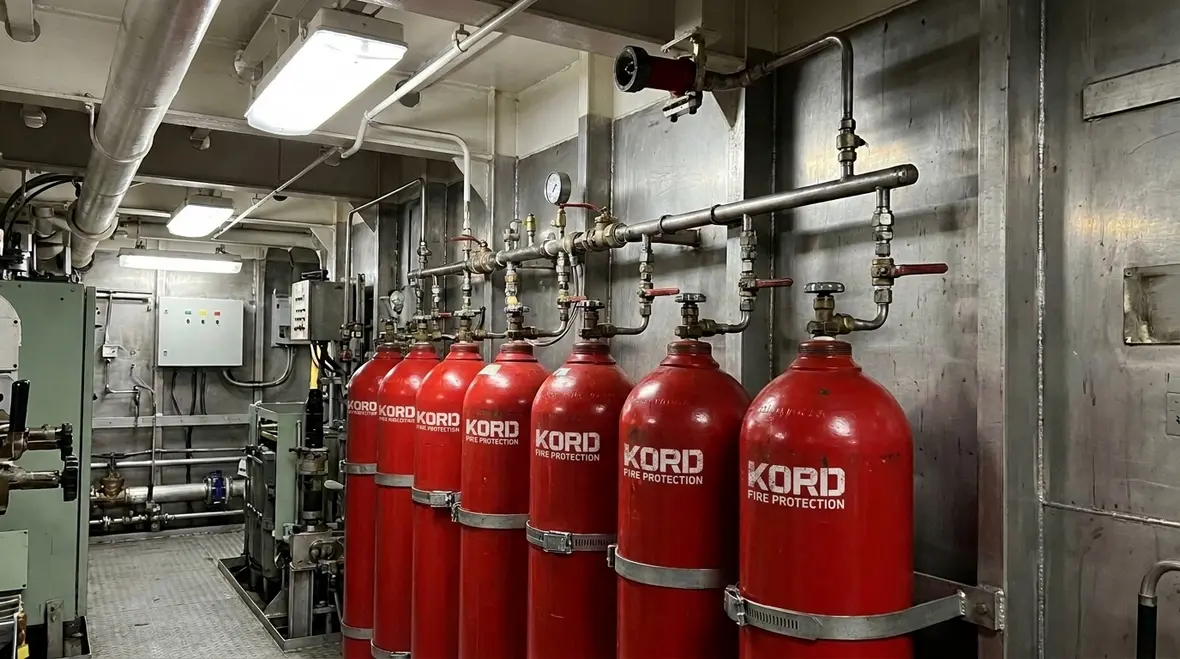
- Discharge Means encompasses the hardware and pathways that release CO2 into a protected space, including agent cylinders, control valves, piping networks, and discharge nozzles that meet marine installation constraints.
- Initiation and Actuation definitions cover how a fire detection or manual trigger initiates a CO2 release. In marine systems actuation sequences must consider crew ingress, safe supervision, and system redundancy.
- Space Integrity and Ventilation terms describe how compartment sealing, doors, and ventilation impacts carbon dioxide dispersion and the required clearance for safe re entry after a discharge event.
These terms knit together to form a coherent framework for marine CO2 system design and testing. In NFPA 12 marine CO2 definitions, the emphasis is on ensuring that a vessel can be protected while allowing safe crew operation and timely maintenance access in constrained maritime spaces.
Design and Commissioning Implications
When translating NFPA 12 marine CO2 definitions into practice, engineers must map each term to a concrete specification. The space to be protected dictates cylinder sizing, discharge density, and the location of control panels. Design concentration considerations must balance effective fire suppression with acceptable exposure limits for crew members and essential equipment. Initiation and actuation sequencing requires redundancy and clear operator instructions that align with vessel procedures. Commissioning should verify that discharge means perform as intended under realistic cabin pressure, temperature, and movement conditions typical of marine environments.
Teams that want a broader practical reference can also review machinery space CO2 suppression design and service, which connects shipboard hazard planning to real installation and maintenance decisions.
Inspection, Testing and Maintenance Considerations
Regular inspections verify that the definitions remain meaningful in operation. Tests should confirm that sensors, valves, and actuators respond within the required timeframes and that protective spaces maintain their integrity under expected marine loads. Cylinder hydrostatic tests, valve torque checks, and piping integrity evaluations help prevent leakage that could skew actual dispersion and design concentration outcomes. Documentation should show compliance with the marine specific interpretations of space to be protected, design concentrations, and discharge pathways as defined in NFPA 12 marine CO2 definitions.
Compliance Challenges in Commercial Facilities
Commercial facilities that support maritime operations face unique challenges when integrating NFPA 12 marine CO2 definitions. Tight vessel berths, restricted access to engine rooms, and frequent crew turnover require clear procedures for testing, recharging, and post discharge restoration. Contractors must maintain accurate records that reflect sector specific terminology, such as space boundaries and confinement expectations in shipboard contexts. Regular coordination with port authorities, ship owners, and maintenance teams is essential to maintain alignment with NFPA 12 marine CO2 definitions and to avoid gaps during audits.
If you are cross-checking this topic against broader code guidance, the NFPA 12 compliance guide for carbon dioxide extinguishing systems is a useful companion resource.
Role of Kord Fire Protection as a Compliance Partner
Kord Fire Protection specializes in marine and commercial fire safety systems. By interpreting NFPA 12 marine CO2 definitions for practical installation, testing, and ongoing maintenance, Kord helps facilities stay within code requirements while minimizing downtime. Their services cover system design validation against the marine definitions, intelligent actuation schemes, thorough commissioning, and routine performance testing. Engaging Kord ensures that a commercial facility or fleet operator maintains robust documentation, reduces risk exposure, and achieves reliable fire protection in line with NFPA 12 marine CO2 definitions.
Frequently Asked Questions
Conclusion and next steps: For commercial facilities that rely on marine CO2 protection or shipboard operations, adherence to NFPA 12 marine CO2 definitions is foundational. Effective compliance requires clear interpretation of terms, rigorous testing, and disciplined maintenance. To ensure ongoing compliance and reliable protection, contact Kord Fire Protection for expert assessment, design validation, and a tailored maintenance program that aligns with Section 9.1 and your fleet or facility needs.
Ready to elevate your marine CO2 fire protection program? Contact Kord Fire Protection today to schedule a specification review, commissioning, and ongoing maintenance designed around NFPA 12 marine CO2 definitions and the realities of commercial vessel operations.

Join Our Newsletter!
Get the latest fire safety tips delivered straight to your inbox From our Newsletter.