NFPA 12 Annex A: CO2 System Explanatory Material Guide
NFPA 12 CO2 explanatory material in Annex A clarifies how carbon dioxide suppression systems should be interpreted and applied in real world facilities. This guide translates that guidance into practical actions for design, installation, inspection, and ongoing maintenance within commercial, industrial, and retail environments.
If you are evaluating how this fits into your broader protection strategy, Kord Fire’s fire suppression system services page is a useful next stop for seeing how CO2 support, inspections, repairs, and ongoing service come together in the field.
For readers who want the bigger compliance picture, this companion resource on NFPA 12 compliance for carbon dioxide extinguishing systems pairs naturally with the Annex A discussion below.
Section 1: Understanding Annex A Explanatory Material
Annex A provides non normative explanatory material that helps practitioners interpret the intent of NFPA 12. It is a companion to the normative chapters and informs decisions related to risk assessment, system behavior, and acceptable design choices. For commercial facilities, this means aligning facility risk profiles with the guidance while staying compliant with local authority requirements.
What Annex A actually helps you do
- Distinguish between normative requirements and explanatory guidance to avoid over interpreting text as mandatory when it is intended as guidance.
- Use Annex A to justify design tradeoffs such as space planning, means of egress, and occupant notification during a CO2 release scenario.
- Document interpretations and decisions for future audits and maintenance planning.
Section 2: Core System Components and Mechanisms
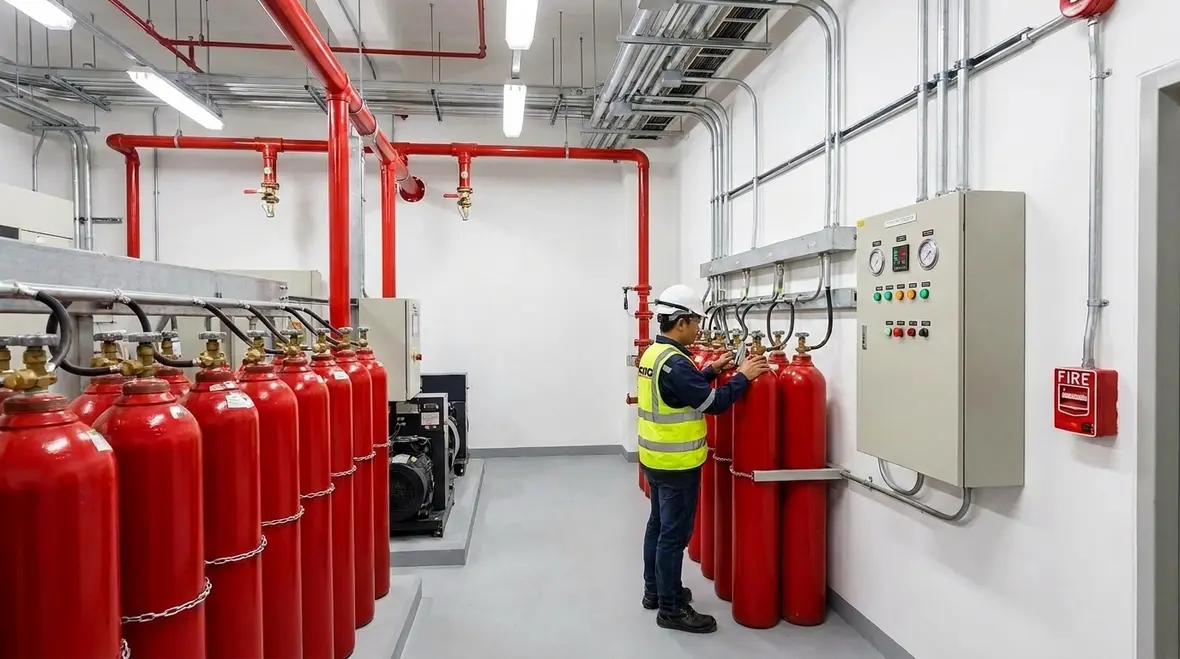
A fixed CO2 extinguishing system typically comprises high pressure gas cylinders, valve assemblies, discharge piping, release and alarm devices, and a control panel with supervisory circuits. The Annex A material helps practitioners understand how components interact during a release sequence and what constitutes acceptable performance.
The moving parts behind the release sequence
- Cylinders and manifolds store the extinguishing agent and feed the discharge network.
- Valve assemblies regulate release and must be protected from accidental tampering or environmental damage.
- Control panels coordinate alarm signaling, release sequencing, and integration with building management and fire alarm systems.
- Discharge nozzles and piping ensure uniform distribution of CO2 to the protected volumes.
Section 3: Design and Installation Considerations for Commercial Facilities
When applying Annex A guidance to commercial facilities, designers must assess occupancy, risks, and adjacency to personnel. The guidance supports balancing effective fire suppression with occupant safety, particularly in spaces with personnel present and where CO2 concentrations could impact life safety.
Design choices that need extra attention
- Perform a thorough space by space risk assessment to determine protected volumes and discharge zoning.
- Coordinate venting and egress paths so occupants can reach safe areas during testing or release events.
- Integrate detection and alarm systems to provide clear warnings and enable orderly evacuation where required.
- Prepare written procedures for authorized release, maintenance, and rare situations requiring manual intervention.
Section 4: Inspection, Testing and Maintenance Standards
Ongoing maintenance is essential for CO2 systems because leakage, valve corrosion, or valve misalignment can compromise performance. Annex A guidance supports maintaining a rigorous inspection and testing protocol that aligns with NFPA 12 and local regulatory requirements.
What a disciplined maintenance rhythm looks like
- Carry out routine visual inspections of cylinders, valves, and piping for signs of damage or corrosion.
- Test control circuits, alarms, and supervisory signals to confirm correct sequencing and notification.
- Verify that manual release devices function and are accessible to trained personnel only.
- Document all inspections, tests, and repairs to support compliance audits and maintenance planning.
Section 5: Common Failure Points and Troubleshooting
Common failure points include leaking cylinders, degraded seals, valve sticking, improper venting, and misconfigured control logic. Annex A guidance emphasizes understanding the failure modes and implementing corrective actions before incidents occur.
Where CO2 systems tend to get grumpy
- Leaks at cylinder connections or valve seats require immediate corrective action and replacement as needed.
- Valve actuation should be checked periodically to prevent delayed releases or false releases.
- Control panel diagnostics must be monitored to catch sensor or wiring faults early.
- Environmental factors such as temperature, humidity, and vibration can affect system components and should be mitigated.
Section 6: Compliance Challenges and Contractor Partnerships
Commercial facilities often face coordination challenges among owners, engineers, and contractors. Understanding the NFPA 12 CO2 explanatory material aids in documenting decisions, validating that installed systems meet intent, and ensuring reliable performances over time. Kord Fire Protection positions itself as a key partner for compliance, testing, and ongoing maintenance.
How to keep the paperwork and the hardware aligned
- Develop a written maintenance plan that aligns with Annex A explanations and local codes.
- Schedule regular training for facility staff on safety procedures and emergency response related to CO2 systems.
- Engage qualified contractors for commissioning, testing, and periodic recharge or cylinder inspection as required.
- Maintain a complete record package including plans, as built drawings, and service history to support future audits.
Section 7: Frequently Asked Questions
Conclusion and call to action: For comprehensive CO2 system evaluation, NFPA 12 compliance verification, and a proactive maintenance program, engage a trusted partner. Kord Fire Protection offers expert assessment, design refinement, commissioning, and ongoing service to keep CO2 suppression reliable, compliant, and ready. Contact Kord Fire Protection to schedule an facilities review, establish a maintenance schedule, and ensure your system meets the exacting standards of Annex A guidance.

Join Our Newsletter!
Get the latest fire safety tips delivered straight to your inbox From our Newsletter.