
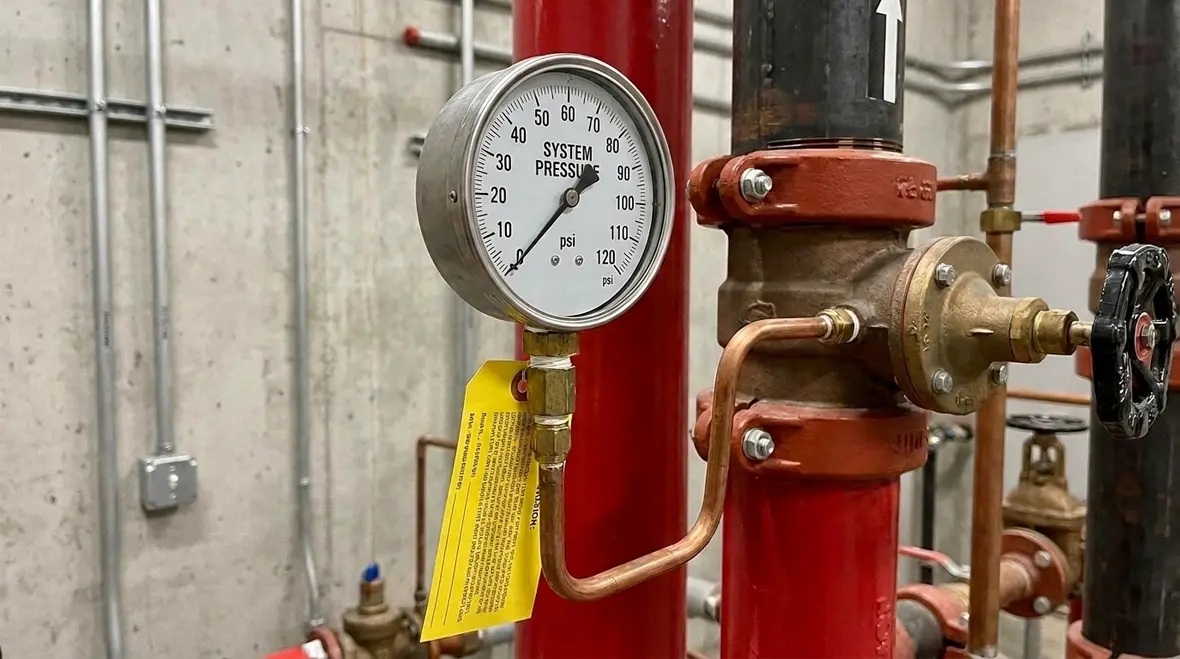
NFPA 13 Section 16.13 – Gauges for Sprinkler System Monitoring
Pressure gauges do not exactly get movie trailer treatment, but they quietly do one of the most important jobs in a sprinkler system: telling you whether the system is actually ready to perform. If you want a broader code foundation first, see this NFPA 13 overview for automatic fire sprinkler system installation. It gives useful context for how gauge requirements fit into the larger sprinkler design and installation picture.
NFPA 13 Section 16.13 Gauges for Sprinkler System Monitoring
NFPA 13 Section 16.13 requires gauges on sprinkler systems to monitor pressure and status reliably. This quick guide outlines which gauges are required, where they should be mounted, and how often they must be tested. It highlights common failures and practical steps for NFPA 13 gauges sprinkler system monitoring.
Understanding the Required Gauges under 16.13
- Pressure gauges on risers and mains: These provide immediate indications of system pressure and help verify water supply integrity during routine checks and emergencies.
- Test and drain gauges: Installed at test and drain connections to verify that the system can be exercised and emptied without compromising service.
- Remote monitoring capabilities: Some gauges offer 4 20 mA outputs or networked readouts for building management systems, enabling centralized monitoring.
- Labeling and service designation: Every gauge should be clearly labeled with service, range, and tolerance information for quick interpretation by staff and inspectors.
Why gauge selection matters more than people think
A gauge is small, but a bad reading can create very large problems. If the indicated pressure is off, technicians may misread supply conditions, miss developing issues, or waste time chasing the wrong fault. That is a lot of chaos from one little dial, which frankly feels rude.
Placement Accessibility and Installation Standards
- Visible and accessible: Gauges must be mounted at approved heights and locations where personnel can read them without equipment removal.
- Close to control valves and risers: Placement near main distribution points ensures accurate readings of the active system state.
- Protective, corrosion resistant: Use appropriate enclosures or shielded boards to minimize damage from moisture and impact.
- Orientation and connection: Gauges should be installed with proper orientation and connections to avoid misreadings due to piping vibration or thermal movement.
Facilities that also depend on pump performance trends may find it useful to review broader pressure behavior in related systems, especially where recurring low pressure symptoms appear during testing or inspection routines.
Accessibility is not a luxury feature
If a gauge is hidden behind equipment, installed too high, or mounted where nobody can read it safely, it may as well be practicing stealth instead of monitoring. Readability and access are part of usefulness, not a nice extra.
Inspection, Testing and Maintenance Protocols
- Visual inspections: Conducted during routine site visits to verify gauge readability, axis movement, and absence of leaks or frost.
- Calibration and accuracy checks: Calibrate gauges at manufacturer-recommended intervals or during hydrostatic testing to ensure readings stay within tolerance.
- Maintenance documentation: Record readings, calibration dates, replacements, and any anomalies to support NFPA 25 compliance and insurer requirements.
- Prompt replacement: Replace defective or drifting gauges promptly to prevent misinterpretation that could compromise protection.
Near the top of any strong maintenance program is consistency. Routine checks, clear records, and quick replacement of damaged gauges help teams avoid the classic situation where everyone assumes the instrument is fine right up until it absolutely is not.
Common Failure Points and Troubleshooting
- Stuck or slow needle movement: Often caused by corrosion, debris, or gauge malposition; cleaning or replacement is typically required.
- Reading drift after calibration: May indicate valve movement, thermal effects, or internal sensor wear; recheck and recalibrate or replace.
- Leaks at connections: Leaks affect readings and system performance; address promptly with proper sealing and thread restoration.
- Inaccurate readings during hydrostatic tests: Verify test procedure, support devices, and gauge integrity; verify with a known reference.
When the gauge starts telling stories
A drifting gauge can make a healthy system look suspicious or make a struggling system look calm. Neither outcome is charming. When readings seem inconsistent, verify them against a known reference and inspect the surrounding valves and connections before blaming the entire system.
Compliance Challenges for Commercial Facilities
- Documentation and record keeping: Multi site facilities must maintain standardized forms, easy access to inspection histories, and audit readiness.
- Coordination with maintenance crews and BMS: Ensuring remote readouts integrate smoothly with existing building management systems requires careful planning and vendor coordination.
- Consistency across portfolios: Standardized gauge types, mounting, and labeling reduce training time and error rates in warehouses, retail centers, and manufacturing campuses.
Kord Fire Protection – Your Partner for Monitoring Gauges
Kord Fire Protection specializes in designing, installing, testing, and maintaining NFPA compliant gauge networks for commercial facilities. Their teams assess current gauge layouts, upgrade to remote monitoring where appropriate, perform regular calibration, and provide thorough documentation. This partnership supports reliable operation, faster inspections, and sustained regulatory compliance for industrial, retail, and large office campuses.
For organizations evaluating broader system readiness, Kord Fire Protection’s resources on sprinkler standards and related system performance can help connect the dots between pressure indication, inspection discipline, and overall fire protection reliability.
Frequently Asked Questions
Conclusion and call to action: Ensure reliable NFPA 13 gauges sprinkler system monitoring across your facilities by partnering with Kord Fire Protection. Contact us for a comprehensive gauge assessment, installation, and ongoing maintenance plan. We deliver compliant documentation, calibration, and remote monitoring integration for commercial, industrial, and retail properties. Schedule a consultation today to safeguard system readiness and regulatory compliance.

Join Our Newsletter!
Get the latest fire safety tips delivered straight to your inbox From our Newsletter.


