Large Facility Fire Protection Los Angeles Guide
In a city known for movie magic, sprawling warehouses, and humming data centers, safety rarely makes the front page. Yet behind every stadium light and hospital corridor stands a quiet guardian. Large facility fire protection Los Angeles is not a luxury. It is a lifeline. From high rise office towers to logistics hubs near the ports, fire protection systems hold the line between order and chaos.
Moreover, in a region shaped by heat, drought, and dense development, fire risk carries real weight. That is why Kord Fire Protection technicians often take time to explain each layer of protection in clear, steady terms. They do not just install equipment. They build confidence. And in a city that rarely sleeps, confidence matters.
What follows is a deeper look into how fire protection infrastructure supports large facilities across Los Angeles, and why every component must work in harmony.
The Foundation of Fire Safety in Large Facilities
How big buildings change the fire equation
Large buildings behave differently during a fire. Because of their size and layout, smoke can travel quickly while heat builds in hidden pockets. Therefore, fire protection design must begin with a full understanding of the structure.
Engineers first assess occupancy type. A hospital demands a different strategy than a distribution warehouse. Next, they evaluate ceiling heights, storage methods, and the materials inside the building. For instance, stacked pallets of consumer goods burn in ways that differ from server racks inside a data center.
Layered protection: active, passive, detection, notification
Consequently, large facility fire protection in Los Angeles relies on layered systems. These include:
- Active systems such as sprinklers, standpipes, and fire pumps.
- Passive systems such as fire rated walls, doors, and compartment barriers.
- Detection systems like smoke detectors and heat sensors.
- Notification systems including alarms and voice evacuation.
Each layer serves a purpose. However, no single system stands alone. When Kord Fire Protection technicians explain this to facility managers, they often compare it to a movie production crew. The actor gets the spotlight, but the lighting, sound, and camera teams make the magic possible.
How Sprinkler Systems Protect High Occupancy Buildings
Hydraulic design for real-world fire conditions
Sprinkler systems form the backbone of most fire protection strategies. In large facilities, these systems require careful hydraulic calculations. Water must reach the most remote area at the right pressure and flow. Otherwise, the system may underperform when it matters most.
Designing for Los Angeles seismic reality
In Los Angeles, seismic activity adds another layer of planning. Therefore, designers include seismic bracing to prevent pipes from shifting during an earthquake. After all, a system that survives fire but fails during a tremor would not earn applause.
Matching sprinkler types to storage and occupancy
Additionally, different storage arrangements require specific sprinkler types. High pile storage often demands in rack sprinklers or early suppression fast response heads. Meanwhile, office spaces may rely on standard spray heads designed for lower hazard areas.
Hollywood myths vs. sprinkler reality
Kord Fire Protection technicians frequently explain that sprinklers respond individually to heat. Contrary to Hollywood myths, they do not all activate at once. Only the heads exposed to high temperature release water. So no, a small kitchen mishap will not drench the entire building like a dramatic sitcom scene.
Fire Pumps and Water Supply Infrastructure
When city pressure is not enough
Water supply determines whether a system can meet demand. In large facility fire protection Los Angeles projects, municipal pressure alone often falls short. Therefore, fire pumps become essential.
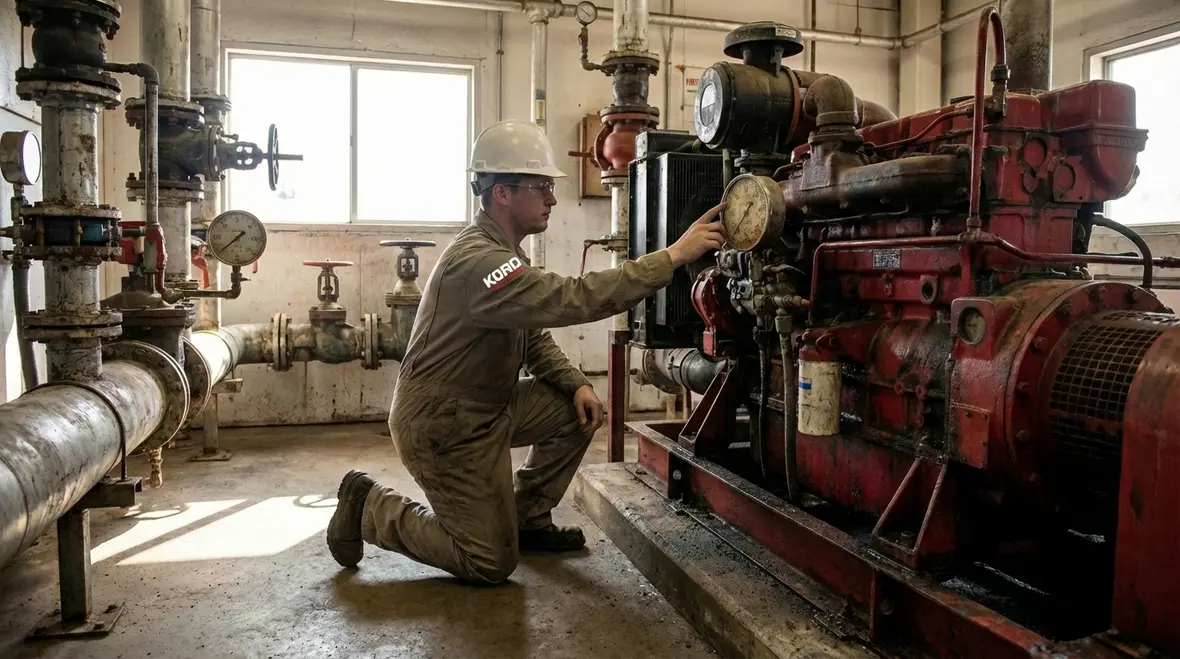
Fire pumps boost water flow to meet required density and duration standards. Diesel or electric driven, these pumps sit ready for activation the moment pressure drops. Furthermore, backup power ensures operation even during utility failure.
Supporting components that keep water moving
- Water storage tanks for extended supply
- Backflow prevention assemblies to protect public water systems
- Supervisory devices that monitor valve positions
Testing, monitoring, and NFPA-based routines
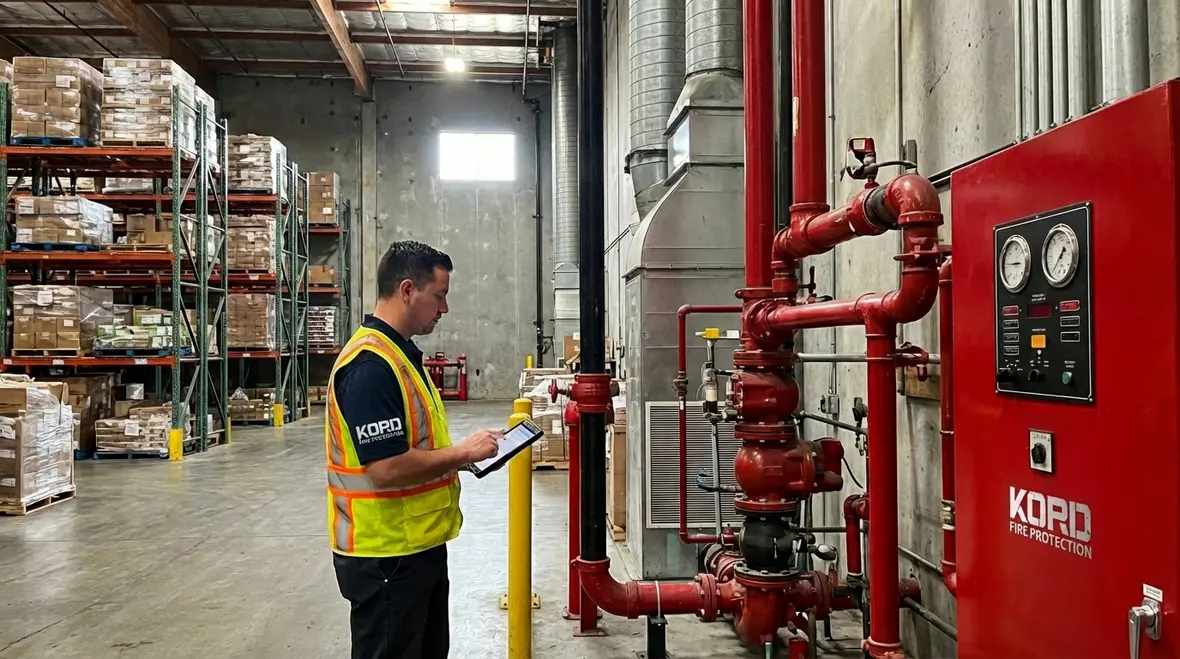
Because reliability matters, routine testing forms part of the infrastructure. Weekly churn tests and annual flow tests confirm performance. Kord Fire Protection technicians often walk facility managers through pump rooms, pointing out gauges and control panels. They explain what each reading means, translating technical data into plain language. As a result, owners feel informed rather than overwhelmed.
For deeper details on pump testing expectations, many Los Angeles owners also review resources like Kord Fire’s Fire Pump Testing Requirements – Things To Know and their overview of how NFPA 20 regulates fire pump systems to better understand design and maintenance obligations.
Detection and Alarm Systems That Speak Clearly
From early smoke detection to smart monitoring
Early detection reduces damage and saves lives. In large facilities, detection systems must cover wide areas without delay. Smoke detectors, beam detectors, and heat sensors work together to identify threats quickly.
Why voice evacuation matters in Los Angeles
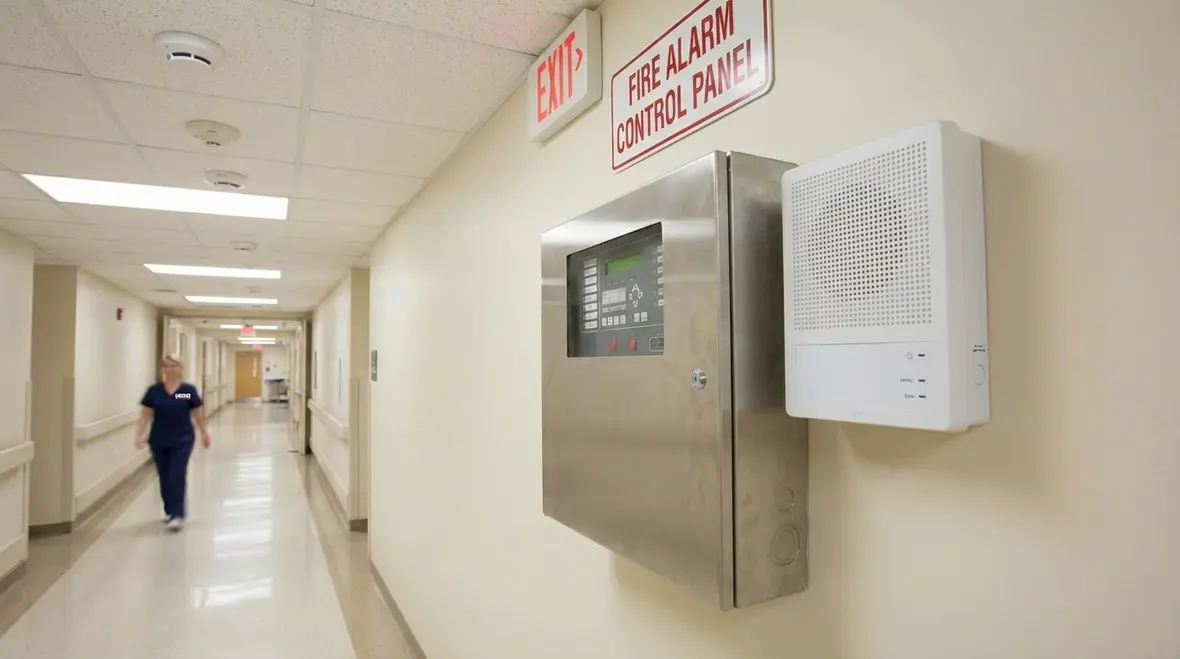
However, detection alone does little without communication. Voice evacuation systems now play a major role in Los Angeles commercial fire safety. Instead of a simple horn, many buildings use recorded or live voice instructions. Clear messages reduce panic and guide occupants toward safe exits.
Integration with building management and operations teams
Moreover, integration with building management systems allows real time monitoring. When an alarm activates, facility teams receive alerts instantly. This coordination supports faster response and limits confusion.
Kord Fire Protection technicians often remind clients that alarms are not background noise. They represent a call to action. So while people may joke about ignoring car alarms on busy streets, ignoring a building fire alarm should never become a habit.
What Does Large Facility Fire Protection Los Angeles Require from Code Compliance?
Plan review, inspections, and approvals
Los Angeles enforces strict fire codes shaped by state and local amendments. Therefore, compliance demands more than installing equipment. It requires documentation, inspection, and approval at every stage.
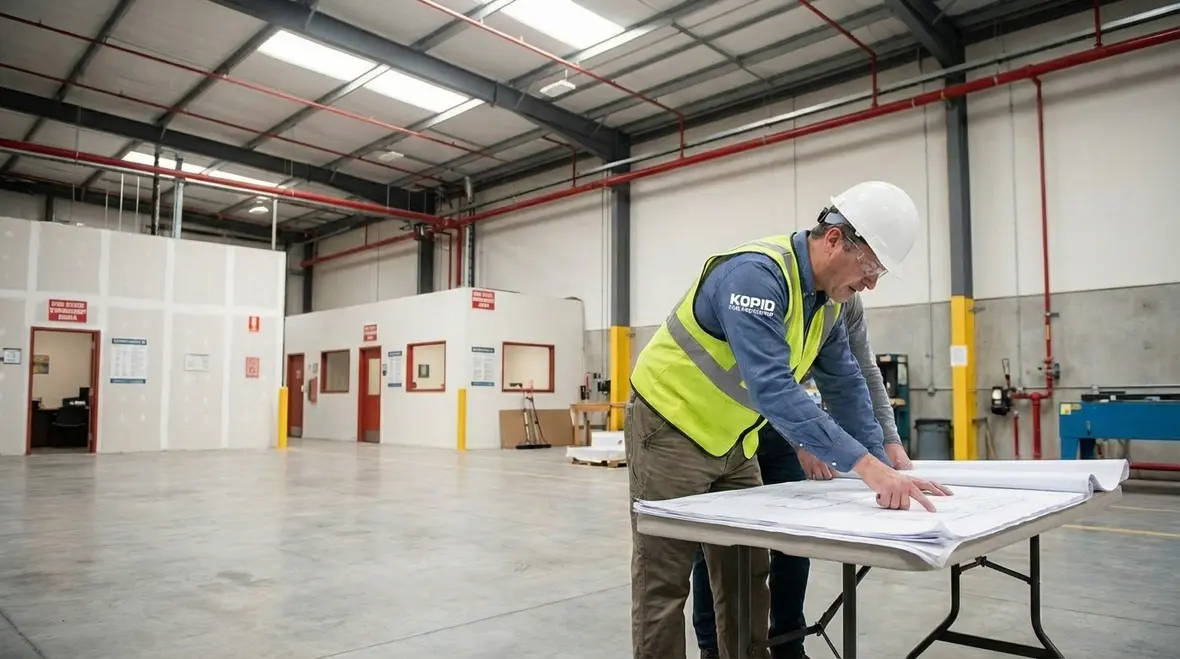
Plans must pass review by the fire department. Inspectors verify pipe sizing, head spacing, and system layout. In addition, final acceptance tests confirm functionality before occupancy.
Ongoing inspections and testing schedules
- Quarterly sprinkler inspections
- Annual alarm testing
- Five year internal pipe assessments
- Regular fire door checks
Turning regulations into a predictable process
Because regulations evolve, property owners rely on experienced professionals to stay current. Kord Fire Protection technicians explain updates in practical terms, ensuring managers understand both the rule and the reason behind it. Consequently, compliance becomes a structured process rather than a stressful surprise.
Many Los Angeles properties also fall under Chief’s Regulation 4 testing. Resources such as Kord Fire’s Reg 4 Auto Sprinkler Test and Regulation 4 Fire Pump Test pages help owners see how local requirements stack on top of NFPA standards.
Special Considerations for Warehouses, Hospitals, and Data Centers
Warehouses: towering racks and changing commodities
Warehouses often feature tall storage racks and varying commodities. High hazard goods demand higher water density. Additionally, clear aisle spacing and proper flue space between pallets allow sprinklers to perform effectively.
Hospitals: defend-in-place and vulnerable occupants
Hospitals must protect patients who cannot evacuate easily. As a result, compartmentation plays a vital role. Fire rated walls create defend in place zones, allowing staff to move patients horizontally rather than outside. Detection systems also integrate with nurse call and emergency power systems.
Data centers: uptime, clean agents, and redundancy
Data centers prioritize equipment protection and uptime. While sprinklers remain required, many facilities add clean agent suppression systems. These agents extinguish fire without damaging sensitive electronics. Because downtime costs can climb fast, redundancy and monitoring receive special attention.
Across each facility type, large scale fire protection in Los Angeles must balance life safety, property protection, and business continuity. It is a careful dance, though thankfully without the reality show judges.
Maintenance and Long Term Reliability
Why installation is only the opening scene
Installation marks the beginning, not the end, of fire protection responsibility. Over time, valves may close accidentally, gauges may drift, and components may corrode. Therefore, structured maintenance programs protect system integrity.
Inspections, documentation, and accountability
Regular inspections identify small issues before they grow. For example, a partially closed control valve can reduce water flow significantly. Yet a simple supervisory switch alert can catch that problem early.
Furthermore, documentation supports accountability. Inspection reports create a record of care and compliance. In the event of an incident, these records demonstrate due diligence.
Treating fire protection like any other critical asset
Kord Fire Protection technicians often emphasize that systems should never gather dust in silence. Instead, they encourage facility teams to treat fire protection like any critical asset. After all, few people would ignore maintenance on a fleet of delivery trucks. The same logic applies to life safety systems.
Planning for Growth and Future Expansion
Designing with tomorrow’s footprint in mind
Los Angeles continues to expand. Warehouses grow taller. Campuses add new wings. Consequently, fire protection infrastructure must anticipate change.
Forward thinking design includes spare capacity in pumps and piping. It also considers modular alarm panels that can expand with new zones. By planning early, owners avoid costly retrofits later.
Collaboration from schematic design through turnover
Additionally, collaboration between architects, engineers, and fire protection specialists ensures seamless integration. When teams coordinate from the start, they reduce conflict and streamline approvals.
In conversations with clients, Kord Fire Protection technicians often describe fire protection as a living system. It adapts as the building evolves. Therefore, strategic planning today protects tomorrow’s operations.
FAQ About Fire Protection Infrastructure in Large Los Angeles Facilities
Protect What Matters Most
A city that never sleeps needs systems that never slack
Fire does not schedule appointments. Therefore, preparation must remain steady and intentional. Large facility owners across Los Angeles trust proven systems, clear communication, and skilled professionals to guard their operations. Kord Fire Protection technicians stand ready to explain, design, and maintain every layer of protection. When safety cannot wait, decisive action matters.
Work with a Los Angeles fire protection partner
Connect with experienced specialists today and ensure your facility remains secure, compliant, and prepared for whatever tomorrow brings. Kord Fire’s team provides end to end support, from design and installation to inspections and testing. To explore comprehensive services for your building, visit their Fire Protection and Safety Inspection page and request a custom plan for your Los Angeles facility.
Know Your Weapon Before You Fight the Flame
Kord Fire Protection is your go-to when it comes to all things fire protection. For over 20 years, we’ve been serving Southern California with the quality service and equipment to keep your home or business safe at all times. Our competitive prices reflect our unwavering commitment to protecting what matters most in the event of a fire emergency. Give us a call, send an email, or use that form!

Join Our Newsletter!
Get the latest fire safety tips delivered straight to your inbox From our Newsletter.