Clean Agent Suppression for Data Centers by Kord Fire
When a data center needs fast, clean fire protection, leaders often start with clean agent suppression for data centers because it can help protect equipment without leaving a messy residue. In the real world, that matters. Water damages gear, dust clings to surfaces, and “we will clean it later” is not a plan, it is a prayer. For these facilities, the decision is about more than choosing a cylinder system and calling it done. It also involves matching the agent type, piping layout, and release controls to the space design and the risk profile.
And yes, even though fire protection sounds like a dramatic movie trailer, the team behind it should stay calm. Kord Fire Protection technicians explain the process step by step, and they also insist on one simple idea: a suppression system should be engineered, tested, and maintained like a mission critical tool, because it is. For facilities comparing strategies, Kord Fire also breaks down broader clean agent fire suppression system services and how they fit sensitive environments.
What clean agents do in mission critical rooms
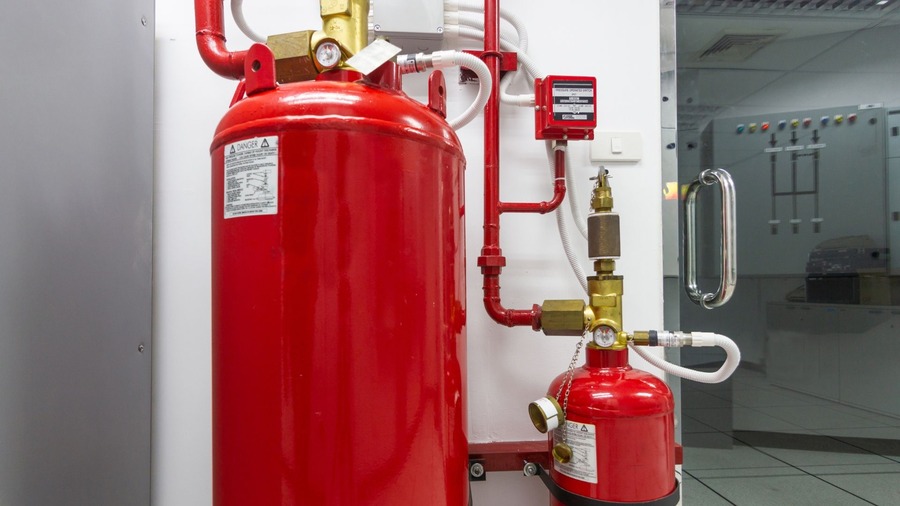
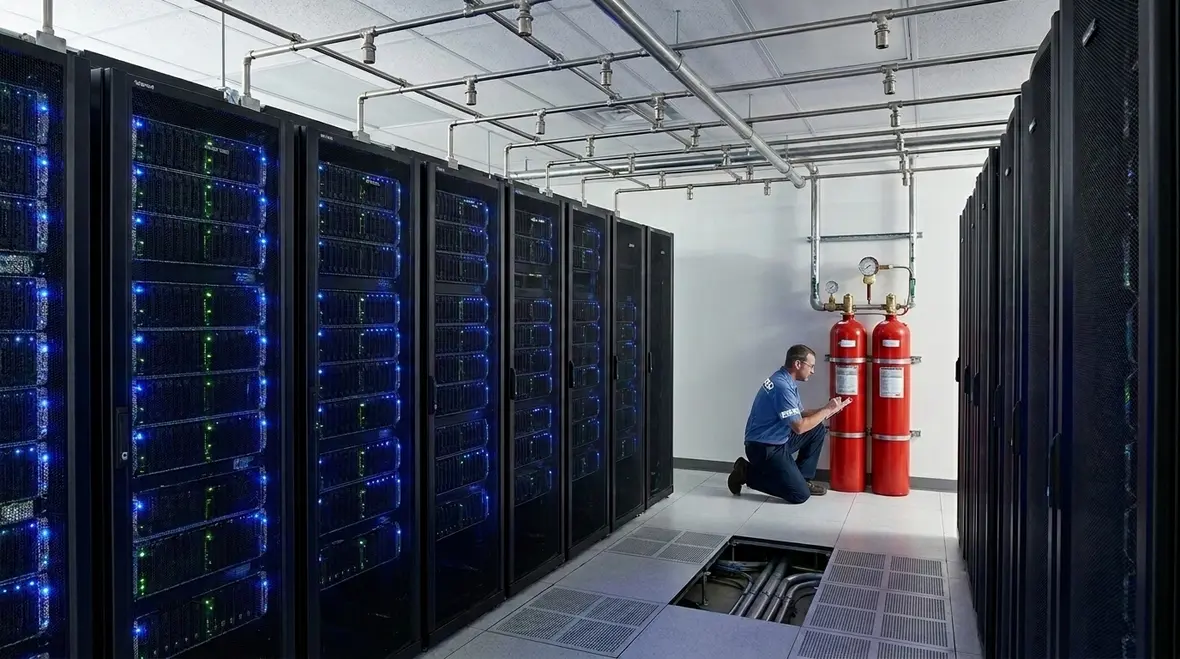
Clean agents work by interrupting the fire chemistry and reducing the conditions that let flames keep going. Instead of relying on large volumes of water or foam, they discharge in a controlled way and then the system quickly resets to a safe state. As a result, the protected area can often avoid heavy cleanup, which keeps downtime lower and allows teams to focus on recovery rather than scrubbing cabinets.
However, clean agent systems do not solve every problem by magic. For example, if the room has major air leakage, poor sealing, or unplanned vents, the agent can disperse too fast to control the fire. Therefore, facility teams must pair the agent choice with good building practices. That is why room performance matters just as much as equipment selection, a point Kord Fire highlights in its guide to room integrity testing. Kord Fire Protection technicians often point out that people treat containment like a suggestion, then act surprised when the suppression performance falls short.
Why residue free protection matters
In a data center, recovery is not only about putting out a fire. It is also about getting operations back online without creating a second disaster during cleanup. Clean agent systems support that goal because they are designed for spaces filled with servers, electronics, and infrastructure that absolutely do not want an accidental shower.
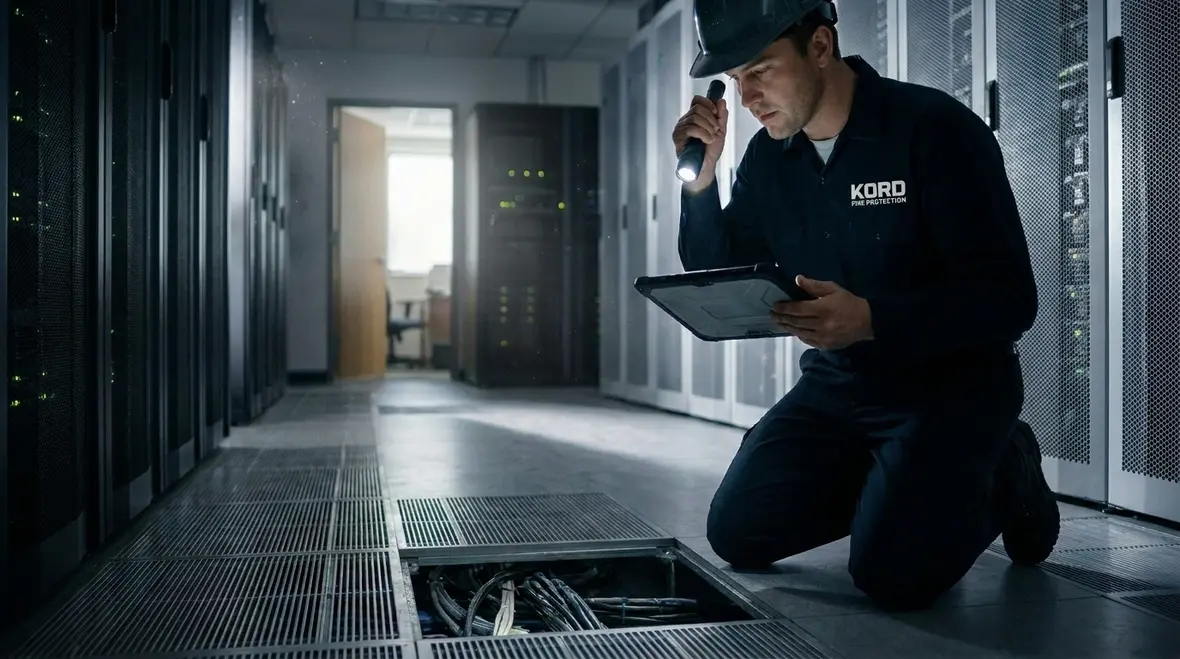
How to evaluate data center risk before choosing an agent
Before selecting hardware, teams should map what can burn, how fast it can grow, and where smoke will travel. They then link that to the suppression strategy and the target design concentration. In practice, that means reviewing fuel load, rack density, cable insulation, UPS battery locations, and how HVAC affects airflow.
Also, they should consider the likely ignition sources. Electrical faults, hot work mistakes, and airflow problems are common. Yet the “common” part does not mean “easy.” It means engineers must design for real conditions, including operating airflow and the presence of doors, ceiling voids, and raised floors.
Transitioning from theory to action, Kord Fire Protection technicians typically recommend a structured walkthrough: identify hazards, confirm room volumes, verify leakage assumptions, and ensure the system matches the actual environment. Otherwise, the project becomes like ordering a pizza without checking the oven size. The pizza might still show up, but the result will not be what the team needs.
Risk factors teams should never gloss over
- Rack density and cable concentrations
- Raised floors and ceiling voids
- Battery rooms and adjacent hazards
- Airflow patterns during normal operation
- Door openings, penetrations, and leakage points
Which clean agent suppression types fit different facility layouts
Clean agent suppression comes in multiple categories, and each has pros and tradeoffs. Engineers usually pick an agent based on required concentration, occupational safety limits, system pressure behavior, compatibility with space configuration, and local code requirements.
In general, facilities with well controlled enclosure characteristics and predictable airflow often achieve strong performance with properly designed systems. Meanwhile, sites with complex airflow patterns, frequent door openings, or challenging leakage must address those issues first. If they do not, the “clean” part becomes less about agent cleanliness and more about paperwork cleanliness.
To choose the right fit, a team should also examine the interface with detection, alarm, and emergency procedures. Clean agent discharge needs coordination, because the space occupants must get warnings, and mechanical systems may need to respond in a specific way. Kord Fire Protection technicians explain that selecting the agent without confirming detection placement and control logic can create timing problems during a real event. For a more detailed technical overview, Kord Fire’s data center clean agent fire suppression guide offers additional context on design, discharge, and system coordination.
Where system design usually fails and how to avoid it
Many projects stumble not because the agent is wrong, but because the design assumptions drift from reality. First, improper room volume calculations can cause a mismatch between the required concentration and what the room actually needs. Next, undersized piping runs and bends can reduce flow performance. Then there is enclosure leakage, which can change after renovations, cable pulls, or poorly sealed penetrations.
Additionally, discharge nozzle placement affects mixing and coverage. If the nozzles do not deliver the agent where the hazard sits, the system may suppress a developing fire instead of preventing full involvement. And yes, the word “developing” matters, because early control can mean saved servers and a quiet incident report, while late control means the incident report turns into a novel.
To prevent these issues, the facility team should insist on site based verification and acceptance testing. They should also plan for ongoing inspection and maintenance. Kord Fire Protection technicians often stress that the best time to find leakage is during commissioning, not during an alarm, when everyone is suddenly a structural engineer.
Common design misses
| Design issue | Why it hurts performance |
|---|---|
| Bad room volume data | Concentration targets can miss the real enclosure needs |
| Leaky penetrations | Agent can dissipate before it holds long enough |
| Poor nozzle placement | Mixing and coverage can become uneven |
| Weak control logic | Alarm, abort, and HVAC responses may happen at the wrong time |
How to build reliable detection and control with the suppression system
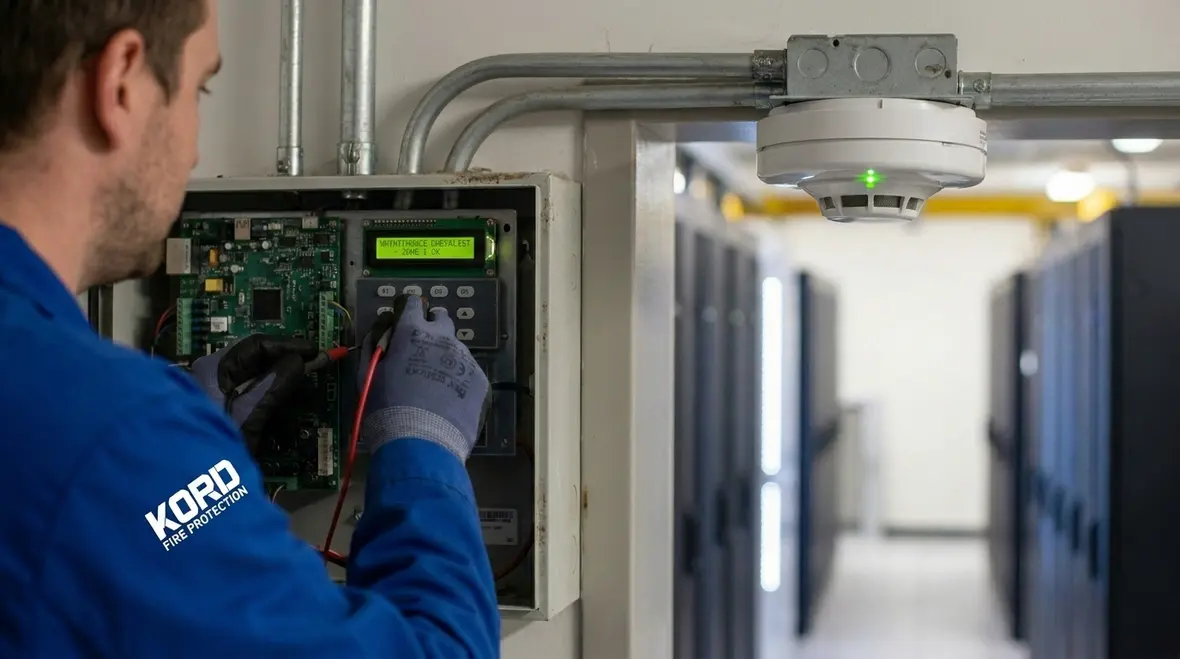
Detection drives timing, timing drives discharge, and discharge drives outcomes. Therefore, teams should select detectors that match the fire growth in the space and account for airflow. In data centers, early stage detection matters because fires can start in ceiling areas, behind racks, or inside cable pathways.
After detection, controls must coordinate clear evacuation, alarm notifications, and any HVAC actions that support agent effectiveness. For instance, shutting down air handlers can help reduce dilution, but the sequence must match the facility’s design. If the system turns off the wrong equipment too early or too late, it can change air movement and agent concentration.
Moreover, the system should handle abort and pre discharge warnings when required by the code and the occupancy plan. Kord Fire Protection technicians explain that people forget this step, then wonder why operators feel “surprised” during drills. A calm drill is not just better for morale, it helps crews trust the system when it matters.
Installation, commissioning, and ongoing maintenance that keep performance steady
Installation should follow engineered drawings, and teams should verify that actuated devices and panels meet the design intent. During commissioning, they should confirm that detection zones, control wiring, and release circuits operate correctly. They should also validate the discharge pathways, pressure readings where applicable, and that the system meets acceptance criteria.
Once the system is live, maintenance becomes the difference between “it should work” and “it does work.” That includes periodic inspections, checks of cylinders and pressure readings, verification of clean agent storage conditions, testing of alarms and supervisory circuits, and documentation updates after any renovations.
Additionally, organizations should train staff on response steps. If a data center team understands what the alarms mean and how to react, they support suppression effectiveness and reduce confusion. As a bonus, training also prevents those legendary “we thought it was a test” moments that can make any incident feel like an episode of a streaming show nobody asked for.
FAQ
Next steps to protect your data center with confidence
A strong fire protection plan starts with the right engineering decisions, not guesswork. Teams should partner with experienced technicians, review facility hazards, confirm enclosure assumptions, and commission and maintain the system so it performs as designed. If Kord Fire Protection technicians have taught leaders anything, it is this: the system must match the room, and the room must match the assumptions.
Ready to strengthen your protection strategy? Start by learning more about fire protection, then explore Kord Fire’s dedicated clean agent fire suppression service page to schedule a site review and build a suppression plan that earns trust.

Join Our Newsletter!
Get the latest fire safety tips delivered straight to your inbox From our Newsletter.