
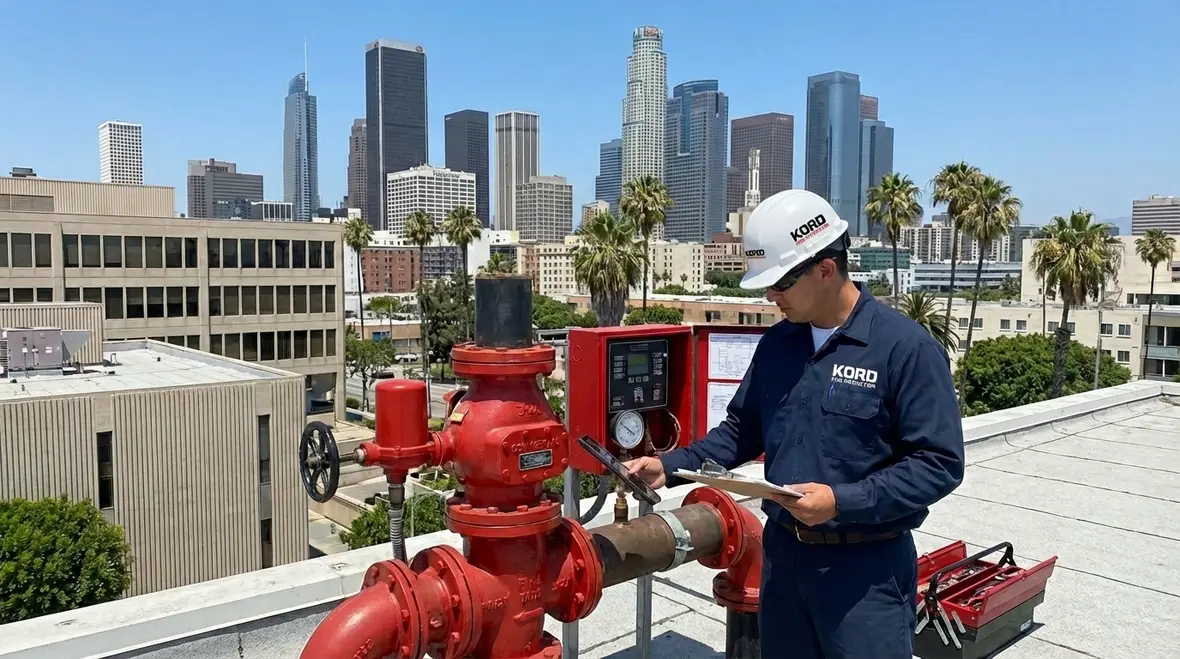
Commercial Fire System Maintenance Los Angeles Guide
In a city where sunshine is abundant but risk never sleeps, commercial fire system maintenance los angeles is not just a service. It is a responsibility. From high rise offices downtown to restaurants tucked along Ventura Boulevard, every commercial space depends on systems that stand ready in silence. Sprinklers wait behind ceiling tiles. Control panels blink softly in back rooms. Fire alarms hold their breath. And behind it all, trained professionals keep watch.
In Los Angeles, that watch often includes Kord Fire Protection technicians explaining things with patience and clarity. They walk property managers through inspections, codes, and upgrades in a way that feels less like a lecture and more like a calm conversation. Because when it comes to fire safety, clarity matters. Panic does not.
The Reality of Fire Risk in Los Angeles Commercial Buildings
Los Angeles is many things. It is innovation. It is culture. It is traffic that could test the patience of a monk. However, it is also a region shaped by heat, dry winds, and dense development. Therefore, commercial buildings face a unique mix of fire risks.
Electrical systems run long hours. Commercial kitchens operate with open flames. Warehouses store flammable goods. Meanwhile, older buildings often contain legacy wiring or outdated suppression equipment. Consequently, fire protection systems must do more than exist. They must perform.
Local fire codes reflect this reality. The Los Angeles Fire Department enforces strict inspection schedules. In addition, insurance carriers often require documented proof of testing and service. Without proper upkeep, a building owner may face fines, liability exposure, or worse, system failure during an emergency.
This is why structured fire protection maintenance in LA commercial properties follows a disciplined schedule. It is not about checking a box. It is about ensuring that every device, valve, and sensor works in real time when seconds matter.
Fire sprinkler testing in Los Angeles County follows those same principles, tying local requirements to NFPA standards in a way that keeps real buildings ready, not just technically compliant.

What Does Commercial Fire System Maintenance in Los Angeles Include?
Property owners often ask what actually happens during a maintenance visit. Do technicians simply press a few buttons and nod thoughtfully? Not quite. The process is detailed, methodical, and guided by national and local codes.
Commercial fire system maintenance in Los Angeles typically includes inspection, testing, repair, and documentation of multiple components. Each system has its own rhythm and requirements.
Core Components Serviced
- Fire alarm systems: Control panels, smoke detectors, pull stations, notification devices, and backup batteries are tested for function and signal accuracy.
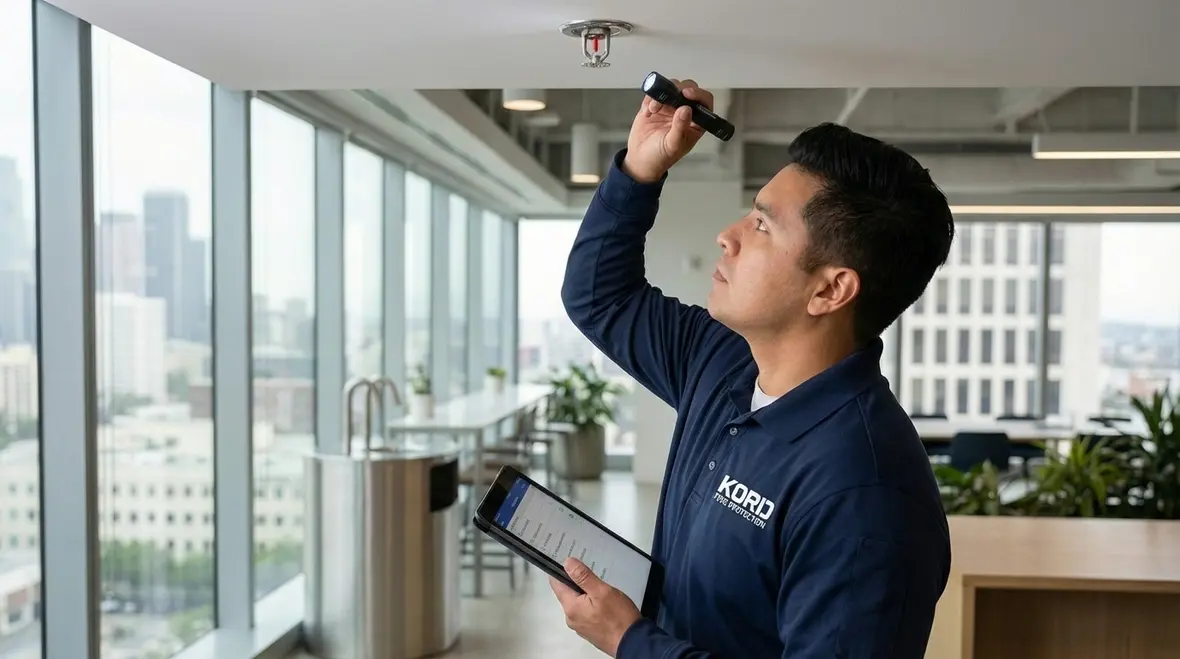
- Automatic sprinkler systems: Technicians inspect sprinkler heads, piping, valves, and water flow alarms. They also check for corrosion, obstructions, and pressure issues.
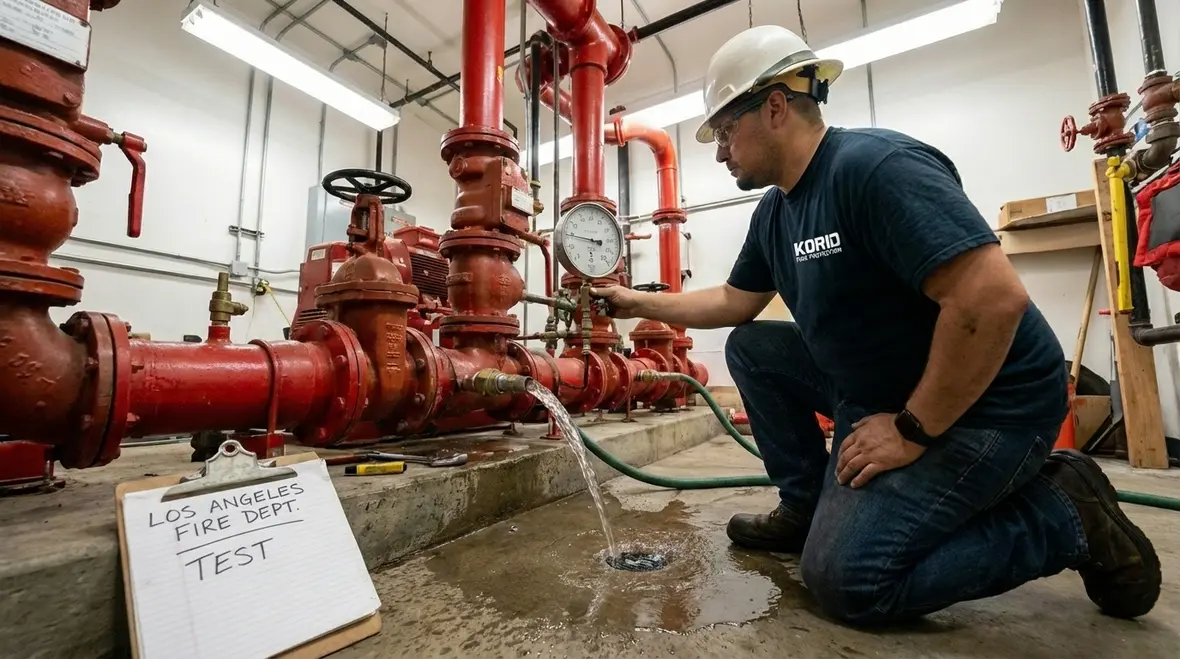
- Fire pumps: Weekly and annual testing ensures pumps deliver the required water pressure during peak demand.
- Backflow preventers: These devices protect the public water supply and must be tested annually.
- Emergency lighting and exit signs: Batteries and illumination levels are verified to ensure safe evacuation.
Furthermore, technicians document every test result. This documentation supports compliance and provides a clear maintenance history. If an inspector requests records, the building owner can present them with confidence rather than a hopeful shrug.

How Often Are Commercial Fire Systems Inspected and Tested?
This is the question that echoes through property management offices. The answer depends on the system type and applicable codes. However, Los Angeles generally follows NFPA standards with local amendments.
For example, fire alarm systems require annual testing, while certain components such as control panels may need more frequent visual inspections. Sprinkler systems often undergo quarterly, semiannual, and annual checks. Fire pumps require weekly churn tests and annual flow tests. Yes, weekly. Fire safety does not believe in procrastination.
Kord Fire Protection technicians often explain this schedule in clear terms. They break down what must be done monthly, quarterly, or yearly. As a result, property managers gain a practical roadmap instead of a stack of confusing code references.
Additionally, after any building modification, systems may need re inspection. Renovations, tenant improvements, or layout changes can affect coverage and device placement. Therefore, maintenance is not static. It evolves with the building.
If your building is adding new tenants or reworking floors, pairing routine testing with services like Reg 4 auto sprinkler testing keeps everything aligned with Los Angeles requirements.
The Step by Step Process Technicians Follow On Site
When a technician arrives at a commercial property, the visit follows a structured path. There is no guesswork. There is no dramatic music playing in the background. Just disciplined procedure.
Initial Review
First, the technician reviews past inspection reports and identifies prior deficiencies. This ensures unresolved issues do not quietly linger.
Visual Inspection
Next, visible components are examined. Are sprinkler heads blocked by storage? Are pull stations accessible? Is there corrosion on exposed piping? These small details often reveal larger risks.
Functional Testing
Then comes live testing. Alarms sound. Strobes flash. Water flow switches activate. Signals transmit to monitoring stations. While the noise may startle a few office workers, it confirms the system responds correctly.
Repairs and Adjustments
If a device fails, technicians repair or replace it. In some cases, they recommend upgrades to meet current code.
Documentation and Explanation
Finally, detailed reports are provided. Kord Fire Protection technicians take time to explain findings, answer questions, and outline next steps. They do not disappear into the sunset without context. Instead, they ensure building owners understand both the problem and the solution.
Common Deficiencies Found During Fire Protection Maintenance in LA Commercial Properties
Even well managed buildings develop issues over time. Dust accumulates. Valves shift. Tenants rearrange storage without considering sprinkler clearance. It happens.
Some of the most common deficiencies include:
- Blocked or painted sprinkler heads
- Dead batteries in fire alarm panels
- Closed control valves left unmonitored
- Damaged wiring or loose connections
- Obstructed smoke detectors near HVAC vents
Although these issues may seem minor, they can prevent proper system activation. Therefore, routine inspections catch problems before they escalate. Think of it as a regular health checkup for the building. No one enjoys the appointment, but everyone appreciates the early diagnosis.
Dual Focus: Compliance and Real World Protection
Fire safety in Los Angeles operates on two parallel tracks. One track follows code compliance. The other focuses on actual life safety performance. While they overlap, they are not identical.
| Compliance Focus | Performance Focus |
| Meets LAFD and NFPA inspection intervals | Ensures systems activate under real emergency conditions |
| Maintains required documentation | Verifies water pressure and alarm signal speed |
| Avoids fines and penalties | Protects occupants and assets |
| Passes annual inspections | Reduces downtime and damage during a fire event |
Strong commercial fire system maintenance los angeles programs address both tracks. They satisfy regulators. At the same time, they prepare the building for the unpredictable. Because fire does not consult paperwork before it spreads.
Why Experience Matters in Commercial Fire System Maintenance Los Angeles
Los Angeles buildings vary widely. Some are sleek towers with advanced addressable alarm systems. Others are older facilities with retrofitted sprinklers. Each requires a tailored approach.
Experienced technicians understand local code interpretations. They recognize common design flaws in specific building eras. Moreover, they coordinate with property managers, tenants, and inspectors to minimize disruption.
Kord Fire Protection technicians often emphasize education during service visits. They explain why a valve must remain locked open. They demonstrate how alarm signals travel to monitoring centers. They clarify how small changes in occupancy can affect hazard classification. Consequently, clients make informed decisions rather than reactive ones.
In addition, seasoned providers plan ahead. They track inspection due dates, schedule recurring services, and maintain clear records. This proactive approach transforms maintenance from a scramble into a strategy.
Integrating Fire Safety with Broader Building Operations
Fire protection does not operate in isolation. It intersects with electrical systems, HVAC, security, and building management platforms. Therefore, coordination is essential.
For example, when a new tenant builds out office space, sprinkler layouts may need adjustment. Similarly, when electrical panels are upgraded, fire alarm circuits must remain protected. As a result, maintenance teams often collaborate with general contractors and facility engineers.
Technology also plays a growing role. Many modern systems provide digital reporting and remote monitoring. This allows faster detection of trouble signals. However, technology still requires physical inspection. A sensor can send data, but it cannot tighten a loose fitting.
By aligning fire system care with overall facility management, building owners reduce risk across the board. It becomes part of the operational culture rather than an afterthought.
FAQ About Commercial Fire System Maintenance
Conclusion: Protecting What Matters Most
Fire safety in Los Angeles demands discipline, experience, and steady hands. Through structured inspections, detailed testing, and clear communication, buildings remain prepared rather than reactive. Kord Fire Protection technicians guide property owners with calm authority, ensuring every valve, alarm, and pump stands ready.
For those seeking dependable protection, now is the time to strengthen your plan, schedule service, and safeguard your people and property with confidence. If your facility is in or around Los Angeles County, connect with the Kord team through their regional pages, such as Diamond Bar fire protection services, to align your commercial fire system maintenance with local expectations and real-world risk.
Know Your Weapon Before You Fight the Flame
Kord Fire Protection is your go-to when it comes to all things fire protection. For over 20 years, we’ve been serving Southern California with the quality service and equipment to keep your home or business safe at all times. Our competitive prices reflect our unwavering commitment to protecting what matters most in the event of a fire emergency. Give us a call, send an email, or use that form!

Join Our Newsletter!
Get the latest fire safety tips delivered straight to your inbox From our Newsletter.


