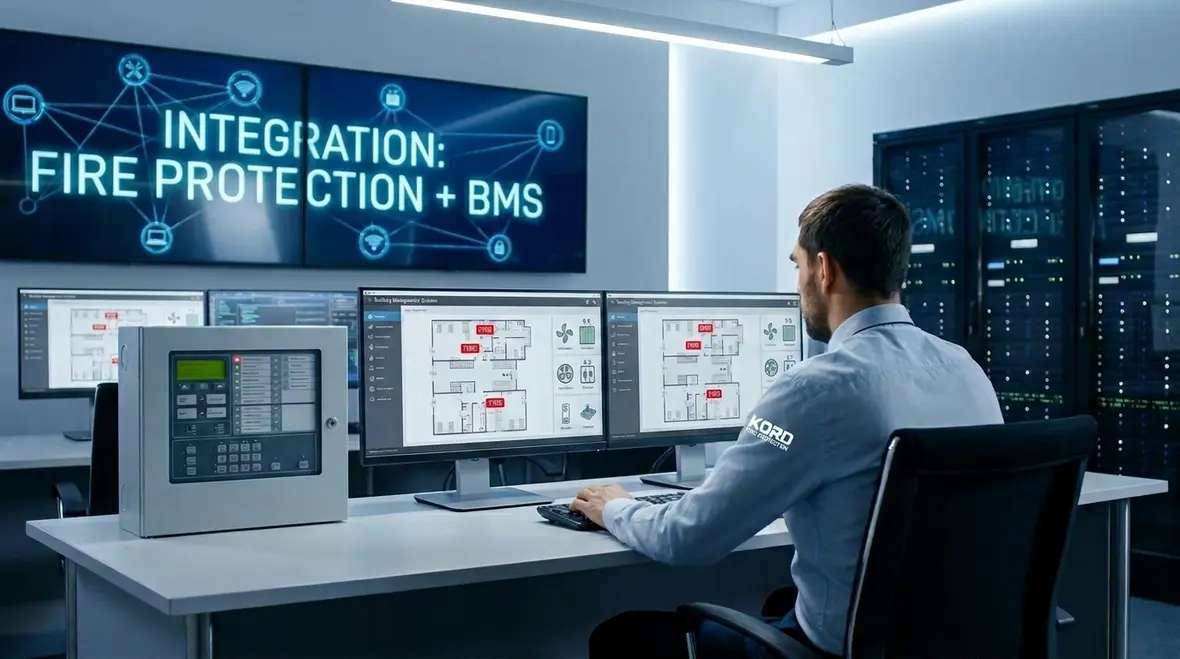
Integrating Fire Systems With Building Controls for Safety
Integrating Fire Protection With Building Management Systems: A Smarter Way to Protect People
Integrating fire systems with building controls means the life safety world and the facility operations world finally agree to stop arguing and start coordinating. In practice, this approach connects fire alarm and detection functions with building management systems so the building can respond faster, smarter, and more consistently during an emergency. As Kord Fire Protection technicians explain during site walk-throughs, the goal is not “more tech for tech’s sake.” It is better decisions in real time, with clear actions for elevators, smoke control, notifications, and monitoring. Think of it like adding a calm voice to chaos. And yes, even chaos appreciates instructions when it knows exactly what to do.
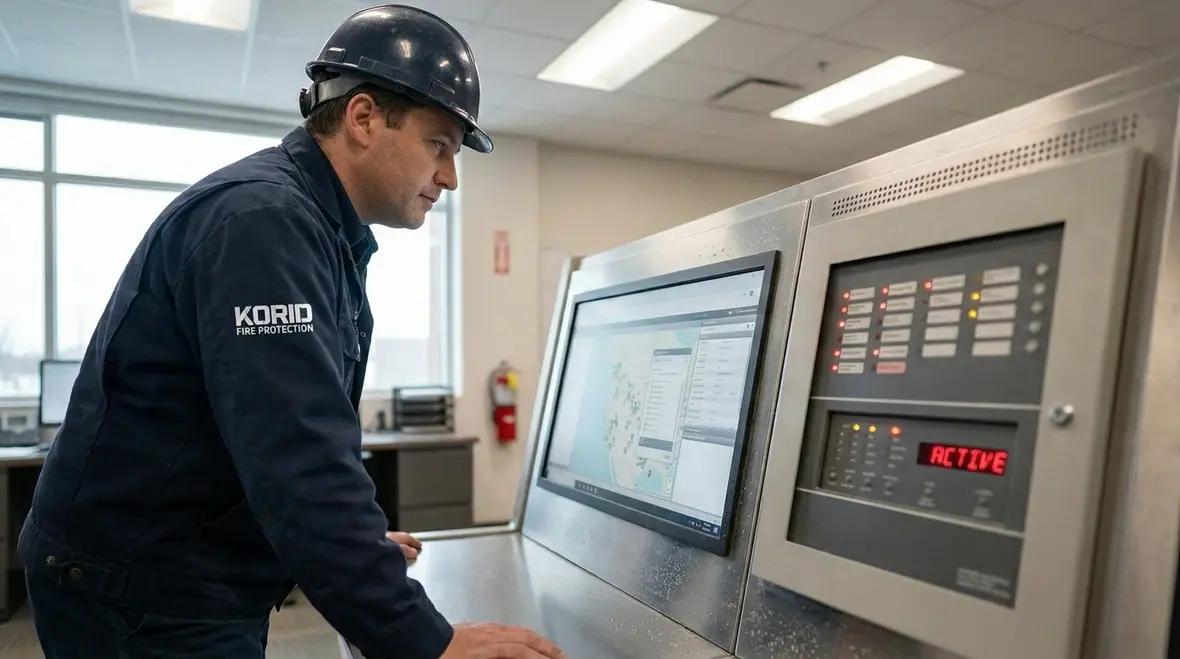
What does integration really mean in day to day operations
Integration goes beyond sharing a few signals between panels. Therefore, it usually covers how alarms, device states, and control requests move through the building network, and how the BMS uses that information to trigger pre planned sequences. For example, when smoke detectors report danger, the fire system can inform the BMS to adjust ventilation, unlock relevant egress paths, and coordinate announcements. At the same time, the BMS can feed status data back to support maintenance and verification.
Meanwhile, Kord Fire Protection technicians often point out a key detail: integration must preserve safety priorities. The fire system stays the brain for life safety. Then the BMS acts as the muscle for building functions. This split reduces risk and keeps operations clear when someone asks, “Who controls what, and when?” Because in an emergency, clarity beats guesswork, every time.
Why clear roles matter
That distinction between life safety authority and building operations support is what keeps integrated systems useful instead of messy. It also helps owners plan upgrades more sensibly. A fire alarm system should not become an afterthought buried inside a controls package, and a controls package should not be asked to improvise during a crisis. Good projects define the sequence early, document it carefully, and test it until the building responds like it has practiced the routine, because ideally it has.
How intelligent fire protection signals travel through the BMS
First, the fire alarm and detection layer captures events like smoke, heat, sprinkler water flow, and supervisory conditions. Next, the system translates those events into structured signals for the BMS or monitoring platform. Then the BMS uses those signals to run specific logic and activate building functions.
To keep things reliable, teams design the communication path with fail safe behavior. In other words, if a link fails, the system should still alarm and protect people without relying on that link. Additionally, the setup supports event logging so operators can review timelines after drills or real incidents. As Kord Fire Protection technicians explain, good integration leaves an audit trail. That matters when it is not just about what happened, but why the building acted the way it did.
This is also where commissioning earns its paycheck. Signal names, priorities, supervisory states, and action confirmations all need to line up exactly as intended. If one status point is mislabeled or one relay behaves differently than the sequence narrative says it should, confusion spreads fast. Buildings are many things, but they are rarely forgiving when communication gets sloppy.
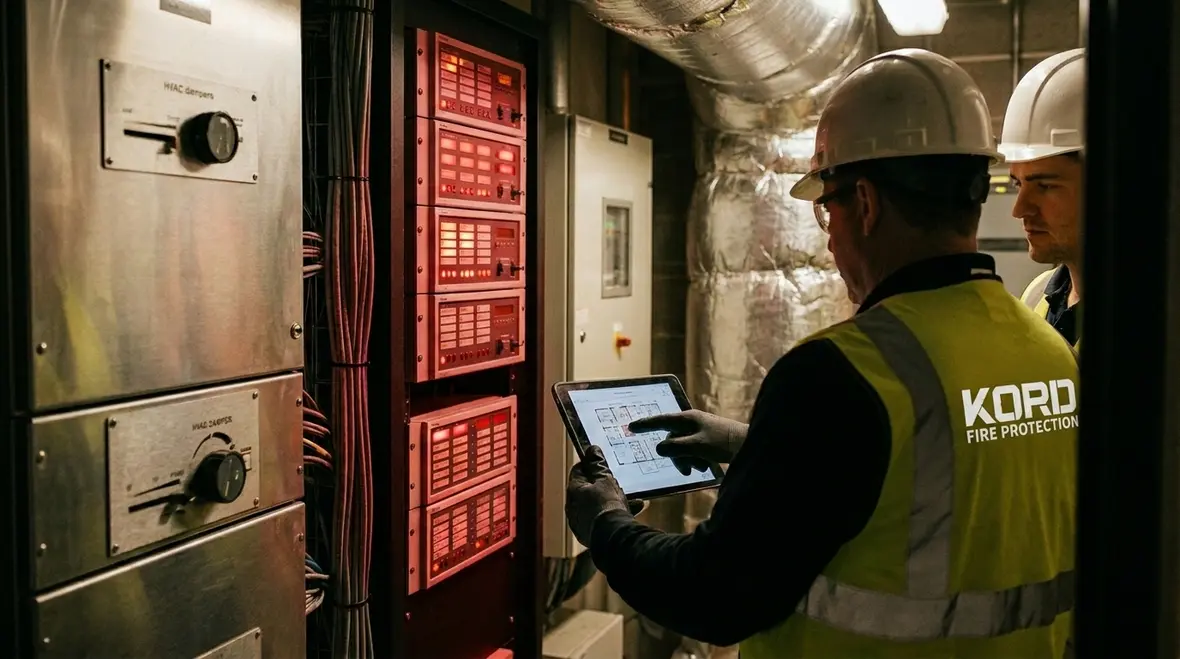
Which building controls benefit most from integrating fire systems with building controls
When integrating fire systems with building controls, several building functions benefit immediately. However, the best results show up when the project team picks the right controls and links them to the right fire conditions.
- Smoke control and ventilation: The system can manage fans and dampers based on alarm zones to reduce smoke spread.
- Elevator recall: The BMS can coordinate elevator mode changes so occupants do not travel into danger.
- Door and egress releases: Related devices can unlock or hold as the fire plan requires.
- Mass notification: Audio and visual messages can match the exact event location and severity.
- Fire fighter access and panel status: Operators see clear device states and system health.
Furthermore, integration helps with routine operations. For instance, the same event routing that powers emergency actions can also support maintenance alerts, reducing “mystery faults” that appear during inspections like a pop quiz with no study guide. When planned well, it also improves response times because staff see what the building saw, not just a generic alarm label.
Operational benefits owners notice first
The first improvements are usually practical, not flashy. Teams spend less time chasing down ambiguous trouble conditions, maintenance staff get clearer information, and operators can see whether related systems actually performed. That makes drills smoother and post event reviews more useful. For facilities trying to simplify vendor coordination, it also helps to work with a provider that understands the bigger picture of full fire protection services across alarms, sprinklers, and support systems.
Where intelligent logic helps and where it should not
Some people want the BMS to decide everything. That is where reality needs a firm hand. Integration should use logic to coordinate actions, but the safety design must stay anchored in code compliant fire alarm behavior. In practice, the most useful logic supports sequencing, not rewriting safety rules.
For example, logic can determine which smoke control mode to apply based on alarm type and floor zone. It can also lock out certain non critical routines when a fire event happens. Meanwhile, it should not downgrade alarms, delay annunciation, or “smooth” signals in ways that hide real conditions. Kord Fire Protection technicians often stress that the system must be predictable. During an emergency, predictable beats clever. Clever is how you get a building that behaves like it is haunted by bad programming.
That is why documentation matters so much. If the sequence of operations only lives in someone’s memory or in a half-labeled controls screen, the building is one turnover away from confusion. The best integrated systems are understandable by technicians, operators, and inspectors alike. If a sequence cannot be explained clearly, it probably should not be trusted blindly.
What technicians look for during commissioning and ongoing service
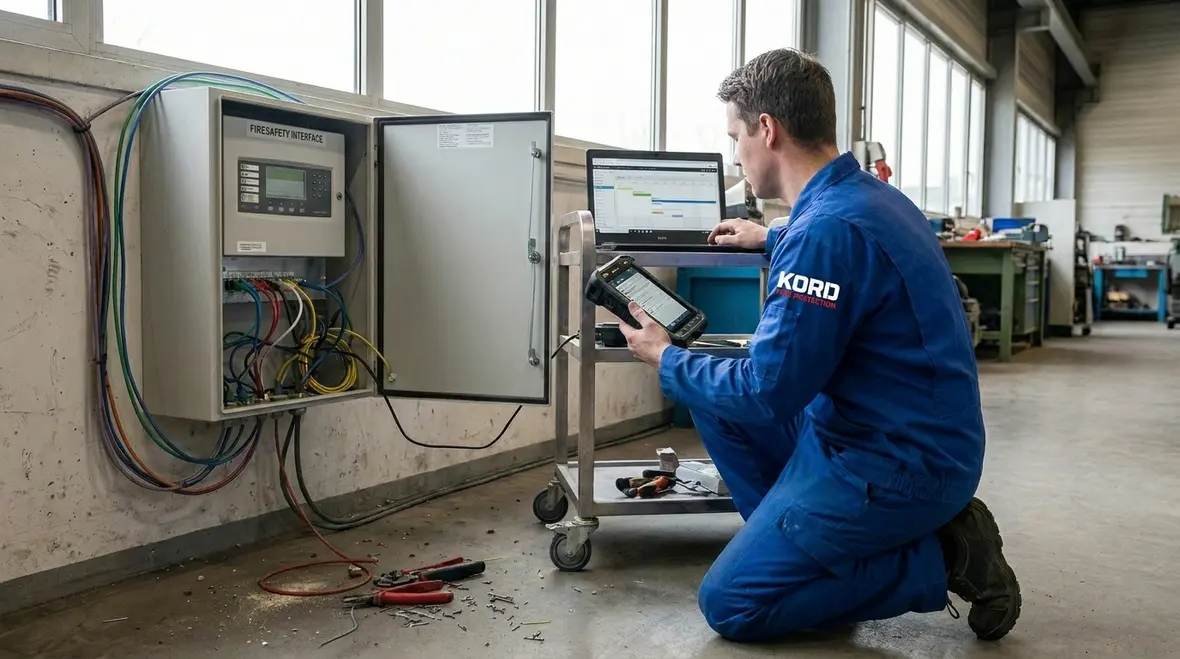
Integration succeeds when commissioning checks both the fire system and the control behavior. First, teams verify point to point mapping. Next, they test fail safe behavior, including what happens when a network path drops. Then they run scenario tests that mirror the building’s risk profile, such as smoke on a specific level, sprinkler flow, and supervisory events.
During ongoing service, technicians should review alarm logs, confirm device health, and confirm the BMS continues to interpret signals correctly after software updates. Additionally, they should verify that each integration change still matches the fire plan. As Kord Fire Protection technicians explain, a building is not a one time project. It evolves, people update systems, and the best time to catch an issue is before it finds you in the middle of a real emergency.
A practical service checklist
- Verify device point mapping and naming remain accurate after updates.
- Confirm alarms, supervisory signals, and troubles display distinctly.
- Test smoke control, door release, elevator recall, and notification sequences.
- Check event logs for missing timestamps, duplicate actions, or unexplained delays.
- Review whether recent tenant changes, remodels, or controls edits affect the original fire plan.
Building owners care about ROI, so what does integration improve
Cost and value should feel grounded, not dreamy. Integrating fire systems with building controls can lower risk exposure by improving response consistency. That benefit can reduce downtime and limit damage by helping smoke control and evacuation actions start at the right time. Additionally, integration can reduce manual work for operators during incidents because the system can present clear status and recommended actions based on the event.
Also, it can support smarter maintenance workflows. When the building logs specific device events and communicates them to facility staff, technicians can fix faults faster. In many cases, the ROI shows up as fewer repeat call outs, smoother drills, and less time spent chasing unclear alarms. And if anyone claims integration is purely “optional comfort,” a quick drill can cure that optimism in about five minutes.
There is also a management advantage that rarely gets enough attention: accountability. Integrated reporting makes it easier to see whether an issue came from a device, a communication path, a sequence error, or an operator action. That clarity saves time, reduces finger pointing, and helps decision makers invest in the right correction instead of the loudest guess.
FAQ about integrating fire systems with building controls
Final word and next steps
Integrating fire systems with building controls can make a real difference when emergencies strike, because it connects detection to coordinated actions without confusing priorities. To get it right, the team must plan sequences, verify fail safe behavior, and test scenarios that match the building’s actual risks. If the building is ready for smarter life safety coordination, reach out to Kord Fire Protection technicians to discuss an integration review, commissioning plan, and service support. Then let the building do less guessing and more protecting.
For owners who want a practical next step, start with a review of the alarm system, interfaces, and service history, then connect that to the broader facility plan. Kord Fire Protection also offers dedicated fire alarm services that pair well with an integration strategy, especially when the goal is cleaner signals, dependable testing, and fewer surprises during inspections or real events.

Join Our Newsletter!
Get the latest fire safety tips delivered straight to your inbox From our Newsletter.