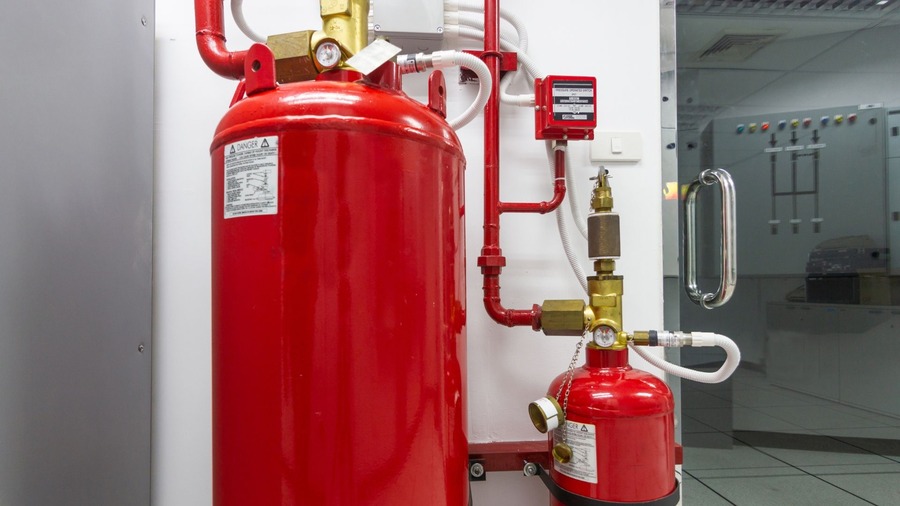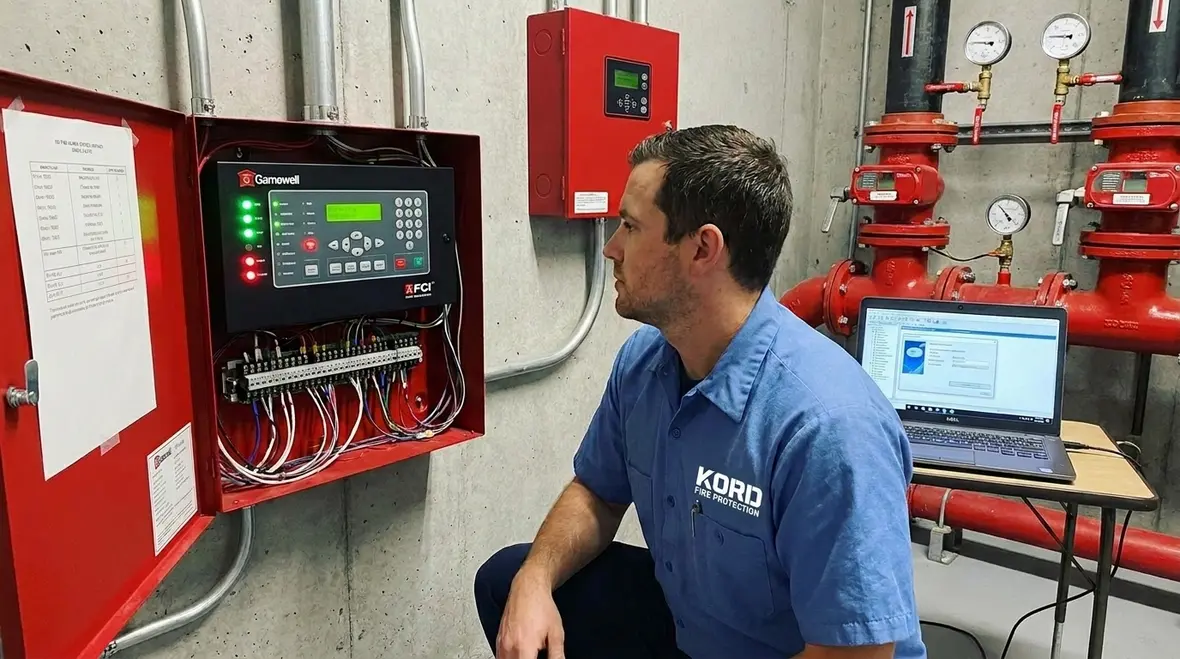
Gamewell FCI Fire Alarm Panel Integration with Suppression
When a building owner asks for life safety systems that talk to each other, the answer starts with the right brains. In many projects, the Gamewell FCI fire alarm panel becomes that brain, coordinating notifications, signals, and response actions in a single, dependable workflow. Then, if the site also needs a suppression system, integration becomes the difference between “it works on paper” and “it works when it matters.” In this article, the focus stays on how fire alarm panels and suppression systems come together smoothly, and how Kord Fire Protection can step in as a vital partner to manage the details, testing, and long-term performance. Yes, it is a lot of coordination. No, it is not the kind of coordination you do for a group chat. It is the real kind.
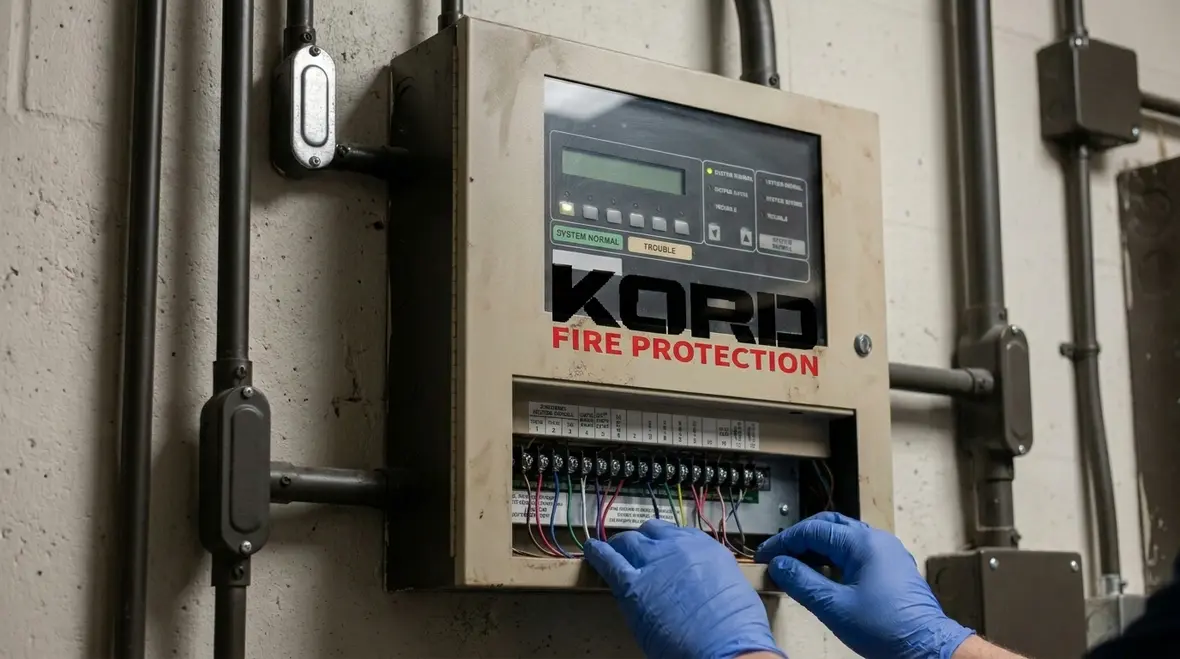
How the Gamewell FCI panel supports integrated life safety
A well planned integration begins with control and clear signals. The Gamewell FCI fire alarm panel monitors initiating devices, supervises circuits, and manages outputs that drive alarms and control functions. As a result, the fire alarm system does more than announce danger. It can also trigger actions that protect people and property, including interface points used by suppression equipment.
In practice, the panel typically communicates with suppression controls through defined input and output paths. This allows the fire alarm system to confirm alarm conditions, then execute programmed sequences that align with the suppression design. Meanwhile, supervision features help detect faults early, so problems do not wait until the next fire drill. Transitioning from detection to suppression requires discipline, and that is where good engineering and commissioning make the whole setup behave like a team.
That team concept matters because integrated life safety is not just a wiring exercise. It is a coordinated strategy where detection, notification, control, and discharge all need to land in the right order. Kord Fire Protection regularly covers this broader concept in related resources like Fire Suppression System Integration for Life Safety and Commercial Fire Alarm Integration for Safe Building Automation. When those parts are aligned, the panel acts less like a lonely box on the wall and more like a reliable command center.
Why the panel becomes the “brain” of the system
Owners and facility teams often want one place to understand what is happening during an emergency. That is why the fire alarm panel matters so much in an integrated setup. It centralizes alarm inputs, supervisory signals, control outputs, and event history. So when smoke or heat starts the process, the response is not scattered across disconnected components. Instead, the panel helps make sure the system reacts with logic, timing, and visibility. Nobody wants a life safety event to feel like twelve people shouting different directions in a parking lot.
Fire alarm to suppression system: what must be coordinated
Integration does not succeed by guessing. It succeeds when every control step matches the intent of the hazard analysis. Therefore, the project team must coordinate several items before wiring ever starts.
- Sequence of operation: what happens first, what happens next, and what must be delayed for safety
- Initiating device selection: smoke, heat, or other devices that match the environment
- Alarm verification rules: when the system confirms a true event
- Control interface mapping: which alarm outputs drive suppression functions
- Supervision requirements: how the system supervises circuits and control paths
- Release logic: how suppression release permits are handled and restored
And yes, humans love to skip steps when schedules get spicy. However, suppression release logic cannot be treated like a “close enough” configuration. When suppression acts too early or without proper confirmation, it creates risk all its own. So the best teams plan carefully, document the behavior, and verify it in testing.
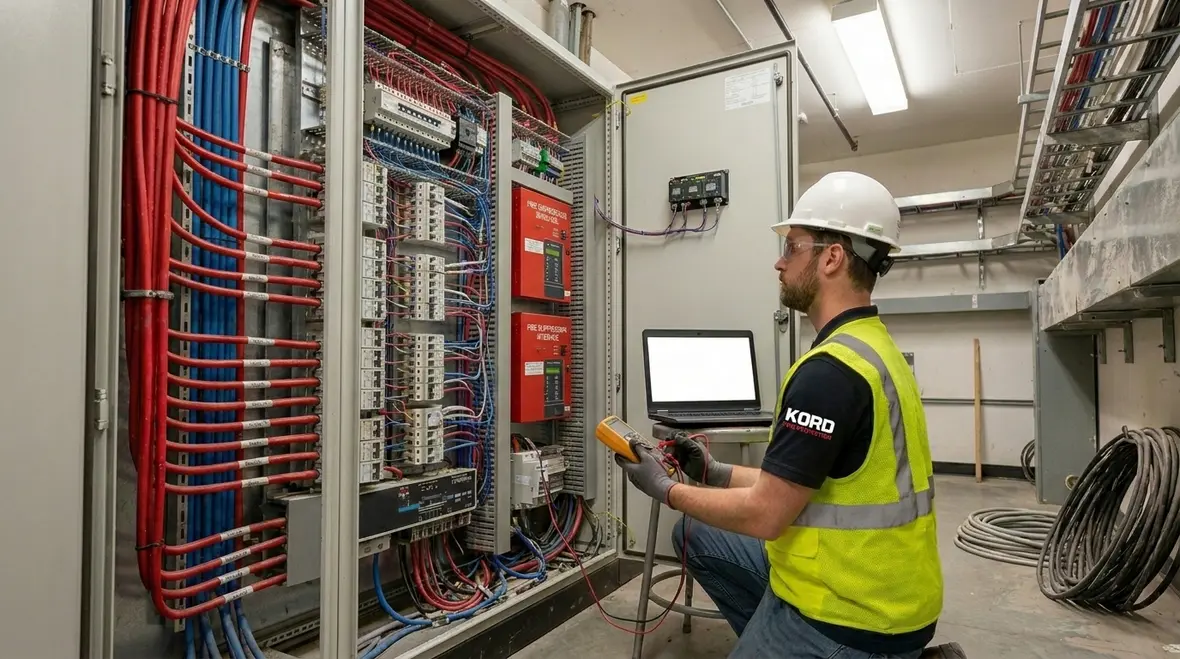
Documents that should exist before programming begins
Before anyone starts assigning points or landing wires, the project should have a written sequence of operation, coordinated riser and control drawings, device schedules, and a clear understanding of who owns each interface. That sounds obvious until a deadline shows up and everyone starts pretending the other trade definitely has it handled. A calm, documented plan usually beats a heroic last-minute scramble every single time.
This is also where inter-discipline coordination pays off. Mechanical systems, power shutdowns, door releases, and suppression discharge paths may all intersect with the fire alarm logic. If one assumption changes in the field, the integrated behavior can change with it. That is why early review matters more than post-installation regret. Regret is not listed as an approved commissioning method, and honestly it should stay that way.
Suppression activation sequencing that keeps people safe
Once detection confirms an alarm, the system moves toward action. Yet the most important part is often the timing. Suppression systems may require steps like pre discharge warnings, enclosure checks, and confirmation of alarm conditions before discharge. Consequently, the fire alarm panel must support those sequences with the correct output logic and state transitions.
Proper sequencing usually includes:
- Notification phase: occupants receive warnings with clearly defined timing
- Hold or delay phase: the system waits for verification rules and permitted release conditions
- Control phase: suppression modules receive the right commands
- Monitoring phase: the system tracks status signals and supervisory states
- Reset and restoration: the system returns to normal operation without unsafe ambiguity
As the sequence runs, the integrated system also needs to show status clearly to operators. If someone later asks, “What exactly happened during the last event?” the system should provide answers through event logs, alarm descriptions, and supervised conditions. In other words, it should not feel like a mystery novel written by a committee.
Visibility matters as much as control
A suppression event is not just about sending a release signal. Operators, service teams, and responding personnel need visibility into what triggered the sequence, whether delays were active, whether a manual hold affected timing, and whether faults were present along the way. The cleaner that visibility is, the easier it becomes to troubleshoot, document, and restore the system properly after an event or test.
Testing and commissioning for a reliable integrated system
Even a well designed interface can fail if the commissioning process skips real validation. Therefore, testing should confirm both detection behavior and control behavior. That means the team verifies that each programmed output on the Gamewell FCI platform triggers the intended suppression control input, under the correct conditions, with the right timing and supervision.
Strong commissioning typically includes:
- Point to point verification: confirm every mapped input and output function
- Functional scenario tests: test alarm and suppression sequences, including delays and permits
- Supervision checks: confirm trouble reporting, open circuit detection, and reset behavior
- Notification performance review: ensure audibility and clarity before any suppression step
- Documentation handoff: provide as built drawings, program records, and test results
Transition words matter here because commissioning has many stages. First, the team checks logic. Then, it checks wiring. After that, it checks behavior under controlled conditions. Finally, it checks documentation. This is how an integrated system earns trust instead of hoping for it.
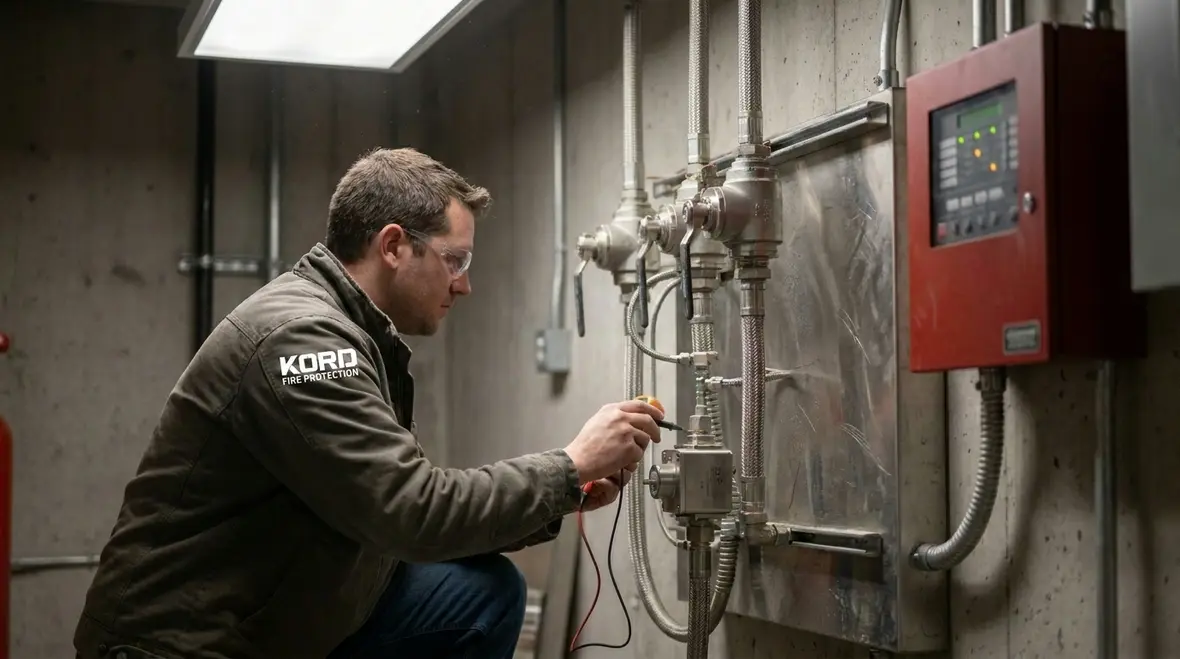
For teams that want a deeper look at how these checks support real-world readiness, Kord Fire Protection also discusses related inspection priorities in Commercial Fire Suppression Integration With Smart Automation and broader building coordination in How Commercial Building Fire Safety Systems Work. Testing is where a nice drawing either becomes a dependable system or a very expensive optimism project.
Why Kord Fire Protection becomes a vital partner
Integration work often lives at the intersection of multiple trades, multiple submittals, and multiple standards. That is exactly where Kord Fire Protection can become a vital partner. They help coordinate the practical side of the job: design review support, interface planning, and disciplined commissioning that reduces change orders and late surprises.
In addition, Kord Fire Protection supports ongoing reliability through maintenance-minded service. Because once the system is installed, real life shows up. Sensors drift, environments change, and software updates happen. When the integration includes a Gamewell FCI fire alarm panel, the ongoing tasks must still protect the suppression interface. Kord Fire Protection helps ensure that future servicing does not accidentally break sequencing, supervision, or control logic.
Think of it like this: the fire alarm panel is the conductor, and suppression is the orchestra. If someone swaps a violin string without telling the conductor, the symphony gets weird fast. Kord helps keep the whole performance in tune.
From install day to long-term support
A lot of projects focus hard on installation day and then act surprised when the real challenge becomes keeping the system reliable over time. Integrated systems need clean records, periodic validation, and technicians who understand how changes in one area can affect behavior somewhere else. If devices move, spaces change use, or software adjustments are made without rechecking the sequence, the system can drift away from its original intent. That is why disciplined support after turnover matters just as much as a smooth startup.
Common integration pitfalls and how to avoid them
Many teams run into the same problems, and they usually come from rushing. However, avoiding them is not mysterious.
- Unclear sequence of operation: teams must write it down before programming
- Mismatch between drawings and programming: as built updates must keep up with changes
- Improper supervision setup: trouble signals should match the actual wiring and control interfaces
- Inconsistent device and zoning assumptions: the system needs correct mapping for alarm routing
- Skip testing for rare scenarios: integrated events need proof, not vibes
Also, pop culture can help explain the risk. Like a movie scene where someone says “We’ll handle it later,” integration issues rarely wait politely. They show up during inspections, during occupancy, or during that one moment the system needs to behave perfectly. So the best teams treat testing and documentation as the main event, not the afterthought.
FAQ about Gamewell FCI integration with suppression systems
Ready to integrate safely and on time
Integration between a fire alarm system and a suppression system should feel controlled, testable, and understandable. Kord Fire Protection helps teams plan the sequence, verify interfaces, and maintain the setup after installation so the system performs when it truly counts. If your team is reviewing related guidance, the article Industrial Fire Suppression Integration Tips for Safer Buildings is a strong next step for broader planning insight.
When it is time to move from planning to action, explore Kord Fire Protection’s full fire protection services for support with fire alarm services, fire suppression, inspections, commissioning, and long-term system readiness. If this project needs a calm, professional partner who treats commissioning and documentation like the main goal, now is the time to act.

Join Our Newsletter!
Get the latest fire safety tips delivered straight to your inbox From our Newsletter.