
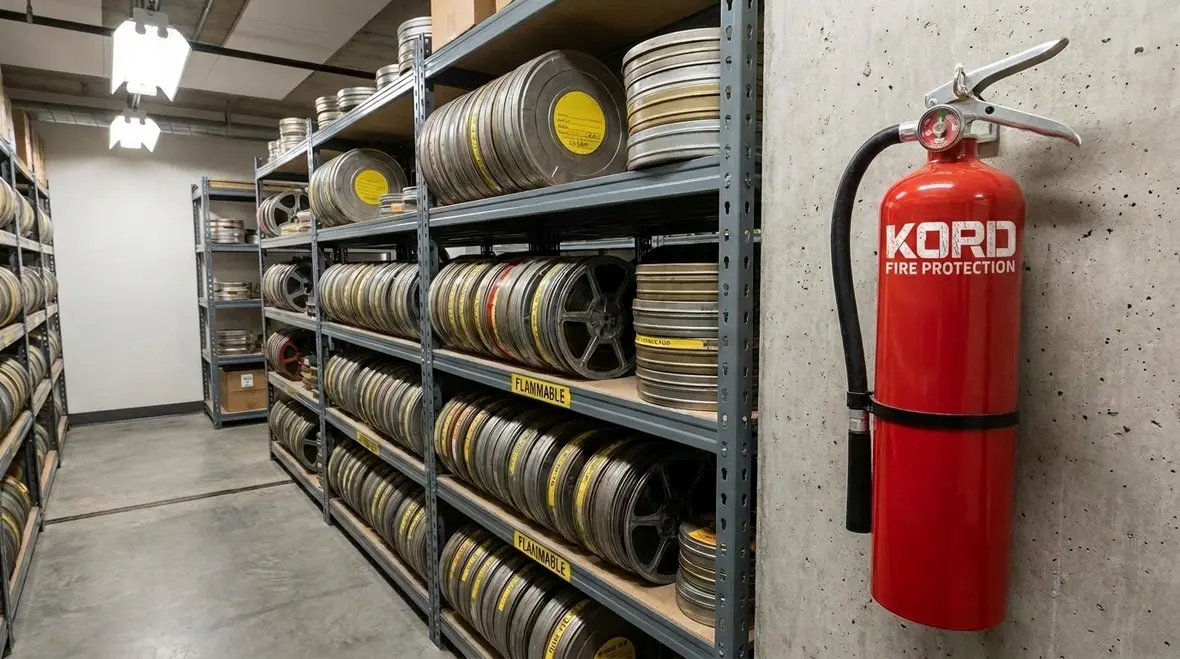
NFPA 40 Section 5.3: Portable Fire Extinguishers for Nitrate Film Locations
Quick Answer
NFPA 40 Section 5.3 sets expectations for portable fire extinguishers where nitrate film is present. Facilities must select appropriate extinguishing capabilities, ensure correct placement and access, and follow inspection, maintenance, and training practices that prevent reliance on an improperly maintained extinguisher.
For facilities reviewing portable extinguisher strategy as part of a broader suppression plan, see Portable vs Fixed Fire Suppression Options for a helpful look at how manual extinguishers fit into layered fire protection.
What does NFPA 40 Section 5.3 require where nitrate film is stored?
In nitrate film locations, the central intent of NFPA 40 Section 5.3 is practical fire control with portable extinguishers that match the hazards and are ready when needed. This is where many sites miss details during turnover, vendor changes, or deferred inspections. For facilities searching for NFPA 40 portable fire extinguisher requirements nitrate film, the compliance discussion typically focuses on selection, distribution, readiness, and ongoing serviceability of extinguishers.
Operationally, nitrate film introduces a high consequence scenario. Portable extinguishers support early intervention while trained personnel initiate evacuation, activate emergency response, and follow the site’s emergency plan. Section 5.3 addresses the “portable equipment” side of that plan, including how extinguishers are provided and kept in working order.
How Section 5.3 drives extinguisher selection in nitrate film areas
Portable fire extinguishers in nitrate film locations must be suitable for the likely fire conditions in and around storage, handling, and staging areas. That suitability is not a generic label on a plastic tag. It is a combination of extinguishing agent behavior, suitability for the fire class present in the environment, and the ability to deploy effectively by trained staff under stressful conditions.
Practical selection criteria facilities should document
- Hazard identification: nitrate film storage configuration, exposure to combustibles such as packaging, shelving materials, and nearby electrical equipment.
- Fire scenario mapping: credible ignition sources during routine operations, maintenance activities, and accidental exposures.
- Agent compatibility: confirmation that the extinguisher’s agent and discharge characteristics align with the hazards present in that space.
- Service readiness: review of inspection history, hydrostatic test intervals, internal component condition, and expected service life.
Commercial facilities often treat extinguisher selection as a one time purchase. Section 5.3 requirements are harder to comply with when the building plan changes, storage racks are reconfigured, or new adjacent processes are introduced. Kord Fire Protection supports compliance by reviewing the actual hazard layout and correlating it with extinguisher capabilities and ongoing inspection records.
Placement and access: getting extinguishers where staff can use them
Even if the extinguisher model is correct, placement failures create noncompliance in the field because extinguishers are not deployable under real conditions. In nitrate film areas, placement should support immediate access without obstruction and should align with expected egress and response paths.
Common placement failure points
- Obstructed access: locked cabinets, stored equipment in front of units, or placement behind doors that require a complicated access step.
- Wrong location assumptions: extinguishers placed based on older floor plans rather than current rack layouts and travel routes.
- Visibility and signage gaps: units present but not readily identifiable during emergencies, especially in smoke or low visibility.
- Unverified reach and path: staff cannot reach units promptly due to door swing patterns, narrow aisles, or temporary partitions.
To close these gaps, facilities should verify placement using walk down checks with floor supervisors. Kord Fire Protection can assist with compliance audits that include access review, coverage assessment, and corrective action tracking.
If placement is the pain point, Kord Fire’s Fire Extinguisher Placement Planning article is a strong companion resource for reviewing access, signage, and travel path issues.
Inspection, testing, and maintenance: the compliance line that fails most often
NFPA 40 Section 5.3 ties extinguisher expectations to the reality that portable firefighting equipment must remain in operating condition. Documentation alone does not prove readiness. Facilities need a maintenance system that addresses mechanical integrity, seal condition, gauge readability, tamper resistance, and periodic testing requirements.
What “good” looks like during extinguisher inspections
- Physical condition: no corrosion, impact damage, missing labels, or evidence of abuse.
- Tamper seal integrity: seals and pins remain intact and correctly installed.
- Pressure indication: gauges read within acceptable operating ranges for the installed model.
- Accessibility: mounts, cabinets, and bollards do not create deployment delays.
- Service intervals: hydrostatic and internal inspection schedules meet regulatory and manufacturer requirements.
Many commercial and industrial sites fall into a pattern where inspections get performed but maintenance response times are slow. A small issue such as a leaking valve or a gauge that repeatedly fails verification often turns into an “it is still working” assumption. That practice is risky and can fail during enforcement inspections.
For nitrate film locations, the operational expectation is strict readiness because staff may have only seconds to act on a developing incident. Kord Fire Protection helps facilities standardize extinguisher service, ensure traceable documentation, and reduce the likelihood of missed testing or inconsistent recordkeeping.
For a deeper maintenance angle, see Inspecting and Replacing Fire Extinguisher Parts and Common Fire Extinguisher Failures and Prevention.
Operational readiness: training, signaling, and response coordination
Section 5.3 supports early intervention, but portable extinguishers do not replace emergency procedures for nitrate film. Facilities must coordinate extinguisher availability with training, alarm and evacuation practices, and internal decision making about when to attempt versus when to evacuate.
Key coordination steps that reduce risk
- Staff training: proper extinguisher selection awareness, basic operating techniques, and safe positioning habits.
- Clear escalation: instruction for when to notify emergency response, stop handling, and evacuate.
- Drills for realistic workflow: include storage area entry, retrieval tasks, and immediate exit paths.
- Post incident controls: assessment of extinguisher use, replenishment, and verification that all units return to service status.
Facilities that handle nitrate film typically manage other life safety and fire protection components as well. Strong coordination improves the effectiveness of extinguisher deployment when someone notices early smoke or heat. For broader facility alignment, Kord Fire Protection can help integrate extinguisher program management into the overall life safety maintenance strategy.
For related fire protection program guidance, see Kord Fire Protection for commercial services focused on ongoing compliance, testing, and maintenance.
Frequently Asked Questions
Next step: validate your nitrate film extinguisher program
Schedule a compliance-focused review of your nitrate film storage and handling areas. Kord Fire Protection can verify extinguisher selection fit, placement and access, inspection performance, and maintenance history, then provide corrective actions with documentation you can defend during audits. If your facility has had recent rack, layout, or staffing changes, conduct the validation now to prevent avoidable noncompliance.

Join Our Newsletter!
Get the latest fire safety tips delivered straight to your inbox From our Newsletter.



