Gainwell Fire Alarm and Suppression Controls Service
In the first place, a Gainwell fire alarm system helps keep people safe and helps teams respond fast. When a building needs fire and suppression controls working together, the details matter more than most people think. And yes, the paperwork matters too, because fire safety does not care if someone “forgot” a step. This article explains what to know about Gainwell fire alarm and suppression controls, how installation and programming affect performance, and how kord fire protection can become a vital partner for the service and job from start to finish.

Understanding Gainwell fire alarm system and suppression control roles
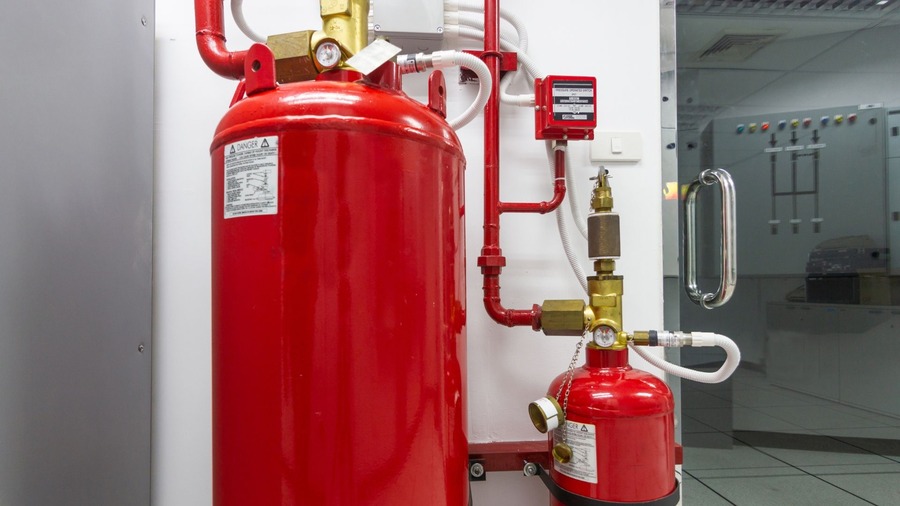
A reliable safety plan depends on two parts acting like a well rehearsed crew. The fire alarm portion detects smoke, heat, and other signals, then alerts occupants and notifies the right parties. The suppression controls portion manages systems that extinguish or control a fire, such as sprinklers, gaseous agents, or related control devices depending on the project.
Then comes the real magic: coordination. The alarm panel and control logic must align so that a detection event leads to the right response. For example, the building may need door holders to release, fans to shut down, and notification to activate, while suppression equipment gets the correct command timing. If those sequences do not match the engineered plan, teams can lose time, and systems can behave in ways the designers never intended.
Because modern buildings often include multiple zones, relays, and interfaces, the design and wiring approach matters. Furthermore, the control panel programming should reflect the building’s life safety strategy, not just a generic template downloaded from someone’s “probably fine” folder.
That is also why connected planning matters long before a final acceptance test. Kord Fire Protection discusses similar coordination challenges in Fire Protection Systems Components and Coordination and in Fire Alarm Integration for Smarter Building Safety, where detection, control, notification, and suppression are treated like one system instead of a pile of expensive strangers.
Key components people overlook during planning
Most teams focus on the panel first, but other items carry equal weight. For example, detection devices must match the space. A dusty storage room does not behave like a clean office, and the alarm strategy should account for that. Similarly, notification appliances need the right placement so people hear alerts where they actually walk, not where the drawings say they might stand.
Meanwhile, suppression controls depend on correct integration. That means the system must provide the proper signals to fire pumps, valves, solenoids, or releasing panels as required. In addition, monitoring points need careful attention. If a supervisory signal does not report a trouble condition, someone may discover it only after it has already cost them reliability.
Also, interfaces with other building systems matter. These can include elevators, smoke control, dampers, and emergency power monitoring. If these links get treated like optional side quests, the whole mission can stumble.
Where planning usually gets too casual
Another issue is assuming every relay point, module, and interface will simply sort itself out in the field. It will not. Buildings with multiple zones, tenant needs, and mechanical systems require exact coordination between drawings, device lists, and programming notes. Kord Fire’s recent article Fire Suppression Electrical Interface for Reliable Protection is especially useful here because it highlights how signal paths and control intent have to match, not just exist on paper.
How to avoid misprogramming and sequence problems
Gainwell fire alarm system performance depends heavily on programming accuracy. Therefore, teams should treat it like a safety-critical logic engine, not a configuration checkbox. The sequence of operations should align with the local code requirements and the engineered life safety plan.
Common failure points include confusing input types, incorrect zone mapping, or delays that do not match the building’s intent. For instance, if the system waits too long before initiating suppression-related actions, a small event can become a bigger one. Conversely, if actions trigger too early, the system may activate suppression in situations that should not require it.
To reduce risk, contractors should confirm device addresses, verify wiring continuity, and test each step of the sequence. Next, they should run functional tests that simulate real events. Then, they should document results clearly so the service team can repeat them later without guessing.
As a humorous reality check, fire systems do not care that someone “meant to” update a database. The panel runs what it has, not what a person remembers.
Installation best practices for real-world reliability
Good installation starts long before power gets turned on. It includes correct device spacing, secure mounting, correct wire types, and clean labeling. However, the process becomes most important when multiple trades share the same space. If electricians, sprinkler contractors, and low voltage installers do not coordinate, interfaces can get misrouted, and a single missing link can lead to a failed inspection.
Furthermore, teams should protect devices from damage during construction. Panels, detectors, and control modules can suffer from dust, humidity, or mechanical impact. Even if the system powers up, hidden damage can reduce sensitivity or cause intermittent trouble signals later.
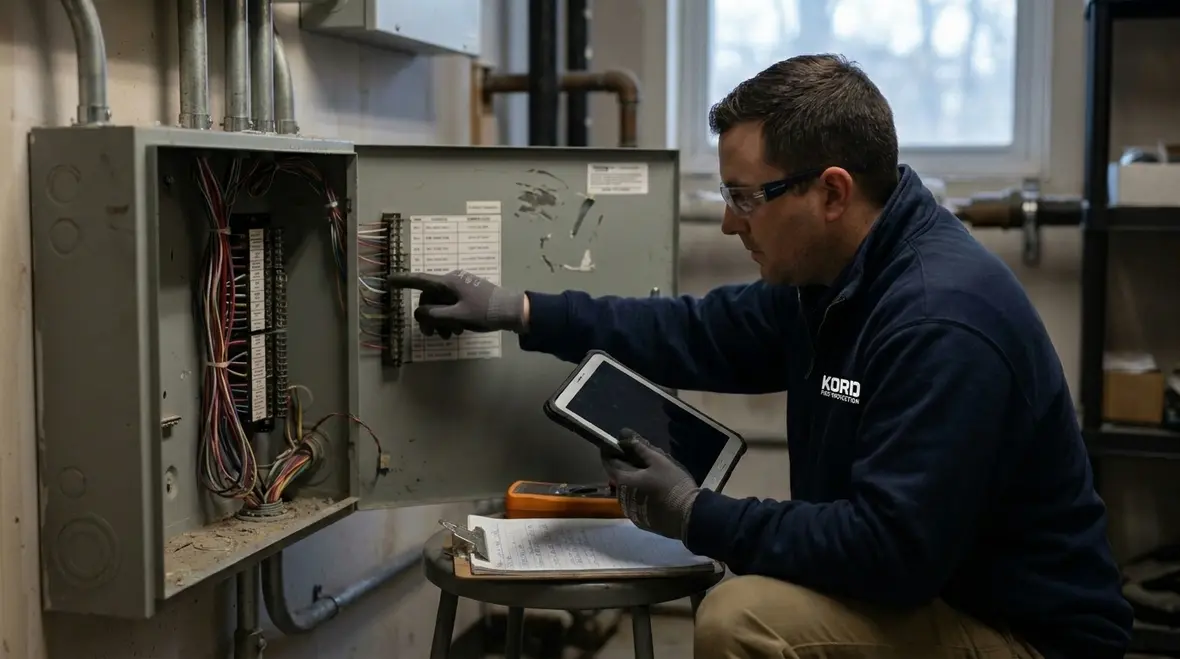
Then there is commissioning and testing. Contractors should verify alarm audibility and visible notification coverage where needed. They should confirm suppression control inputs and ensure that releasing or valve operations behave as designed. After that, they should perform point-to-point checks and record outcomes so that future service uses the same baseline.
When the job runs smoothly, it feels calm. When it does not, everyone learns humility fast, usually right before the inspector arrives.
For a broader look at how these handoffs should work, Kord Fire also covers this in Fire Suppression System Integration for Life Safety. If the project involves automation layers, Commercial Fire Alarm Integration for Safe Building Automation is another useful internal read before someone starts assuming the mechanical room runs on good vibes.
Maintenance, inspections, and what “service-ready” really means
Maintenance keeps the system dependable. Yet many owners treat it like a yearly chore rather than a risk control. For Gainwell fire alarm system and suppression controls, service-ready means the right people can access the system quickly, the logs reflect real history, and the control logic matches current building use.
During inspections, service teams should review trouble reports, verify that devices still respond properly, and check that interfaces remain intact. They should also confirm that suppression-related hardware shows no signs of corrosion, loose connections, or damaged wiring runs.
Just as important, the service plan should account for changes. If a tenant remodel adds new equipment or alters airflow paths, detection and notification strategies may need adjustment. If storage arrangements change, smoke sensitivity settings might require review. And if life safety drawings get out of date, technicians lose time hunting for the “right” version.
In that moment, a partner like kord fire protection can help because it supports more than just repairs. It helps maintain a consistent service rhythm, keeps documentation organized, and supports system performance so the building stays ready, not just compliant.
Why kord fire protection strengthens the job
Fire and suppression controls succeed when the team handles them with care, not with guesswork. kord fire protection can become a vital partner by supporting planning, installation coordination, and long term service. Since these systems often connect to many building components, having a knowledgeable partner helps reduce gaps between trades and improves test outcomes.
In practice, a strong partner helps teams do three things well. First, it aligns system design intent with real wiring and device placement. Second, it verifies integration points so alarm actions and suppression actions match the engineered response. Third, it provides ongoing service that keeps the system consistent over time, even when the building changes around it.
That means fewer surprise issues during inspections and smoother handoffs after commissioning. And if the building ever needs fast troubleshooting, the team already understands the logic and history, so response time stays quick.
Near the end of planning, teams often need a direct path to qualified help, not another vague promise. Kord Fire’s Fire Suppression Systems service page is the most relevant service resource for projects that need coordination between alarm response and suppression performance. It also pairs naturally with the article Industrial Fire Suppression Integration Tips for Safer Buildings when the scope includes more demanding facilities and more moving parts.
FAQ for Gainwell fire alarm system and suppression controls
Call kord fire protection for dependable support
A dependable fire safety strategy needs correct installation, careful programming, and ongoing service that matches how the building operates. When Gainwell fire alarm and suppression controls get handled with attention, teams gain confidence and speed during emergencies. For projects that require coordination across trades and clear documentation for inspections, kord fire protection can step in as a strong partner.
Reach out today to discuss your scope, your testing needs, and a service plan built for long term reliability. Start with Kord Fire’s Fire Suppression Systems page, and if your project involves more advanced coordination, continue with Industrial Fire Suppression Integration Tips for Safer Buildings for the next step.

Join Our Newsletter!
Get the latest fire safety tips delivered straight to your inbox From our Newsletter.