
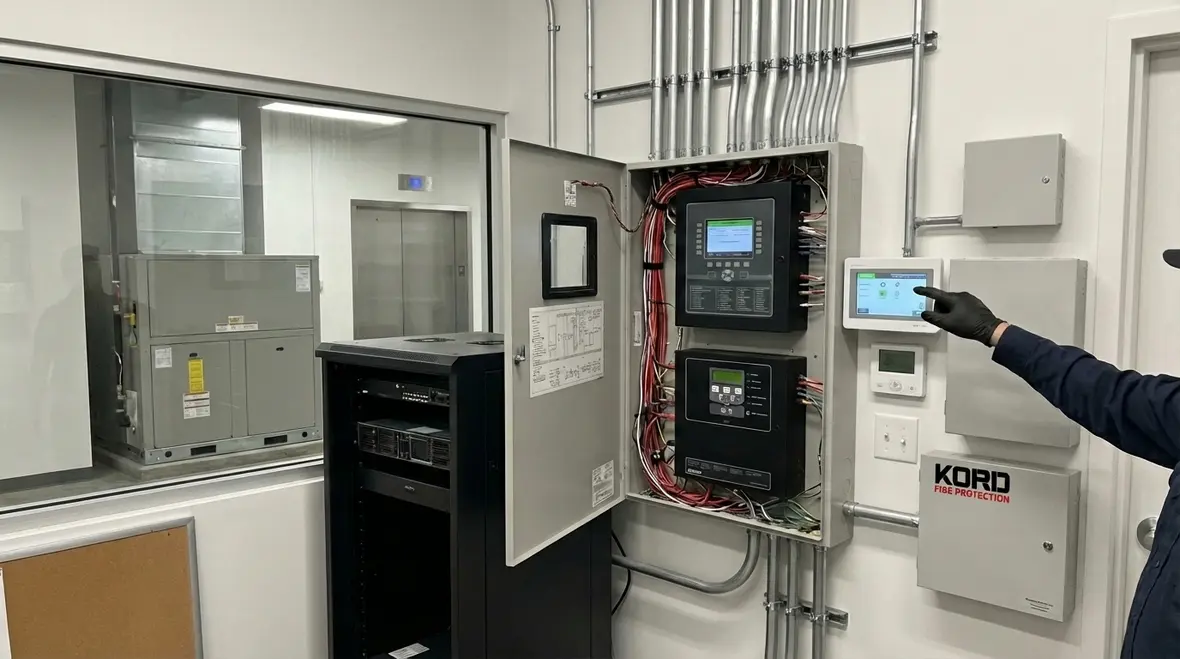
Fire Alarm Integration for Smarter Building Safety
Buildings are more than steel and concrete. They are living systems filled with people, technology, and constant motion. At the heart of protecting those spaces sits Fire Alarm Integration, a strategy that connects fire detection systems with other building operations to create a seamless safety network. When alarms, sprinklers, access control, elevators, HVAC units, and monitoring platforms work together, response becomes faster, smarter, and far more effective.
Kord Fire Protection technicians often explain it this way: a single smoke detector shouting into the void is helpful. But an entire building responding in harmony? That is safety with purpose. And yes, even the calmest building deserves a coordinated plan, because smoke does not politely wait for everyone to finish their coffee.
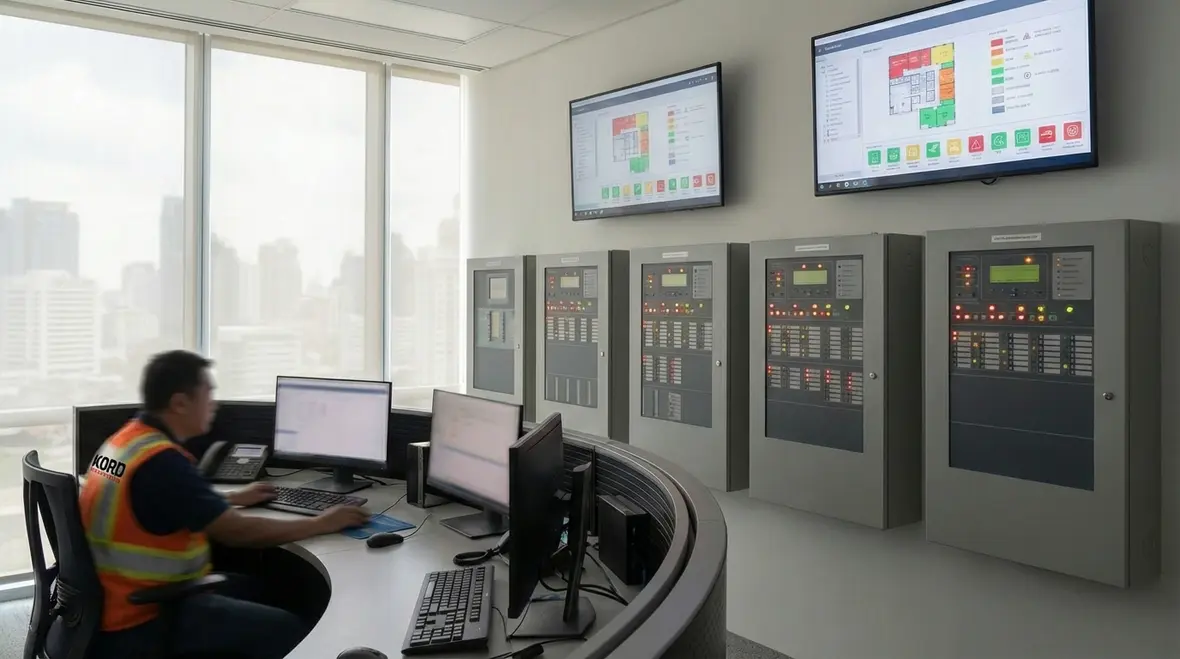
What Is Fire Alarm Integration and Why Does It Matter?
In simple terms, fire alarm integration connects the fire alarm system to other critical building systems. Instead of operating in isolation, each component communicates instantly when a threat appears.
For example, when smoke triggers a detector, the integrated system can:
- Unlock exit doors
- Shut down air handling units to prevent smoke spread
- Recall elevators to a safe floor
- Activate emergency lighting
- Notify monitoring centers and first responders
Because everything works together, response time shrinks dramatically. Moreover, confusion drops. People receive clear signals. Systems act automatically. Emergency teams walk into a situation that is already stabilized.
Kord Fire Protection technicians frequently remind property managers that buildings without integration often rely on manual coordination. That delay, even if it lasts only minutes, can cost thousands in damage and, more importantly, put lives at risk.
In other words, integration transforms a reactive building into a proactive one. And in safety, proactive always wins.
To see how integration supports broader protection strategies in real-world settings, you can explore resources like Kord Fire’s restaurant fire suppression guide, which highlights how alarms, suppression, and monitoring work together in commercial kitchens across Camarillo and beyond.
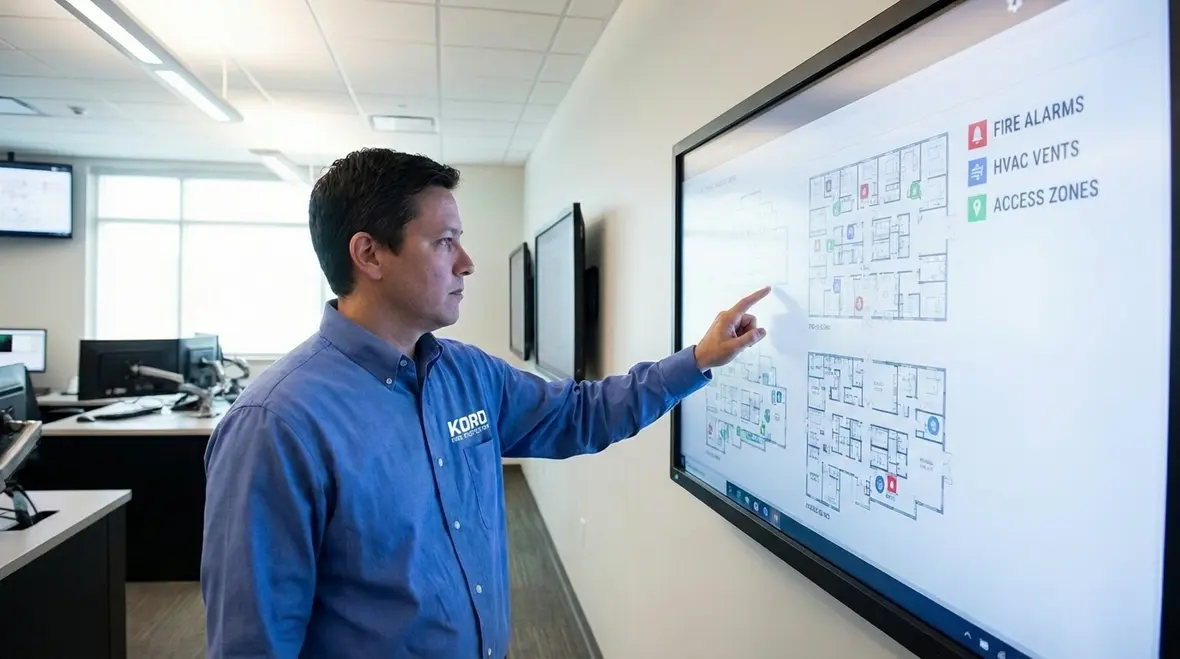
How Connected Systems Strengthen Daily Safety Operations
Many assume integrated fire systems only matter during emergencies. However, their value shows up long before smoke fills a hallway.
Integrated systems provide centralized monitoring. Facility managers can view alarms, supervisory signals, and system health from one interface. As a result, maintenance teams identify faults early. A failing device does not hide in a forgotten corner of the building.
Additionally, integration improves routine testing. When technicians perform inspections, they can confirm that connected systems respond correctly. Sprinkler flow switches trigger alarms. Door releases activate as programmed. Everything follows a predictable chain of action.
Kord Fire Protection technicians often compare it to rehearsing a play. Every actor knows their cue. When the curtain rises, there is no awkward silence. The same principle applies to life safety systems. Coordination reduces chaos.
Furthermore, integrated systems support compliance with local and national fire codes. Documentation becomes easier to manage. Reports stay centralized. Audits become less stressful. And no one enjoys a surprise from a fire marshal, unless that surprise is a compliment.
Everyday benefits beyond emergencies
Outside of alarm events, integration helps with trend tracking, nuisance alarm reduction, and planning upgrades. By seeing how often certain devices trigger or how systems interact, facility teams can fine-tune settings and schedule timely maintenance.
The Real Time Coordination That Saves Lives
When a fire begins, seconds matter. Integrated fire protection systems act without hesitation.
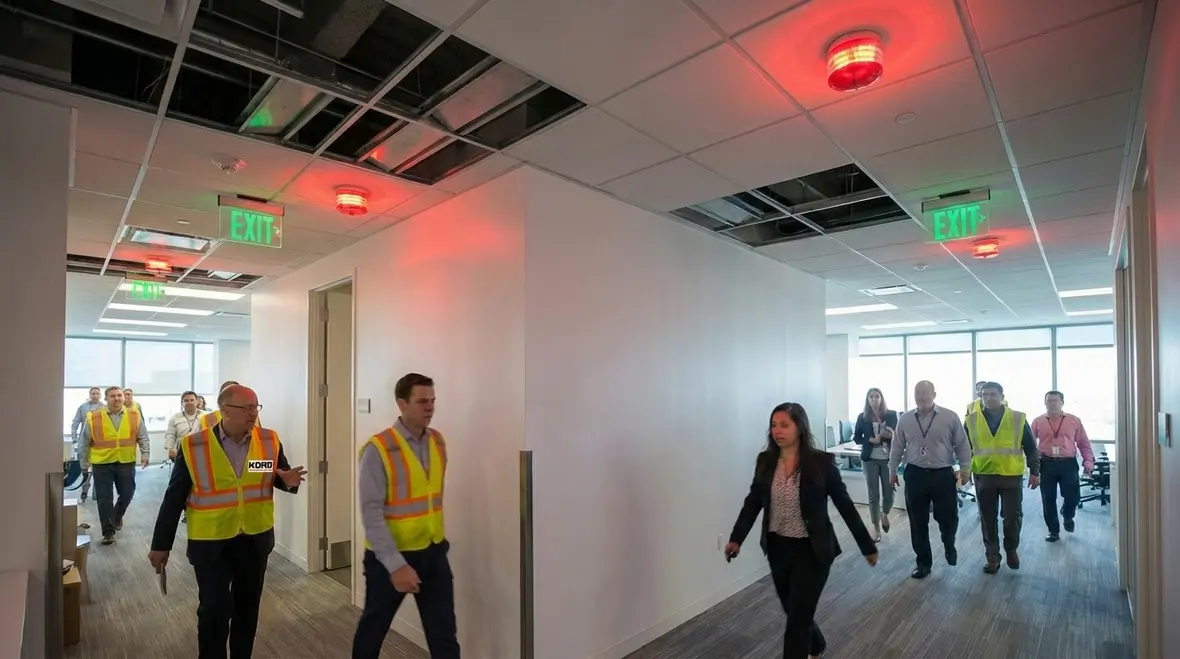
First, detectors sense smoke or heat. Immediately, the control panel processes the signal. Then, programmed sequences activate across the building. Doors release. Fans shut down. Notification devices sound. Monitoring centers receive alerts. Because these steps occur simultaneously, evacuation begins sooner and spreads more smoothly.
Equally important, integration reduces human error. Staff members do not scramble to flip multiple switches or call several vendors. The system executes pre planned actions automatically.
Kord Fire Protection technicians often explain that integration creates layers of defense. If one safeguard fails, another supports it. For instance, if a smoke compartment door does not close fully, the HVAC shutdown still limits smoke travel. Redundancy becomes a quiet hero.
And while Hollywood loves dramatic explosions, real safety depends on controlled response. Integrated systems deliver that control with calm precision.
From chaos to choreography
In a well-integrated building, alarms, voice evacuation messages, lighting, and door controls work like a choreographed routine. Occupants receive clear instructions and find clear paths, while first responders gain accurate information about what is happening and where.
Comparing Standalone Systems and Integrated Protection
To better understand the impact, consider how standalone systems differ from integrated ones.
Standalone Systems
- Operate independently
- Require manual coordination
- Limited communication between devices
- Slower response during complex events
- Separate monitoring platforms
Integrated Systems
- Communicate across platforms
- Automate coordinated responses
- Centralize monitoring and data
- Reduce response time significantly
- Support code compliance documentation
The difference is not subtle. One setup reacts in pieces. The other acts as a unified network.
Kord Fire Protection technicians often walk clients through these comparisons during consultations. Once building owners see how integration simplifies operations, the decision becomes clearer. After all, juggling multiple disconnected systems feels like trying to manage a group chat where nobody reads the same message. It rarely ends well.
Planning a Smart Integration Strategy for Your Building
Successful fire alarm integration begins with thoughtful planning. Every building has unique needs based on size, occupancy, and use.
First, professionals assess existing systems. They evaluate control panels, detection devices, sprinkler connections, and building automation platforms. Next, they identify compatibility requirements. Not all systems speak the same technical language, so proper configuration matters.
Then comes programming. Engineers create cause and effect sequences that define how each component reacts. For example, a smoke detector in a mechanical room may trigger a different response than one in a lobby. Customization ensures the system fits the building rather than forcing the building to fit the system.
Kord Fire Protection technicians emphasize testing at every stage. They simulate alarm events and confirm each linked system performs as expected. Because assumptions create risk, verification becomes essential.
Moreover, staff training plays a critical role. Even the most advanced system requires informed operators. Facility teams must understand control panels, emergency procedures, and reporting protocols. When technology and people align, safety strengthens.
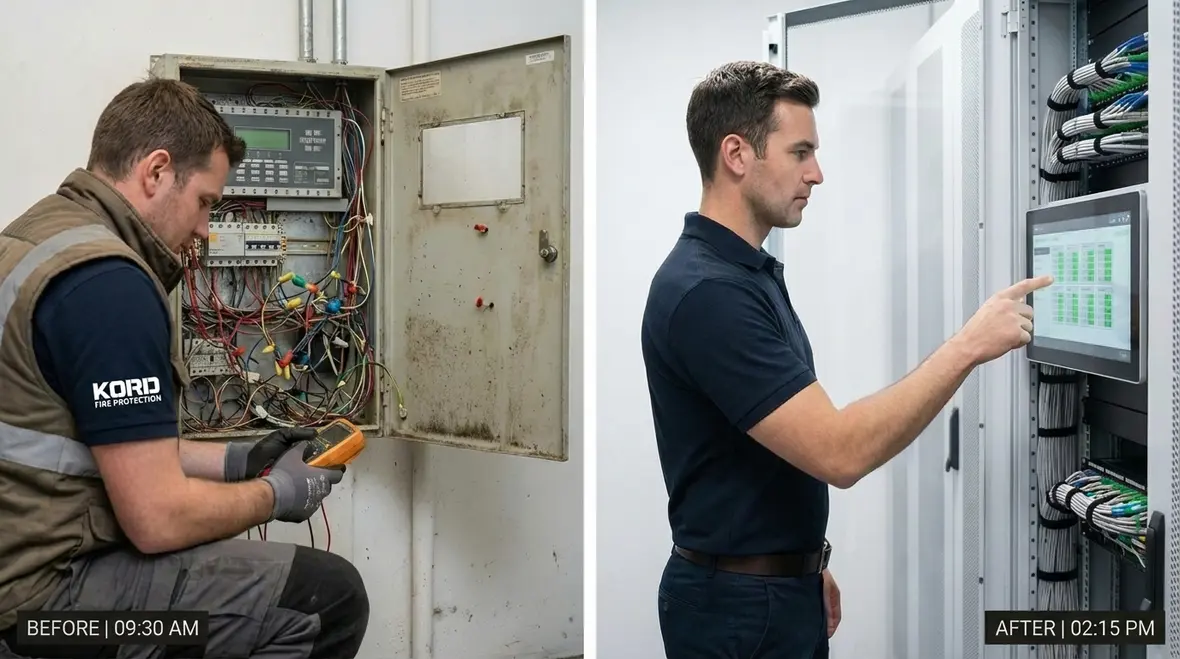
Integration with Modern Building Technology
Today’s buildings rely heavily on digital infrastructure. Therefore, integrated fire protection systems often connect with building management systems and cloud based monitoring tools.
Through these connections, facility managers receive real time alerts on mobile devices. They can review system status remotely. In some cases, predictive analytics identify trends that suggest maintenance needs before failures occur.
Additionally, integration supports energy management strategies. During an alarm event, HVAC systems shut down only in affected zones instead of across the entire building. This targeted approach limits disruption while maintaining safety.
Kord Fire Protection technicians explain that modern integration balances safety with operational efficiency. It does not simply sound alarms. It manages the building intelligently. And while no system replaces human judgment, smart automation provides valuable support.
Of course, cybersecurity also enters the conversation. Connected systems require protection from unauthorized access. Skilled technicians configure secure networks and follow industry standards to safeguard data. Because in today’s world, even fire alarms need digital bodyguards.
Why Professional Expertise Makes the Difference
Integration is not a plug and play upgrade. It demands experience, code knowledge, and technical skill.
Kord Fire Protection technicians bring hands on expertise to every project. They understand local regulations. They stay current with national standards. They coordinate with electricians, engineers, and inspectors to ensure smooth implementation.
Furthermore, they focus on long term reliability. Proper wiring, clean panel programming, and thorough documentation prevent future headaches. Because while shortcuts may save time today, they create expensive problems tomorrow.
Technicians also provide ongoing inspection and maintenance services. Integrated systems evolve as buildings expand or change use. Regular reviews keep the safety network aligned with current needs.
In many ways, integration resembles conducting an orchestra. Each instrument matters. However, without a skilled conductor, harmony fades. Professional oversight ensures every component plays its part.
Frequently Asked Questions
Strengthen Safety with Intelligent Coordination
Buildings deserve more than isolated alarms and hopeful planning. They deserve coordination, speed, and dependable protection. Through expert Fire Alarm Integration, property owners create safer environments for occupants while simplifying daily operations. Kord Fire Protection technicians stand ready to assess, design, and implement systems that respond with precision when it matters most.
If you manage facilities in areas like Porterville or other California communities, exploring Kord Fire’s local fire protection service pages can help you understand how integrated alarms fit into broader suppression, sprinkler, and monitoring strategies tailored to your jurisdiction.
Connect with the Kord Fire Protection team today and transform your building into a smarter, safer space prepared for whatever comes next. Their technicians can evaluate your existing fire alarm, design integration with sprinkler, suppression, and monitoring systems, and provide long term inspection support so your protection stays ready year round.
Next step: Schedule a building fire alarm and integration assessment through Kord Fire’s Fire Alarm Services offering and request a coordinated plan that aligns detection, notification, suppression, and monitoring into one intelligent safety framework.
Know Your Weapon Before You Fight the Flame
Kord Fire Protection is your go-to when it comes to all things fire protection. For over 20 years, we’ve been serving Southern California with the quality service and equipment to keep your home or business safe at all times. Our competitive prices reflect our unwavering commitment to protecting what matters most in the event of a fire emergency. Give us a call, send an email, or use that form!

Join Our Newsletter!
Get the latest fire safety tips delivered straight to your inbox From our Newsletter.


