FM 200 vs Novec 1230 vs Inert Gas Guide
FM 200 vs Novec 1230 vs Inert Gas is a comparison that facility managers, data center owners, and risk officers hear almost daily. Yet, when alarms are silent and equipment hums along peacefully, fire suppression rarely feels urgent. Until it is. Then, suddenly, the choice of clean agent matters more than the morning coffee.
In the world of mission critical protection, selecting between FM 200, Novec 1230, and inert gas systems requires more than a quick glance at a brochure. It demands a clear understanding of performance, safety, environmental impact, and long term value. Fortunately, Kord Fire Protection technicians spend their days explaining these systems in plain language, turning complex chemistry into practical decisions. What follows is a grounded, detailed guide that walks through the differences and helps decision makers choose wisely.
Understanding Clean Agent Fire Suppression Systems
Clean agent systems extinguish fires without leaving residue. Unlike traditional sprinkler systems, they do not soak servers, archives, or control panels. Instead, they release a gas that interrupts combustion. As a result, operations can often resume quickly after discharge.
There are two primary types of clean agents. First, chemical agents such as FM 200 and Novec 1230 absorb heat and disrupt the chemical reaction of fire. Second, inert gas systems reduce oxygen levels to a point where fire cannot sustain itself, yet people can still breathe safely for a short time.
Kord Fire Protection technicians often explain it this way. Fire needs heat, fuel, and oxygen. Take away one of those, and the fire goes out. Chemical agents remove heat. Inert gases lower oxygen. Different paths. Same destination. A safe facility.
However, while the goal is identical, the route each system takes affects storage space, environmental footprint, refill costs, and safety planning. Therefore, understanding the science behind each option is essential before making an investment. For a deeper dive into how the major clean agent types compare across different facilities, many teams pair this guide with Kord Fire Protection’s explainer on the different types of clean agent fire suppression systems.

FM 200 vs Novec 1230 vs Inert Gas Explained for Facility Managers
When decision makers search for clarity on FM 200 vs Novec 1230 vs Inert Gas, they usually want simple answers. What works fastest. What lasts longest. What regulators approve. What will not cause trouble ten years from now.
FM 200
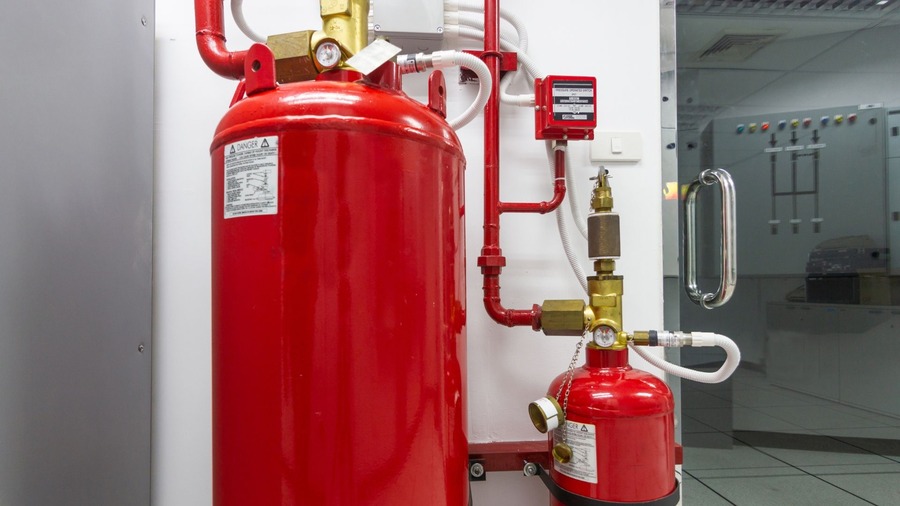
FM 200 is a hydrofluorocarbon agent that suppresses fire primarily by absorbing heat. It discharges rapidly, usually within ten seconds. Because of this speed, it is highly effective in data centers, telecom rooms, and medical facilities where even seconds of fire growth can mean massive loss.
Moreover, FM 200 requires less storage space compared to inert gas systems. Cylinders are smaller, which makes retrofits easier. That is why many older buildings favor FM 200 installations.
However, there is an environmental consideration. FM 200 has a higher global warming potential compared to newer alternatives and is currently being phased down under evolving regulations. Long term planning must account for environmental policy trends and the increasing focus on FM 200 phase out strategies, topics Kord Fire covers extensively in their FM 200 fire suppression changes and alternatives guide.
Novec 1230
Novec 1230 is a newer chemical agent designed with environmental sustainability in mind. It has an extremely low global warming potential and a short atmospheric lifetime. In other words, it does its job and then politely exits the atmosphere.
Like FM 200, it discharges quickly and leaves no residue. In addition, it offers a wide safety margin for occupied spaces. Many organizations choose it for facilities where people are present during operation.
Kord Fire Protection technicians often describe Novec 1230 as the environmentally conscious cousin of FM 200. It performs similarly, yet it aligns more comfortably with sustainability goals. For companies with public environmental commitments, that distinction matters, even as the industry keeps an eye on supply changes and long term Novec 1230 availability.
Inert Gas Systems
Inert gas systems use naturally occurring gases such as nitrogen, argon, or blends of both. Instead of absorbing heat, they reduce oxygen levels from about 21 percent to roughly 12 to 15 percent. At that level, combustion stops.
Because inert gases exist naturally in the atmosphere, they have no global warming potential. That makes them highly attractive from an environmental standpoint. Furthermore, they are not subject to the same regulatory pressures as some chemical agents.
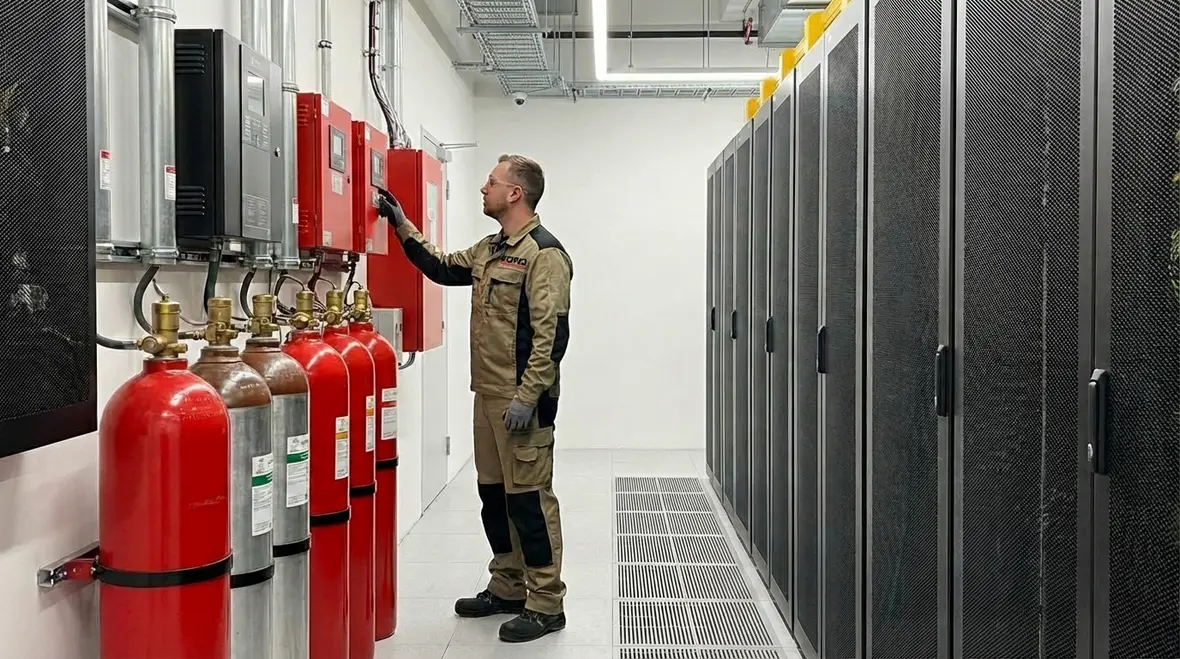
However, inert gas systems require larger storage cylinders and higher discharge pressures. Consequently, they demand more physical space and stronger structural considerations. Kord Fire Protection technicians always assess room integrity and venting requirements before recommending this option, often referencing best practices from NFPA 2001 guidelines and their own field experience with Inergen and similar blends.
Performance and Speed: What Happens When Seconds Matter?
In fire protection, time is everything. A few extra seconds can mean the difference between a minor incident and a catastrophic loss.
FM 200 and Novec 1230 discharge rapidly, typically reaching design concentration within ten seconds. Therefore, they suppress flames at an early stage. This rapid action helps minimize heat damage and smoke production.
Inert gas systems also act quickly. However, because they rely on reducing oxygen levels throughout the space, the distribution dynamics differ slightly. Even so, when properly designed, inert systems meet the same fire protection standards as chemical agents.
Where the difference appears is in pressure dynamics. Inert gas releases can create significant room pressure changes. As a result, pressure relief venting becomes critical. Chemical agents generally operate at lower pressures, which simplifies some installations.
Kord Fire Protection technicians emphasize proper room sealing tests for all systems. After all, the best agent in the world will fail if it cannot maintain concentration. That would be like buying the latest superhero suit and forgetting to charge the battery.
Environmental Impact and Regulatory Considerations
Environmental impact often drives the clean agent comparison discussion. While all three options qualify as clean agents, their long term atmospheric effects differ.
FM 200, though effective, carries a higher global warming potential. Therefore, some organizations anticipate future restrictions or phasedown policies. It remains legal and widely supported, yet forward thinking companies weigh regulatory trends carefully and track updates on the FM 200 phase out as part of their capital planning.
Novec 1230 offers an ultra low global warming potential and short atmospheric lifetime. Consequently, it has become a preferred solution for sustainability focused enterprises. Many green building initiatives favor this profile.
Inert gases, composed of natural atmospheric elements, present virtually no environmental risk. They do not deplete ozone and do not contribute to global warming. Because of this, they often appeal to institutions planning decades ahead and looking for maximum regulatory stability.
Nevertheless, environmental impact is not the only factor. Facility design, space constraints, and budget must align with sustainability goals. Kord Fire Protection technicians guide clients through these tradeoffs, balancing environmental responsibility with practical feasibility.
Installation, Space Requirements, and Cost Factors
Budget conversations tend to bring clarity. Clean agent systems involve upfront equipment costs, installation labor, and long term maintenance.
Chemical agents such as FM 200 and Novec 1230 typically require fewer cylinders. Therefore, they occupy less storage space. This can reduce construction modifications in retrofit projects.
Inert gas systems, by contrast, require more cylinders at higher pressures. As a result, they may demand reinforced storage areas and additional venting. For new construction, this can be designed in from the start. For older facilities, it may add complexity.
Below is a simplified dual column overview that Kord Fire Protection technicians often use during consultations.
Chemical Agents
- Smaller cylinder footprint
- Fast discharge time
- Minimal structural reinforcement needed
- Environmental profile varies by agent
Inert Gas Systems
- Larger storage requirements
- High pressure discharge
- Strong environmental credentials
- May require additional venting design
Cost varies by region and application. However, decision makers should evaluate lifecycle cost rather than initial price alone. Refilling, regulatory changes, and future expansion plans all influence total ownership cost.
Safety for Occupied Spaces
People matter more than property. Therefore, any suppression system must prioritize human safety.
FM 200 and Novec 1230 are safe for occupied areas when designed within approved concentration limits. They extinguish fire without significantly reducing oxygen levels. As a result, occupants can typically exit safely during discharge.
Inert gas systems lower oxygen to levels that stop combustion yet remain survivable for short durations. Healthy adults can function briefly at reduced oxygen levels, similar to being at high altitude. Nevertheless, clear evacuation procedures are essential.
Kord Fire Protection technicians train staff to understand alarms, pre discharge warnings, and exit routes. Because even the best system works best when people know what to expect.
How to Choose the Right Clean Agent for Your Facility
Selecting among these systems requires a structured evaluation. First, assess the type of assets protected. Data centers, museums, healthcare facilities, and manufacturing plants each present unique risks.
Second, evaluate available space for cylinders and venting. If space is tight, chemical agents may offer advantages. If environmental neutrality stands at the top of the priority list, inert gas or Novec 1230 may lead the conversation.
Third, consider long term compliance and corporate sustainability goals. Regulations evolve. Therefore, aligning with future expectations reduces the chance of costly upgrades.
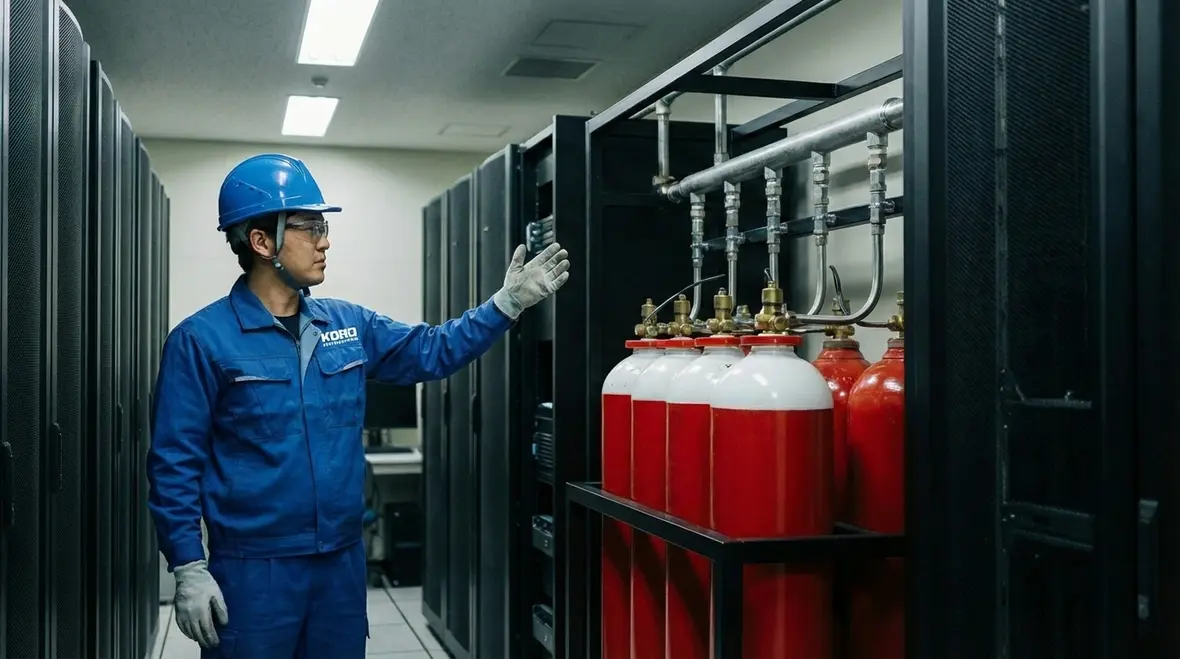
Finally, consult experienced professionals. Kord Fire Protection technicians conduct site surveys, airflow analysis, and enclosure integrity testing. They translate technical standards into clear recommendations. In doing so, they remove guesswork and replace it with confidence.
Choosing a suppression system is not about picking a favorite brand. It is about aligning science, safety, and strategy. And yes, sometimes it is also about fitting cylinders into a room that already feels like a game of Tetris.
If you are protecting high value equipment or mission critical spaces and want to see how these agents work in real world designs, Kord’s overview of clean agent systems for high value equipment protection pairs well with this comparison. When you are ready for a tailored plan, their clean agent fire suppression services page outlines how design, installation, and maintenance come together in one coordinated program.
Frequently Asked Questions
Conclusion: Protect What Matters Most
Fire does not schedule appointments. Therefore, preparation must happen before smoke ever appears. Whether the choice involves FM 200, Novec 1230, or inert gas, the right system protects assets, people, and peace of mind. Kord Fire Protection technicians stand ready to evaluate facilities, explain options clearly, and design solutions that last.
Reach out today, because the best time to plan for a fire is when there is not one. If you are weighing a retrofit, responding to FM 200 phase out concerns, or designing a brand new mission critical space, start by requesting a consultation through Kord’s clean agent fire suppression services page so the system you choose today still makes sense a decade from now.
Know Your Weapon Before You Fight the Flame
Kord Fire Protection is your go-to when it comes to all things fire protection. For over 20 years, we’ve been serving Southern California with the quality service and equipment to keep your home or business safe at all times. Our competitive prices reflect our unwavering commitment to protecting what matters most in the event of a fire emergency. Give us a call, send an email, or use that form!

Join Our Newsletter!
Get the latest fire safety tips delivered straight to your inbox From our Newsletter.