Standpipe Pressure Monitoring Electrical Components for Remote Alerts
Remote Standpipe Monitoring Starts With Standpipe pressure monitoring electrical
Remote standpipe pressure monitoring depends on smart, reliable Standpipe pressure monitoring electrical design from the very first connection point. In the field, Kord Fire Protection technicians often explain that the system is only as dependable as its wiring, sensors, power paths, and protective devices. And yes, it still needs to work when the rest of the building decides to get complicated. After all, pressure alarms do not care about bad planning, just like a villain in a movie who always finds the one weak door. From power supplies to communication modules, the electrical components quietly do the heavy lifting while the rest of the team watches pressure trends with confidence.
That is why the electrical side of remote monitoring deserves more attention than it usually gets. Everyone notices a pressure reading on a dashboard. Fewer people think about the regulated voltage feeding the transducer, the relay logic confirming an event, or the signal path surviving a noisy electrical room without turning useful data into nonsense. Yet those quiet details are exactly what make remote alerts trustworthy. If the electrical backbone is weak, the monitoring system can become the life safety version of a group chat where half the messages arrive late and the other half make no sense.
Which electrical components power remote sensors and alarms?
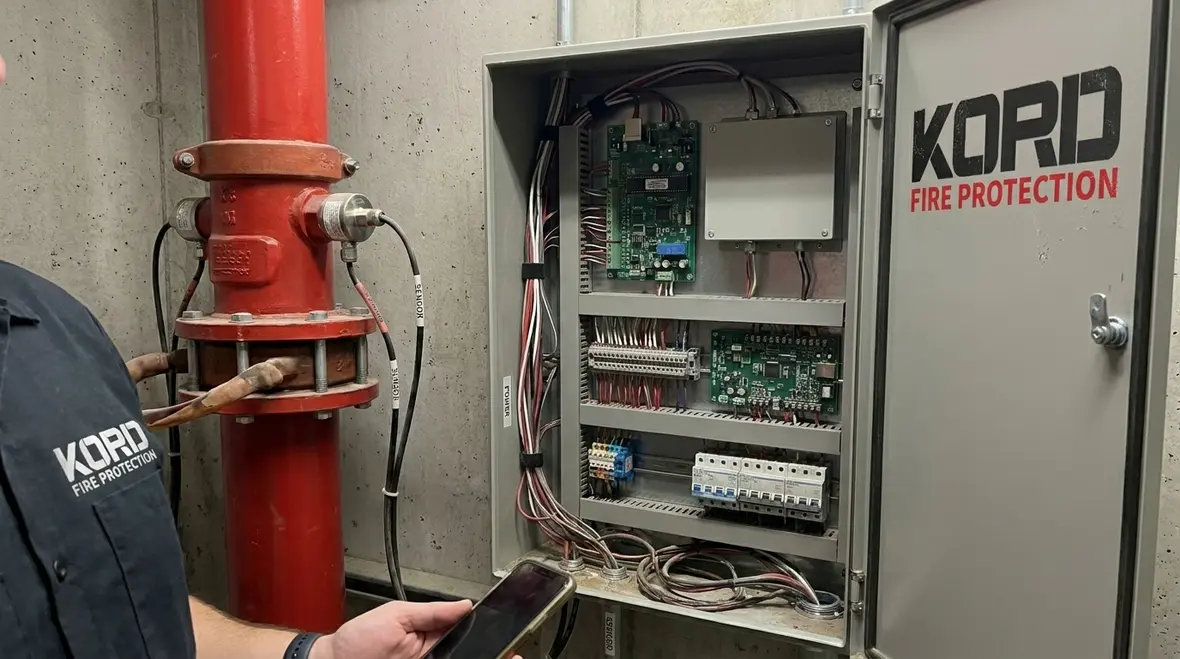
To understand how a remote standpipe pressure system stays online, a reader must start with the core electrical parts. First, the system needs a stable power distribution path. Then it adds control and monitoring circuits that read sensor signals, compare them to setpoints, and send alerts. Finally, it includes alarm output devices so a monitoring panel or remote receiver can act quickly.
Typically, Kord Fire Protection technicians walk clients through these building blocks in plain language. For example, when a valve shifts or a pump status changes, the sensors convert real-world pressure into electrical signals. After that, the control circuit turns those signals into data that the monitoring platform can log and display. Therefore, the system must manage both clean power and clear signal integrity, or the alarms will sound like a broken microphone at karaoke.
- Power supply units that convert incoming voltage to the levels the electronics require
- Field wiring harnesses and terminals that carry signals from sensors to the controller
- Control and interface boards that interpret readings and manage status
- Alarm relays or output modules that trigger notifications
In a well-planned setup, none of those components work in isolation. Each one supports the others. The power supply keeps the controller stable, the controller interprets the sensor, the interface board sends clean data, and the alarm relay translates that information into action. Remove one weak link and the whole chain starts acting dramatic. Unfortunately, electrical failures do not announce themselves politely. They usually wait for the exact wrong moment.
For building owners trying to understand the bigger system context, Kord Fire Protection also breaks down the fundamentals in its Standpipe System Requirements and How It Works article. That broader view helps connect remote pressure monitoring to the rest of the standpipe system instead of treating the electrical side like some mysterious black box with wires coming out of it.
Power supplies, backup power, and surge protection that technicians rely on
In many buildings, power can dip, spike, or disappear without warning. As a result, remote standpipe pressure monitoring uses power supplies and protective devices built for harsh conditions. Kord Fire Protection technicians commonly stress that surge protection and correct grounding prevent nuisance faults and keep readings stable.
For example, the system may run from building power, but it often needs regulated power for the controller and sensors. Additionally, the monitoring hardware can include backup options such as battery backed circuits or supervised power modules. Even when the building loses utility power, the controller can still capture and transmit pressure changes, which matters during an emergency.
Surge protection plays a different role. It protects sensitive electronics from transient events caused by switching equipment, lightning nearby, or utility disturbances. In a properly designed Standpipe pressure monitoring electrical setup, surge devices match the system voltage, are placed near entry points, and integrate with the grounding scheme. Otherwise, the system may keep running, but it will do so with a foggy memory and unreliable behavior.
Backup power also changes how useful a remote alert system really is. A monitoring setup that goes dark the second a building loses power is not much of a guardian. It is more like a flashlight with dead batteries sitting in a drawer, technically present but emotionally unavailable. Battery backed power paths, supervision circuits, and low-voltage fault reporting give technicians a much better chance to catch trouble before a real emergency exposes it.

How sensors convert water pressure into electrical signals
Remote standpipe monitoring relies on pressure sensors that measure water pressure and produce electrical output. Typically, the sensor generates either an analog signal, a digital signal, or a network message, depending on the design. Then the controller or communication module reads that signal and maps it to actual pressure values.
Technicians often explain signal type because it affects wiring choices and diagnostics. If the sensor uses an analog output, the system depends on stable signal levels and proper shielding. If it uses digital communication, the setup depends more on correct addressing, data integrity, and network health.
In both cases, wiring quality matters. Therefore, the Standpipe pressure monitoring electrical design must include good cable routing, correct terminal connections, and strain relief so vibration and building movement do not loosen a signal path. Kord Fire Protection technicians also recommend testing and documenting sensor calibration points so pressure readings align with what the system should report.
And here is the practical part: a sensor that reads high during normal conditions will cause confusion during events. Meanwhile, a sensor that drifts over time can create alert fatigue. So technicians focus on stable installation practices and repeatable verification methods, not just “it seems to work.”
This is one reason pressure data should never be treated as magic. A sensor is an electrical device translating physical reality into a signal the system can understand. That translation only stays accurate when the hardware is installed correctly, calibrated properly, and checked on a routine basis. Otherwise, small errors stack up until the dashboard looks confident while being deeply wrong, which is a talent no life safety system should ever develop.
Why calibration records matter more than people expect
Calibration records help technicians prove that a pressure reading means what everyone thinks it means. They also make future troubleshooting faster. If a reading changes months later, the team can compare current performance to previous benchmarks instead of starting from zero and guessing. That may not sound glamorous, but neither does spending six hours tracing a problem that a clean calibration log could have solved in fifteen minutes.
Wiring, termination, and cable shielding for signal accuracy
Once sensors and power sources exist, the next challenge involves getting clean signals from point A to point B. In remote monitoring, wiring can travel through mechanical rooms, raceways, and ceilings. Then it may pass near motor drives, lighting panels, and other noisy electrical equipment.
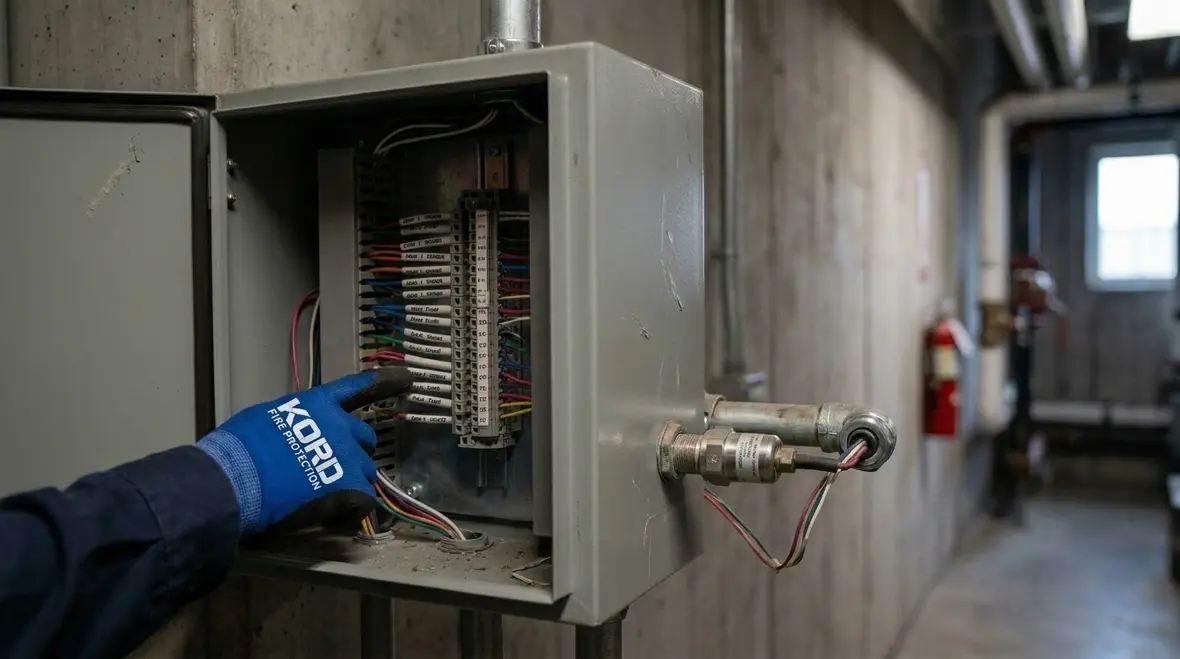
To keep Standpipe pressure monitoring electrical signals accurate, systems commonly use proper wire gauge, correct termination methods, and shielding strategies. Terminations must fit tightly, and they must remain secure under temperature changes. Also, technicians should avoid mixing power conductors and signal conductors in ways that invite interference.
Shielded cables help reduce noise pickup. However, shielding only works when it is implemented correctly. The shield must connect to the correct ground reference at the right points, and it must not become a random antenna. Kord Fire Protection technicians often compare it to seatbelts. The belt is useless if it is twisted or improperly latched, and the signal wire is the passenger.
- Consistent cable labeling to speed troubleshooting and reduce mistakes
- Clean wire management so splices do not sit where moisture or heat can attack them
- Correct terminal torque so connections maintain contact integrity over time
- Separation from noisy circuits to protect signal stability
These habits may sound simple, but they are exactly the kinds of details that separate a stable system from a frustrating one. A beautifully designed monitoring platform can still be undermined by one loose termination, one poorly landed shield, or one unlabeled splice buried in a location nobody wants to revisit. Electrical reliability is often less about drama and more about discipline.
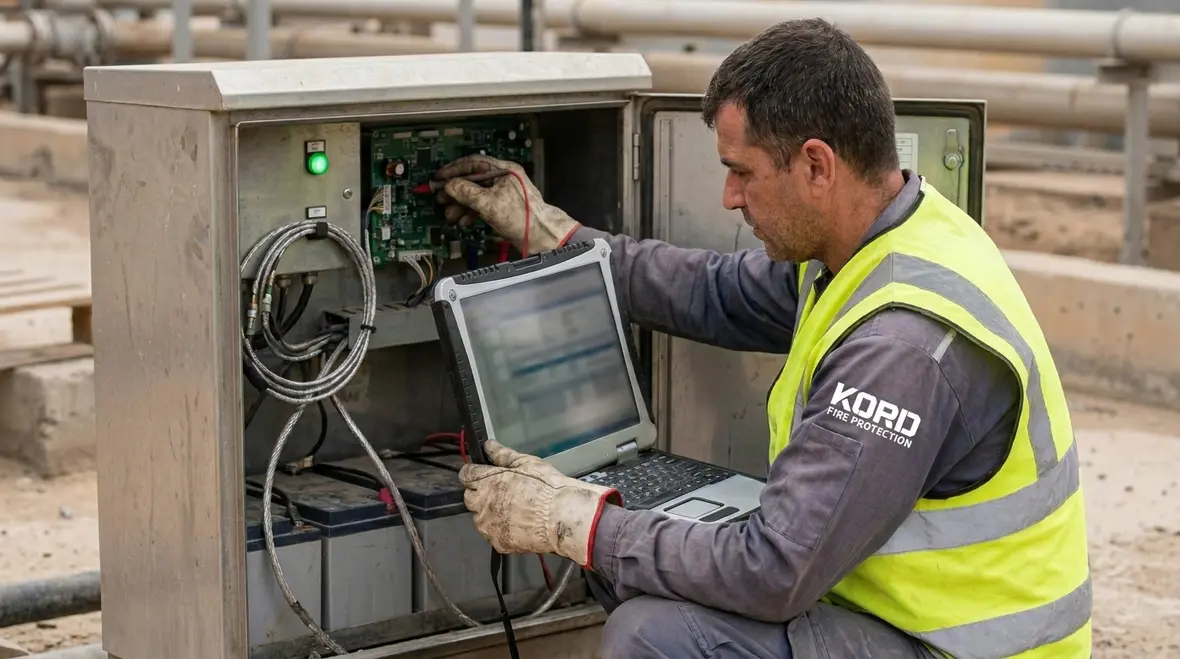
If you want a practical companion piece on standpipe hardware and pressure control behavior, Kord Fire Protection’s Fire Standpipe Basics: Hose Valves and PRVs article helps connect field components with what the monitoring system is actually trying to observe.
Communication modules, networking, and reliable remote alerts
After sensors produce readings, communication modules move that information to the monitoring platform. Depending on the system design, remote monitoring may use cellular, Ethernet, Wi Fi, or a building network integration. Each method introduces its own electrical needs, such as stable voltage rails, network isolation, and fault supervision.
Therefore, remote alert reliability often comes down to how the system monitors itself. For instance, a communication module may report link loss, power loss, or controller faults. In good designs, the controller also checks sensor status so it can report “sensor out of range” instead of sending a misleading pressure number.
Kord Fire Protection technicians explain that communication does not replace good Standpipe pressure monitoring electrical fundamentals. Even a great network link cannot fix a weak sensor feed or a loose terminal. Meanwhile, a solid electrical foundation makes the data transmission more consistent, which helps building teams act faster.
In practice, the system must support clear event logic. That means it should handle normal fluctuations, pump start signals, and valve changes without generating chaos. After all, the goal is alerts that make sense, not alerts that feel like spam from a department store email list.
Self-supervision is what separates useful alerts from mystery notifications
A remote alert should tell the building team what happened, where it happened, and whether the monitoring hardware itself is healthy. If the system cannot supervise its own communication path, power source, and sensor status, every alert becomes harder to trust. That uncertainty slows response and creates more follow-up calls, more confusion, and more opportunities for everyone involved to age dramatically before lunch.
Testing, diagnostics, and maintenance checks that prevent failures
Electrical components must be tested, not just installed. During commissioning, technicians verify sensor calibration, check power stability under load, and confirm alarm outputs. Later, routine maintenance should include inspection of wiring runs, terminal condition, and protective devices.
Kord Fire Protection technicians often advise using a planned schedule with clear checks. That approach prevents “surprise problems” that show up during an emergency or a utility outage. Additionally, diagnostic features can reveal early signs of trouble such as fluctuating readings, intermittent signal dropout, or battery wear in backup circuits.
When technicians maintain the system, they also update documentation. That includes wiring diagrams, firmware versions if applicable, and sensor mapping. As a result, the building team can troubleshoot faster, and they avoid guesswork. In many cases, a short test today prevents a long troubleshooting session tomorrow, which is an outcome most people prefer. Even the ones who enjoy puzzles should still like sleep.
Maintenance also pairs naturally with broader standpipe inspections. For example, Kord Fire Protection’s Wet Standpipe System Inspection and Maintenance Guide gives helpful context for how ongoing system readiness depends on both mechanical and electrical follow-through. The monitoring side is important, but it still lives inside a larger fire protection ecosystem.

FAQ about electrical parts in standpipe pressure monitoring
How to choose a team that understands Standpipe pressure monitoring electrical in the real world
Remote standpipe pressure monitoring works best when the electrical design and installation match the actual building environment. Kord Fire Protection technicians deliver that kind of real-world focus, from power and surge protection to wiring practices and ongoing diagnostic checks. If a system is planned with proper electrical components and tested thoroughly, the building team can trust the data when it counts.
If you are reviewing your current setup, it also helps to work with a team that understands how remote monitoring fits into the larger standpipe design. Kord Fire Protection’s Standpipe Systems service page outlines how standpipe configurations, classifications, and field conditions shape the right solution for a building.
Because remote alerts often connect with broader building notification strategies, it also makes sense to review related life safety systems. Near the end of a project, many property teams coordinate standpipe monitoring with broader alarm reporting and supervisory functions through Kord Fire Protection’s Fire Alarm Services page. That creates a stronger, more coordinated response when abnormal pressure conditions need fast attention.
If you want to review your current setup or plan a new installation, contact Kord Fire Protection for an assessment and an electrical-focused recommendations call. Good monitoring is not just about getting alerts. It is about getting the right alerts, at the right time, from a system that is built to stay calm when the building is not.

Join Our Newsletter!
Get the latest fire safety tips delivered straight to your inbox From our Newsletter.