How Clean Agent Systems Protect High-Value Equipment Across Southern California
In the heart of Southern California, where technology, aerospace, and creative industries thrive, safeguarding high-value equipment is not just a precaution it’s a necessity. From high-tech manufacturing floors to climate-sensitive archival centers, each environment presents a unique challenge when it comes to fire protection. Increasingly, businesses across the region are turning to Clean Agent Fire Suppression Systems to protect high-value equipment. These fire suppression solutions serve as the quiet guardian, preserving critical infrastructure without leaving a trace of damage. Their silent efficiency ensures continuity, preserves assets, and secures years of innovation and investment.
When traditional methods fall short either too destructive or too slow clean agents stand firm, acting swiftly and precisely. As this article unfolds, it will illuminate why these systems are ideal for today’s businesses, how they work in detail, and why they have become the standard in modern asset protection throughout Southern California.
The Challenge of Protecting Sensitive Equipment
Modern data centers, laboratories, and control rooms house some of the most critical and costly systems imaginable. A malfunction, misfire, or mishap can cost millions and paralyze operations. Unlike older suppression methods such as water-based sprinklers or foam, which often harm the very things they seek to save, Clean Agent Systems respond swiftly without adding further damage.
These environments can’t afford exposure to moisture, chemical residue, or debris. Electronics, medical diagnostics machines, telecom switches, and historical artifacts all demand a nuanced approach. Southern California’s innovation sectors—be it Silicon Beach startups or global defense contractors—rely heavily on keeping their data and equipment intact, even under threat.
Therefore, systems designed to extinguish fires without compromising internal systems have become vital protection tools. Their deployment reflects a deeper understanding of operational continuity and long-term investment value.
Understanding Clean Agent Fire Suppression Systems
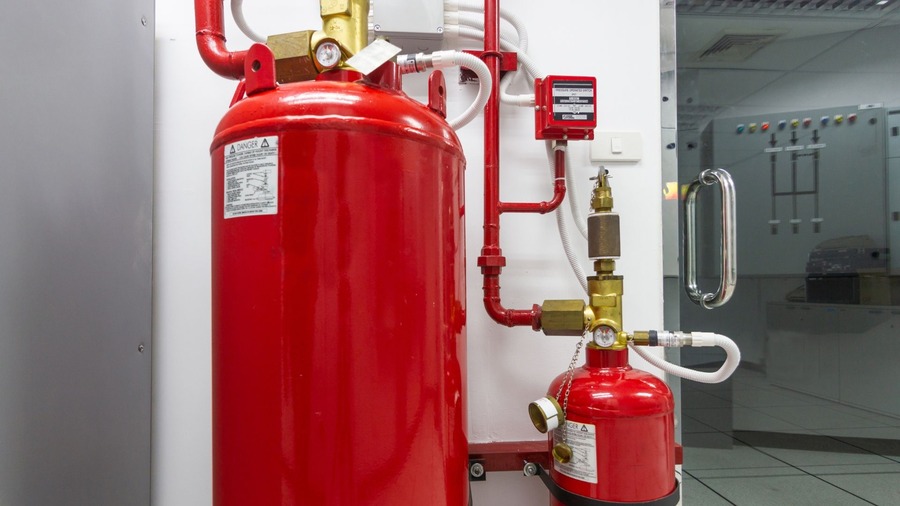
A Clean Agent Fire Suppression System uses non-conductive, residue-free gasses to suppress fire without harming electronics, delicate instruments, or indoor air quality. These agents are stored as either pressurized liquid or gas and discharged only in the event of a fire.
There are three main types of clean agents commonly found in high-value environments:
- FM200™ (Heptafluoropropane): This gas targets fire at the molecular level, absorbing heat and interrupting the combustion reaction without leaving residue.
- Novec™ 1230: Known for its environmental friendliness, this synthetic compound evaporates instantly upon release and is safe for occupied spaces.
- Inert Gases (IG-55, IG-541, IG-100): These gases—often mixes of nitrogen, argon, and CO₂—displace oxygen to below combustion thresholds.
Clean Agent Systems detect heat or smoke before flames erupt, responding within seconds. Their rapid action not only extinguishes the fire but does so with minimal impact on the surrounding environment, ensuring the continuity of mission-critical operations.
Maintenance-Free Not Quite. But Very Low Touch.
One of the most attractive qualities of Clean Agent Systems is their simplicity after deployment. Unlike water-based systems, which require constant monitoring for corrosion and leaks, clean agent setups offer reliable performance with minimal hands-on attention. However, this doesn’t mean you can ‘set it and forget it.’
Routine inspections—quarterly and annually—verify cylinder pressure, nozzle alignment, enclosure integrity, and connectivity with fire panels. Special hazard fire suppression specialists in Southern California often provide integrated service plans. These ensure the system remains compliant with NFPA 2001 standards and relevant local codes.
This low-maintenance demand is particularly beneficial for companies whose staff may not include dedicated facilities personnel. Peace of mind comes not just from technological reliability, but from knowing the maintenance can be outsourced and automated efficiently.
Where Clean Agent Systems Thrive in Southern California
Geography and climate shape safety strategies. Across Southern California’s varied landscape, clean agent systems are increasingly incorporated in industries where traditional suppression either overreacts or underperforms. Below is a dual-column snapshot showing sectors deeply invested in clean agent integration.
| Industries Using Clean Agents | Reasons for Use |
|---|---|
| Data Centers & Server Rooms | Protect servers and network hardware without water or residue |
| Television & Film Production Studios | Preserve camera, sound, and editing equipment |
| Aerospace & Defense Labs | Secure precise, mission-critical research and navigation tools |
| Museums & Archives | Prevent fire damage to rare artifacts and irreplaceable documents |
| Medical and Diagnostics Facilities | Maintain sterile environments; protect MRI and CT scan equipment |
These industries have one thing in common: they operate in environments where downtime is expensive and equipment replacement costs are astronomical. Clean Agent Systems ensure safety without interfering with vital, real-time processes.
Designing Systems Specific to High-Value Locations
The design of a Clean Agent System is more than just sprinkling nozzles overhead it’s architectural fire science tailored to each space’s airflow, occupancy, and use-case scenario. Expert engineers evaluate factors like room volume, ceiling height, heat-sensitive materials, and ventilation pathways to prescribe the correct agent and concentration levels.
Additionally, Southern California’s stringent building codes and volatile seismic activity demand a higher level of system resilience. Racks must be anchored, piping supported for tremors, and discharge sequences tested for wide-area coverage. This isn’t a one-size-fits-all solution; it’s a carefully calculated shield adapted to both risk and structure.
Working with life safety professionals ensures legal compliance, optimal coverage, and integration with monitoring systems. From concept to commissioning, local expertise plays a pivotal role in specifying systems that truly safeguard your investment.
Environmental Responsibility: Beyond Equipment Protection
In an era of sustainability and carbon accountability, environmental impact matters. Older Halon systems, once standard, have been phased out due to their ozone depletion potential. Modern Clean Agent Systems like Novec 1230 and Inert Gases offer environmentally responsible alternatives without compromising performance.
Wanting to protect high-value equipment doesn’t mean ignoring the planet. Choosing clean agents with low Global Warming Potential (GWP) and zero Ozone Depletion Potential (ODP) also aligns your fire strategy with corporate sustainability goals. Many of today’s systems are designed to meet LEED standards and support ESG reporting frameworks adopted across California’s private sector.
In Southern California, where awareness about environmental fragility is high, these systems present more than just business continuity they present stewardship.
Benefits That Extend Beyond Immediate Threats
Investing in a Clean Agent Fire Suppression System does more than eliminate flames. It adds value in ways that aren’t always apparent until long after installation. Here are a few of these extended benefits:
- Reduced Insurance Premiums: Many carriers offer lower premiums for proactive and non-destructive fire protection.
- Minimal Downtime During an Emergency: Since cleanup is nearly non-existent, operations can resume quickly.
- Protection of Brand and Reputation: Avoiding system failures or data losses preserves public trust.
- Silent Operation: Agents discharge quietly, without causing panic or chaos in populated spaces.
Each of these advantages carries weight in competitive markets where any disruption, however small, can echo into lost contracts, damaged reputations, or regulatory violations.
How Do Businesses Begin the Transition to Clean Agent Systems?
While interest is growing, many businesses remain unsure how to shift away from legacy suppression systems toward a Clean Agent model. The process begins with a thorough risk assessment from a certified fire protection provider based in Southern California. This includes mapping all potential fire sources, studying airflow modeling, analyzing occupancy flows, and identifying highly sensitive zones.
Next comes system design and integration with preexisting alarms and HVAC systems. The final stage includes installation, testing, personnel training, and continuous monitoring. For newer buildings, clean agent systems are often part of the original blueprint. For older buildings, retrofitting requires thoughtful layout modifications but delivers significant value.
Working with specialists who understand local seismic, environmental, and regulatory dynamics ensures long-term performance and compliance. It transforms a fire suppression strategy from reactive patchwork into a proactive vision.
Frequently Asked Questions (FAQ)
What is a clean agent fire suppression system?
A clean agent system uses gas to put out fires without damaging electronics or leaving residue.
Is it safe for people to be in the room when it’s discharged?
Yes, most clean agents are safe for human-occupied spaces when installed properly.
Do these systems require a lot of maintenance?
No, they are very low-maintenance but do require annual inspections.
Can I install a clean agent system in an existing building?
Yes, systems can be retrofitted into older buildings with the help of fire protection experts.
Are clean agents environmentally friendly?
Yes. Most modern agents have zero ozone impact and low global warming potential.
How quickly does a clean agent system suppress a fire?
Typically within 10 seconds of detection, the system activates and smothers the fire rapidly.
Will insurance costs go down with this system?
In many cases, insurers offer discounts for advanced, non-damaging fire suppression systems.
Conclusion: Ready to Protect What Matters Most?
Now more than ever, Southern California businesses need a smart, swift, and reliable way to preserve their most valuable assets. Clean Agent Fire Suppression offers that resilience—quietly working in the background so your operations remain uninterrupted and secure. It’s protection without compromise. To begin designing a system that matches your facility’s needs, connect with a certified protection provider today.