FM 200 Fire Suppression Changes and Alternatives
There was a time when our FM 200 fire suppression systems were the quiet heroes of server rooms, hospitals, and data centers across the country. No smoke. No water damage. No dramatic slow motion exits. Just clean, fast protection when it mattered most. For years, businesses trusted FM 200 fire suppression to stop flames in seconds without harming sensitive equipment. And for a long time, that trust was well placed.
However, change has arrived. Environmental regulations are shifting. Production timelines are tightening. Costs are climbing. As a result, facility managers and building owners are asking a simple question. What now?
Kord Fire Protection technicians have been walking clients through this transition step by step. They explain what FM 200 is, why rules are changing, and what smart replacements look like today. So, let’s take a steady walk through it all.
What Is FM 200 Fire Suppression and How Does It Work?
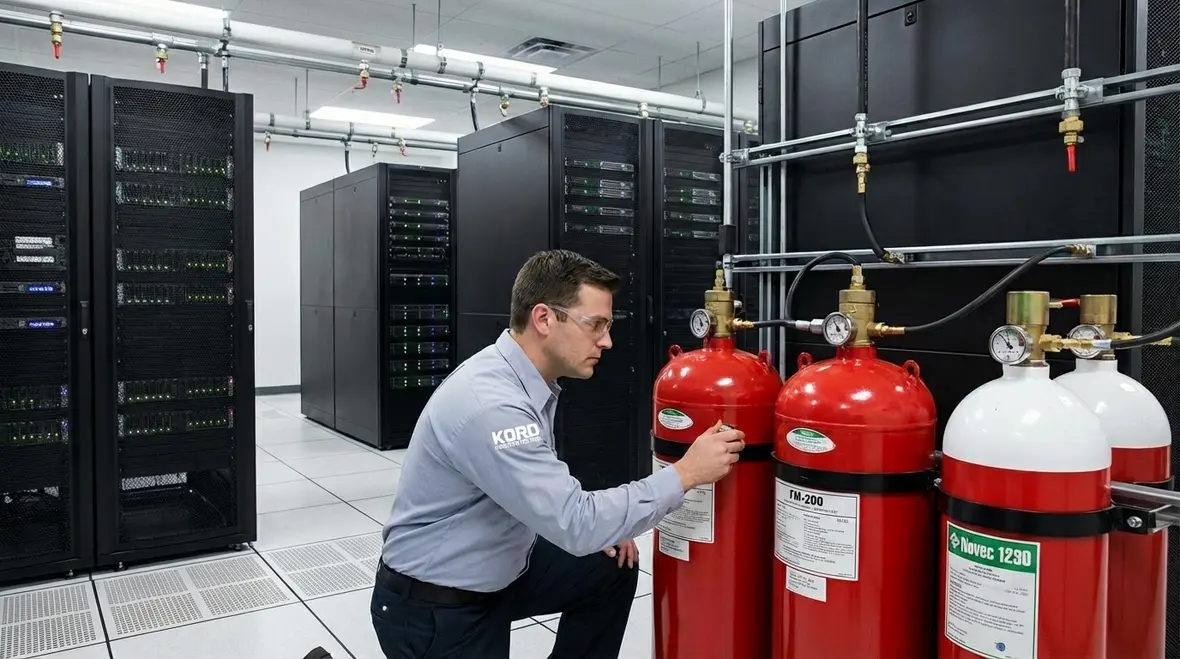
FM 200, known chemically as HFC 227ea, is a clean agent fire suppressant. In simple terms, it is a colorless, odorless gas stored as a liquid. When discharged, it floods a protected space and interrupts the combustion process. It does not remove oxygen entirely. Instead, it absorbs heat and stops the chemical reaction that allows fire to continue.
Because of that, it works fast. In most cases, full discharge happens within ten seconds. That speed often prevents a small spark from becoming a six figure disaster. Consequently, businesses that rely on uptime have historically favored this system.
Unlike water based sprinklers, FM 200 leaves no residue. There is no cleanup crew with mops. There is no electronics graveyard. Once the air clears and the system is inspected, operations can resume. For data centers, telecom rooms, museums, financial institutions, and healthcare facilities, that clean discharge has been invaluable.
Kord Fire Protection technicians often describe it this way. If traditional sprinklers are like dumping a swimming pool onto a fire, FM 200 is more like pressing a pause button on combustion. Calm. Precise. Effective.
If you want a broader look at how clean agents behave in different environments, Kord Fire’s article on clean agent fire suppression for critical equipment dives deeper into the science and strategy behind these systems.

Why Regulations Are Changing and What It Means for Owners
Now the plot thickens. Although FM 200 fire suppression has saved property for decades, it belongs to a family of chemicals called hydrofluorocarbons. These compounds do not harm the ozone layer. However, they do have a high global warming potential.
As environmental awareness has grown, governments have taken action. New regulations under federal and state climate initiatives are phasing down the production and import of high GWP refrigerants and fire suppressants. Therefore, supply is tightening.
That does not mean existing systems are suddenly illegal. In most cases, current installations can remain in service if properly maintained. Yet, the cost of refilling cylinders after a discharge has increased. Lead times for new agent supplies have also stretched.
Consequently, facility managers are facing a crossroads. Maintain and monitor what they have. Or plan for a transition before market pressure makes the decision for them.
Kord Fire Protection technicians explain these regulatory changes in plain language. No jargon. No fear tactics. Just facts. They review compliance requirements, local codes, and long term risk so clients can make informed choices instead of reactive ones. For a bigger-picture overview of how FM 200 compares to agents like Novec 1230 and Inergen, the clean agent fire suppression systems page is a helpful resource.
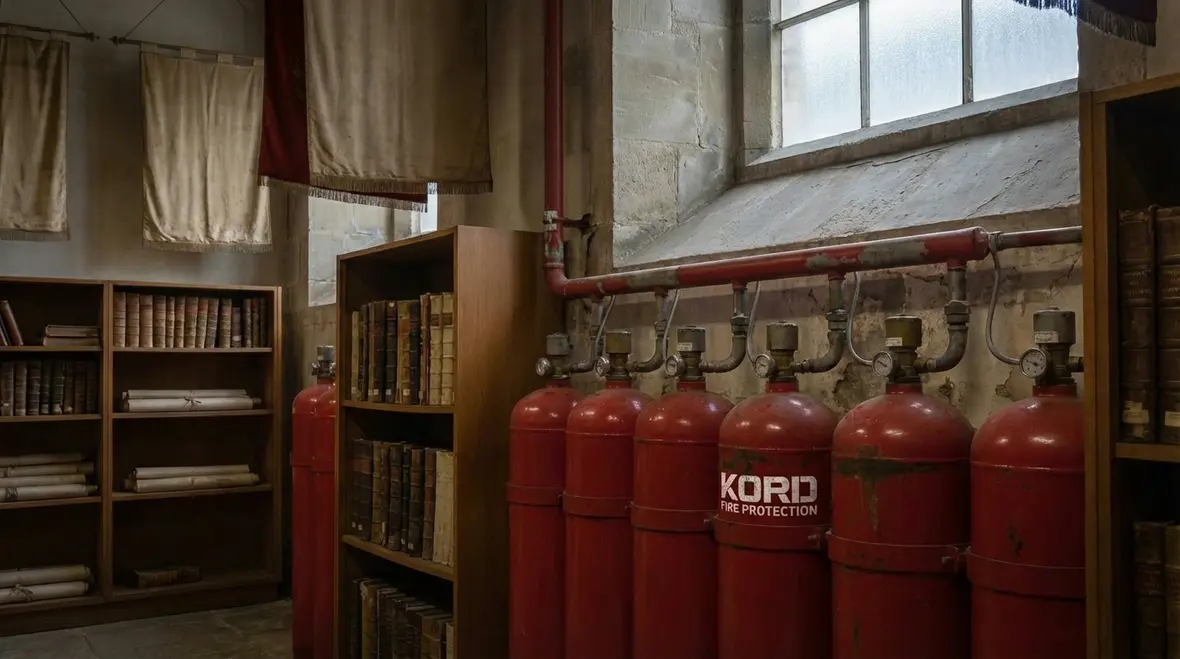
Where FM 200 Systems Still Make Sense
Despite regulatory shifts, FM 200 systems still serve many facilities well. If a building already has a properly installed and inspected system, it may continue operating for years with routine maintenance. Therefore, immediate replacement is not always necessary.
In addition, some industries prioritize rapid suppression and proven reliability over long term environmental metrics. For high value archives, specialized labs, and mission critical control rooms, performance history matters.
Key factors owners should weigh
Agent availability
As production decreases, refills may cost more and take longer to secure.
Insurance considerations
Some insurers are beginning to review environmental impact when underwriting policies.
Corporate sustainability goals
Many organizations now track carbon impact across operations, including fire protection systems.
Kord Fire Protection technicians assess these variables during site evaluations. Rather than pushing a one size fits all solution, they look at risk profile, budget, occupancy type, and future building plans. After all, replacing a system is not like swapping a light bulb. It requires strategy.
Modern Clean Agent Alternatives to FM 200
As regulations evolve, newer clean agents have stepped into the spotlight. The most discussed alternative is FK 5 1 12, commonly known by its brand name Novec 1230. It offers similar rapid suppression performance with dramatically lower global warming potential.
Unlike traditional HFC agents, this newer compound breaks down in the atmosphere within days instead of years. Therefore, it aligns more closely with emerging environmental standards.
Other solutions include inert gas systems such as IG 541 or IG 55. These systems use blends of naturally occurring gases like nitrogen and argon. Instead of absorbing heat, they reduce oxygen concentration in a controlled manner that stops combustion while remaining safe for occupied spaces.
Each option carries tradeoffs. Clean chemical agents often require smaller storage cylinders but can cost more upfront. Inert gas systems may need larger cylinder banks, which affects room design and space allocation.
Kord Fire Protection technicians walk clients through performance data, room integrity testing, discharge calculations, and code requirements. They do not simply say, here is the new thing. They explain why it works, how it fits, and what it means long term. Their overview of clean agent systems for high-value equipment protection is a useful companion read if you are comparing system architectures.
Comparing FM 200 to Today’s Leading Replacements
To make decisions clearer, it helps to look at a direct comparison. Below is a simplified side by side view of key differences.
| Feature | FM 200 | Newer Clean Agent FK 5 1 12 |
|---|---|---|
| Environmental impact | High GWP | Very low GWP |
| Atmospheric lifespan | Decades | Days |
| Space requirements | Moderate | Similar or slightly less |
| Regulatory outlook | Phased down | Favorable |
| Performance speed | Rapid | Rapid |
While both systems extinguish fires quickly and leave no residue, the long term regulatory outlook differs. Therefore, organizations planning new construction often lean toward low GWP agents.
Still, every building tells its own story. Ceiling height, enclosure integrity, ventilation design, and occupancy levels all influence system choice. This is where experienced evaluation matters. Kord Fire Protection technicians test room tightness, verify hazard classification, and confirm that discharge concentrations meet code. Fire protection is not guesswork. It is engineering with consequences.
Planning a Transition Without Disrupting Operations
Change can feel disruptive. However, a well planned upgrade does not need to interrupt daily operations. In fact, many retrofits occur during scheduled maintenance windows.
From assessment to final testing
First, technicians conduct a full system assessment. They inspect cylinders, piping, nozzles, detection panels, and enclosure integrity. Next, they calculate whether existing piping can support a new agent or if modifications are required.
Then comes design and permitting. Local fire authorities review plans to ensure compliance with current codes such as NFPA 2001. Once approved, installation teams coordinate with facility managers to minimize downtime.
Finally, room integrity testing confirms that the protected space will hold the required concentration for the necessary duration. Without this step, even the best agent can fail. Think of it like filling a bathtub with the drain open. Impressive effort. Zero results.
Kord Fire Protection technicians emphasize communication throughout the process. They provide timelines, cost projections, and contingency plans. As a result, clients move forward with clarity instead of crossed fingers.
Maintenance, Inspections, and Long Term Reliability
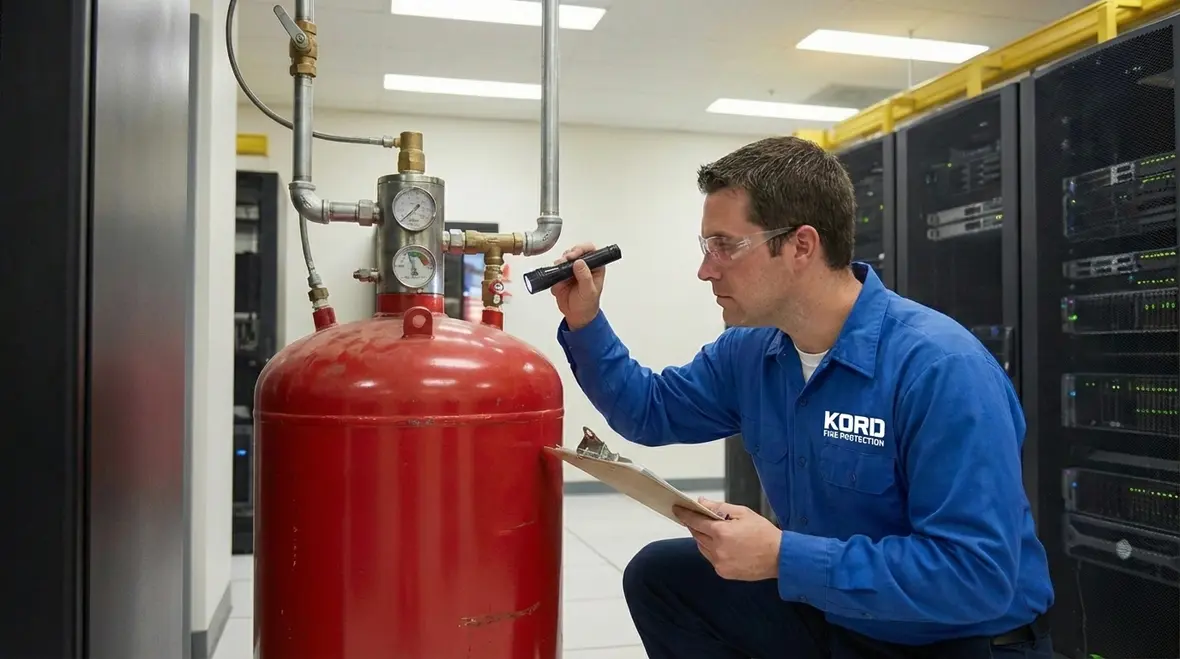
Regardless of agent choice, maintenance remains essential. Clean agent systems require regular inspections, typically semiannual and annual checks. Technicians verify cylinder pressure, inspect discharge nozzles, test detection devices, and review control panels.
Additionally, room integrity testing should occur periodically or after structural changes. Even small renovations can affect enclosure tightness. A new cable penetration or ventilation change may compromise hold time.
For facilities still operating FM 200 fire suppression systems, proactive monitoring becomes even more important as supply tightens. Early detection of leaks or pressure drops prevents costly emergency refills.
Kord Fire Protection technicians document every inspection in detailed reports. They also advise clients when components approach end of life. In this way, surprises stay on movie screens where they belong, not inside electrical rooms at two in the morning.
Frequently Asked Questions
Moving Forward with Confidence
Fire protection decisions carry weight. They protect data, history, revenue, and most importantly, people. While FM 200 fire suppression has served faithfully for decades, the landscape is shifting. Therefore, thoughtful planning matters more than ever. Kord Fire Protection technicians stand ready to evaluate existing systems, explain modern alternatives, and design solutions that balance safety, compliance, and sustainability.
When the future calls, it is wise to answer with preparation rather than panic. Schedule a consultation and move forward with clarity. To explore system design, upgrades, and maintenance options, visit Kord Fire’s clean agent fire suppression system services page or go straight to their contact us page to request a quote and talk through your FM 200 transition plan.
Know Your Weapon Before You Fight the Flame
Kord Fire Protection is your go-to when it comes to all things fire protection. For over 20 years, we’ve been serving Southern California with the quality service and equipment to keep your home or business safe at all times. Our competitive prices reflect our unwavering commitment to protecting what matters most in the event of a fire emergency. Give us a call, send an email, or use that form!

Join Our Newsletter!
Get the latest fire safety tips delivered straight to your inbox From our Newsletter.