Commercial Fire Alarm System Design for Multi Tenant Buildings
Designing a commercial fire alarm system for a multi tenant building is not a “set it and forget it” job. Instead, it requires careful planning, clear accountability, and a system layout that protects people while staying friendly to building operations. In this guide, Kord Fire Protection technicians explain how teams can think through the big details, from tenant layouts to device placement and inspection paths. After all, fire safety does not care if the lease is new or the tenant is on their third round of renovations. So, let’s build a plan that works on day one and still performs when the building changes around it.
How Kord Fire Protection technicians start with building realities
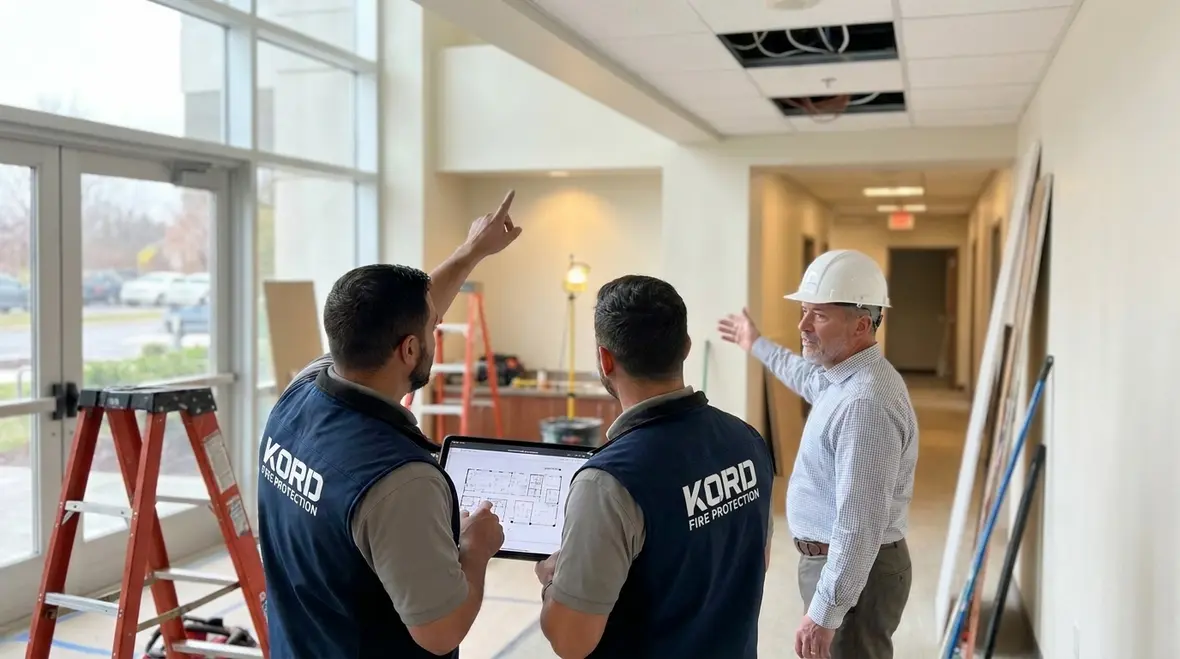
Before the first wire gets pulled, Kord Fire Protection technicians anchor the design to how the building actually behaves. Multi tenant spaces rarely stay static, and the alarm system needs to handle that truth without drama. First, they review the building use types, occupant loads, and life safety hazards that come from real daily activity, not marketing brochures. Then, they map escape routes, door arrangements, and areas that people might block or alter during remodeling.
Next, they confirm which codes and standards apply for the jurisdiction and building type. Because requirements can vary by location, a design that looks “reasonable” on paper can still fail a plan review. Additionally, they coordinate with the fire alarm control equipment plan, the signaling strategy, and the power calculations so the design does not rely on luck. In short, they set a foundation that can survive both inspections and future tenant turnover.
Why real world conditions matter more than assumptions
This is where many projects either become smooth or become a recurring headache with paperwork. A clean plan must reflect loading docks, shared hallways, after hours occupancy, utility rooms, and the little quirks every building swears are temporary. Those temporary quirks have a funny way of becoming permanent. A design rooted in actual conditions is simply more durable, especially in properties where one tenant is a calm office and the next one generates noise, heat, or airflow that changes how devices perform.
What multi tenant layouts demand from the design
Tenant walls move. Ceiling tiles disappear. Storage rooms get repurposed. For that reason, commercial fire alarm system design must account for how the building changes. A smart approach segments the system so it can identify where an alarm originates while still supporting buildingwide evacuation.
To do this, technicians build device zoning around practical boundaries such as suites, corridors, stairs, and shared mechanical areas. Then, they verify that the system can annunciate the right area without confusing occupants or staff. Also, they plan for common interruptions like contractor work and temporary storage that can obscure detection coverage.
Finally, they address the “shared responsibility” issue. In multi tenant buildings, not everyone coordinates well, and that is where designs succeed or fail. Kord Fire Protection technicians encourage clear labeling, consistent supervision of circuits, and installation details that remain readable decades from now. That practical mindset pairs naturally with Kord Fire Protection’s guidance on fire code compliance in multi tenant buildings, especially when landlords and tenants need a clearer line between common area obligations and in suite responsibilities.
Designing for future changes without inviting chaos
A thoughtful layout leaves enough flexibility for tenant improvements, phased occupancy changes, and the occasional remodel that arrives with a deadline nobody respects. If the system is too rigid, every lease turnover becomes an expensive redesign. If it is too vague, the panel tells a story nobody can interpret under pressure. Good design lands in the middle: specific enough to respond clearly, flexible enough to survive real estate reality.
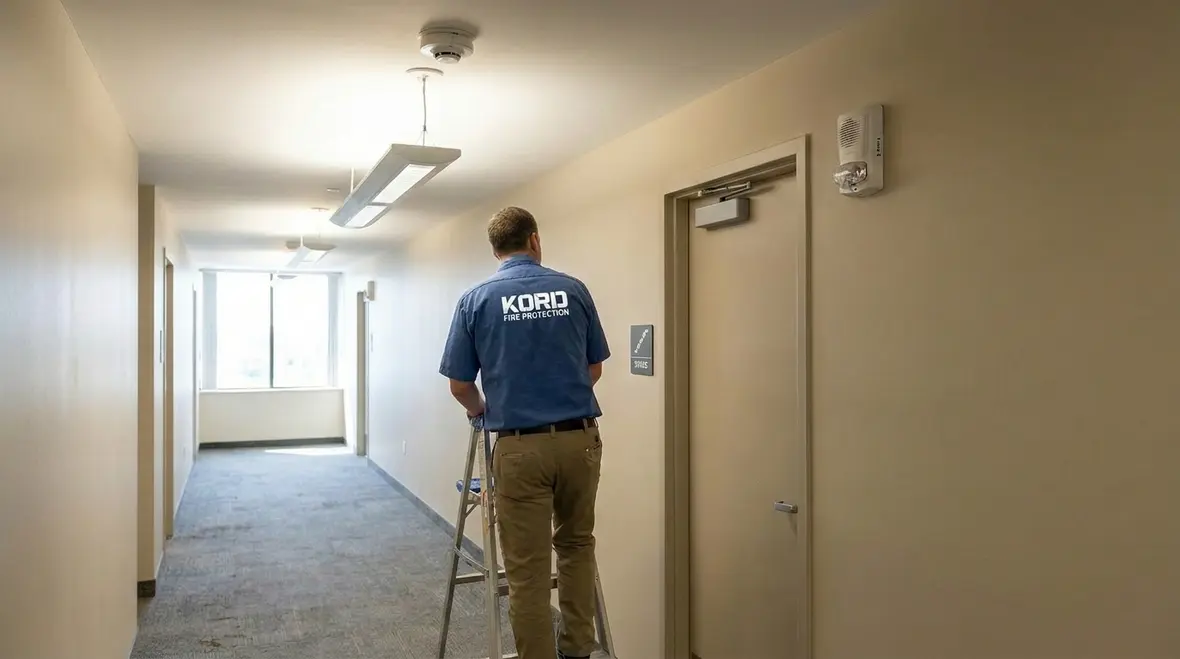
Where notification appliances should go for clear evacuation
When an alarm activates, people do not read a blueprint. They follow cues. Therefore, designers place notification appliances where they remain audible and visible, including in hallways, near stair access, and outside elevator lobbies. They also consider background noise from nearby tenants, since a quiet office can be louder than expected in the afternoon.
Additionally, they coordinate mounting heights and coverage patterns to meet the required audibility and visibility levels. And because some spaces behave differently, they evaluate any high ceiling volumes, large open areas, or acoustical effects in common spaces. If notification relies on the weakest sound path, the system becomes a polite suggestion instead of an alert.
To keep the design practical, the team ensures signals tie into building operations. For example, they plan how the system interacts with door releases, fan shutdown strategies, and elevator recall. After all, a fire alarm that triggers the right response matters more than a fire alarm that simply chirps until someone complains.
Making alerts obvious in real tenant conditions
In mixed use buildings, the challenge is not only device placement but predictable occupant response. Music, machinery, conversations, closed suite doors, and open common spaces all change how an alarm is perceived. Strong notification design closes those gaps. It gives people enough information to move, not enough ambiguity to stand still and wonder whether someone burned popcorn again.
How to coordinate detection coverage without overbuilding
Detection placement must balance safety, code requirements, and avoidable nuisance alarms. So, Kord Fire Protection technicians start by identifying hazard types and smoke or heat behavior expected in each area. Then, they select detectors that match the environment, such as smoke detection in typical office spaces, and alternate detection strategies in special rooms when conditions justify them.
However, they do not stop at device selection. They also evaluate spacing, obstructions, airflow patterns, and ceiling configurations. For instance, suspended ceilings and ducted returns can create pockets where smoke does not travel like models assume. Meanwhile, kitchens, washrooms, and storage zones can generate conditions that trigger nuisance alarms if the design ignores the way people live in the building.
Consequently, they often refine the design by reviewing manufacturer spacing guidance and local code rules, then checking the final layout for detection gaps. In other words, they aim for coverage that works the first time, not the tenth drawing revision that everyone pretends to understand.
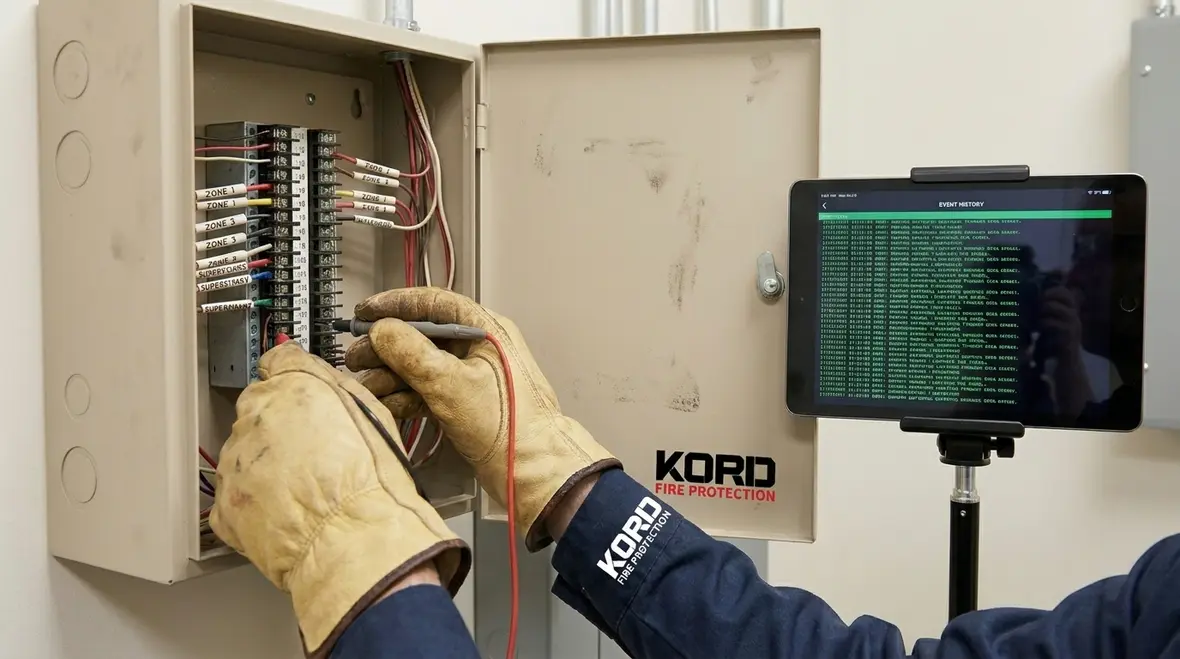
Panel configuration, zoning, and supervision for tenant changes
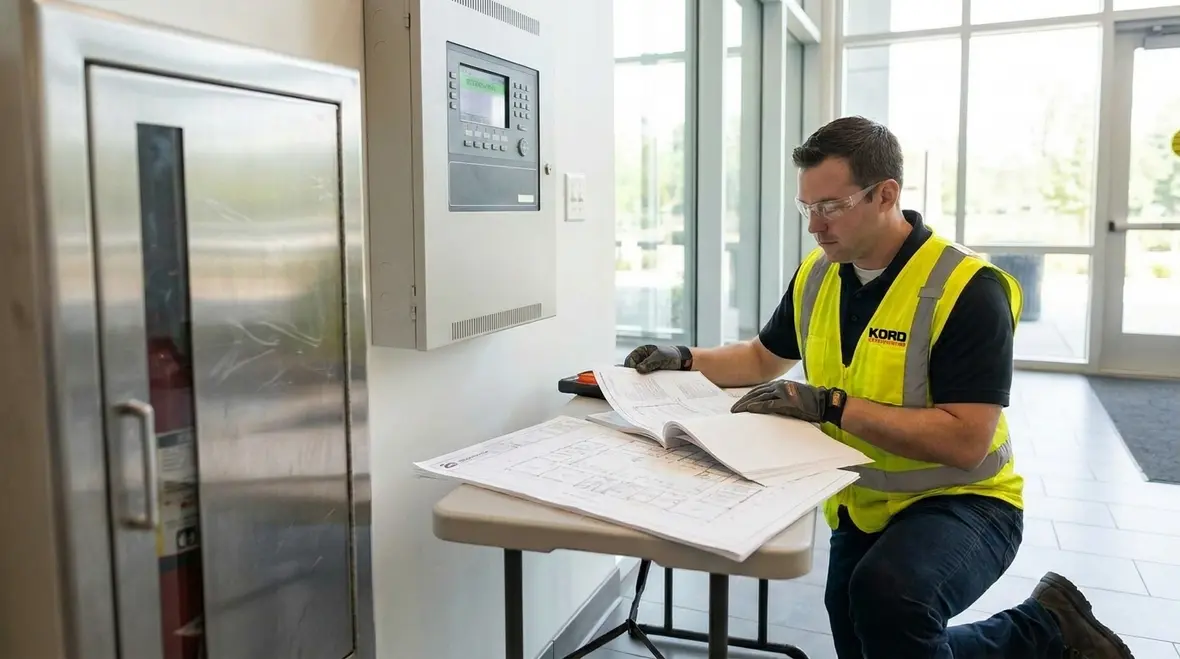
A reliable commercial fire alarm system design depends on the control equipment configuration and how the building staff will use it. Technicians define how many devices connect per circuit, how supervision works, and how trouble signals show up at the right time. They also choose annunciation methods that match how the building is managed, since a confused staff member can waste precious minutes.
Next, the team plans for tenant turnover. Some buildings require periodic upgrades, and others see whole floors change use. So, the design should allow expansion or reprogramming without forcing a full rebuild. To support that, Kord Fire Protection technicians document circuit plans clearly and provide a layout that can scale to new suite configurations.
They also coordinate where the control equipment sits, ensuring access for authorized personnel and protection from damage. Moreover, they verify power supply needs and battery calculations so the system remains within required standby and alarm timeframes.
And yes, proper supervision matters even when nothing is happening. It is the difference between “We think it’s fine” and “We know it’s fine,” which is a comforting feeling when the calendar says it is inspection week.
Testing, inspection, and ongoing service planning
A design only earns trust after it survives testing. That means the approach must include practical inspection and maintenance paths. Kord Fire Protection technicians advise teams to plan for how staff will reach devices, how labeling will help during troubleshooting, and how the system records events for later review.
Also, they help property teams understand the difference between periodic testing and full functional testing, then define a schedule that matches building use. For multi tenant buildings, the schedule should account for special seasonal risks and construction timelines that can temporarily change smoke production patterns or airflow.
Then, they consider documentation. Complete as built drawings, circuit maps, and detector schedules help future technicians avoid guesswork. That reduces downtime, and it helps the building avoid repeat costs. If teams are already navigating shared landlord tenant duties, combining design planning with Kord Fire Protection’s article on multi tenant fire code responsibilities can make testing access, inspection scheduling, and deficiency follow up much easier to manage.
Documentation is not glamorous, but it saves the day
Nobody throws a party for updated as built drawings, but those records are what keep future service calls from becoming detective work. Accurate labels, event histories, battery calculations, and circuit maps speed repairs and reduce false assumptions. In a busy property, that kind of clarity is worth a lot more than optimism.
Risk management that keeps operations steady
Fire alarm design affects day to day operations, not just emergencies. So, designers reduce operational disruption by planning installation sequence and minimizing downtime in active tenant spaces. They also handle interface points with other building systems carefully, so the alarm does not unintentionally trip equipment controls without reason.
Additionally, Kord Fire Protection technicians recommend a communications workflow for staff training. Tenants and property managers need clear instructions on what sounds mean, who responds, and how to report trouble signals. When people understand the system, they react faster and avoid the classic scenario where everyone assumes it is “just a test” until it is not.
Finally, they align the design with the building’s evacuation and life safety approach. That includes emergency procedures for people who may need assistance, and it includes how notification patterns support clear movement toward exits. Near the end of any planning effort, it also helps to connect the design discussion with Kord Fire Protection’s fire alarm services, since installation, inspection, monitoring, maintenance, and repairs all play a role in keeping the system useful long after the drawings are approved.
FAQ
Conclusion
A strong commercial fire alarm system design for a multi tenant building protects lives, supports inspections, and stays useful through tenant change. Kord Fire Protection technicians help property teams plan the details that matter, from zoning and detection coverage to notification placement and ongoing service. If this building is headed toward upgrades, renovations, or new occupancy, now is the time to get the layout right.
Contact Kord Fire Protection to review your current plan, spot gaps early, and build a system that performs when it matters. For teams that want support beyond design, Kord Fire Protection also provides fire alarm system services that help keep commercial properties protected, compliant, and much less likely to rely on crossed fingers as a maintenance strategy.

Join Our Newsletter!
Get the latest fire safety tips delivered straight to your inbox From our Newsletter.