Fire Sprinkler Obstruction Investigation NFPA 25 Australia
Quick Answer
Fire sprinkler obstruction investigation NFPA 25 helps facilities find hidden blockages before they turn a working sprinkler into a slow, expensive disappointment. Under Section 14.3, teams inspect piping, heads, and water paths for rust, scale, foreign objects, and growth. For industrial, retail, and commercial sites across Australia, this work protects life, property, and uptime.
If your team needs broader support beyond one inspection task, Kord Fire Protection’s full fire protection services can fit naturally into a wider maintenance and readiness plan.
Fire sprinkler obstruction investigation NFPA 25: what it means for Australian facilities
Fire sprinkler obstruction investigation NFPA 25 focuses on one hard truth: a sprinkler system can look fine and still fail when it matters most. It is worth saying plainly that this standard calls for a careful search for anything that can block water flow inside a fire sprinkler system. That includes corrosion, mineral scale, trapped debris, manufacturing residue, and even biological growth. For industrial plants, retail centres, warehouses, and large commercial buildings across Australia, that matters because downtime, stock loss, and safety risk do not wait for a convenient hour. So, when a facility treats obstruction checks as routine care, it avoids the kind of surprise nobody wants, especially not at 2 a.m. with alarms sounding and everyone suddenly acting like the fire drill was a documentary.
This also fits into the broader maintenance picture covered in Kord Fire Protection’s NFPA 25 overview complete water-based fire protection systems maintenance breakdown, which explains how inspection, testing, and maintenance tie together across sprinkler systems and related equipment.

What NFPA 25 Section 14.3 expects during an obstruction search
NFPA 25 Section 14.3 sets the direction for how teams investigate and manage obstructions in sprinkler piping. It does not ask for guesswork. Instead, it pushes a structured approach that looks at system age, water quality, pipe material, and past service issues. The goal is simple: confirm that water can reach the sprinkler heads without delay or restriction.
In practice, this often includes:
Common obstruction source
Rust, scale, sediment, foreign objects, microbiological growth, and pipe residue.
Why it matters
Each one can reduce flow, delay discharge, or stop a sprinkler from working as designed.
Because different systems face different risks, a site with older steel piping may need closer attention than a newer installation. Likewise, a facility with recycled water exposure, poor maintenance history, or frequent valve work may need a stronger inspection plan. That is not drama. That is just physics wearing steel boots.
A good investigation also looks beyond the single symptom that first got attention. If one inspector sees discoloured water or a pressure quirk at a test point, the right next step is not a shrug and a hopeful coffee. It is a fuller look at where debris may be gathering, how branch lines are behaving, and whether the system history points to a pattern. That is how facilities stop a minor finding from turning into a major lesson.
How obstruction problems start in real facilities
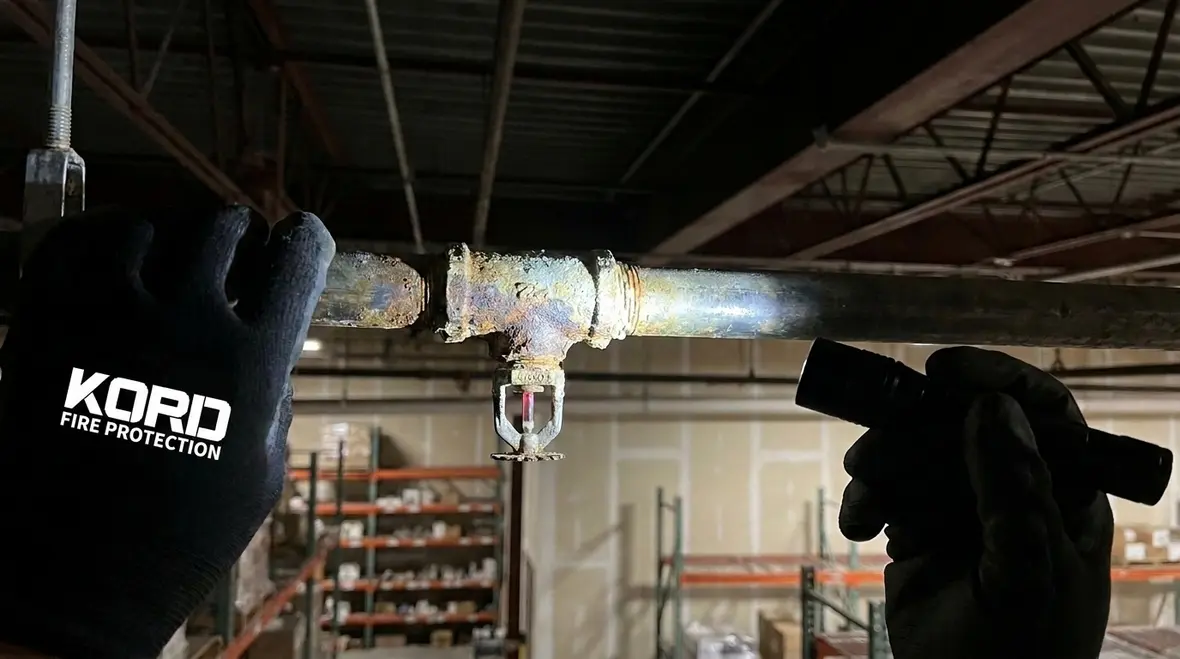
Obstructions rarely appear overnight. They build slowly, which is why they are so easy to miss. First, small particles enter the pipe. Then, rust begins to form where water sits too long. After that, scale and sludge can collect in low points, elbows, and branch lines. Over time, the inside of the piping becomes less like a water highway and more like a lane blocked by old construction cones.
In commercial and industrial sites, several conditions make this worse. Poor water turnover, dead legs in the pipe layout, incompatible materials, and missed maintenance can all increase the chance of blockage. In addition, system changes made during tenant fit outs, equipment upgrades, or warehouse reconfigurations can create hidden trouble spots. As a result, a routine inspection program becomes the only sensible way to catch the problem before the system is asked to perform under stress.
Common triggers facility teams overlook
Long periods of low flow that let sediment settle in branch lines.
Older black steel piping with corrosion already underway inside the system.
Water supply conditions that leave scale or residue behind over time.
Renovations and fit outs that disturb piping or create new dead ends.
Maintenance gaps that allow small warning signs to become expensive ones.
The tricky part is that none of these issues need to cause a visible leak or a dramatic alarm to be serious. A system can stay quiet while performance slips. That is why water based maintenance work should never rely on appearances alone. In fire protection, “it looked fine from the outside” is not the heroic ending people imagine.
What a proper fire sprinkler obstruction inspection includes
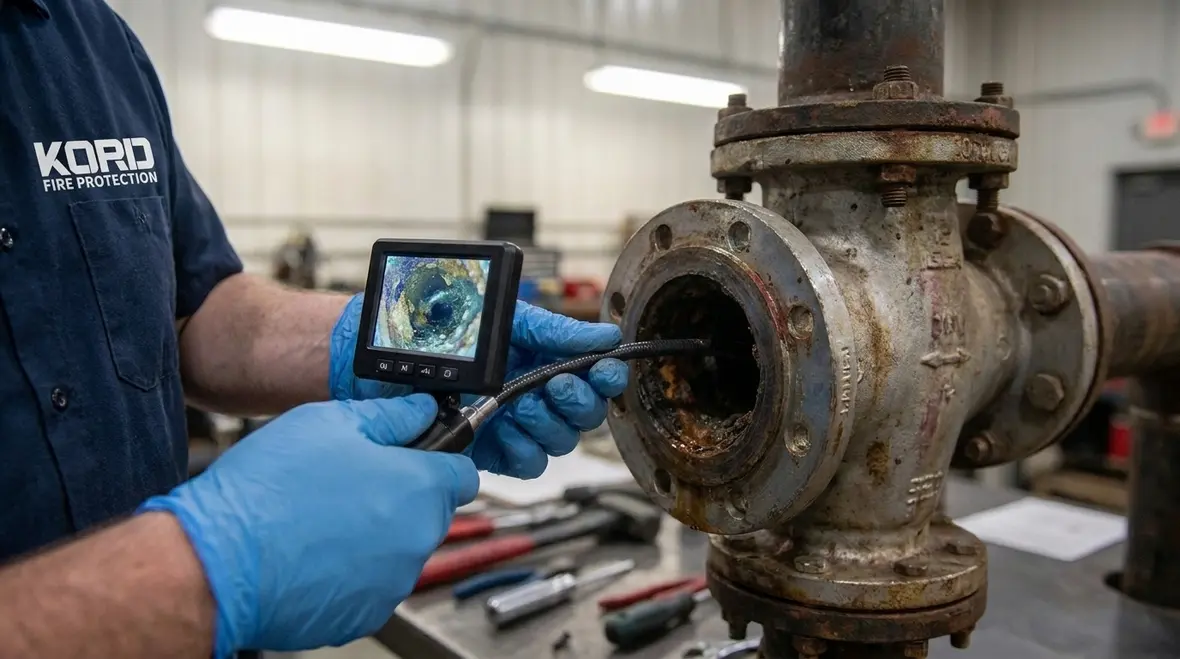
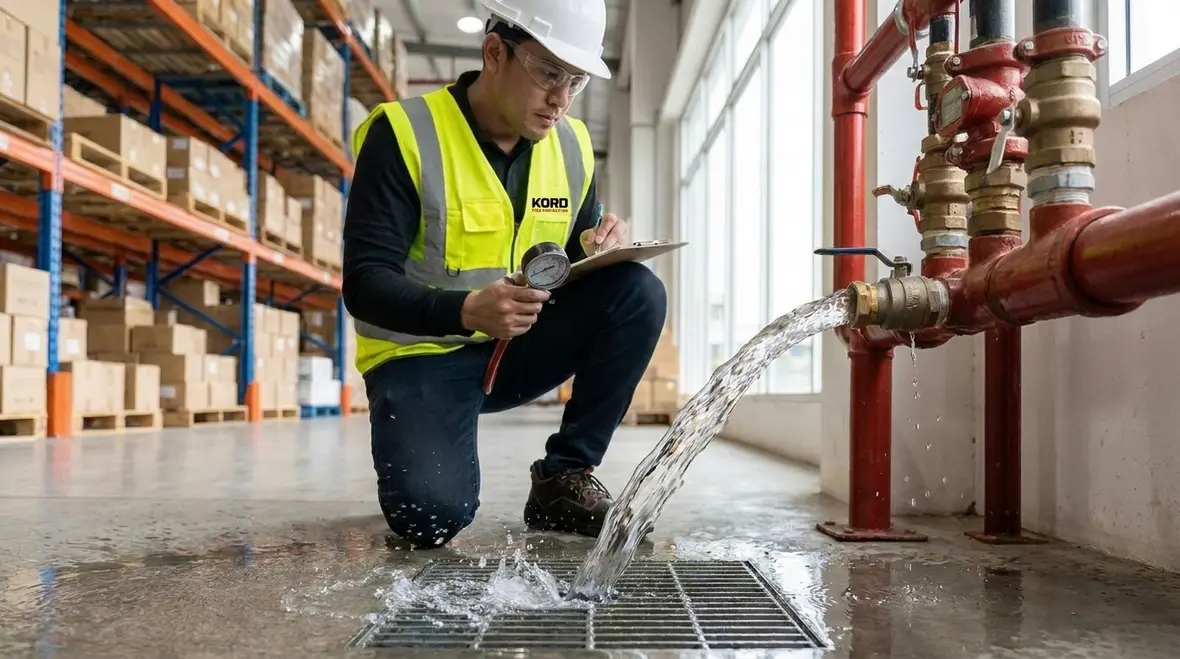
A serious obstruction inspection should do more than glance at visible parts and call it a day. It should review system records, examine pipe conditions, test water flow where needed, and open up sections when signs point to a deeper issue. Technicians may also check for pressure changes, unusual valve behavior, and staining or buildup at test points.
Just as important, the process should link field findings with the site history. If the system has had repeated valve work, water discoloration, or past blockage issues, those clues matter. They help create a more accurate risk picture. Therefore, the inspection becomes both a technical task and a detective story, only with less fedora wearing and more compliance paperwork.
What a strong inspection process usually covers
Review of maintenance logs, test records, and previous deficiencies.
Checks on valves, gauges, drains, and accessible sprinkler components.
Assessment of water flow behaviour and pressure conditions where needed.
Internal investigation of piping sections when evidence points to blockage.
Recommendations for corrective work and long term prevention.
This is also where related checks can add useful context. Kord Fire Protection covers nearby concerns like pressure trends in commercial sprinkler system pressure monitoring Australia and system reliability issues in sprinkler system water flow monitoring for compliance. When pressure, flow, and obstruction findings are read together, the picture gets much clearer.
Kord Fire Protection as a partner in obstruction prevention
Kord Fire Protection can become a vital partner in this service because obstruction control is not a one time fix. It takes a steady maintenance mindset, strong technical knowledge, and clear communication with site managers. For industrial, retail, and commercial facilities, that support can help keep sprinkler systems dependable and ready.
Kord Fire Protection can assist with inspection planning, obstruction investigation, corrective work, and ongoing prevention strategies. More importantly, a skilled partner can help identify risk patterns before they become failures. That includes tracking problem areas, suggesting practical maintenance steps, and helping teams stay ahead of NFPA 25 expectations. In a busy facility, that kind of support is worth its weight in gold, or at least in fewer emergency callouts, which is close enough.
This kind of support matters even more when a site is already dealing with broader readiness issues. Related Kord resources like fire suppression deficiencies found in inspections by Kord and fire suppression impairment causes and owner response show how small system issues can stack up fast when nobody tackles them early.
Why prevention saves money, time, and panic
Prevention always costs less than failure. When a sprinkler system discharges properly, it can stop a fire early and protect people, equipment, and stock. However, when obstructions interfere, the result can be heavier damage, longer shutdowns, and more insurance trouble than anyone wants to explain in a boardroom.
There is also a practical business case. Routine obstruction prevention helps facilities reduce unplanned outages, support compliance records, and extend system life. Therefore, the work serves both safety and operations. That is the sweet spot. It protects the building while also protecting the budget, which tends to make everyone from safety managers to finance teams breathe a little easier.
And if anyone is tempted to postpone it because the system has been “mostly fine,” that is usually the exact sentence that ages badly. Obstruction issues do not care about optimism. They care about physics, water movement, and whether anyone bothered to look before the emergency arrived.
When a facility should act now
Some warning signs should trigger a closer look without delay. Discolored water during testing, unusual pressure loss, repeated valve issues, corrosion at fittings, or a history of neglected maintenance all point to possible internal blockage. Likewise, older systems or sites with frequent upgrades should not wait for a problem to announce itself in the worst possible way.
For Australian facilities, a steady inspection schedule aligned with NFPA 25 guidance helps reduce risk across warehouses, shopping centres, manufacturing sites, and commercial buildings. So, if the system has not been checked properly in a while, the right time is not “soon.” The right time is now.
FAQ
Conclusion
Fire sprinkler obstruction investigation NFPA 25 is not just a compliance task. It is a practical safeguard for people, property, and business continuity. For Australian industrial, retail, and commercial facilities, Kord Fire Protection can provide the skill and support needed to keep systems clear, reliable, and ready.
When the goal is less risk and better protection, the next move is simple: bring in the right partner and get the system checked. It is a lot easier to deal with a planned inspection than an unplanned disaster, and considerably less noisy.

Join Our Newsletter!
Get the latest fire safety tips delivered straight to your inbox From our Newsletter.