Commercial Sprinkler System Pressure Monitoring Australia
Quick Answer: Monitoring sprinkler system water pressure protects lives, assets, and uptime. When pressure drops, sprinklers may fail to discharge properly or may activate too late. For commercial sites across Australia, Kord Fire Protection helps keep pressure within safe ranges through testing, data checks, and ongoing system support.
For facilities that need broader support beyond monitoring alone, Kord Fire Protection also provides full fire protection services that fit naturally into inspection, testing, maintenance, and system readiness planning.
Why sprinkler water pressure controls real fire outcomes
Every commercial fire protection plan in Australia lives or dies by one quiet factor: commercial sprinkler system pressure. In the opening stages of a fire, seconds matter, and the system must deliver the right flow at the right pressure to the right sprinkler heads. When crews rely on “it usually works” instead of actual readings, the building becomes a science project nobody asked for.
To be clear, water pressure is not just a number for paperwork. It directly affects spray pattern, coverage, and the timing of discharge. And if pressure is wrong, the sprinkler system can underperform even if it passes a basic visual inspection. That is where Kord Fire Protection becomes a vital partner, because monitoring turns uncertainty into evidence, and evidence into action.
How pressure affects coverage, discharge, and activation
Sprinklers do not simply “release water.” They rely on hydraulic conditions that determine whether each sprinkler can operate as intended. Therefore, facilities teams must understand what changes when pressure changes.
First, flow rate drops when pressure falls. Next, the system may still activate, but it may not deliver enough water to cover the hazard area. Additionally, when pressure runs too high, it can create uneven flow and strain components over time. Either scenario can increase risk during a real event.
What actually changes when the pressure is off
- Sprinkler discharge and spray distribution
- Heat response confidence, because hydraulics support the intended operation
- Occupant safety, since suppression depends on timely water delivery
- Asset protection, including stock, racking, and critical equipment rooms
And yes, facilities managers already have enough to juggle. The goal is simple: stop guessing. Monitor pressure, then act like professionals instead of fortune tellers with a clipboard.
This is also where related checks matter. Kord’s article on sprinkler system water flow monitoring for compliance fits naturally beside pressure monitoring, because the two tell a more honest story together than either one does alone.
What causes pressure drops in commercial facilities
Commercial and industrial sites rarely struggle with one single issue. Over time, multiple factors combine to reduce commercial sprinkler system pressure stability. Consequently, monitoring helps identify the early warning signs before a problem grows teeth.
Common causes facilities teams should watch closely
- Water supply variability from the municipal main or on site tanks
- Valve position changes after maintenance or construction work
- Obstructions from debris, scale, or partial blockages in pipe runs
- Undersized or misconfigured system components from historical design constraints
- Pressure regulator drift or wear in pressure limiting hardware
- Undetected leaks that steal pressure without triggering visible alarms
Moreover, some sites experience pressure shifts only at certain times, such as peak water use in retail precincts or coordinated wash down cycles in industrial facilities. That is why monitoring cannot be a one off event. If a system only gets checked once a year, you miss the daily patterns that matter most.

Where monitoring finds problems before they become emergencies
Monitoring works best when it connects readings to real world conditions. For facilities teams across Australia, that means tracking pressure during routines, seasonal changes, and after any activity that touches pipework or water supplies.
Rather than waiting for an incident, monitoring can expose issues in advance:
- Slow pressure decline that signals scaling or wear
- Pressure spikes that indicate control device problems or valve hunting
- Short duration dips triggered by nearby pumping or water demand
- Mismatch between expected and measured flow during tests
Then, with the right service partner, the data becomes a plan. For example, Kord Fire Protection can help interpret monitoring results, compare them to design intent, and guide corrective actions with a focus on keeping the system ready for real fire conditions.
Think of it like CCTV, but for water. Nobody wants to watch a fire unfold. Instead, they want to catch the problem while it is still hiding behind a pipe.
If the concern points back to the source itself, Kord’s piece on water supply reliability analysis for fire suppression systems adds useful context on how supply performance shapes pressure and flow readiness at the system level.
What Kord Fire Protection adds to sprinkler system water pressure jobs
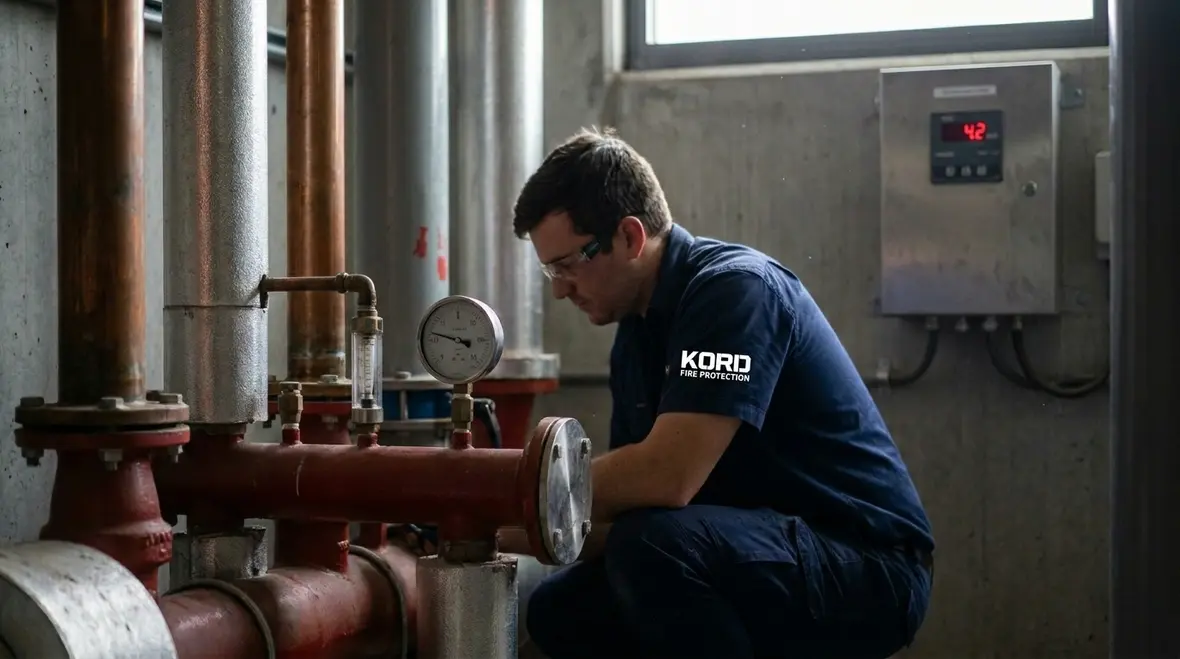
A monitoring program is only as useful as the response. Kord Fire Protection supports facilities with the operational discipline required for commercial and industrial settings across Australia. When pressure readings suggest a risk, the next step should be clear, documented, and fast.
What support looks like after the data shows a problem
- Testing and verification of pressure and flow performance against system requirements
- Root cause checks that look beyond the first symptom
- Maintenance guidance that protects performance after service activities
- Reporting for accountability, so site leaders can track risk trends over time
Just as importantly, Kord Fire Protection helps facilities align monitoring with business reality. Many sites cannot shut down for long. Therefore, the service approach must minimize disruption while keeping safety uncompromised. That is the sweet spot where monitoring becomes more than an obligation and turns into a managed system capability.
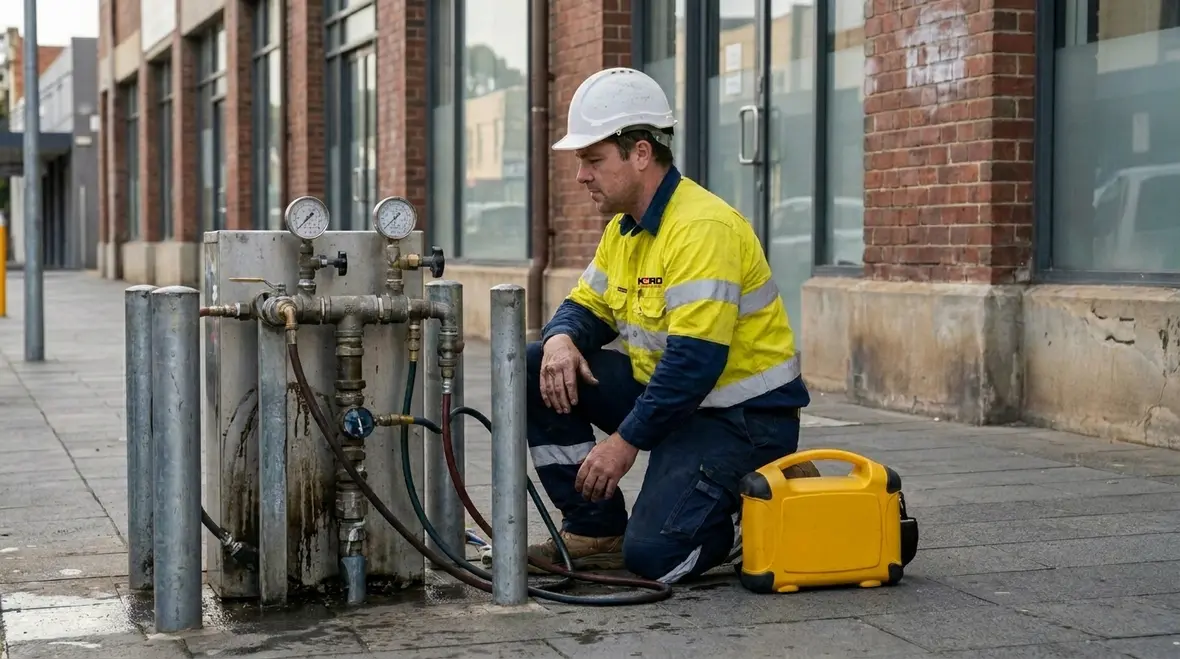
Best practices for keeping pressure stable and documented
Facilities teams do not need complicated processes. They need consistent habits backed by evidence. Monitoring becomes far more effective when it follows a disciplined routine.
First, they should set an inspection cadence that matches operational risk. Next, they should record readings in a way that supports trend analysis, not just single point results. Additionally, they should treat pressure changes after work as a trigger for follow up checks, even if the site still “feels fine.”
Simple habits that prevent expensive surprises
- Baseline performance established after acceptance and major work
- Trend review at set intervals, not only when someone gets nervous
- Valve and control verification after maintenance or construction
- Leak checks when pressure declines or flow patterns shift
- Clear documentation for audits and internal accountability
Then, when a correction is required, the team can act with confidence. After all, in a busy retail or industrial operation, time is expensive and downtime is painful. Monitoring protects both people and schedules.
Dual perspectives on monitoring: operations and compliance
Monitoring sprinkler system water pressure creates two benefits at once. On one side, operations teams reduce downtime risk by catching issues early. On the other, compliance teams gain clear proof that the system performs as required. When those two perspectives share the same data, decisions improve and arguments shrink.
Operational value
Fewer surprises
Faster troubleshooting
Better maintenance planning
Compliance value
Stronger records
Evidence for audits
Clear corrective actions
FAQ about sprinkler water pressure monitoring for commercial sites
Final thoughts and next step with Kord Fire Protection
Commercial sprinkler systems protect people and business continuity, and commercial sprinkler system pressure sits at the center of that promise. When facilities monitor pressure, they catch risks early, reduce downtime surprises, and support stronger compliance records.
If your site runs multiple hazards, operates around the clock, or has frequent construction and maintenance, contact Kord Fire Protection to review your monitoring approach and strengthen performance where it matters most. If backup reliability is also on your radar, this related guide on battery backup vs generator for emergency lighting is a smart next read.

Join Our Newsletter!
Get the latest fire safety tips delivered straight to your inbox From our Newsletter.