Fire Pump Electrical Controller Troubleshooting Checklist
Quick Answer: Fire pump electrical controllers are the brains behind reliable pumping in commercial buildings. When issues show up, crews should check power, inputs from water flow and pressure sensors, control logic settings, contactor health, and alarm circuits. With the right Fire pump electrical controller troubleshooting, faults get isolated fast. Then Kord Fire Protection helps keep the system ready.
For facilities that need support beyond a one-off reset, Kord Fire Protection’s fire pump services can help teams stay ahead of recurring controller problems before they become expensive downtime.
Fire pump electrical controller troubleshooting starts with a calm, methodical plan
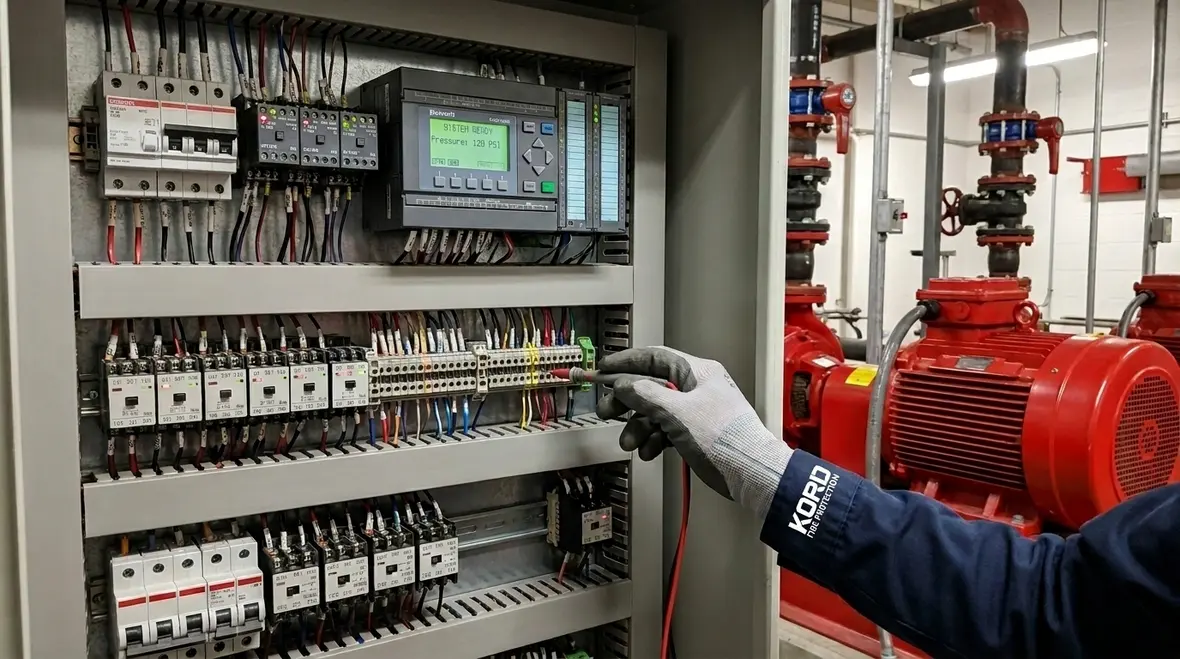
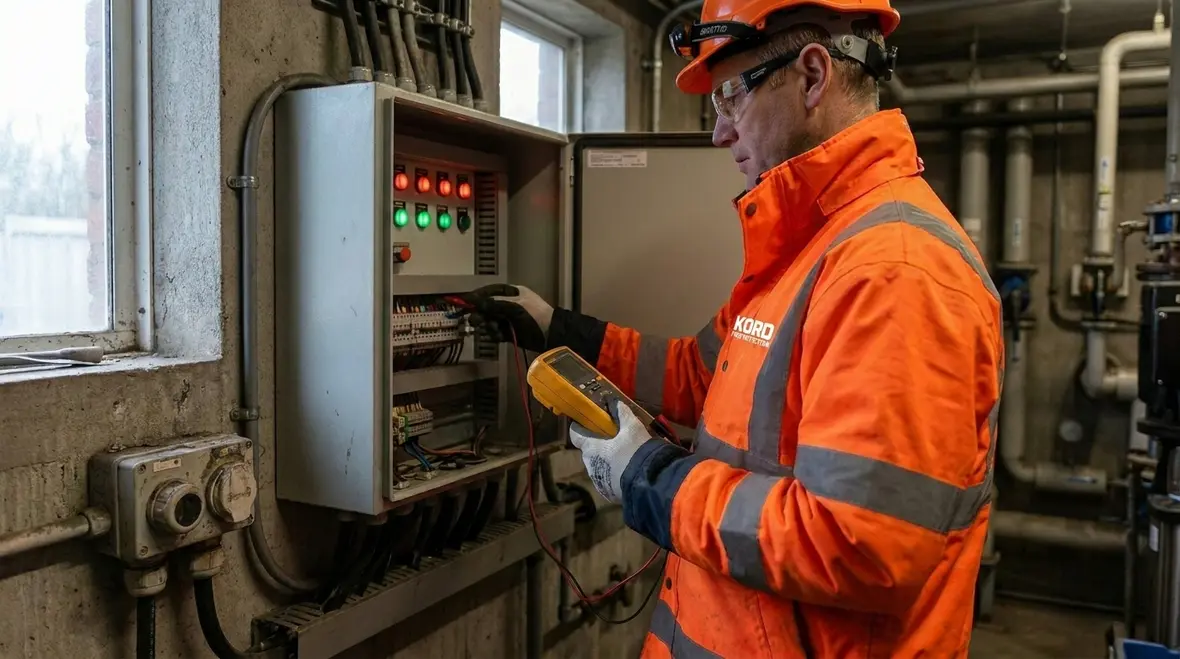
In commercial buildings across Australia, fire pump electrical controllers do not fail “someday.” They fail when the building least wants surprises, like a barista running out of oat milk right before a big rush. That is why Fire pump electrical controller troubleshooting must begin with disciplined steps and clear documentation. In the first pass, a technician should confirm correct incoming power, verify controller status lights, and review the most recent alarm history. Next, they should confirm wiring integrity in the controller cabinet, check terminal tightness, and look for signs of heat, corrosion, or moisture. Finally, they should validate that sensors and switches report values within expected ranges.
Because industrial, retail, and facility teams have real uptime pressures, Kord Fire Protection often becomes a vital partner on these jobs. They bring practical service experience, faster troubleshooting pathways, and a safety-first approach that matches the way Australian sites operate. Their related guide on essential fire pump electrical requirements and design also gives a useful design-side view of why controller issues often start upstream.
Common symptoms that point to a controller fault
Every job starts with what the building tells the technician. Therefore, the controller’s alarms, the pump’s behavior, and the site’s operating events help narrow the cause quickly. Typical signs include the pump not starting on demand, frequent starts without stable pressure, a controller stuck in fault lockout, or nuisance alarms that repeat after reset.
To keep troubleshooting focused, crews should link symptoms to likely control sections. For example, if the controller fails to start during a test, the problem often lives in power feed quality, phase loss detection, undervoltage settings, or an interlock circuit. If the pump starts, but pressure fails to ramp, the controller likely receives incorrect feedback from pressure transducers or flow-related switches. When the controller logs multiple faults in short bursts, that pattern can suggest a wiring or sensor issue that only appears under load.
In short, technicians should treat symptoms like clues, not like “mystery meat.” The goal is to isolate the control pathway that is failing. That same clue-based approach shows up again and again in Kord Fire Protection’s troubleshooting content, especially in its discussion of fire pump controller electrical issues, where symptom patterns help teams move faster.
A symptom first checklist that saves time
- No start on demand: check power input, start logic, and interlocks first.
- Short cycling or repeated trips: verify sensor feedback, protective settings, and motor status signals.
- Recurring nuisance alarms: inspect grounding, terminations, and environmental exposure inside the cabinet.
- Lockout after reset: read the fault history before anyone starts guessing.
Electrical basics: power quality, phase loss, and wiring integrity
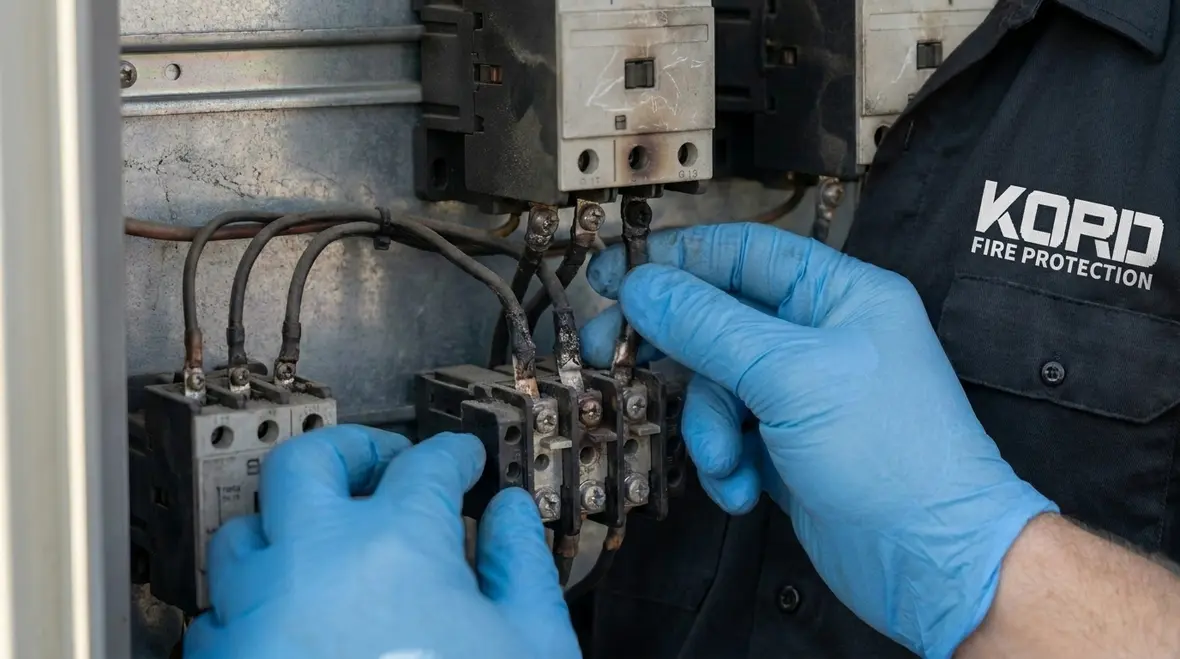
Even when the system looks installed properly, power quality can still cause controller troubles. Therefore, the technician should confirm the controller receives the correct voltage and that supply phases remain balanced. Next, they should check for loose lugs, damaged conduit entries, or moisture intrusion around cable glands. Heat damage often shows up as discolored terminals, brittle insulation, or chalky residues in the enclosure.
It also helps to verify that the controller’s protective devices match the design. For instance, a breaker with aging contacts can drop voltage during motor start. Then the controller sees undervoltage and refuses to run, which looks like a “control fault” when the root cause is actually supply stability.
When crews test, they should follow safe lockout and verification steps. Then they can measure at the controller input and compare readings against expected ranges. If phase loss detection trips, the technician should inspect incoming supply, terminal blocks, and any upstream disconnects. This is one reason Kord Fire Protection’s article on fire pump electrical troubleshooting for controller faults emphasizes sequence checks before replacing parts that may still be perfectly healthy.
How control logic, interlocks, and auto start settings get stuck
Controllers love rules. Yet when rules conflict, the pump can act like it has stage fright. In Fire pump electrical controller troubleshooting, the technician should review control logic settings such as start mode, stop mode, and the behavior on sensor faults. Many systems use interlocks from remote alarms, sprinkler waterflow switches, or auxiliary status contacts. If any interlock contact misreports status, the controller may deny a start request.
Additionally, the controller can lock out after repeated faults. In those cases, the site may reset the unit without fixing the cause, which leads to another cycle of failure. Technicians should confirm the lockout reason using the fault log, then verify that the condition that triggered the fault is actually cleared.
Finally, the auto start timing and sequencing settings matter. If timing is misconfigured, the controller may start too early, before valves stabilise or before feedback signals become valid. As a result, it can generate trips that appear “random.”
This is where careful reviews pay off. Kord Fire Protection often supports these control logic reviews during service visits, especially on multi-tenant or mixed-use sites where interlocks can change over time after refurbishment. Their workflow article on fire pump controller diagnostics troubleshooting reflects the same idea: read the logic path before blaming the hardware.
Interlock trouble usually hides in plain sight
A dry contact that never changes state, a supervision point wired backwards, or a remote inhibit flag left active after testing can all stop a healthy controller from doing its job. That is why the smartest troubleshooting is often the least dramatic. Read inputs, compare them to actual field conditions, and make sure the controller and the building are telling the same story.
Pressure feedback problems and why the pump may run but not perform
Many callbacks happen after a pump starts, but water delivery does not match demand. Therefore, the technician should inspect pressure transducers, pressure switches, and any transmitter wiring to the controller. If a sensor reads low or noisy signals, the controller may think demand is not present and hold back output.
Technicians should check sensor calibration status and verify the controller receives clean analog or digital input. They also should look for wiring runs routed near noisy power cables, which can introduce interference. In some sites, contractors add temporary equipment over the years, and those wiring changes can quietly affect controller readings. That is why updated wiring maps and terminations checks are not busywork, they are survival.
Also, motor and starter feedback can mislead the controller. If status contacts indicate “running” while actual speed or flow does not match, the control can enter a fault state or operate in an unstable control loop. Then the pump might cycle. Nobody wants a fire pump doing the equivalent of “dancing, but the wrong song.”
Contactors, relays, and power electronics: what fails in real buildings
Inside many electrical controller cabinets, contactors and relays do the heavy lifting. Over time, contacts wear, coils heat up, and terminals loosen. Consequently, the controller might report a fault that seems electrical but is really mechanical wear. Technicians should inspect contactor contacts for pitting, check coil voltage supply, and confirm relay outputs switch cleanly.
They should also check for signs of arcing, especially on start circuits and output terminals. If the controller includes soft-start or variable frequency components, the technician should examine cooling fans, filters, and any status indicators tied to drive health. Blocked vents in hot plant rooms can reduce reliability, then trips become more frequent during warm seasons across Australian climates.
During inspection, they should verify ground connections. Poor earthing can cause erratic controller behavior and false fault signals. As an added benefit, good grounding supports safe fault detection during abnormal electrical events.
When the service team needs speed and consistency, Kord Fire Protection can support ongoing maintenance so these parts do not wait until they fail. They can also help coordinate testing windows so operations keep running. If the fault path points more toward starter hardware than programming, their article on fire pump motor starter issues troubleshooting is another helpful companion read.
Testing and documentation that keeps compliance moving
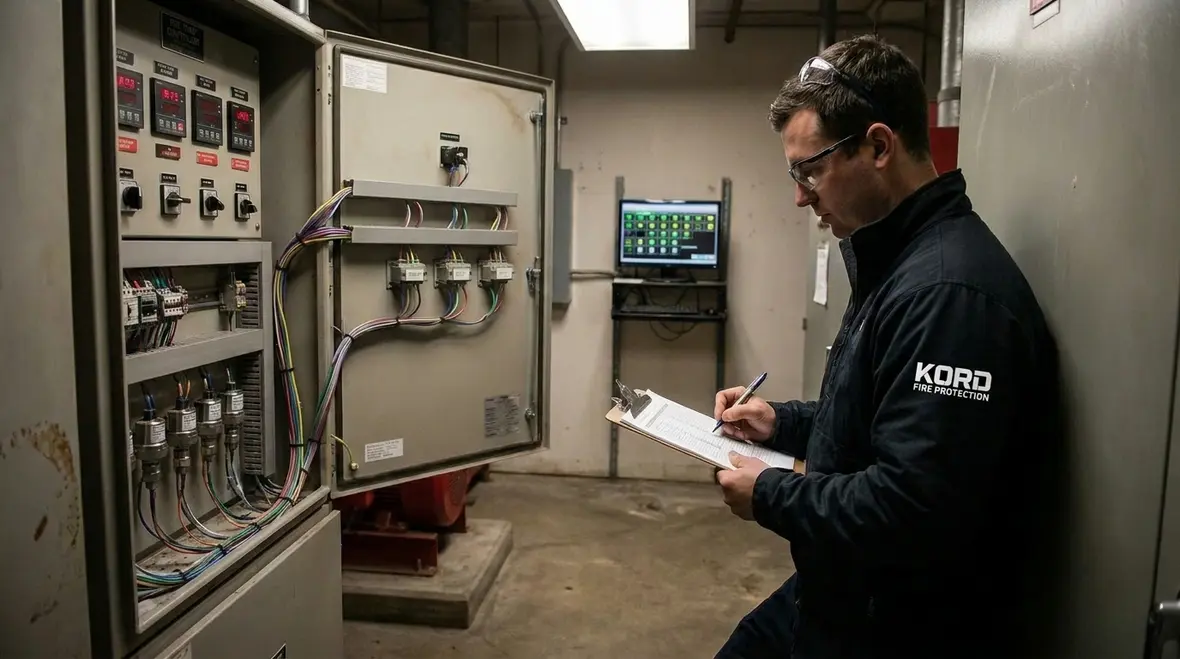
After repairs, crews should run proper functional tests, not just a quick “does it start” check. Therefore, they should perform controlled tests that confirm alarms, starting sequence, and stop logic work as designed. They should also verify that the controller reports status correctly to the building alarm system. If the building uses remote monitoring, technicians should confirm the telemetry points update reliably.
Documentation matters because future faults often reuse the same path. Technicians should record measured voltage readings, sensor values used during testing, the fault log entries before and after the fix, and any calibration changes. Then the next service visit can move faster and more confidently.
Also, they should verify that cabinet labeling remains accurate. If terminals or wire IDs change during past repairs, outdated labels can turn troubleshooting into a scavenger hunt. That hunt is fun in movies. It is not fun when time matters.
For commercial and industrial facilities across Australia, this documentation discipline becomes even more important when handovers, tenant fitouts, and equipment upgrades happen over time. Kord Fire Protection can help keep the history clean and understandable.
Why Kord Fire Protection becomes the steady partner on these jobs
Fire pump systems sit at the edge of safety and business continuity. When the controller misbehaves, downtime gets expensive, and emergency readiness gets threatened. That is why Fire pump electrical controller troubleshooting works best with a partner that understands both the engineering and the operational reality of Australian facilities.
Kord Fire Protection can support facilities teams with service planning, skilled inspection, and practical fixes that reduce repeat faults. Instead of treating controller issues as one-off problems, they help create a clear maintenance rhythm so electrical faults and sensor drift do not build up quietly.
In other words, they help the fire pump do what it is supposed to do, every time. Unlike some famous pop culture heroes, the fire pump does not get second chances.
FAQ
| Symptom | Likely controller area | Next step |
|---|---|---|
| Does not start on demand | Power input, interlocks, start circuit | Check voltage, phase status, interlock contacts, then outputs |
| Starts then trips repeatedly | Sensor feedback or protective logic | Verify pressure signals, motor/start feedback, fault log |
| Nuisance alarms | Wiring, grounding, sensor drift | Inspect terminals, check earth, confirm sensor calibration |
Conclusion: book service before the next fault writes the script
When a controller acts up, quick checks help, but real reliability comes from structured Fire pump electrical controller troubleshooting and proven maintenance. Facilities in Australia should schedule inspection, verify sensor and interlock behavior, and document results so the next team can move faster.
If the cabinet shows heat damage, repeated lockouts, or unstable pressure feedback, act now. Contact Kord Fire Protection to plan the right service pathway and keep your fire pump ready when it matters.

Join Our Newsletter!
Get the latest fire safety tips delivered straight to your inbox From our Newsletter.