Fire Alarm Power Supply Redundancy in Australia
Quick Answer: Fire alarm systems must stay powered even when the grid fails. Fire alarm power supply redundancy uses layered backup sources like batteries and supervised chargers so the system keeps monitoring and signaling. With the right design, testing, and service, facilities avoid downtime, support compliance, and protect people and property across Australia.
Ensuring uninterrupted fire alarm power supply redundancy for facilities starts with a simple truth: fires do not wait for paperwork, and power failures do not schedule themselves for business hours. That is why fire alarm power supply redundancy matters from day one, not only after an incident. In the rest of this article, the focus stays on how facilities keep panels alive, supervise critical circuits, and respond fast when something drifts out of spec. And yes, this is the part where people usually say, “We will fix it later.” Later is a luxury many sites do not get.
Facilities that already rely on professional fire alarm services are usually in a stronger position here, because routine inspection, troubleshooting, and system support help catch power related drift before it becomes a very expensive surprise. That kind of support matters even more when buildings change over time, which they always do, usually right after someone says, “This setup should stay simple.”
Why power continuity decides life safety outcomes
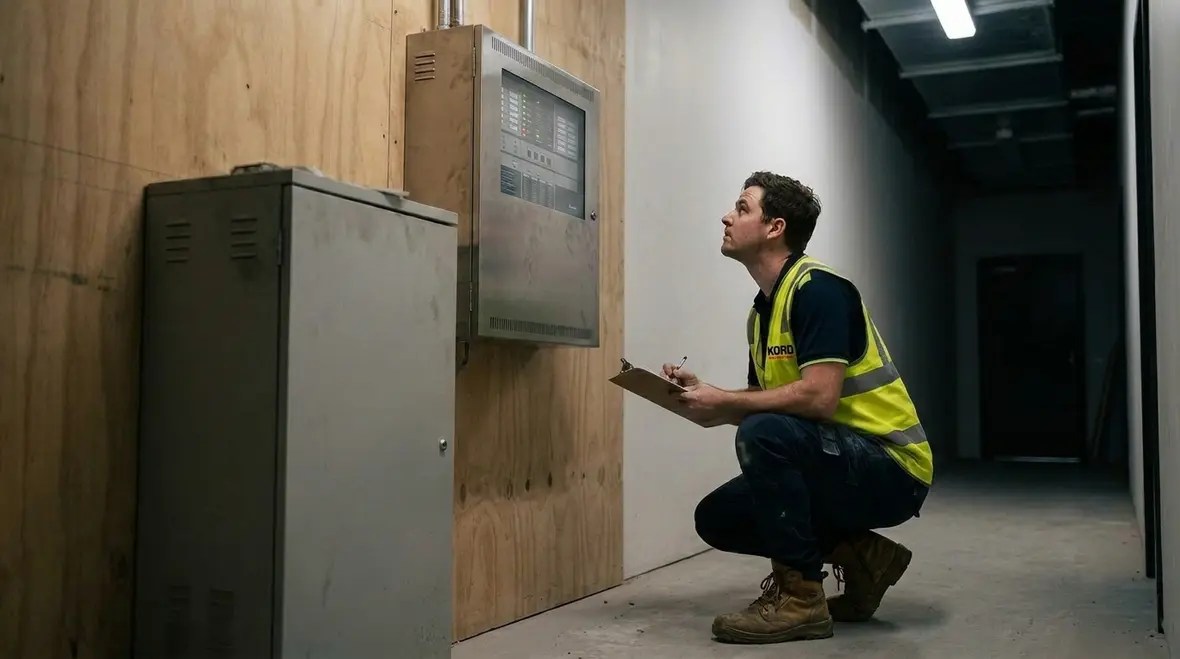
Fire detection does more than sound an alarm. It triggers evacuation, alerts monitoring services, and supports safe emergency response. However, each of those actions depends on steady power. Therefore, facilities need a plan that covers both normal operation and abnormal conditions, including brownouts, switchgear faults, and accidental site outages.
In practice, power continuity means the fire panel and its related devices keep operating during the full required standby and alarm time. Furthermore, it means the system can report faults instead of silently failing. A well planned redundancy approach also reduces nuisance shutdowns, because the control equipment sees stable inputs and correctly monitors battery health.
For industrial, retail, and commercial sites across Australia, the risk picture varies by environment, but the requirement stays consistent: the fire alarm system needs power it can count on, every time.
Why this matters in real buildings
A panel that looks healthy during normal conditions can still struggle during a prolonged outage. The trouble usually hides in plain sight. Batteries age. Chargers fall out of tolerance. Added field devices quietly increase current draw. Communications equipment joins the party and suddenly the original runtime assumptions are living in the past. The system might still activate, but activation is only part of the story. It also needs to stay active long enough to do its job without fading out halfway through the emergency like a phone at 1 percent.
What a reliable redundancy design includes
A strong redundancy plan combines multiple safeguards instead of betting everything on one component. As a result, the system stays functional when any single element degrades. Typically, that includes:
- Primary power from the electrical supply, routed with proper protection and correct earthing practices
- Supervised chargers that maintain battery float and report charging faults
- Backup batteries sized for the required standby and alarm durations, considering real world device loads
- Fault signaling so the system reports missing, low, or degraded power states
- Defined change control when equipment is added, because new devices change load calculations
Moreover, redundancy design should account for the full system load, not just the control panel. Sounders, beacons, interfaces, relays, and communications gear can add up quickly. Then, during an alarm event, the draw changes again. If a facility underestimates those currents, batteries may drop sooner than expected. And that is when you get “the alarm did not fail,” but “the alarm did not last.” Those are two very different stories, even though people try to tell them like they are the same.
Design details that deserve more respect
Reliable power redundancy also depends on disciplined documentation. Load calculations should not live as a mystery buried in an old commissioning folder no one has opened since the building fit out. They should reflect the current installation. If extra notification appliances, relays, dialers, or network modules have been added, the power budget needs to catch up with reality. That is why good teams review the whole pathway from supply to charger to storage to field load, rather than admiring one shiny component and hoping the rest behaves itself.
How supervision prevents silent failure
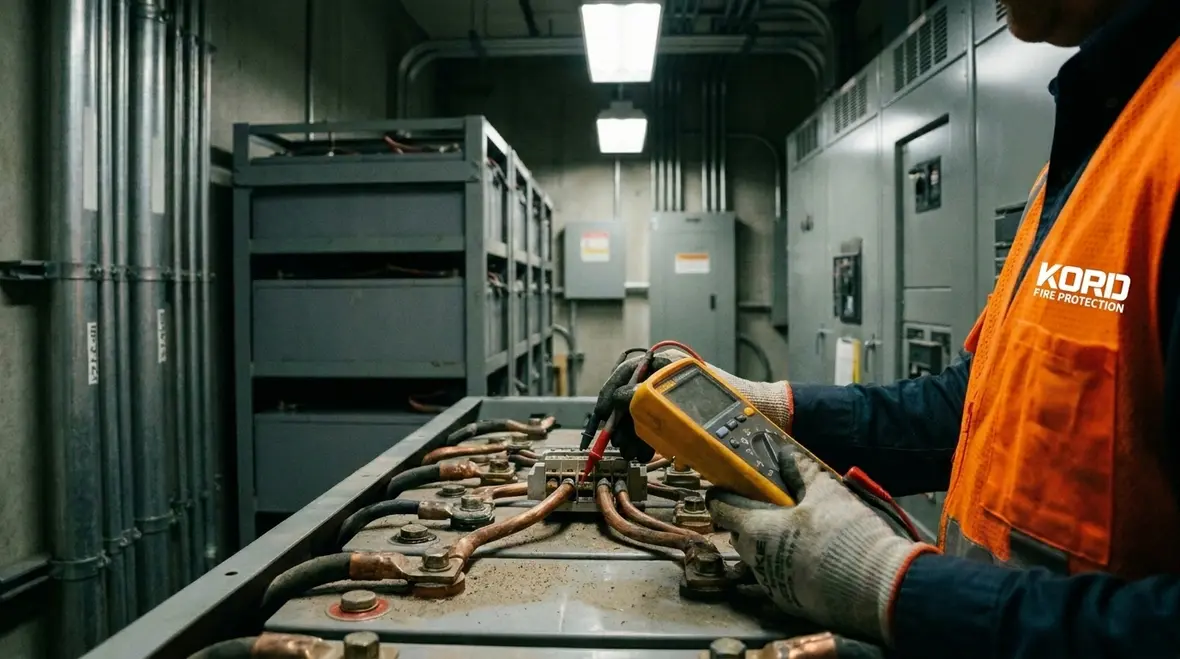
Redundancy does not only mean having backups. It also means supervising them so faults surface early. When a system supervises battery voltage, charger status, and circuit continuity, it can warn the facility before the next outage turns a small issue into a major one.
In addition, supervision reduces the chance that a problem hides behind routine operation. For example, a battery can weaken gradually. Therefore, it may still power the system today, while it fails to deliver required runtime next month. Supervision and periodic testing catch that decline.
To keep the integrity of the fire alarm power redundancy strategy, facilities should treat testing as a core operational task, not a “nice to have.” Service records, measured results, and documented outcomes support audits and, more importantly, inform decisions. If the facility ignores the data, the system will not ignore the risk.
This is also where contextual learning from related resources helps. Kord Fire’s guide on streamlining fire alarm maintenance schedules reinforces the same point: consistent maintenance and clear records make systems easier to trust when conditions stop being normal. Nobody wants their life safety strategy to rely on crossed fingers and a half remembered service note.
Maintenance schedules that actually protect runtime
Many sites schedule maintenance when it is convenient. Unfortunately, power supply health follows its own timeline, not the calendar that humans prefer. Therefore, a good maintenance plan matches the system risk and environment.
For most facilities, that means combining routine inspection with battery performance checks and charger verification. It also means confirming the installation still matches the as built load calculations. If a site upgrades communications, adds devices, or alters zones, the redundancy math may shift.
Additionally, facilities should standardize how they respond to faults. For instance, if the panel reports a battery fault or charger fault, the team should not just clear it. They should investigate. Then, they should repair or replace the affected component using compatible parts and approved methods.
Here is the calm, soothing part: a good schedule makes the system boring in the best way. It runs, it monitors, and it stays ready. Fires and outages still happen, but surprises lose their power.
What teams should review during service
- Battery condition, age, and measured performance under test
- Charger output and any reported abnormal states
- Panel logs that may show recurring or intermittent power trouble
- Recent device additions that change standby or alarm loads
- Documentation updates so the next technician is not forced to solve a treasure hunt
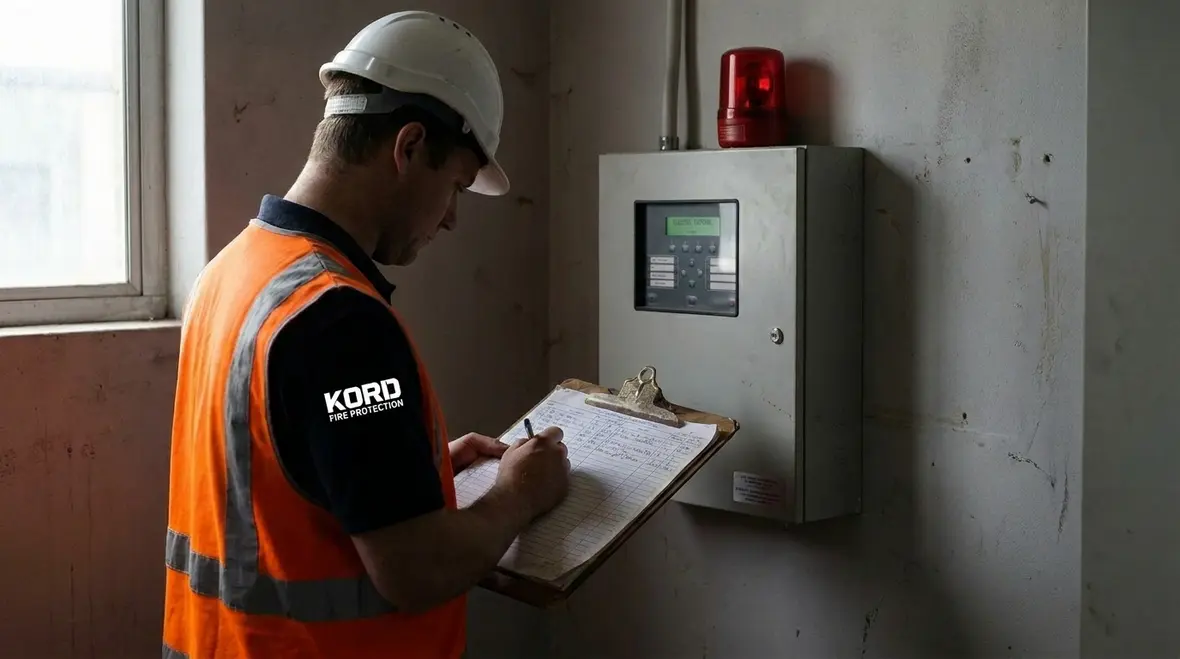
Where Kord Fire Protection fits as a vital partner
Kord Fire Protection can become a vital partner in ensuring uninterrupted power supply redundancy for facilities because it brings both technical service discipline and ongoing support. Instead of a one off visit, the best approach focuses on verification, documentation, and responsible updates as the facility changes.
In many Australian sites, the challenge is not only keeping batteries alive. It is keeping the entire fire system aligned with correct runtime needs. Kord Fire Protection supports this by helping facilities maintain proper monitoring, manage testing outcomes, and address faults with a clear path to resolution. As a result, the facility builds confidence that the fire alarm system performs as designed.
Moreover, when facilities bring in Kord Fire Protection early, teams can plan upgrades without breaking the redundancy balance. They can also reduce the gap between install day intentions and day to day operations, which is where risk often sneaks in like a pop up ad at midnight.
For readers exploring broader system coordination, the Kord Fire blog hub and articles such as fire alarm integration for smarter building safety add useful context around how dependable power supports the rest of a building’s life safety response. After all, integration works best when the system still has the energy to do the integrating.
Planning for upgrades across industrial, retail, and commercial sites
Industrial, retail, and commercial facilities evolve. New lines, new fit outs, and new tenants introduce changed loads and sometimes new power paths. Consequently, a redundancy strategy must include a change process that protects runtime.
Key steps include:
- Load review before adding devices, sounders, or interfaces
- Battery recalculation to match the revised standby and alarm demand
- Charger capacity check to ensure safe charging and supervision
- Route and protection verification for any power wiring changes
- Updated records that reflect the current configuration
Then, when a facility upgrades, it should also check the supervision settings and confirm the panel sees the circuits correctly. Otherwise, the system may display normal status while the underlying power capability drifts. And that is like saying a car is fine because the dashboard lights are on. The proof sits in the system performance, not in guesswork.
Upgrade planning is rarely glamorous, but it is one of the quiet heroes of reliable fire protection. The more a site changes, the more dangerous old assumptions become. A battery set that was perfectly adequate for yesterday’s layout may be undersized for today’s tenant mix, device count, or monitoring pathway. Redundancy only earns its name when it is reviewed against present conditions, not nostalgia.
Featured FAQs
Conclusion and call to action
Fire alarm power supply redundancy protects people when power fails and keeps a system ready during emergencies. For industrial, retail, and commercial facilities across Australia, the safest path is proper design, active supervision, and maintenance that matches real loads over time. When facilities stay ahead of changing demands, they reduce the risk of hidden runtime gaps and avoid the kind of problem that only becomes visible at the worst possible moment.
Kord Fire Protection can help facilities verify performance, manage changes, and respond to faults with confidence. If the site has an existing system or a coming upgrade, now is a smart time to schedule support through Kord Fire’s fire alarm service team. Because when the lights go out, the fire alarm should not decide it also deserves a break.

Join Our Newsletter!
Get the latest fire safety tips delivered straight to your inbox From our Newsletter.