Fire Pump Controller Troubleshooting for Facility Managers
Quick Answer: Facility managers rely on fire pump controller troubleshooting to keep water pressure reliable when seconds matter. They check alarms, power quality, sensor signals, setpoints, and pump response. Then they verify testing records and fix issues before they become emergency calls. For many sites across Australia, Kord Fire Protection helps deliver steady, documented protection.
In every facility across Australia, the fire pump controller stands like a quiet bouncer at the door of life safety. It watches the system, it listens for faults, and it tells pumps when to perform. However, when reliable pressure delivery starts to wobble, the downtime and stress can feel like a bad Netflix sequel that nobody asked for. That is where fire pump controller troubleshooting becomes essential for facility managers. And while internal staff can handle routine checks, complex issues often need an expert partner who understands codes, wiring, sequences, and the real-world behavior of pumps. That is why Kord Fire Protection can become a vital partner, especially when you want results you can prove during inspections and commissioning follow ups.
Near the top of any troubleshooting plan, it helps to connect controller issues to broader system care. For sites that need practical support beyond the panel itself, fire alarm services can provide helpful context for how monitored signals, reporting pathways, and documented maintenance work together across life safety infrastructure.
Why pressure drops start with control logic
Pressure problems rarely begin with the pump itself. Instead, they often start with what the controller believes is happening. For example, a controller might receive a dry run input, interpret a sensor reading as an abnormal state, or delay pump start because the signal sequence does not match its programmed logic. As a result, the pump can fail to ramp correctly or can start late when demand spikes.
To prevent this, facility teams should review the controller history first. Then they should look at the event log for the moment pressure performance dipped. After that, they can compare those events to system conditions like tank level, jockey pump status, and any concurrent alarms. In many cases, the issue looks like “the pump is weak,” but the truth is “the controller did not command the pump the way the system needs.”
- Confirm the fire pump controller setpoints match the design intent
- Verify the phase loss or fault inputs have not been triggered
- Check that any auto alternation or staging settings align with system design
- Review sensor health, especially pressure and flow transducers
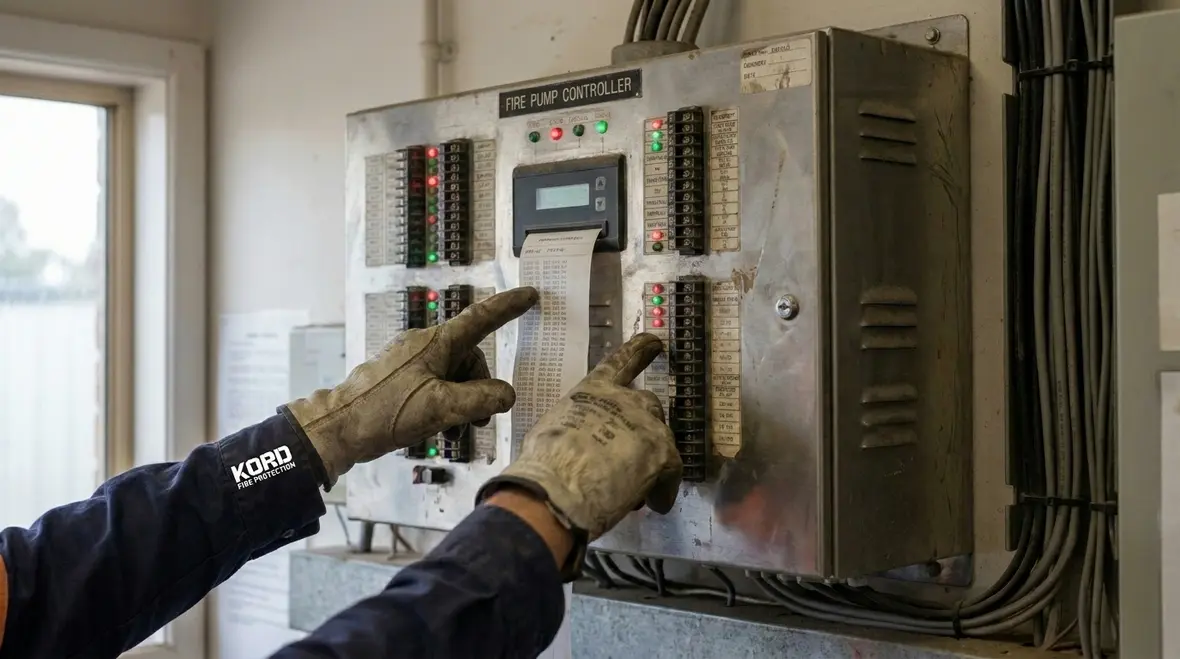
Common symptoms and what they usually mean
When a site reports “poor pressure” or “slow response,” the controller can show telltale signs. These signs matter because they help teams avoid guessing, and guessing in life safety is like using a spoon to fix a gearbox. It might work once, but usually it does not.
If the controller issues repeated starting attempts, it may indicate unstable inputs or a feedback mismatch. If the pump starts but pressure never reaches the expected range, the controller may be commanding speed or start levels based on incorrect sensor feedback. If the controller locks out, it may detect a condition that should be reset only after corrective action.
Facility managers should also watch for repeated alarms that clear temporarily. That pattern can indicate loose terminals, intermittent wiring faults, or vibration affecting sensors. In industrial and retail settings where equipment runs continuously, those small electrical problems can escalate quickly.
- Pump starts late during demand: check input circuits and sequence logic
- Pressure overshoots then drops: verify sensor range calibration and filtering
- Controller faults after start: confirm feedback signals and permissives
- Frequent resets: inspect wiring, terminations, and contact wear
If your team wants a useful comparison point, Kord Fire Protection also covers similar patterns in its fire sprinkler pump controller troubleshooting guide, where signal problems, relay issues, and unstable readings show how small faults can punch above their weight.
Read the symptoms before touching the settings
One of the fastest ways to waste half a day is to start changing parameters before anyone records what the controller was trying to say. Good troubleshooting starts with clues, not confidence. Alarm history, active indicators, sequence timing, and operator observations can narrow the issue before tools even come out. The controller may look dramatic, but it usually leaves fingerprints everywhere.
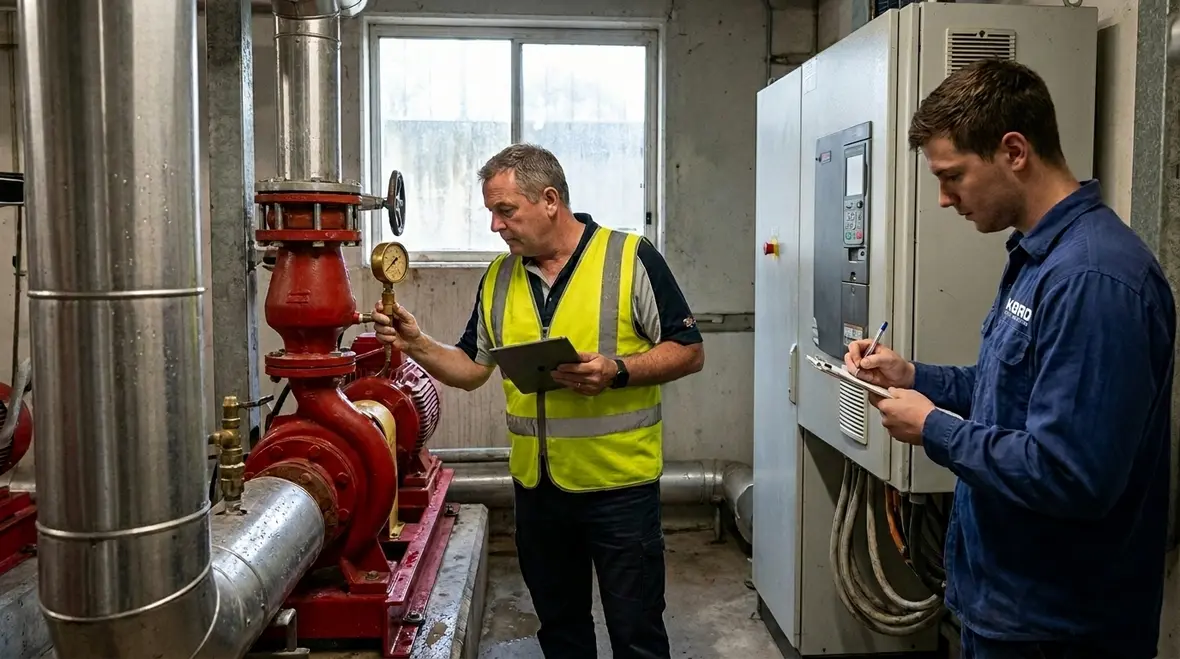
Step by step fire pump controller troubleshooting for facility managers
When teams handle fire pump controller troubleshooting, they should follow a calm, consistent order. First, they verify safety procedures and isolate electrical hazards. Then they collect the basics before touching settings. After that, they test inputs, outputs, and feedback in a way that confirms the controller’s decision path.
Most sites benefit from a structured process that reduces “trial and error.” Here is a practical flow that suits facilities across Australia, from industrial plants to complex commercial sites.
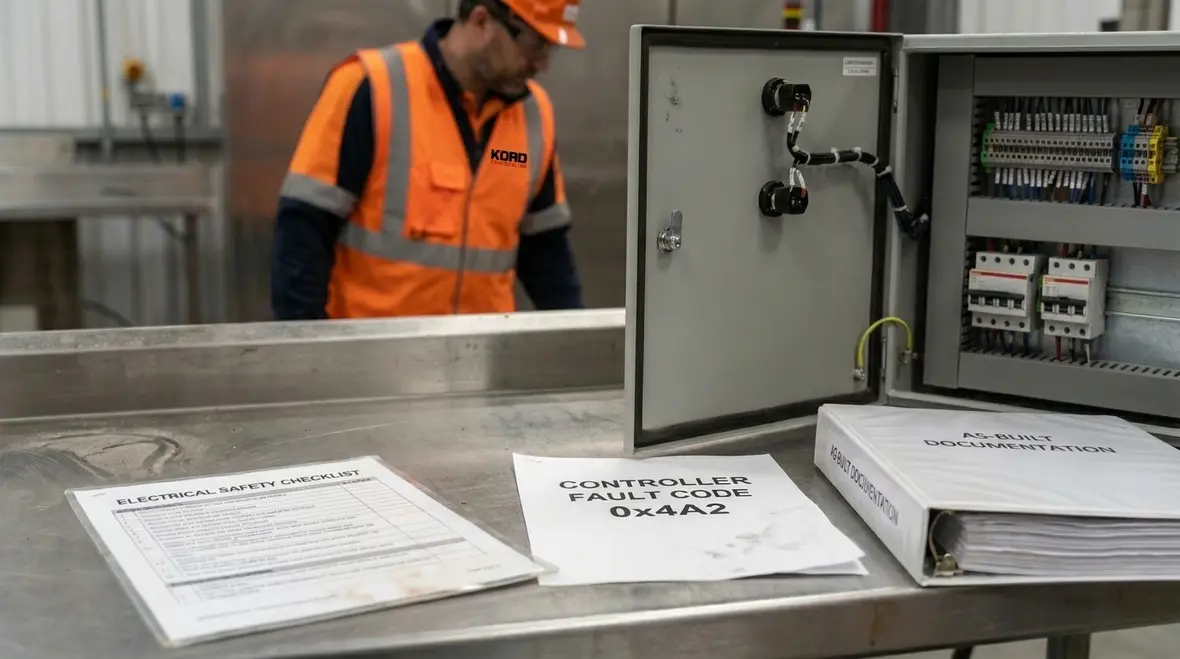
- Start with documentation: controller manual, as built drawings, and last service records
- Check power quality: confirm incoming voltage stability and phase balance
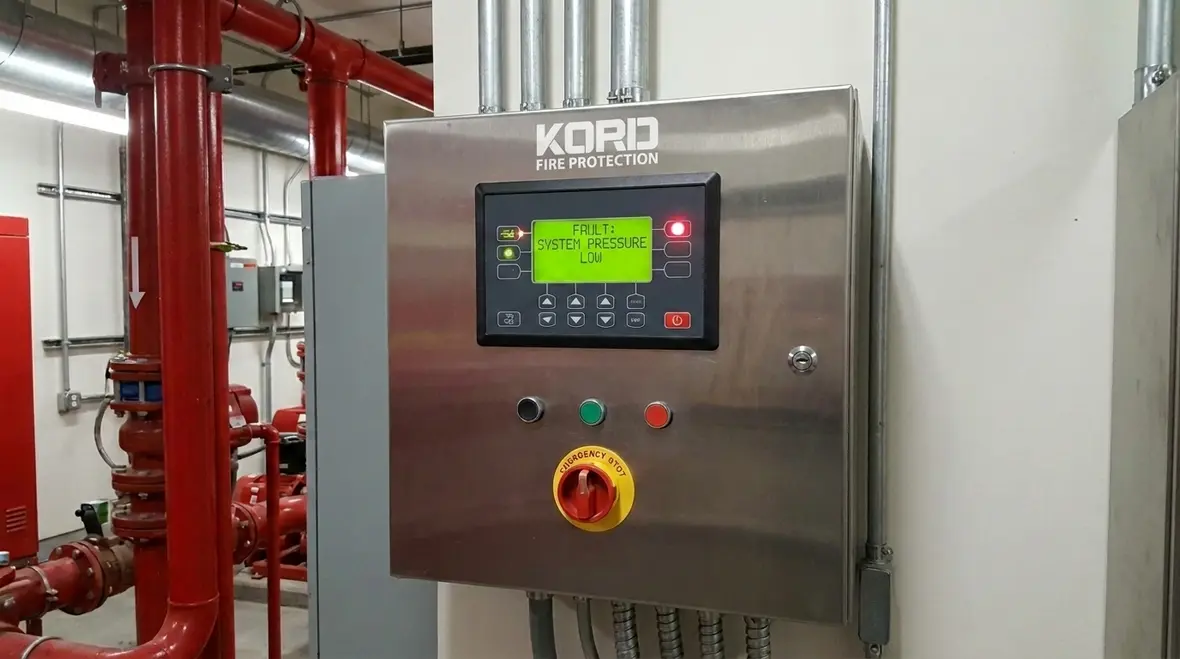
- Inspect indicators and alarms: record every fault code and timestamp
- Validate sensors: compare controller readings with pressure gauge verification
- Confirm control signals: check start and stop command paths from the fire system interface
- Verify feedback: ensure the controller receives pump running and flow confirmation correctly
- Test staging logic: confirm lead lag and alternation functions behave as designed
- Recheck setpoints: ensure no unauthorized changes occurred
Because you manage multiple trades, you want to avoid a situation where electrical technicians test one thing, mechanical staff test another, and nobody confirms how the controller ties them together. Therefore, a coordinated approach helps maintain a clean chain of evidence.
Documentation is part of the repair, not a boring afterthought
A complete troubleshooting record does more than satisfy paperwork. It tells the next technician what changed, what failed, what values were verified, and what should be watched next. That is especially useful when the same alarm comes back weeks later pretending it is a brand new mystery. Clear records can stop that performance before it gets an encore.
For teams that need a tighter diagnostic flow, Kord Fire Protection’s fire pump controller diagnostics troubleshooting workflow expands on how technicians confirm mode, setpoints, interlocks, and real operating conditions in the field.
How facility conditions affect controller performance
Even well engineered systems struggle when the facility environment fights back. That is why facilities managers should consider heat, humidity, dust, and vibration. Those factors affect terminal integrity, sensor drift, and contact reliability. In warehouses and manufacturing zones, airborne debris can get into panels, and vibration can slowly loosen components.
Additionally, water quality can influence pump behavior, which then changes feedback signals. If the controller sees unexpected discharge conditions, it may interpret them as an abnormal state. Hence, you need to connect controller symptoms back to system reality: suction conditions, valve positions, isolation status, and any changes made during recent works.
In multi tenant retail and commercial sites, maintenance activities can also shift valve alignment. Sometimes a valve gets adjusted for plumbing works, and the fire pump system keeps taking the blame. A quick walk through the mechanical room during troubleshooting can save hours.
- Confirm valves remain in their required positions after works
- Check for panel contamination, moisture ingress, and cable strain
- Inspect cable routes for abrasion and mechanical stress points
- Verify strain or corrosion on terminals and connectors
When to involve Kord Fire Protection as a partner
Facility teams can handle basic checks, but advanced fire pump controller troubleshooting often requires specialized testing, correct configuration knowledge, and experience with controller sequencing. In addition, if the controller involves complex interfaces, alternation schemes, or variable demand strategies, you want someone who has already seen the “same” problem show up with different wiring layouts.
This is where Kord Fire Protection becomes a vital partner. They help teams connect the dots between controller behavior, pump performance, and documentation outcomes. That means fewer surprise failures and smoother inspection readiness. Instead of treating the controller like a mysterious black box, you bring it back into a measurable, testable system.
Partnering also supports better decision making. When a controller fault repeats, Kord Fire Protection can help identify whether the issue is calibration, wiring integrity, sensor drift, or a logic setting that no longer matches the system. In a busy site, that saves time and reduces unnecessary parts replacement.
And yes, sometimes the problem is a loose terminal that looks fine until it does not. Panels can be drama queens like that. The good news is you can tame the drama with the right approach.
Specialists can separate a control issue from a system issue
That distinction matters. A controller may show a fault because a field device failed, or a field device may look guilty because the controller logic was misread. Experienced troubleshooting cuts through that back and forth. Kord Fire Protection also offers broader fire alarm service systems support when facilities need coordinated attention across alarms, interfaces, and ongoing compliance tasks.
Best practices to prevent repeat faults
Prevention beats emergency response. Therefore, facility managers should build habits around testing, cleanliness, record keeping, and controlled changes. First, schedule checks that align with the manufacturer and local compliance expectations. Then, verify that each test result ties to an actionable maintenance task. After that, limit unplanned modifications and manage any changes through a proper workflow.
- Keep controller firmware and configurations aligned with approved documentation
- Maintain sensor calibration intervals and verify readings against known references
- Check and log panel conditions, including moisture control and cable strain
- Use a change register for valves, setpoints, and wiring modifications
- Ensure alternation and lead lag settings match current pump configuration
Finally, facility managers should train the right people to interpret controller indicators. When maintenance staff can read the event log correctly, the site improves response time and reduces confusion during emergencies.
FAQ
Conclusion and call to action
Reliable pressure delivery depends on a fire pump system that responds instantly and predictably, and that starts with disciplined fire pump controller troubleshooting. Facility managers should track fault history, verify sensor feedback, confirm control logic, and protect the panel environment. Those habits turn random sounding faults into traceable causes, which is exactly what busy facilities need when time, documentation, and operational confidence all matter at once.
When the job requires deeper testing or configuration confidence, partner with Kord Fire Protection. Reach out to assess your controller performance, reduce repeat faults, and keep your system inspection ready across Australia. If your site also needs stronger coordination between controller behavior and monitored life safety signals, their fire alarm service systems team can support a more complete maintenance strategy.

Join Our Newsletter!
Get the latest fire safety tips delivered straight to your inbox From our Newsletter.