Fire Protection Water Supply Options Explained
When a fire breaks out, water becomes the quiet hero in the background. Yet not all fire protection water supply options are created equal. Some buildings rely on a city main connection. Others depend on a dedicated storage tank. Still others require a fire pump to push water where gravity refuses to cooperate. Each approach carries its own strengths and trade offs. According to Kord Fire Protection technicians, the right choice depends on pressure, reliability, building height, and local codes. In other words, it is not just about turning on a hydrant and hoping for the best. It is about engineering peace of mind long before the sirens ever sound.
Understanding Water Supply for Fire Protection Systems
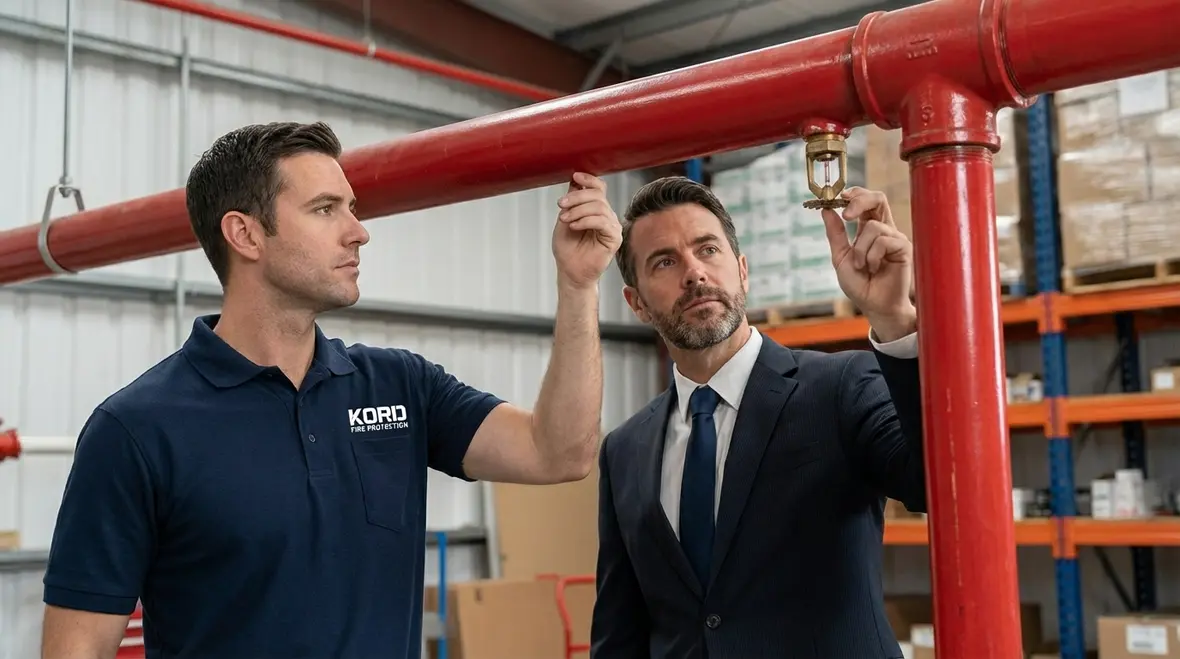
At its core, a fire sprinkler or standpipe system needs two things. First, it needs enough water. Second, it needs that water at the correct pressure. Without both, even the most advanced sprinkler heads become expensive ceiling decorations.
Therefore, selecting among water sources for fire protection requires a close look at flow rate, duration, and reliability. Flow rate measures how much water moves per minute. Duration measures how long that flow can last. Reliability answers the most important question of all. Will the water be there when everything else goes wrong?
Kord Fire Protection technicians often explain this to property owners in simple terms. A system is only as strong as the supply behind it. It is a bit like owning a high performance sports car with no fuel in the tank. Impressive? Yes. Useful in a crisis? Not so much.
If you are interested in how this concept plays out specifically for fire pumps, Kord Fire also offers a deep dive into fire pump testing requirements, including how NFPA standards shape real-world testing and maintenance.
City Main Connection Explained in Plain Terms
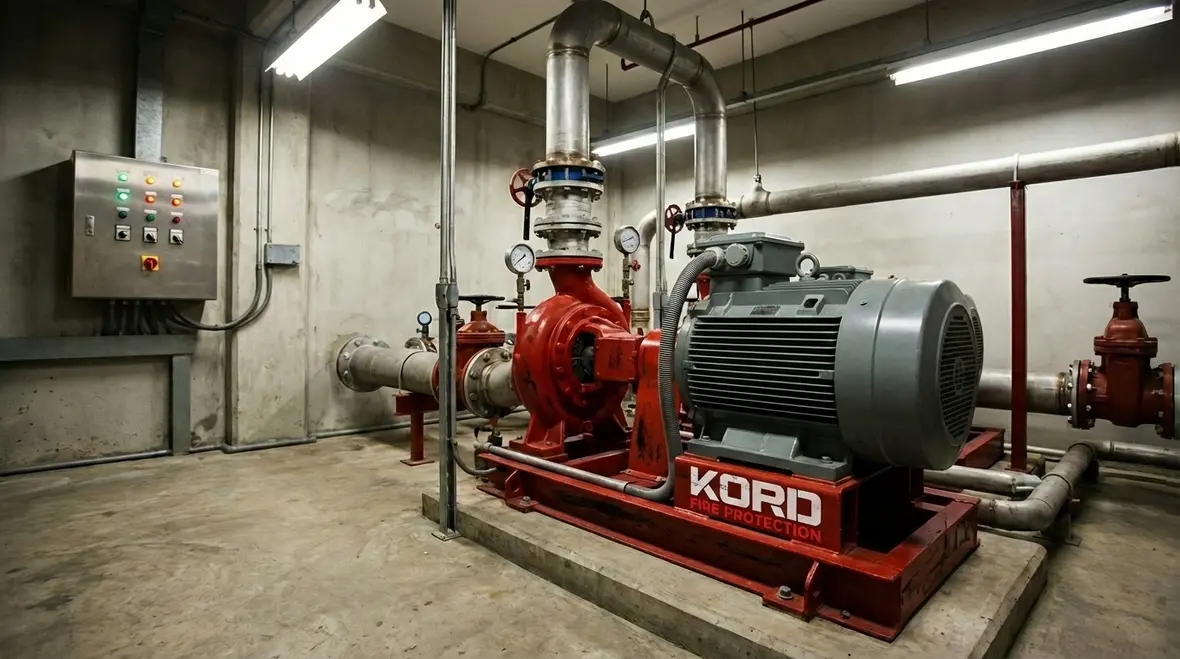
A city main connection ties a building’s fire system directly into the municipal water supply. On the surface, this sounds ideal. After all, city infrastructure delivers water to entire neighborhoods every day. However, the details matter.
Pros of using a city main
- Lower upfront cost compared to installing tanks and pumps
- No need for on site water storage
- Minimal maintenance of supply equipment
- Space saving design for urban properties
Because the municipality maintains the infrastructure, building owners avoid maintaining large tanks. In addition, installation often proves simpler. For smaller commercial buildings, this approach may fully meet fire code requirements without extra equipment.
Cons of relying solely on a city main
- Pressure fluctuations during peak demand
- Limited flow in older infrastructure
- Vulnerability during main breaks or city wide emergencies
- Dependence on public utilities
During high demand periods, such as hot summer afternoons, city pressure can drop. If a large fire occurs nearby, multiple hydrants may draw from the same line. Consequently, available flow may decrease right when it is needed most.
Kord Fire Protection technicians often perform flow tests before recommending this option. They measure real world performance rather than relying on assumptions. As they like to say, hope is not a design strategy.
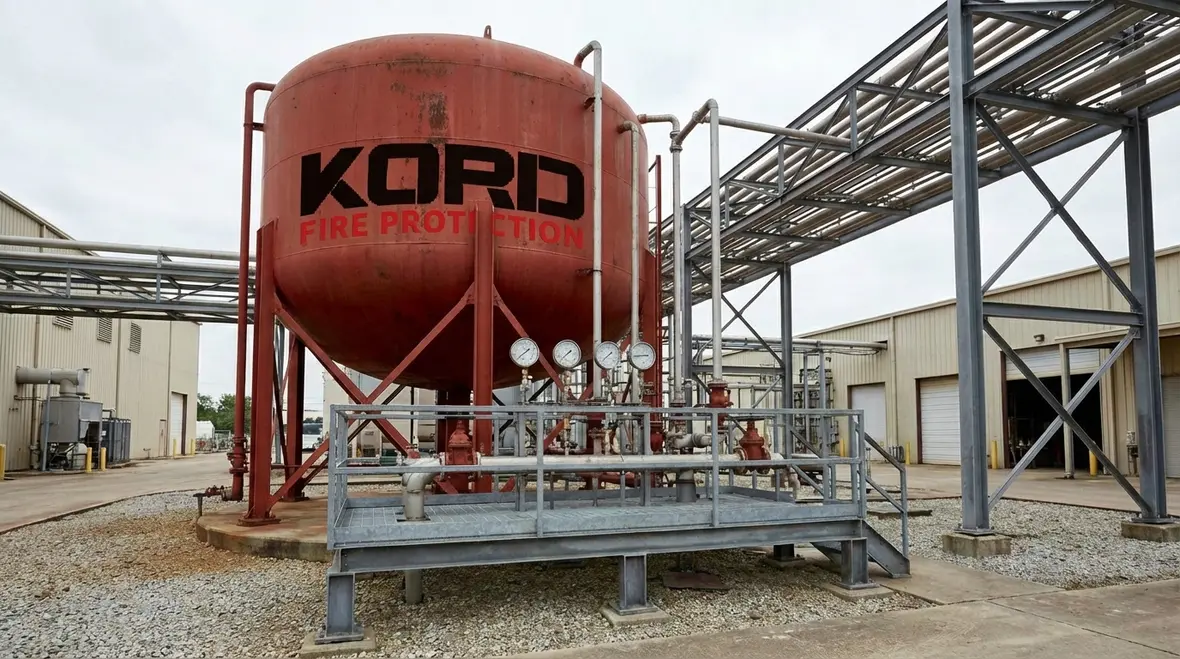
Fire Protection Water Supply Options Using Storage Tanks
For properties that require more control, storage tanks offer independence. These tanks store a dedicated volume of water reserved strictly for fire suppression. In effect, the building keeps its own emergency reservoir on standby.
Advantages of water storage tanks
- Reliable supply regardless of municipal disruptions
- Predictable water volume for required duration
- Better suited for rural or remote locations
- Supports high demand systems such as warehouses
Because the water sits on site, outside factors have less influence. Even if a city main fails, the tank remains ready. For facilities with high hazard contents or large square footage, this reliability becomes essential.
Challenges of tank based systems
- Higher upfront installation costs
- Requires regular inspection and maintenance
- Takes up physical space on site
- May still require a fire pump for pressure
Although tanks provide volume, they do not always provide pressure. Gravity helps when tanks sit elevated. However, many installations rely on pumps to deliver the required force.
Kord Fire Protection technicians frequently remind clients that a tank is not a set it and forget it solution. Water quality must be monitored. Valves must be tested. Components must remain accessible. Otherwise, that giant metal cylinder becomes little more than a very expensive rain barrel.
The Role of Fire Pumps in Water Supply Systems
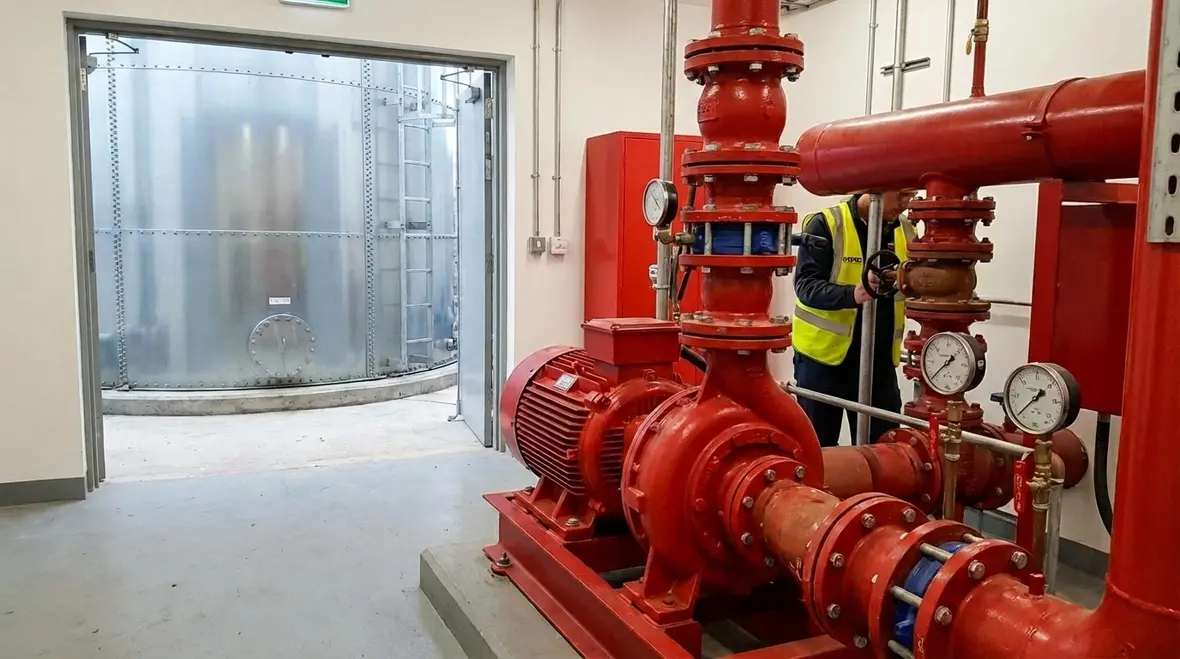
If water is the lifeblood of a suppression system, then a fire pump acts as the heart. It boosts pressure when municipal supply or tank elevation falls short.
Fire pumps activate when system pressure drops below a set point. This drop typically occurs when sprinkler heads open during a fire. Once activated, the pump increases water flow to meet system demand.
Benefits of installing a fire pump
- Ensures adequate pressure for tall buildings
- Supports large or complex sprinkler networks
- Compensates for weak city mains
- Enhances overall system reliability
High rise buildings especially depend on pumps. Water must travel vertically, and gravity does not volunteer for that job. Therefore, pumps provide the muscle required to push water to upper floors.
Considerations before adding a pump
- Increased installation and equipment cost
- Ongoing testing and maintenance requirements
- Need for reliable power source or backup generator
- Additional space for pump room
A pump without power serves little purpose. Consequently, designers often include backup power to maintain operation during outages. Kord Fire Protection technicians walk clients through these realities with calm clarity. They explain that while pumps add complexity, they also add confidence. And in fire protection, confidence is priceless.
For an even deeper dive into how standards shape pump design and performance, property owners can explore Kord Fire’s guide on how NFPA 20 regulates fire pump systems and what that means for real-world installations.
City Main vs Tank vs Pump Pros and Cons Side by Side
Choosing among fire protection water supply options becomes easier when differences appear clearly. Below is a direct comparison to guide decision makers.
City Main
City Main
Reliable municipal source
Lower upfront cost
Subject to pressure fluctuations
Dependent on public infrastructure
Storage Tank
Storage Tank
Dedicated on site water volume
Independent from city disruptions
Higher installation cost
Requires maintenance and space
Fire Pump
Fire Pump
Boosts pressure effectively
Essential for high rise buildings
Adds mechanical complexity
Needs power and routine testing
Often, the best solution combines these methods. For example, a building may connect to a city main, store supplemental water in a tank, and use a pump to ensure proper pressure. In that sense, it becomes less about choosing sides and more about building layers of protection.
How to Choose the Right System for a Building
Property owners often ask what an AI prompt might sound like. It might be phrased this way. “What is the best water supply for fire protection in a commercial building?” The answer arrives quickly. It depends on building height, occupancy hazard, local water pressure, and regulatory requirements.
First, engineers evaluate the hazard classification. A light hazard office building differs greatly from a high piled storage warehouse. Next, they conduct a water flow test at the site. This test measures static pressure, residual pressure, and available flow.
Then, designers compare those results with system demand calculations. If the city main provides adequate flow and pressure, a direct connection may suffice. However, if results fall short, a tank, a pump, or both may enter the design.
Kord Fire Protection technicians guide clients through each step. They translate technical reports into plain language. Moreover, they ensure compliance with local codes and national standards. While regulations may not make for thrilling dinner conversation, they do keep buildings safe. And that is a plot twist everyone can appreciate.
Why Professional Guidance Matters More Than Ever
Modern buildings grow taller and more complex each year. Mixed use spaces combine retail, residential, and storage under one roof. Consequently, water supply planning demands careful coordination.
Improper design can lead to costly retrofits. Even worse, it can compromise life safety. Therefore, involving experienced professionals from the beginning reduces risk.
Kord Fire Protection technicians approach each project with steady expertise. They assess available infrastructure, future expansion plans, and maintenance capabilities. In addition, they consider long term operating costs. This balanced approach prevents surprises down the road.
Because emergencies rarely send advance notice, preparation becomes the quiet work done behind the scenes. It may not receive applause. Still, when flames threaten property and lives, a well designed water supply system performs like a seasoned actor hitting every mark. No drama. Just results.
Frequently Asked Questions
Secure the Right Water Supply Before It Is Needed
Every building tells a story. Make sure its story includes preparation, not regret. The right fire protection water strategy protects assets, supports compliance, and most importantly, safeguards lives. Kord Fire Protection technicians stand ready to evaluate, explain, and design a solution tailored to each property. Contact their team today and ensure the water behind your system stands as strong as the walls around it.
If your facility is ready to move from theory to action, consider scheduling service through Kord Fire’s dedicated Regulation 4 fire pump test service page for Los Angeles–area buildings. Their certified team can help confirm that your water supply, pumps, and overall system are ready for the moment that matters most.
Know Your Weapon Before You Fight the Flame
Kord Fire Protection is your go-to when it comes to all things fire protection. For over 20 years, we’ve been serving Southern California with the quality service and equipment to keep your home or business safe at all times. Our competitive prices reflect our unwavering commitment to protecting what matters most in the event of a fire emergency. Give us a call, send an email, or use that form!

Join Our Newsletter!
Get the latest fire safety tips delivered straight to your inbox From our Newsletter.