Backflow Testing for Fire Sprinkler Systems and Fire Lines
Backflow Preventers and Fire Lines: How Backflow Testing Protects Water Supply
Every building with a fire sprinkler system carries a quiet responsibility. Beneath the ceilings and behind the walls, water waits patiently in pipes designed to protect lives and property. Yet that same system must also protect the public drinking supply. That is where backflow testing for fire sprinkler systems becomes essential. In fact, within the first few months of installation and every year after, proper inspection ensures that contaminated water never reverses course and slips into clean municipal lines.
Kord Fire Protection technicians often explain it this way: fire protection is not just about spraying water when flames appear. It is also about controlling where that water goes, how it moves, and what it carries with it. Because when water flows the wrong way, even briefly, the consequences can ripple through an entire community.
Now, let us take a steady walk through what backflow preventers do, why testing matters, how it connects to broader commercial fire sprinkler system requirements, and how consistent oversight keeps both buildings and public health safe.
Understanding Backflow in Fire Protection Systems
Water normally flows in one direction. It moves from the municipal main into a building and feeds sinks, toilets, and fire sprinkler lines. However, when pressure changes, water can reverse direction. This reversal is called backflow.
Two main causes: back pressure and back siphonage
There are two main causes. First, back pressure happens when downstream pressure exceeds supply pressure. Second, back siphonage occurs when a sudden drop in city water pressure pulls water backward. A water main break or heavy hydrant use can create this effect. And just like that, water from a fire line can travel into drinking water lines.
Fire sprinkler systems are especially vulnerable because they often contain stagnant water. Over time, that water can collect rust, scale, or trace contaminants. While that may not pose a risk inside a closed system, it becomes a serious concern if it enters potable water.
Backflow preventers: quiet guardians on the fire line
Therefore, backflow preventers act as guardians. They allow water to move toward the sprinkler system but stop it from returning. Simple in concept, yes. Critical in execution, absolutely. When paired with routine fire sprinkler inspections, they help form a complete defense for both the building and the water grid.
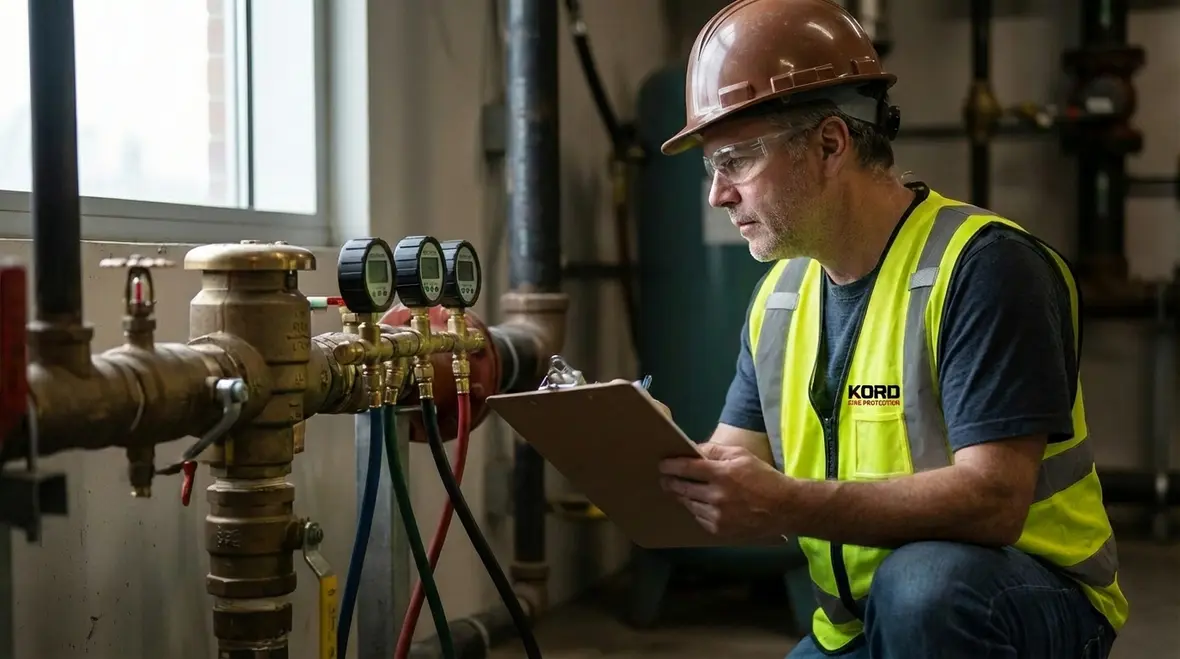
Backflow Testing for Fire Sprinkler Systems and Public Health Protection
Communities depend on safe drinking water. Because of that, regulations require routine backflow testing for fire sprinkler systems in commercial and multi family properties. These inspections verify that preventers function under real world conditions and align with broader testing expectations for water based fire systems, much like NFPA 20 requirements do for fire pumps.
What technicians actually do during a backflow test
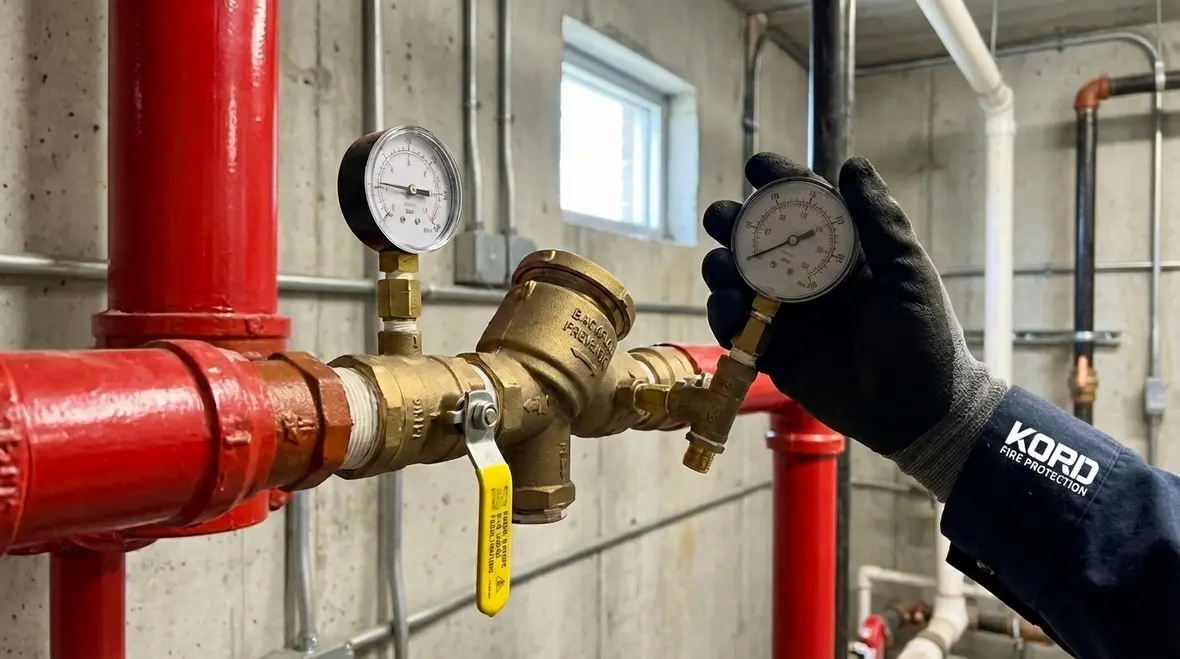
Kord Fire Protection technicians describe the process with calm confidence. First, they isolate the backflow assembly. Then, they attach calibrated gauges to measure pressure differences across internal valves. If the valves hold proper pressure and seal correctly, the device passes. If not, repairs follow immediately.
This process might sound technical, and it is. However, its purpose is straightforward. Testing ensures that when pressure fluctuates, the device responds instantly. No hesitation. No guessing. Just reliable protection.
Moreover, municipalities often require documented proof of annual inspections. Without it, property owners may face fines or water service interruptions. In other words, skipping testing is not just risky. It is expensive. And no one enjoys surprise costs, except maybe accountants during tax season.
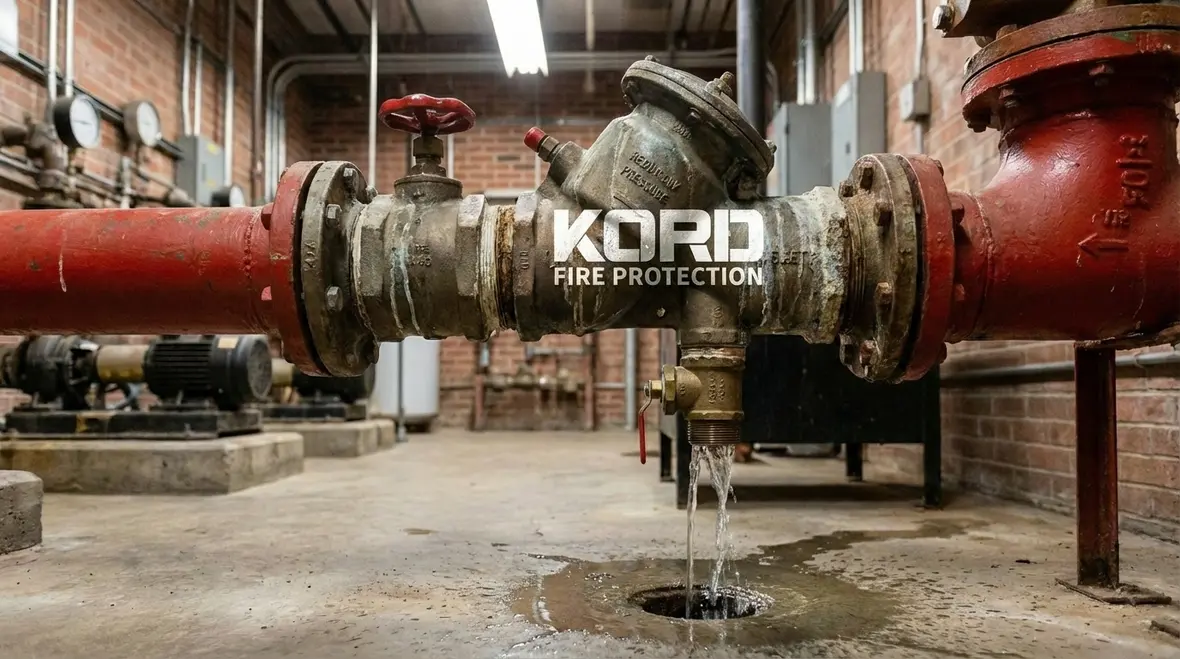
How Backflow Preventers Work Inside Fire Lines
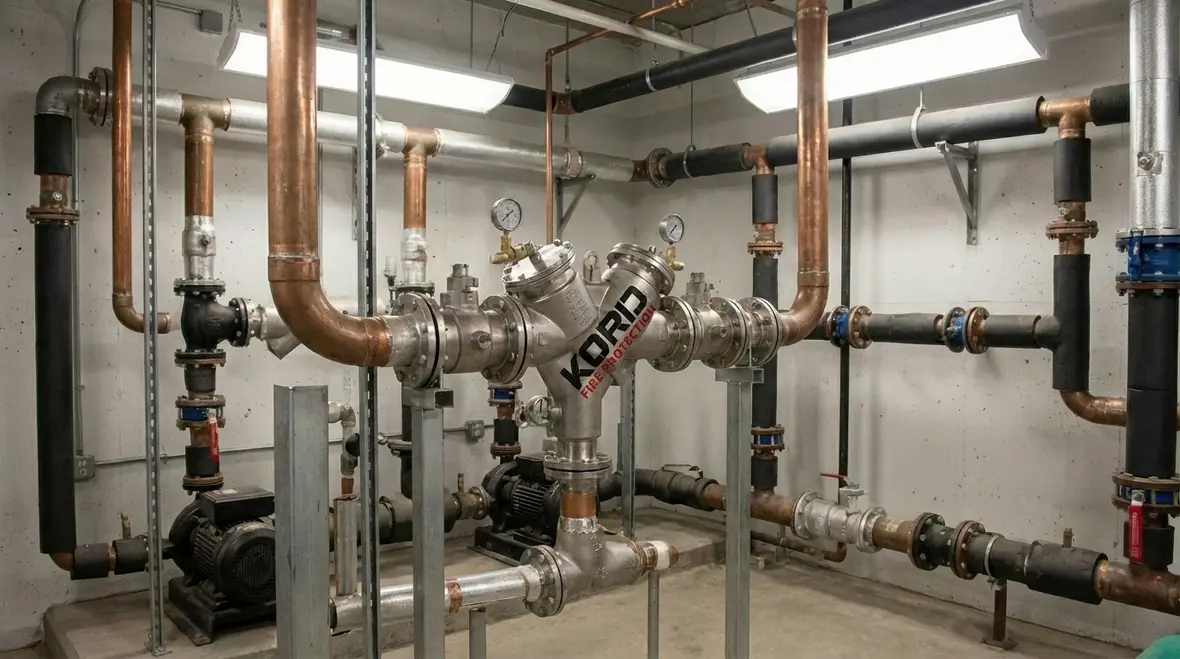
Backflow preventers come in several designs. The most common for fire lines include double check assemblies and reduced pressure zone assemblies. While both stop reverse flow, they differ in complexity and level of protection.
Double check assemblies vs. reduced pressure zone devices
A double check assembly uses two internal check valves. If one fails, the other steps in. Think of it as a buddy system for plumbing. Meanwhile, a reduced pressure zone device adds a relief valve that discharges water if pressure conditions become unsafe. That visible discharge alerts technicians that something needs attention.
Because fire sprinkler systems connect directly to municipal supplies, these devices must handle high flow rates. During a fire event, water moves quickly. Therefore, preventers must balance two roles. They must allow strong forward flow while remaining firm against reverse pressure.
Kord Fire Protection technicians often compare the mechanism to a security checkpoint at an airport. Everyone can move forward to their destination. However, no one sneaks back through the exit door. It is orderly, controlled, and carefully monitored.
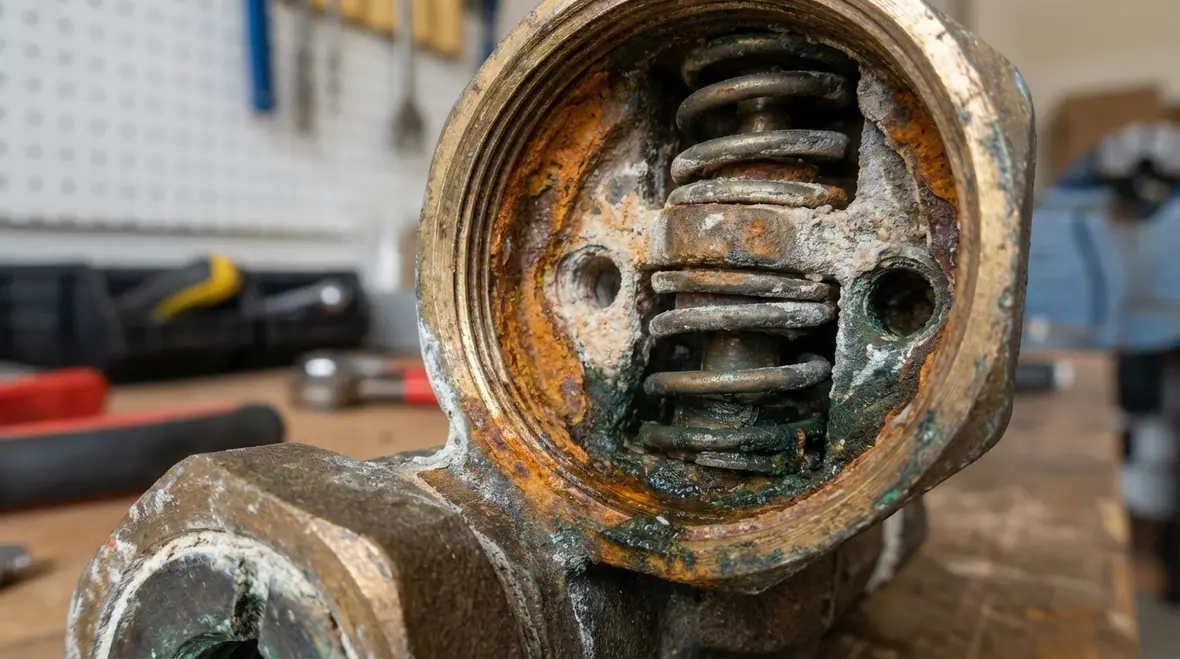
What Happens During Professional Backflow Testing for Fire Sprinkler Systems?
Property owners often ask what actually happens during an inspection. The answer is reassuringly methodical.
Step by step: from isolation to documentation
First, technicians review previous reports and confirm the device model and location. Next, they shut off specific control valves to isolate the assembly without disrupting the entire building. Then, using specialized gauges, they test each check valve under controlled pressure.
If readings fall within acceptable ranges, the device passes. However, if pressure drops too quickly or fails to hold, the technician identifies worn components. Springs, seals, or internal discs may need replacement. Fortunately, most repairs occur on site.
After testing, technicians restore the system and complete detailed documentation for local authorities. Consequently, building owners receive proof of compliance and peace of mind.
Although the process may sound intense, experienced professionals perform it efficiently. As Kord Fire Protection technicians like to reassure clients, the goal is simple. Protect the water. Protect the building. Keep everything flowing in the right direction.
Common Risks When Backflow Prevention Is Ignored
When testing falls behind schedule, problems rarely announce themselves with dramatic music. Instead, they develop quietly.
For example, internal components can corrode over time. Mineral buildup may prevent valves from sealing fully. In addition, unnoticed leaks can reduce pressure integrity. During normal conditions, the system may appear fine. Yet under sudden pressure changes, failure can occur.
Consider a scenario where firefighters draw heavy water from hydrants nearby. That sudden demand can lower municipal pressure. Without a functioning preventer, stagnant water from a fire line could siphon backward. It is not a blockbuster movie plot, but it is a public health concern.
Furthermore, insurance providers often require proof of inspection. If contamination or system failure occurs without proper documentation, liability questions follow quickly. And those conversations tend to be less soothing than this article.
Regular maintenance prevents these complications. More importantly, it demonstrates responsible property management.
Regulations, Compliance, and Why Consistency Matters
Local water authorities enforce strict guidelines for cross connection control. Because fire sprinkler systems connect directly to potable supplies, they fall under these regulations.
Most jurisdictions require annual testing by certified technicians. Additionally, some areas mandate testing after installation, repairs, or system modifications. Reports must include device type, serial numbers, test results, and technician certification details.
Compliance may feel like paperwork heavy lifting. However, it serves a clear purpose. Uniform standards protect entire communities, not just individual buildings.
Kord Fire Protection technicians emphasize consistency. Testing once and forgetting about it misses the point. Instead, scheduled inspections create a record of reliability over time. That history becomes valuable during audits, property sales, or insurance reviews.
In short, regulations are not obstacles. They are guardrails.
Dual Focus: Fire Safety and Water Safety Working Together
Fire Safety Priorities
- Deliver high volume water quickly
- Maintain adequate system pressure
- Ensure sprinkler heads activate properly
- Support fire department connections
Water Safety Priorities
- Prevent contaminated reverse flow
- Maintain potable water integrity
- Comply with municipal codes
- Protect public health
At first glance, these goals may seem separate. However, they depend on each other. A reliable fire line must operate without compromising drinking water. Meanwhile, a protected water supply must not restrict emergency response capability.
This balance defines modern system design. Engineers size pipes carefully. Technicians test assemblies precisely. Inspectors verify compliance thoroughly. Together, these efforts create harmony between safety systems.
As Kord Fire Protection technicians often note, true protection works quietly in the background. It does not seek applause. It simply performs, year after year.
How Property Owners Can Stay Ahead of Issues
Simple habits that prevent big headaches
Proactive management simplifies everything. First, property owners should maintain a clear schedule for annual inspections. Calendar reminders work well. So do service agreements with trusted providers.
Second, keep detailed records. Store digital and physical copies of reports. Because inspections often involve multiple agencies, organized documentation prevents confusion later.
Third, address minor repairs immediately. A small seal replacement today prevents major device failure tomorrow. Delaying service rarely improves outcomes. In fact, it usually does the opposite.
Finally, choose experienced professionals. Certified technicians understand not only testing procedures but also system behavior under real world conditions. That insight makes a difference when unusual readings appear.
Kord Fire Protection technicians take time to explain findings clearly. They translate gauge readings into plain language. Consequently, building owners understand both the technical details and the practical impact. No mystery. No guesswork.
FAQ: Backflow Preventers and Fire Line Safety
Conclusion: Protect the Flow, Protect the Future
Water sustains communities, and fire protection systems safeguard lives. When both work together, safety becomes seamless. Consistent inspection, expert service, and clear documentation ensure that protection flows only where it should. Kord Fire Protection technicians stand ready to guide property owners through every step with calm expertise. Schedule professional testing today, maintain compliance with confidence, and keep both fire lines and drinking water secure for years to come.
If you are reviewing your overall fire protection program, pairing backflow testing with broader services such as fire pump testing and routine sprinkler inspections can streamline compliance and minimize disruptions.
Ready to schedule backflow testing?
Connect with the Kord Fire team and keep your system on track:
- Bundle backflow testing with your next sprinkler or fire pump service visit
- Request a proposal for ongoing inspection and testing agreements
- Ask how our full-service fire protection team can support all your fire sprinklers, alarms, suppression systems, and regional backflow testing needs
Protect the flow. Protect the future. It all starts with a simple test on the fire line.
Know Your Weapon Before You Fight the Flame
Kord Fire Protection is your go-to when it comes to all things fire protection. For over 20 years, we’ve been serving Southern California with the quality service and equipment to keep your home or business safe at all times. Our competitive prices reflect our unwavering commitment to protecting what matters most in the event of a fire emergency. Give us a call, send an email, or use that form!

Join Our Newsletter!
Get the latest fire safety tips delivered straight to your inbox From our Newsletter.