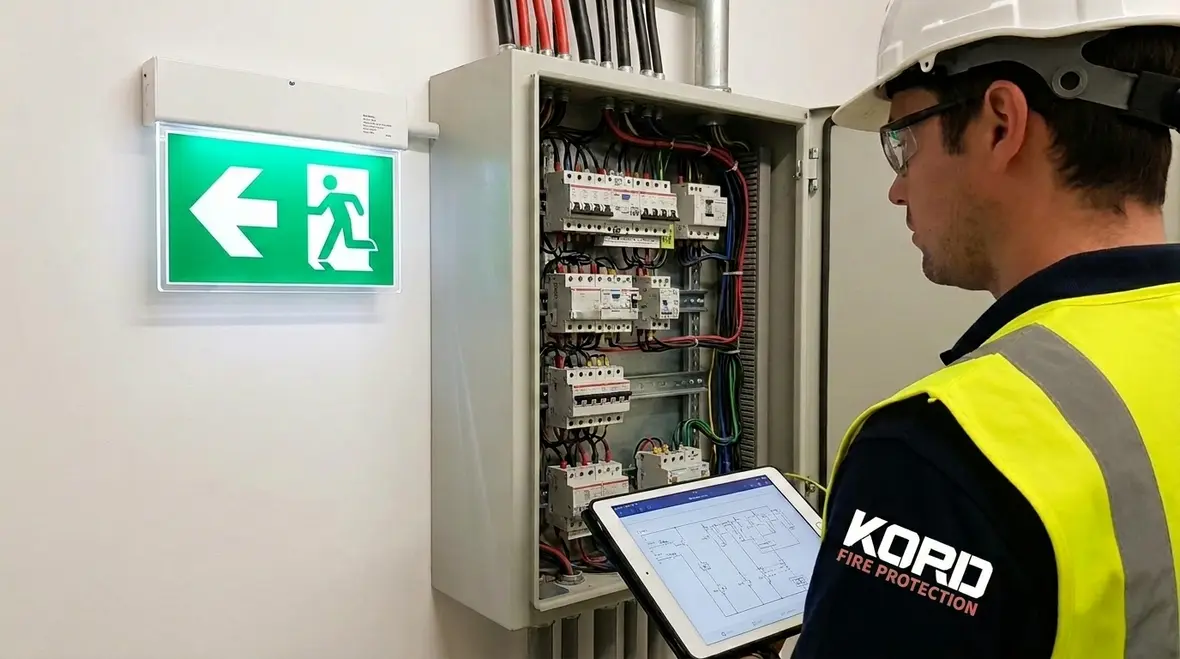
Emergency Lighting Control Integration with Power Distribution
Quick Answer: Synchronizing emergency lighting with commercial power distribution helps facilities maintain safe egress, reduce nuisance alarms, and speed compliance work. With emergency lighting control integration, teams can coordinate test modes, monitor battery and circuit health, and align behavior with switchgear and generator logic. Done well, it turns “when the lights go out” into a managed event, not a surprise plot twist.
In Australia, industrial sites, retail centers, and multi tenant commercial buildings all share one thing: when power shifts, people still need to find exits. That is where emergency lighting control integration earns its keep early in the planning stage. Instead of treating emergency lighting as a standalone system, facilities can synchronize it with commercial power distribution so the lighting responds the same way every time. The result is safer exits, cleaner commissioning, and fewer headaches during audits. And yes, it also makes maintenance staff feel less like they are chasing ghosts in a maze.
For facilities that want support beyond planning, Kord Fire Protection’s emergency exit light services fit naturally into integration work by helping teams keep emergency illumination dependable, documented, and ready for real world power events. ([kordfire.com](https://kordfire.com/emergency-exit-light-services/?utm_source=openai))
Why synchronization matters in real facilities
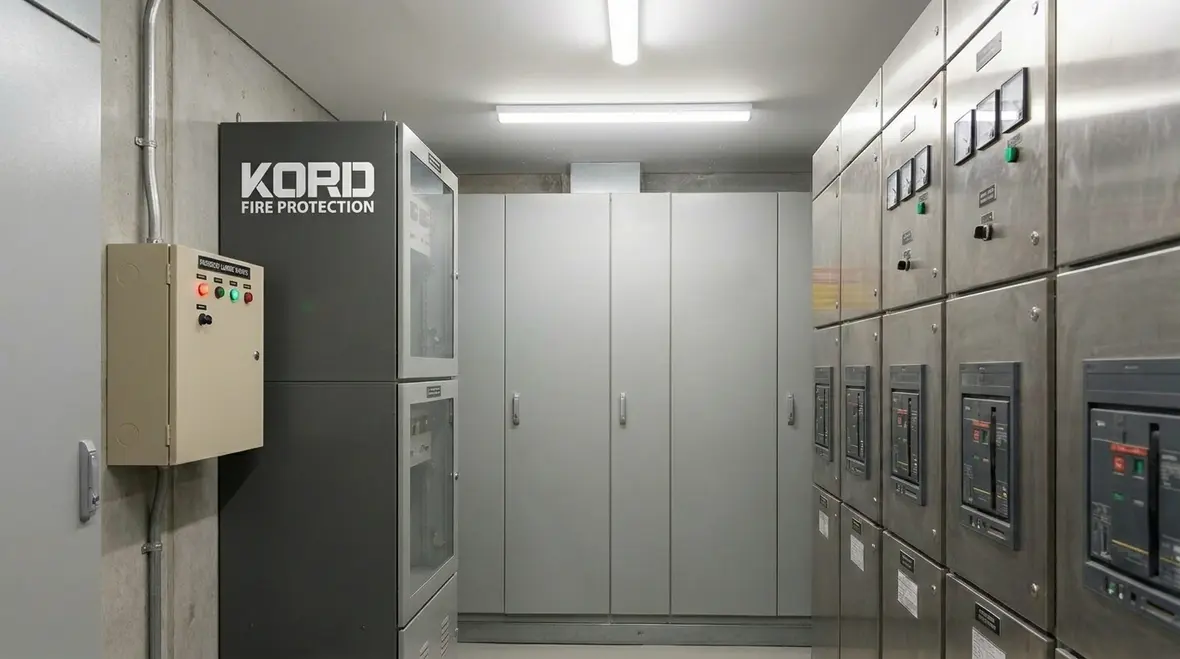
Emergency lighting works best when it behaves predictably during abnormal power events. Therefore, synchronization connects key aspects of emergency lighting operation to the building’s electrical design. This includes transfer from mains to generator, operation of essential circuits, and how distribution boards isolate loads. When systems align, the emergency lights start in the right sequence and under the right conditions, not whenever they feel like it. Transition to power events becomes controlled, and the building’s life safety response stays consistent.
In practice, teams run into issues when emergency lighting is wired without regard to power distribution behavior. For example, a circuit may drop briefly during switching, and some luminaires may flicker or restart. That can trigger confusion during tests, increase wear on components, and complicate commissioning records. By synchronizing early, facilities avoid these ripple effects and reduce downtime during fault scenarios.
This is also where broader life safety planning matters. Kord Fire’s guide on coordinating emergency lighting and fire safety controls reinforces the same practical point: systems that guide occupants out should not operate like separate islands when the building is under stress. ([kordfire.com](https://kordfire.com/coordinating-emergency-lighting-and-fire-safety-controls/?utm_source=openai))
Predictable responses beat improvised ones
When emergency lighting follows the same logic every time, testing gets cleaner, reports get easier to read, and staff know what “normal” looks like during an event. That might not sound glamorous, but predictable behavior is exactly what keeps a routine transfer from turning into a corridor full of confused looks and second guesses.
How commercial power distribution affects emergency performance
Commercial power distribution rarely stays static. Load shedding, transfer switches, upstream protection settings, and maintenance isolation procedures all influence how voltage and power availability change. Consequently, emergency lighting systems must tolerate the exact electrical rhythm of the site. The system needs clarity on when mains fails, when emergency supply energizes, and which circuits remain stable during switching.
A facilities team should map the entire path from switchboard and essential bus to the emergency lighting panel or control equipment. Then it should confirm how protective devices behave during events. For instance, nuisance tripping can cause emergency lighting to cycle. That leads to repeated battery discharge events and more frequent replacement schedules. Meanwhile, generator ramp delays can create brief windows where some devices do not transition quickly enough, depending on their design.
To manage this, teams often use monitoring and control logic so emergency lighting does not operate like a lone actor. Instead, it participates in the site’s power story. When emergency lighting control integration coordinates with power distribution status, the lighting response tracks what the electrical system actually does, not what someone hoped it did on paper.
Map the whole path, not just the fixture
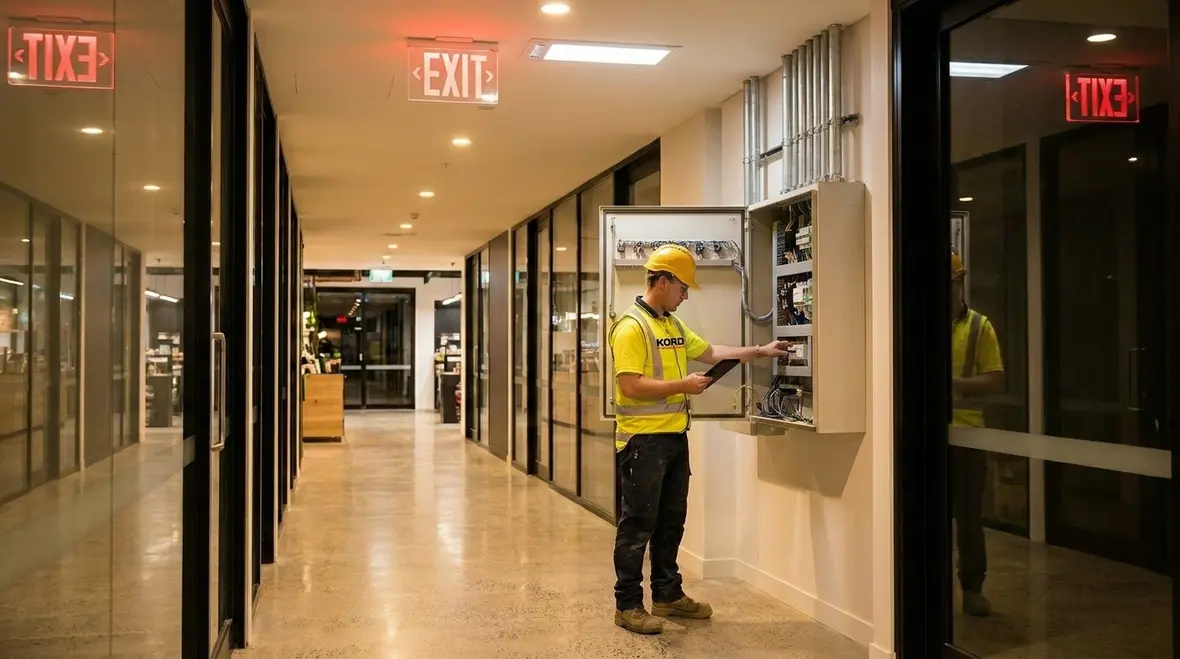
A light fitting can only respond as well as the circuit path behind it. That is why integration teams should look upstream at boards, breakers, transfer logic, and essential supply paths instead of stopping at the luminaire and declaring victory. It is a little less cinematic, sure, but far more useful when the generator takes a few beats to wake up.
Best practices for coordinating circuits and switching logic
Good coordination starts with documentation and ends with verification. First, engineers should identify which luminaires sit on maintained supply and which sit on unswitched emergency supply. Next, they should confirm whether the emergency lighting operates via centralized control, individual battery modules, or a mix of both. After that, they should align control schedules with the building’s testing approach and generator procedures.
Teams also need to consider commissioning steps that are often overlooked. During a test, the system should log the same signals that the electrical network experiences. That includes transfer events, contactor states, and any signals that show essential supply is present. When the emergency lighting control integration captures these inputs, it becomes easier to troubleshoot incidents and produce cleaner compliance evidence.
And because Murphy’s Law loves construction sites, facilities should plan for maintenance modes. For example, when a technician isolates a distribution board, the emergency lighting behavior should remain safe and predictable. Therefore, control rules should define how the system responds to isolation, lockout, and manual override.
- Document maintained, non maintained, and unswitched emergency circuits.
- Confirm switching logic against actual transfer and generator sequences.
- Log contactor status, transfer events, and essential supply confirmation during testing.
- Define safe maintenance and override behavior before handover.
- Recheck labeling so field isolation matches the intended control narrative.
Where Kord Fire Protection becomes a vital partner
Synchronization is not only an electrical task. It is also a life safety coordination job that touches fire risk management, inspection routines, and system interfaces. That is where Kord Fire Protection can become a vital partner with this service job. They bring a practical focus on how emergency lighting systems interact with broader fire and life safety arrangements across commercial and industrial sites.
For teams juggling multiple service providers, the real win is coordination. Kord Fire Protection can support the integration process so emergency lighting behavior aligns with how fire systems and life safety controls operate on the same building backbone. As a result, facilities reduce handover confusion, eliminate duplicated testing effort, and maintain a consistent operational narrative during audits.
Additionally, the partnership model helps with the “middle steps” that derail timelines. These include sequence checks, interface verification, labeling standards, and test evidence preparation. When Kord Fire Protection supports the workflow, clients get fewer surprises at commissioning and fewer “we thought it would do that” conversations. In other words, it keeps everyone from arguing like characters in a sitcom right before the season finale.
Readers who want adjacent context can also review Kord Fire’s article on emergency lighting for exits placement and coverage, which helps connect integration planning to real egress performance in occupied spaces. ([kordfire.com](https://kordfire.com/emergency-lighting-for-exits-placement-and-coverage-guide-kord-fire-protection/?utm_source=openai))
Commissioning and compliance: proving it works the same every time
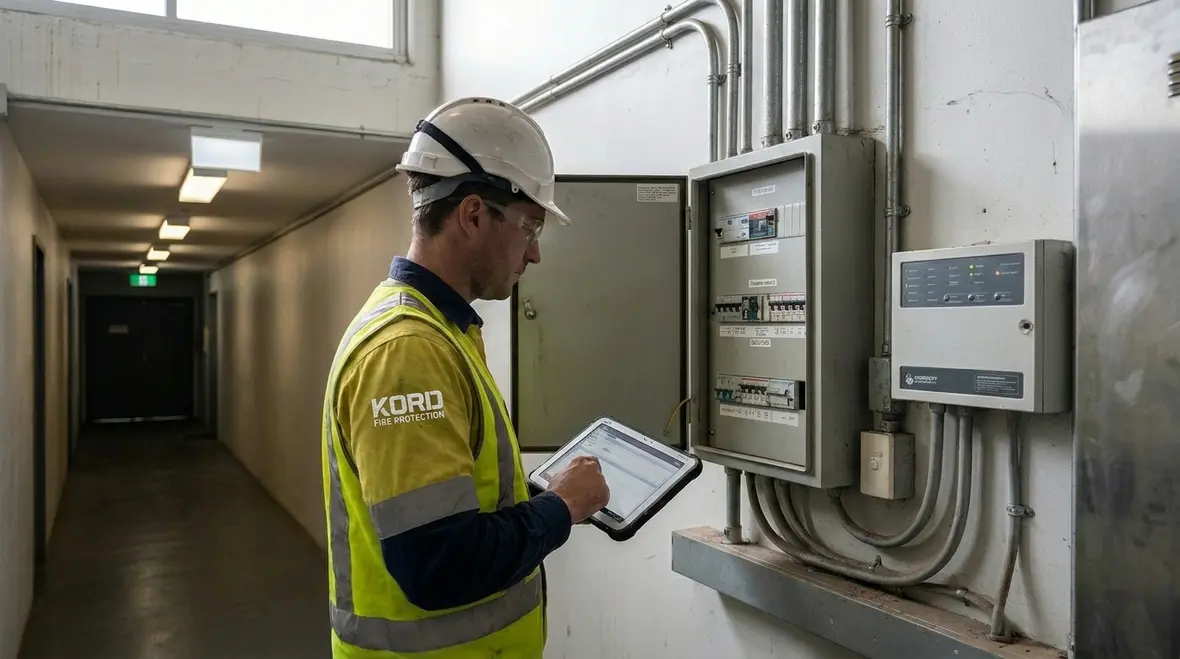
During commissioning, teams should verify the end to end behavior, not just the presence of emergency illumination. First, they should simulate power failure conditions that match real switching events. Then they should observe transition timing, duty states, and control responses across the relevant areas such as escape routes, fire exit paths, and high risk zones.
Next, teams should confirm that test cycles align with the building’s operational schedule. Emergency lighting control integration can standardize test behavior and record outcomes. Therefore, the facility can show that the system performs the same way each time it runs a functional test, instead of offering a “best guess” report.
For compliance, the goal stays simple: clear records, traceable device behavior, and consistent outcomes. When the emergency lighting system produces event logs tied to power status, the evidence becomes easier to review. That helps reduce rework during audits and improves confidence during ongoing maintenance.
Evidence matters as much as operation
A system that technically works but leaves behind messy records can still create pain during handover and inspections. Consistent event logs, repeatable tests, and traceable sequences make it easier to prove that the building did what it was supposed to do, every single time, without a dramatic detective montage.
Maintenance strategies that keep synchronization stable
Maintenance turns the design intent into daily reality. However, synchronization often drifts over time when teams replace parts, adjust switchgear settings, or modify distribution boards. To prevent that, facilities should adopt a routine that checks both electrical health and control health.
For example, when a technician updates a distribution board label, the emergency lighting circuit mapping should update too. Otherwise, future isolation procedures may not match the real behavior. Similarly, battery health checks and visual inspections should link back to control event trends, not only to manual observations. With emergency lighting control integration, facilities can spot patterns early, such as repeated transitions or unusual cycle frequency.
Meanwhile, change management matters. When a site alters generator logic or protection settings, teams should revalidate emergency lighting sequences. This keeps the system synchronized with the actual power distribution behavior, not the old one from last year. Think of it as updating the GPS after you build a new roundabout, so nobody drives into a hedge on purpose.
Dual column overview: integration touchpoints across the project
| Project stage | What to verify for synchronization |
|---|---|
| Design and coordination | Essential circuits, transfer logic, maintained versus unswitched supply, control interfaces |
| Installation and wiring | Correct circuit mapping, labeling, panel settings, and signal wiring integrity |
| Commissioning tests | Transition timing, event logs, functional test outcomes, sequence consistency |
| Handover | Documentation pack, test evidence method, maintenance procedure alignment |
| Ongoing maintenance | Battery health trends, power event correlation, revalidation after electrical changes |
FAQ
Call Kord Fire Protection for a safer, cleaner rollout
Synchronizing emergency lighting with commercial power distribution should feel planned, not improvised. When facilities coordinate circuits, switching logic, commissioning tests, and maintenance routines, they gain reliable egress performance and clearer compliance evidence. Kord Fire Protection can support the integration work so the entire life safety story matches how power actually behaves on site. Get the right plan, then execute it with confidence.
Reach out to discuss your project and next steps. If you want more background reading first, Kord Fire also offers helpful resources on what a proper emergency lighting test includes and emergency lighting repair and troubleshooting, both of which support a cleaner rollout and steadier maintenance program. ([kordfire.com](https://kordfire.com/emergency-lighting-service-what-a-proper-test-includes/?utm_source=openai))

Join Our Newsletter!
Get the latest fire safety tips delivered straight to your inbox From our Newsletter.