Coordinating Emergency Lighting and Fire Safety Controls
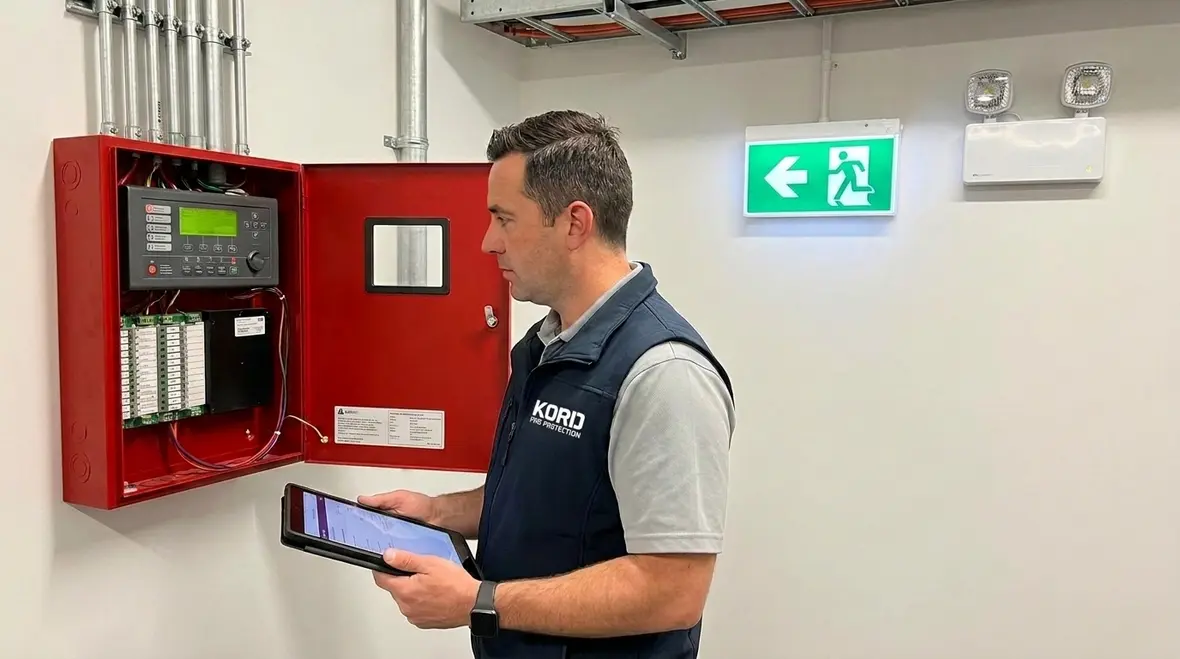
Emergency lighting and fire safety decide whether people find their way to safety when seconds matter. However, the systems that guide occupants out are not magic. They must work in step with the fire protection controls that detect danger, send alarms, unlock doors, and start the right building response. When a site has emergency lighting that runs on its own schedule, the result can feel like a buddy cop movie where nobody reads the script. Yet, when coordination is done right, occupants move smoothly, responders get clear signals, and the whole fire strategy stays consistent. Kord Fire Protection Technicians often explain that the best results come from planning the handoffs between detection, control, and illumination, not just installing hardware and hoping for the best.
Why coordination matters for emergency exits and alarm response
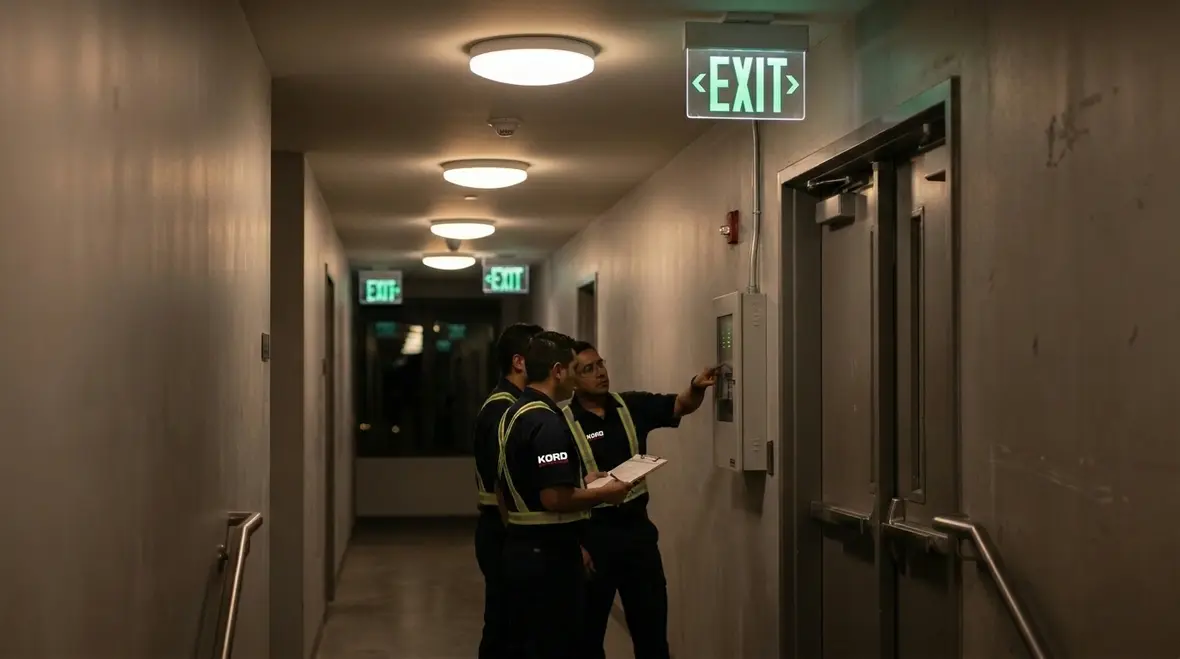
Fire protection controls act like the brain of a safety system. They sense smoke, heat, or flame, then they trigger alarms and control connected devices. Emergency lighting acts like the guiding light on the path out. Therefore, the two must align in timing, wiring, and logic. If the fire panel commands a control output too late, or if emergency lighting stays in test mode, visibility and evacuation flow can suffer.
Moreover, many buildings rely on controlled doors, stairwell pressurization, or phased evacuation instructions. Emergency lighting and fire safety must support those steps. For example, if the fire system indicates a specific zone, the lighting may need to reflect that condition through maintained illumination, switched illumination, or occupancy-based patterns. In practice, Kord Fire Protection Technicians commonly point out that “consistent” beats “complicated,” and the goal is predictable behavior under stress. After all, nobody wants a stairwell to look like a dimly lit concert exit during an actual emergency.
Where emergency lighting fits into the larger life safety plan
It is easy to think of emergency lights as a separate line item on an inspection checklist, but that view is too small. In a real event, occupants do not experience fire alarm devices, door hardware, stair controls, and emergency luminaires as separate systems. They experience one environment. If that environment is coordinated, it feels clear and intuitive. If it is not, people hesitate, backtrack, or cluster in the wrong places. That is why coordination deserves attention long before an alarm ever sounds.
A strong plan also supports the work of technicians and facility teams after installation. When device relationships are documented clearly, service becomes faster, retesting becomes simpler, and unexpected behavior becomes easier to isolate. We see this all the time. The buildings with the calmest emergency response usually are not the ones with the fanciest control logic. They are the ones where everyone agreed on what should happen, wrote it down, and then tested it until the response was boringly reliable. In life safety, boring is beautiful. When electrical issues affect emergency lighting, exit signs, panels, or other critical building systems, having access to trusted emergency electrical services helps keep response times fast and the building’s life safety plan intact.
How fire protection controls drive emergency lighting outputs
Fire panels typically provide output signals that connected systems use to change states. Those signals might be used to turn on maintained lights, activate switched circuits, initiate self testing, or force specific modes for escape routes. In addition, some sites include interface modules that translate fire panel outputs into the correct electrical behavior for luminaires.
When the control logic gets mapped, the coordination becomes clearer. First, the technician confirms what the fire alarm system does for an alarm condition. Next, the team defines what emergency lighting must do during that same condition. Then, they verify that power sources, relays, and control points match the intended fail safe behavior.
We often stress a simple principle: the emergency lighting response should match the life safety design. If the design intent says a corridor must remain lit under alarm, the wiring and control logic must ensure it stays lit. If the design intent calls for staged illumination, the system should stage it reliably. Finally, the team checks that faults in one part do not defeat the overall response.
Simple mapping beats confusing control logic
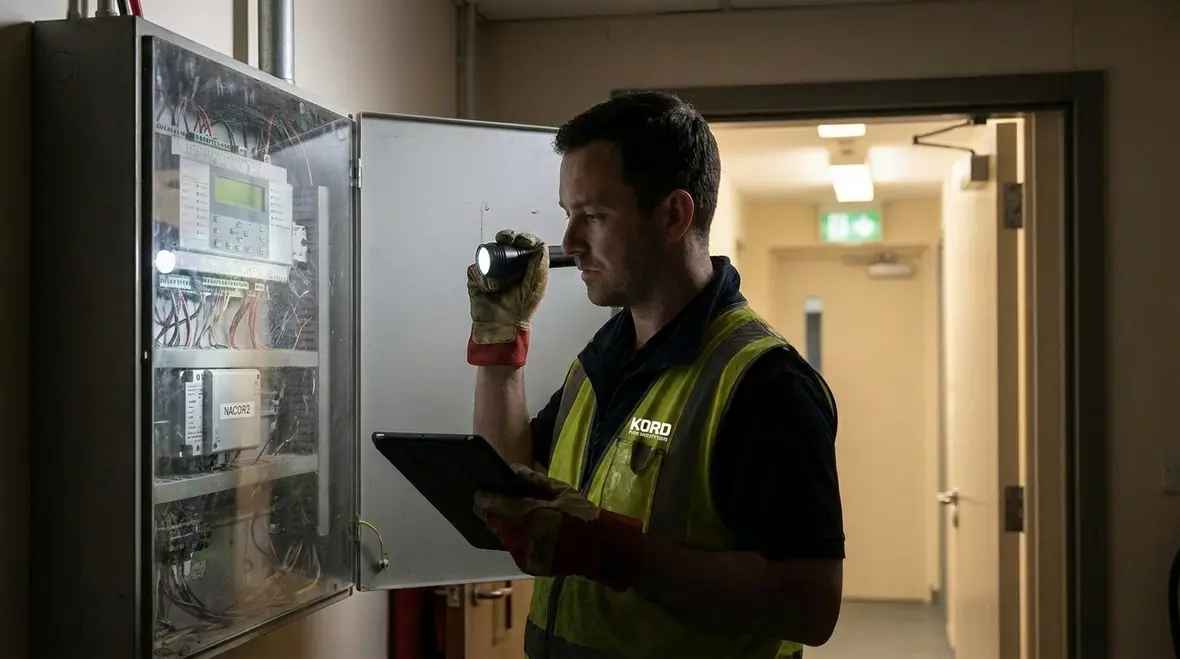
This is where projects either become clean and predictable or drift into a wiring scavenger hunt. If the panel output list, relay schedule, and lighting response matrix all say the same thing, everyone works faster. If each document tells a slightly different story, commissioning turns into detective work. That is why a simple control map matters so much. It tells the installer what to wire, tells the programmer what to command, and tells the inspector what success should look like.
For facilities looking at broader alarm integration support, Kord Fire Protection also offers fire alarm services and systems that connect detection, notification, and response planning into one workable strategy. That kind of overlap matters because emergency lighting is strongest when it is treated as part of the same safety conversation, not as the cousin who only gets invited to inspections.
Design stage checks that reduce field surprises
Planning prevents the classic “we discovered it in commissioning” moment, where the building owner learns that a change request costs time and money. Therefore, the design phase should lock down key details early. Those details include circuit labeling, the classification of escape routes, load calculations, battery backup time requirements, and the type of maintained or non maintained operation.
In addition, coordinated design includes verifying that the fire alarm panel can support the required outputs and that the interface devices meet the needed ratings. It also includes mapping devices to zones so that the response matches the building layout. Then, the team confirms that field wiring and labeling align with the approved documentation.
It helps to think of it like casting a movie. If the wiring “actor” does not match the script, the scene fails. Yet when the coordination is built into the design, inspections go smoother and troubleshooting becomes faster. As Kord Fire Protection Technicians explain during site reviews, clear sequences and clean documentation shorten the path from approval to real-world safety.
Documentation that actually helps people in the field
Good documentation is more than paperwork created to satisfy a file cabinet. It should help a technician standing in front of a panel understand what happens next. Clear riser notes, relay labeling, zone descriptions, and control narratives reduce mistakes before they start. They also help owners and facility managers understand why a system behaves the way it does. When everyone can follow the plan, nobody has to guess which device owns which job during a test.
If your team wants a broader view of the company behind this approach, Kord Fire’s about fire protection page gives useful background on their service scope and field experience. That context matters because coordinated safety systems are built by people who understand both the drawings and the real building conditions those drawings have to survive.
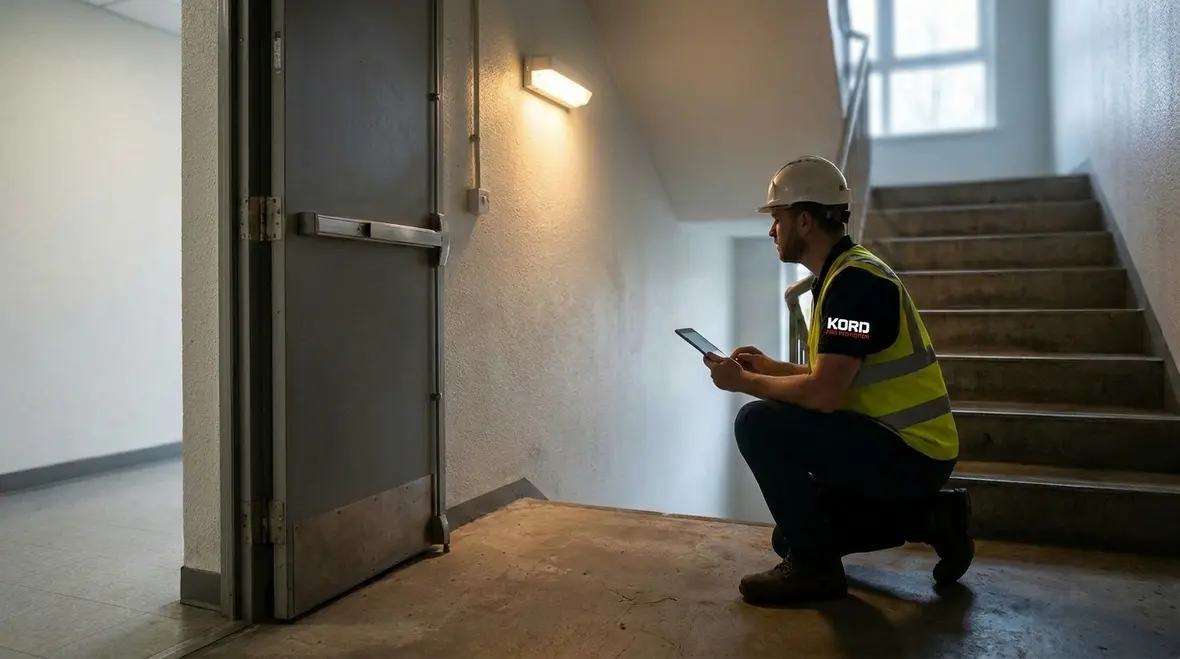
Installation and commissioning steps that prove the sequence
Once installed, the systems need evidence, not guesses. Commissioning should test the exact scenario the design supports. That includes verifying that the fire protection control outputs switch or command emergency lighting as expected when alarms trigger. It also includes testing fault paths, such as loss of normal power, power supply changes, and single device failures.
Then the team should confirm that occupants can see escape routes quickly. That means checking light levels at typical walking paths and ensuring that luminaires are positioned where doors, corridors, and stair approaches become visible. While inspectors focus on compliance, people focus on real visibility. Emergency lighting and fire safety should work together so evacuation looks orderly, not like a group decision made by guessing.
During commissioning, Kord Fire Protection Technicians often use scenario testing. For example, they simulate alarm activation and observe the timing of illumination changes. Next, they verify that any relays or interface modules respond correctly. Finally, they record results so the facility can repeat tests during ongoing service without reinventing the wheel. Because yes, “wing it” is fun in fiction, not in life safety systems.
Scenario testing should look like the real building
A checkbox test is not the same as a useful test. Real scenario testing considers how people actually move through the building, which doors release, which corridors fill first, and where visibility matters most. That means verifying more than lamp operation. It means watching transitions, checking for delays, and confirming that route visibility remains stable while other fire safety controls do their part. If the sequence looks awkward during testing, it will look worse under stress.
Facilities that already schedule emergency lighting service are in a better position to keep those results consistent over time. Testing works best when it is repeatable, documented, and tied back to the original sequence instead of relying on memory and crossed fingers.
Maintenance that keeps coordination from drifting over time
Systems do not stay perfect forever. Over time, lamps age, batteries age, wiring gets modified, and tenants rearrange spaces. Therefore, coordination must survive routine changes. A good maintenance plan tests not only luminaire function but also the interaction with fire protection controls.
Technicians should confirm that emergency lighting maintains the correct mode during alarm. They should also review changes to the fire alarm panel configuration, zone mapping, and linked controls. Even a minor programming update can alter output behavior, which can change how emergency lighting and fire safety respond during an alarm.
We frequently advise that service teams verify coordination after any building alteration. That includes new doors, relocated corridors, upgraded fire panels, or changes to monitored inputs. In other words, when the building evolves, the safety logic should evolve too, without losing the original intent. Because a coordinated system should behave the same way today that it did during commissioning, not like a playlist that randomly changes songs mid evacuation.
Common coordination failures and how to prevent them
Coordination failures tend to look small at first, then show up loud during real tests. One common issue is inconsistent labeling and mismatched documentation. When technicians cannot trace a luminaire circuit to the correct control output, troubleshooting takes longer and errors rise.
Another issue involves incorrect mode selection. A site might use maintained operation in places that should be switched, or it might switch where maintained is needed for continuous wayfinding. Also, interface modules can be wired to the wrong input or powered from the wrong source, which delays or prevents the intended illumination.
Finally, poor fault tolerance creates trouble. If a single component failure interrupts the control path for a group of luminaires, the escape route can darken when it should stay lit. To prevent these problems, teams should confirm zoning logic, verify fail safe operation, and document results. Kord Fire Protection Technicians typically focus on repeatable checks and clear control diagrams, so the system behaves the same way for the next test, the next service visit, and the next inspector.
The small mistakes that create big headaches
Many failures are not dramatic design collapses. They are ordinary oversights with excellent timing for embarrassment. A label gets skipped. A relay gets landed one terminal off. A replacement fixture does not match the intended mode. A programming change fixes one issue and quietly creates another. None of those mistakes look impressive on day one. All of them become memorable during an inspection or outage. That is why repeatable verification matters more than optimistic assumptions.
FAQ about coordinating emergency lighting and fire protection controls
Take action now to lock in safe coordination
Coordinating emergency lighting and fire safety is not a one time task. It is a system plan that needs clear control mapping, careful commissioning, and maintenance that protects the original intent. Facility managers should schedule an on site review, verify alarm output sequencing, and test the real evacuation scenarios, not just individual components. Then, document results so the next service visit stays consistent.
If you want a calmer, safer building response, contact Kord Fire Protection to align your controls and illumination before problems show up. For teams that need related support, Kord Fire also provides emergency exit light services and broader full fire protection services to keep systems coordinated from inspection through ongoing service.

Join Our Newsletter!
Get the latest fire safety tips delivered straight to your inbox From our Newsletter.