CO2 vs Clean Agent Fire Suppression Guide by Kord
CO2 vs clean agent fire suppression can sound like a battle between two very different fire protection philosophies. In simple terms, CO2 fire systems can put out fires by flooding the space with carbon dioxide, which pushes oxygen down. Clean agent systems, on the other hand, use engineered chemicals that knock down the fire without leaving the same residue. However, the best choice does not come from guessing. It comes from understanding the hazard, the space, and the way people actually move through it. And that is where Kord Fire Protection steps in, because a great system on paper still needs a great plan in the field. Think of it like buying a fancy coffee machine and then forgetting the water. Awkward. Read on for the practical differences that matter.
What CO2 fire suppression systems do during an emergency
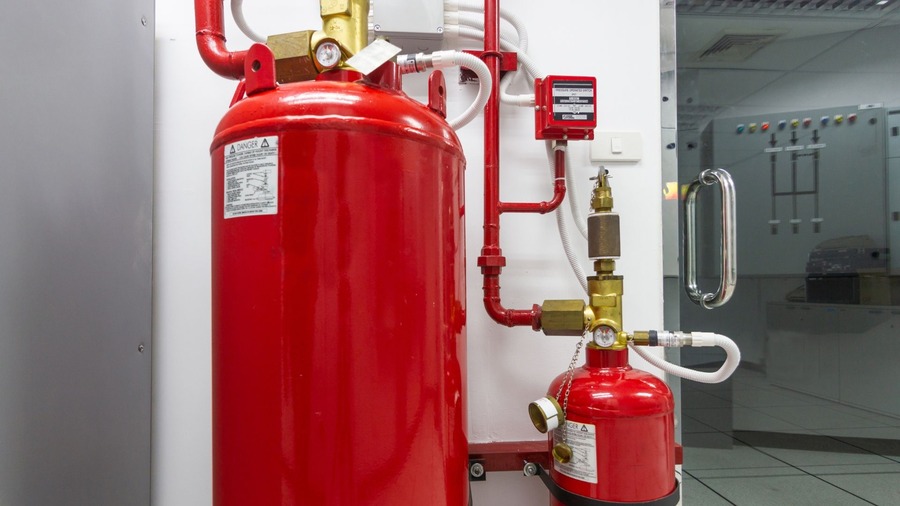
CO2 fire suppression works by reducing the oxygen available to the fire. When released, it creates a concentrated atmosphere that makes combustion much harder. Therefore, the system does not just “spray and hope.” It relies on tight control of the protected enclosure, correct agent concentration, and fast detection.
Because CO2 is stored as a liquid under pressure and then discharged as a gas, the performance depends on proper pipe sizing, nozzle placement, and discharge time. Also, CO2 systems require careful pre discharge and shutdown procedures. In fact, many facilities include alarms, timers, and evacuation steps because the atmosphere created by CO2 is not safe for people to breathe. Kord Fire Protection’s CO2 fire suppression systems page explains how these systems protect Class A, B, and C hazards while being best suited for spaces with few or no occupants.
Additionally, CO2 can create operational challenges in spaces that are hard to seal. If the enclosure leaks, the system may not reach the designed concentration. As a result, the fire may not be suppressed effectively, or the required amount of agent may exceed what the system was built for. In practice, Kord Fire Protection evaluates these real world conditions before recommending anything. If you want a deeper look at operation and risk, Kord’s article on understanding CO2 fire suppression systems breaks down how the gas is stored, discharged, and distributed.
Why enclosure integrity matters more than people think
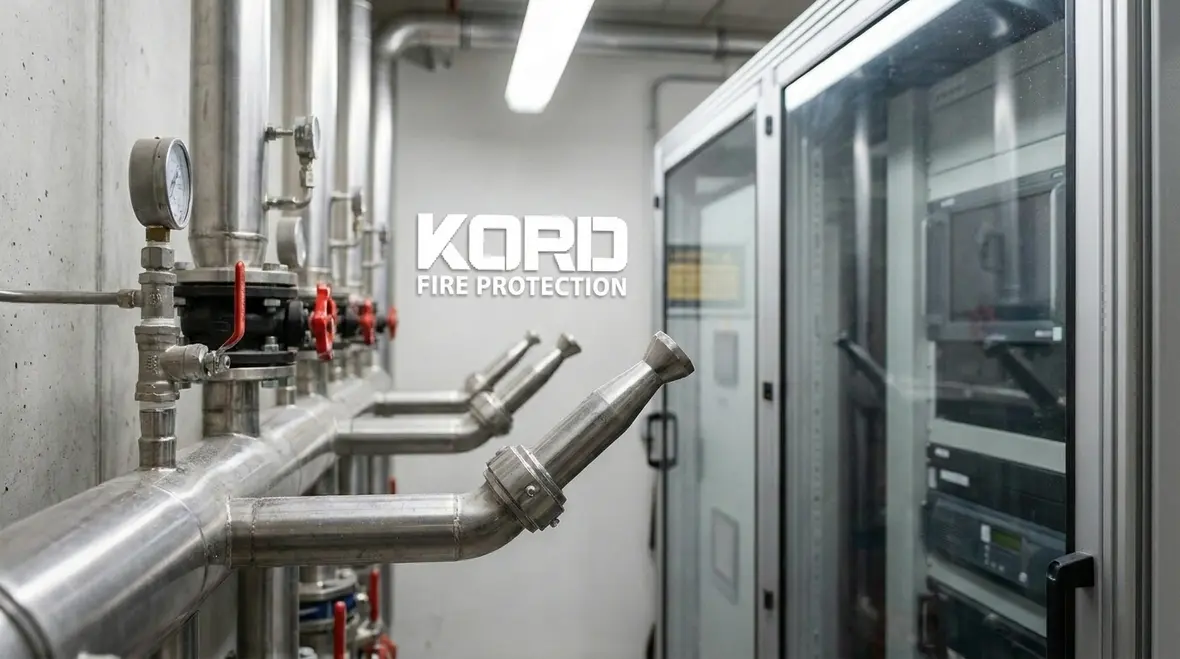
This is one of those details that sounds painfully technical until it suddenly determines whether the whole system does its job. A CO2 system depends on the protected space holding the concentration long enough to suppress the fire. If doors do not latch correctly, penetrations are left open, or ventilation keeps moving air when it should be shut down, the design math starts losing the argument. That is why Kord Fire Protection treats the room itself as part of the suppression system, not just the cylinders and pipe on the wall.
How clean agent fire suppression avoids the mess many fear
Clean agent fire suppression uses specific chemical agents designed to extinguish fires while leaving minimal residue. Consequently, it supports faster return to operation after discharge. It also tends to fit better in spaces where equipment sensitivity and cleanliness matter, such as telecom rooms, data centers, and certain manufacturing control areas.
Most clean agent systems work by interrupting the chemical process of combustion and by helping stop the chain reaction that feeds the fire. However, they still require careful engineering. The discharge relies on correct agent concentration, enclosure integrity, and proper placement of nozzles or diffusers. Kord’s clean agent fire suppression service page highlights where these systems are commonly used, including data centers, telecom rooms, libraries, and bank vaults.
In addition, these systems include strict procedural controls. Even though they leave less residue than older methods, some agents still require evacuation before discharge. And because the environment can change agent concentration over time, system maintenance and testing matter. Kord Fire Protection stays focused on these details, so the system performs when seconds count. For readers comparing newer agent options, Kord’s recent article on FK-5-1-12 clean agent fire suppression gives helpful context on modern clean protection strategies.

Clean protection and faster recovery often go hand in hand
For operations teams, the appeal is not just that clean agent systems suppress fire. It is that they can do it without turning a server room, control room, or electronics heavy space into a cleanup project with a side quest. That difference matters when every minute of downtime starts making accountants sweat. Kord Fire Protection often helps facilities think through not just how a fire is stopped, but what the first few hours after discharge will actually look like.
CO2 vs clean agent fire suppression: key differences that drive the decision
When facilities compare CO2 vs clean agent fire suppression, they usually start with what happens after the discharge. CO2 systems leave no chemical residue, yet they can create visibility and comfort issues during release. Also, they are oxygen displacement systems, so the area must remain unoccupied during and after discharge until levels return to safe limits. Kord’s article on CO2 fire suppression system safety and alarms is useful here because it focuses on alarms, evacuation, and life safety communication.
Clean agents often support quicker cleanup and less downtime because residue tends to be minimal. Moreover, they can protect assets that would not tolerate dirty agent deposits. That said, clean agent systems also demand strict design. If the room volume, airflow, or enclosure leakage does not match the system design, performance can drop.
Therefore, the “best” approach depends on the hazard and the protected space. A facility with heavy sealing and a known risk profile may find CO2 fits well. Conversely, a facility with sensitive electronics and a need for fast recovery often favors a clean agent approach. Either way, decisions should not be made during a busy lunch meeting. They should be made with documented hazard analysis, proper calculations, and compliance focused installation support.
The real comparison is not product versus product
It is really hazard versus hazard, occupancy versus occupancy, and downtime tolerance versus business reality. That is why blanket advice falls apart quickly. The right answer for a sealed industrial enclosure with limited access may be wildly different from the right answer for a 24 hour technology space full of equipment that hates dust, water, and drama equally.
Where each type fits best by occupancy and hazard
Different spaces react differently to suppression methods. CO2 systems often align with hazards where quick total flooding is practical and where the enclosure can be managed for life safety. For example, some industrial spaces and certain unoccupied areas can benefit when the facility can enforce evacuation procedures.
Clean agent systems tend to fit well where people cannot tolerate long downtime and where equipment needs clean protection. In data rooms, control rooms, and many specialized electrical areas, minimizing residue helps keep recovery steps lean. As a result, IT teams, operations staff, and maintenance crews often prefer approaches that do not turn every incident into a cleanup marathon. Kord’s data center clean agent fire suppression guide is especially relevant for teams protecting high uptime environments.
However, neither system acts like a universal hero. If the protected area cannot maintain enclosure integrity, performance suffers. Likewise, if detection and control logic do not match the room realities, discharge can arrive too early, too late, or not at all. Kord Fire Protection accounts for these differences by guiding site walkthroughs, documenting conditions, and aligning the design to the way the building actually behaves.
Installation, compliance, and ongoing maintenance that keep systems reliable
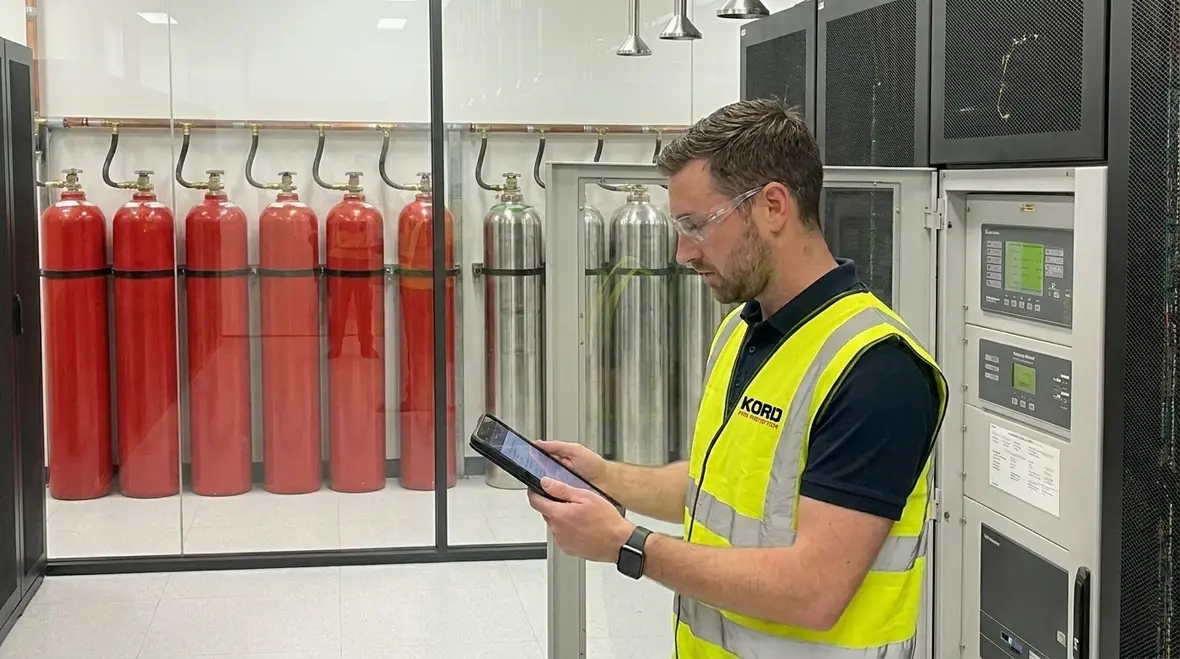
Even the strongest system design fails if it gets installed poorly. Therefore, the work needs strong coordination between detection, alarm, releasing panels, mechanical components, and building features. CO2 discharge lines, valves, and nozzles must align with the engineered plan. Clean agent systems require correct agent storage, piping, distribution layout, and release sequencing.
Then comes compliance and inspection. Fire suppression equipment needs testing routines that verify system health, verify alarm pathways, and confirm correct operation under realistic conditions. Also, technicians must handle cylinders and agents with care, follow labeling and documentation, and log results for audit readiness.
In addition, maintenance includes the “boring” stuff that quietly saves businesses from expensive surprises. Examples include checking control panel functions, inspecting releasing circuits, verifying pressure or weight checks for agent cylinders, and confirming that doors, dampers, and enclosure features still match the original assumptions.
Kord Fire Protection functions as a steady partner through these phases. It does not just install and walk away. It helps facilities manage the system lifecycle so the equipment stays ready, because a fire does not care how pretty the paperwork looks. If your team is reviewing broader options, Kord’s fire suppression system types explained article offers helpful context for comparing technologies across different risk profiles.
Business impact: downtime, safety planning, and insurance conversations
Facilities compare CO2 vs clean agent fire suppression partly due to cost, but they also care about what the incident does to the business. Downtime can hit revenue immediately, especially for operations that rely on uptime and stable processing. Clean agent systems often support faster recovery, and that matters when teams must restart within tight windows.
Safety planning also drives cost and procedures. Because CO2 relies on oxygen displacement, facilities need clear evacuation strategy and occupancy control. Clean agent systems also require safety procedures, yet they generally focus on maintaining safe exposure limits and proper post discharge ventilation time.
In many cases, insurers and risk managers want documented system design, testing records, and evidence of compliance. Therefore, the decision should include how each system will be supported long term. Kord Fire Protection helps simplify this by aligning system work with practical documentation, consistent maintenance plans, and clear operational procedures.
And yes, from a pop culture standpoint, it is like choosing between a “set it and forget it” gadget and a gadget that actually needs maintenance. Fire protection is the serious version, but it still rewards smart planning.
Dual approach planning with Kord Fire Protection for real world outcomes
Many facilities do not choose one system forever. Instead, they build a protection strategy that evolves as equipment changes, areas get renovated, and hazards shift. Sometimes a site uses CO2 for one space and a clean agent for another, depending on the hazard profile and occupancy control needs.
In other situations, a facility begins with one plan but updates it after a layout change, airflow modification, or equipment upgrade changes the risk picture. Kord Fire Protection supports this kind of lifecycle thinking. It helps evaluate zones, review room characteristics, and recommend the method that fits the job, not just the brochure.
That partnership approach also reduces friction with operations teams. People understand what to expect, what alarms do, how evacuation works, and what recovery looks like. When staff trust the plan, response gets faster and calmer. And honestly, calmer responses during emergencies help everyone, including the folks who would rather be anywhere else, like in a quiet office pretending it is not Friday.
Near the end of the process, most organizations realize the smartest move is not simply choosing a cylinder and calling it a day. It is choosing a service partner that can design, install, inspect, test, and maintain the system long after the first proposal lands in the inbox. For teams ready to compare options seriously, Kord Fire Protection’s clean agent fire suppression services and CO2 fire suppression systems pages are the best next step for a practical conversation.
FAQ
Conclusion
Choosing between CO2 vs clean agent fire suppression should feel like a business decision, not a guess. It depends on the room, the hazard, the ability to control occupancy, and the recovery time your operation can afford. Kord Fire Protection helps facilities compare options with real site details, then supports installation, compliance, and ongoing maintenance so the system stays ready.
If a protection plan needs clarity, Kord Fire Protection can bring the calm, measured expertise that turns uncertainty into action. Reach out through Kord’s clean agent fire suppression service page or review the dedicated CO2 fire suppression systems page to plan your next step with a team that understands real world fire protection.

Join Our Newsletter!
Get the latest fire safety tips delivered straight to your inbox From our Newsletter.