
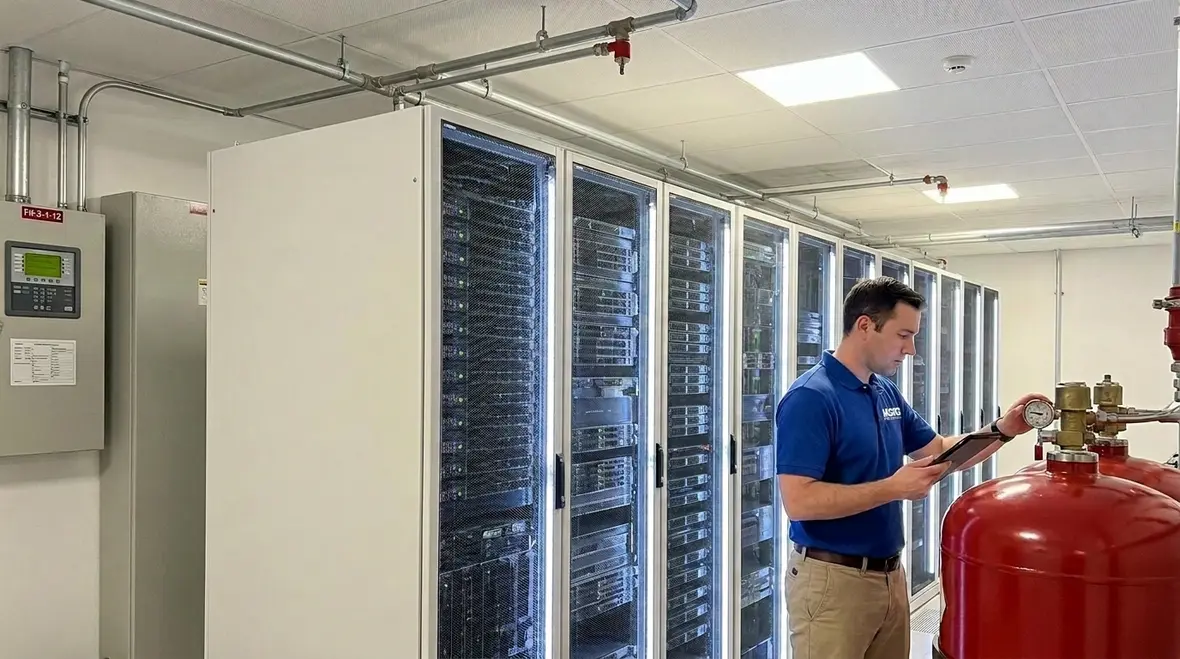
FK-5-1-12 Clean Agent Fire Suppression Explained
FK-5-1-12 Clean Agent Fire Suppression Explained
In the quieter corners of modern facilities, fire safety has evolved into something far more precise than “pull the lever and hope for the best.” FK-5-1-12 fire suppression is a clean agent system designed to extinguish fires without leaving messy residue behind. Because it works fast, and because it helps protect people and high value assets, teams often choose it when downtime is expensive and cleanup is painful. Of course, people still get nervous when alarms start singing, but with the right system design, testing, and service, the process becomes controlled, calm, and repeatable. And when that job needs an experienced partner, Kord Fire Protection can step in as a vital support team from design assistance to ongoing maintenance.
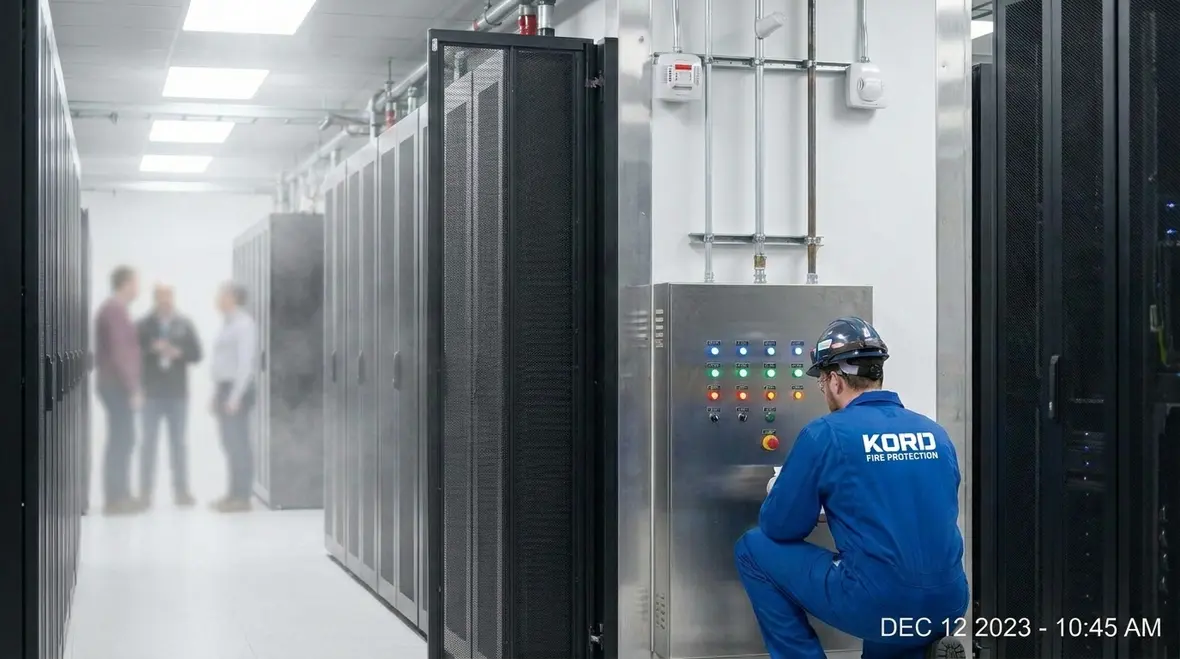
What FK-5-1-12 clean agent systems do in real buildings
FK-5-1-12 is a synthetic clean agent used in total flooding applications. That means the system releases the agent into an enclosed or protected space, aiming to reduce the fire’s ability to keep burning. In practice, it interrupts the chemical reactions and helps bring the fire under control. Since the agent leaves little to no residue, it suits spaces where electronics, documents, and sensitive equipment must stay ready after an event.
However, it does not “magically prevent fires.” Instead, it performs a job: it suppresses the fire quickly once detection triggers the release. Therefore, the value of FK-5-1-12 fire suppression depends on correct system design, proper nozzle distribution, and reliable release sequencing. Without those basics, even the best agent cannot compensate for a poorly prepared room.
That practical advantage is exactly why facilities protecting high value assets often use a clean agent fire suppression system instead of relying on methods that could leave water, powder, or more downtime behind. The appeal is not mystery. It is precision. When the space contains servers, control equipment, records, or specialty electronics, “fast and clean” starts sounding a lot better than “effective, but now everything is soaked.”
Why these systems fit sensitive environments
A good way to think about FK-5-1-12 is as a suppression strategy built for places where the fire is not the only problem. In a data room, archive, or telecom space, a discharge that stops flames but destroys equipment still creates a brutal operational mess. Clean agent systems are chosen because they help reduce both the fire event and the cleanup aftermath. That is a very different conversation from older approaches that treated every room like it could survive the same type of response.
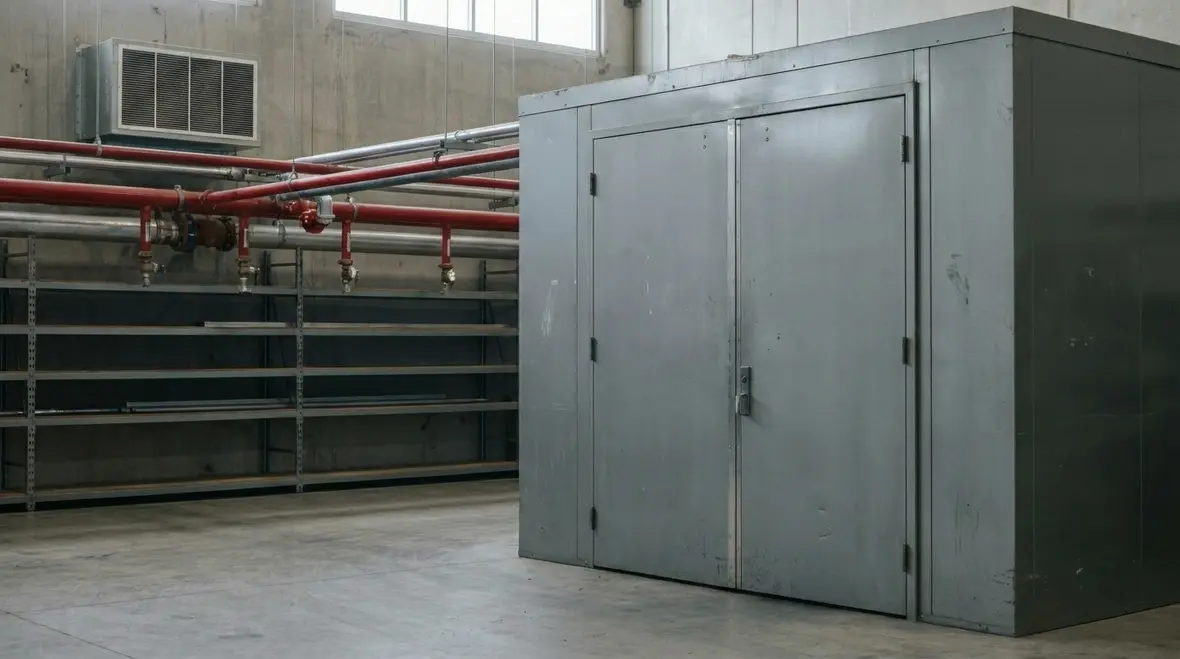
How the suppression cycle typically unfolds
A clean agent system follows a sequence that looks simple on paper, yet matters deeply in the field. First, detection sensors watch for smoke, heat, or other fire indicators. Next, the control panel verifies conditions according to the programmed logic, then starts a pre discharge phase when the system requires it. During that phase, occupants typically get time to evacuate, and the doors or dampers may behave in line with the facility’s design.
Then the release occurs. As the agent disperses, it quickly reaches the required concentration for the defined hazard. Finally, the system shuts down and the affected area can be assessed for damage and cause. At this point, teams often need fast documentation, proper inspection steps, and clear recommendations for restoration. In other words, suppression is the hero moment, but post event readiness is where good service separates itself from “we’ll get back to you eventually.”
Detection, delay, discharge, and documentation
Each stage has a job to do. Detection confirms there is a real problem. Delay periods support evacuation and coordinated response. Discharge puts the suppression strategy into action. Documentation closes the loop, because once the excitement dies down, someone still has to answer what happened, what worked, what needs replacement, and how quickly the room can return to service. Facilities that prepare for all four phases usually recover faster and panic less, which is a nice business perk for something centered around fire.
Where the agent helps most: sensitive areas and uptime needs
Because FK-5-1-12 leaves minimal residue, it tends to work well in spaces where cleanup cost and downtime risk run high. Facilities choose it for data centers, server rooms, telecommunications closets, control rooms, museums with valuable artifacts, and some areas with specialized process equipment. Additionally, some organizations prefer it for environments where water based suppression might cause major harm to electronics or finished goods.
That logic lines up with how Kord discusses clean agent fire suppression for critical equipment, especially in spaces where uptime is not just convenient but contractually, operationally, or financially essential. When a room powers communications, production controls, or core business systems, the cost of downtime can turn a minor fire event into a major operational problem in a hurry.
That said, it still requires correct enclosure planning. If a space has huge openings or inconsistent sealing, the system may struggle to hold concentration long enough to suppress the fire. Consequently, site walkthroughs and ventilation review become part of the story, not an afterthought.
Here is a small pop culture truth: clean agent systems aim for “stealth mode.” They avoid the obvious mess, much like a quiet spy in a film. Yet unlike a movie, real life does not let teams cut corners and still expect perfect results.
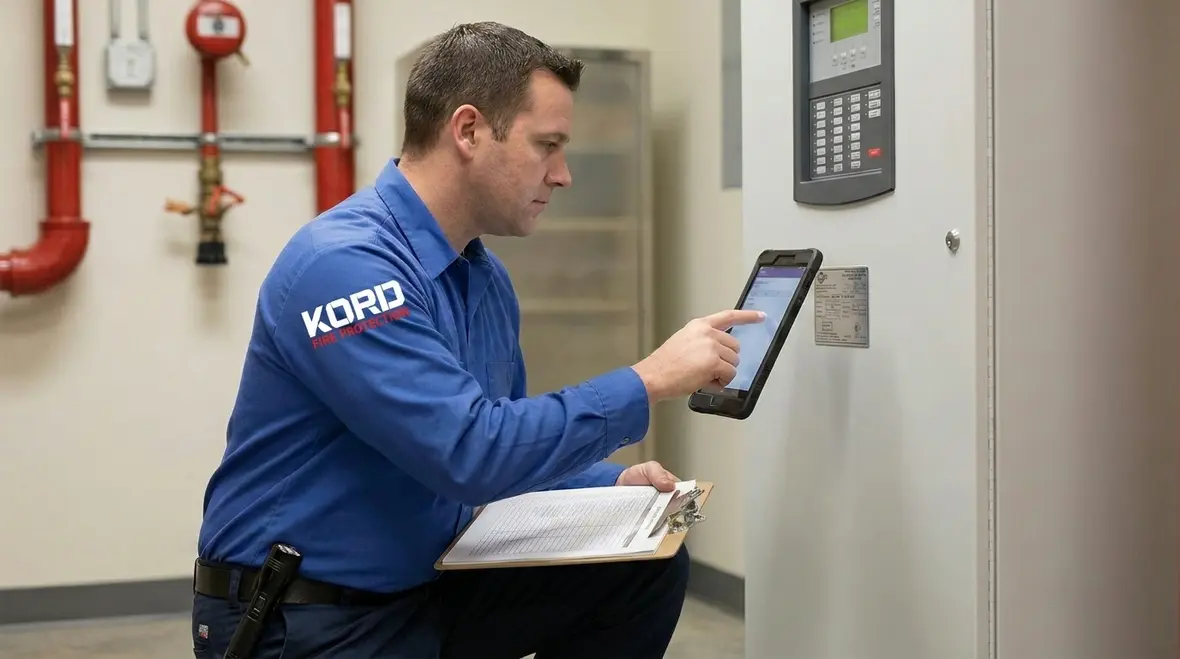
Design and installation details that prevent “almost” success
When companies discuss clean agent fire suppression, the conversation should quickly shift from the agent itself to the engineering details. A strong design considers room volume, leakage rates, enclosure integrity, nozzle placement, and airflow effects from HVAC systems. It also evaluates the expected fire load for the specific hazard category.
Installation quality drives performance. Contractors must handle pipe routing, support requirements, and valve placement with care. Then they must test detection, timing, interlocks, and release paths. If a facility later changes its layout, adds racks, alters ceiling heights, or modifies ventilation, the system may require review. Therefore, ongoing management matters.
That is also why room integrity testing deserves attention long before anyone assumes the system is ready. If the enclosure cannot hold concentration, the nicest equipment in the world is still being asked to win with one hand tied behind its back. A room can look sealed and still leak enough to affect performance, which is a very rude surprise to discover at exactly the wrong time.
And this is where Kord Fire Protection can add real business value. They help teams treat the system like an operational asset, not a box you install and forget. Because when design details match the real space, the system functions as intended. When they do not, the biggest issue is not the agent, it is the mismatch.
Common reasons performance slips over time
- Room changes that alter protected volume
- New cable penetrations or openings that reduce enclosure integrity
- HVAC adjustments that affect agent retention or airflow patterns
- Blocked nozzles, shifted equipment, or forgotten field modifications
- Testing delays because everyone is too busy until they are suddenly not
Operation, maintenance, and testing: keep it ready, not hopeful
Even a well designed FK-5-1-12 system needs regular inspection and testing. Over time, components can drift out of spec, and environmental conditions can affect sensors and power supplies. Additionally, building changes can affect integrity of enclosures and interlocks.
Maintenance typically includes visual inspection of storage containers, checking pressure readings as applicable, verifying detection performance, testing alarm and release sequences, and reviewing any extinguishing hardware for signs of wear. Then, at scheduled intervals, qualified teams perform more in depth functional checks to confirm the system still meets requirements.
It is also smart to keep clear records. When a client needs compliance documentation, faster audits reduce friction. When a facility experiences an alarm, better logs help troubleshoot quickly. In other words, a maintenance program protects both safety and schedule.
If the facility relies on this system to protect mission critical assets, downtime after an inspection matters too. Kord Fire Protection can help coordinate service windows and align testing with operational realities, so teams stay productive while staying compliant. Because nothing ruins a good day like a “quick” test that turns into a long outage.
For organizations comparing protection strategies more broadly, Kord also covers the tradeoffs in clean agent vs traditional fire suppression systems, which can be useful when a facility includes both sensitive rooms and more conventional hazards under one roof.
Why choosing Kord Fire Protection for this job matters
Many companies can install equipment. Fewer can support the full lifecycle with consistent care. Kord Fire Protection positions itself as a vital partner by focusing on more than just the hardware. They help organizations plan service around real building operations, communicate clearly with stakeholders, and verify that systems remain effective as the facility changes.
They also help teams understand the risk picture. That means discussing hazard identification, checking enclosure conditions, confirming detection coverage, and addressing coordination with fire alarm systems and building controls. As a result, clients often gain confidence before an incident, not during one. And when an incident does occur, they can move through documentation and restoration steps with less confusion.
In short, FK-5-1-12 fire suppression performs best when a competent team treats the system like a living part of the facility, not a one time purchase.
FAQ: FK-5-1-12 clean agent fire suppression
Next step: plan your clean agent protection with confidence
Fire protection should not feel like a mystery, and clean agent systems should not be treated like a last minute purchase. Kord Fire Protection can help evaluate your space, confirm enclosure and detection needs, and set up a maintenance plan that keeps the system ready. If you want reliable FK-5-1-12 fire suppression performance with fewer surprises, contact Kord Fire Protection today to schedule a consultation. Then, you can get back to running the business, instead of wondering whether the fire system will behave when it matters most.
If your team is actively evaluating suppression options, a strong next read is Kord Fire Protection’s dedicated clean agent fire suppression service page. For facilities specifically considering this chemistry, it is also worth reviewing https://kordfire.com/clean-agent-fire-suppression/ as part of the planning process near proposal and implementation stages.
Why teams move forward
They want a system that protects sensitive spaces, limits residue, supports uptime, and can be maintained without turning every service visit into a production. That is a sensible goal, not a luxury.
Why Kord is a smart call
Kord Fire Protection brings design awareness, testing support, maintenance coordination, and practical guidance that helps facilities stay ready before something dramatic tries to ruin the week.

Join Our Newsletter!
Get the latest fire safety tips delivered straight to your inbox From our Newsletter.



