CO2 Fire Suppression Safety Requirements with Kord Fire Protection
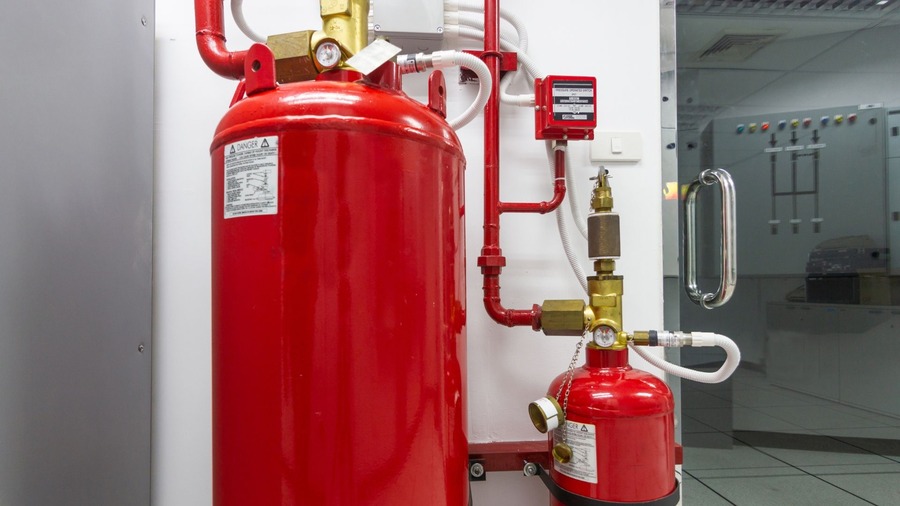
CO2 fire suppression safety matters because the system’s job is to save people and property, not to “surprise” anyone when the alarm goes off. In facilities that store or process flammable materials, carbon dioxide (CO2) can knock down a fire by reducing oxygen around the flames. However, that same oxygen reduction creates real safety duties that contractors and building teams must follow. That is why CO2 fire suppression safety requirements exist in the first place, including design rules, installation checks, training, and emergency planning. And while many vendors can install a cylinder and call it done, Kord Fire Protection can become a vital partner, helping organizations meet the standards without turning compliance into a never ending side quest.
For facilities comparing options, Kord Fire Protection also offers dedicated CO2 fire suppression system services, and that makes this conversation practical instead of theoretical. It is one thing to admire the idea of clean agent style protection from across the room. It is another thing entirely to install, inspect, document, and maintain a system that people can actually trust when alarms start flashing and everybody suddenly remembers they should have read the safety placard more closely.
Why CO2 fire suppression safety matters for real life
CO2 systems work fast, and that is the point. Yet, when CO2 discharges, it can lower oxygen levels in occupied spaces. Therefore, fire suppression safety rules focus on exposure limits, warning times, and controlled discharge behavior. In other words, the system must protect people while it acts like an extinguishing “blanket.”
Also, CO2 is not a joke in a sealed room. If someone bypasses a process step, or if a door stays closed at the wrong time, the consequences can go beyond a minor incident. So, facilities must treat every CO2 release like a high stakes event, not like a routine maintenance task. And yes, this is the kind of responsibility that makes even the most confident technician double check the label before pressing anything.
This is also why Kord’s recent article on CO2 fire suppression system safety and alarms is a useful companion read. It reinforces the same practical truth: the alarm sequence, evacuation time, and interlocks are not decorative extras. They are the difference between a suppression system doing its job and a suppression system creating a second emergency in the middle of the first one.
People safety has to be engineered, not assumed
A surprisingly common mistake is thinking the hardware alone solves the problem. It does not. Safe CO2 protection depends on how detection, controls, notification appliances, access rules, and post discharge procedures work together. That means a room can look perfectly protected on a plan set and still be awkward, confusing, or unsafe for real human behavior unless the design accounts for what people actually do under pressure. Spoiler: they do not always make calm, cinematic decisions.
CO2 hazard classes and how they shape safety requirements
Before installation or inspection, teams typically identify the hazard type and enclosure conditions. For example, a room with poor air flow behaves differently than a compartment with predictable ventilation paths. Consequently, designers must match the extinguishing method to the fire risk and the space geometry.
Then, safety planning must address where people can be. If occupants or staff can enter the protected area during an alarm condition, then the system must provide clear warning and a safe exit route. Meanwhile, if a system is for an unoccupied or remotely controlled space, the procedures can differ, but the need for safeguards does not disappear. In short, the hazard details drive the safety requirements, and the safety requirements drive how Kord Fire Protection helps clients plan and verify real world readiness.
Occupied versus unoccupied spaces changes everything
A total flooding system in a tightly enclosed equipment room does not carry the same operational concerns as one protecting an area where staff, contractors, or vendors come and go throughout the day. Access patterns matter. Shift changes matter. Even a seemingly innocent habit like propping open a door can alter performance expectations or confuse evacuation behavior. Safety planning has to reflect the real habits of the site, not a fantasy version where everyone always follows the sign on the first try.
Facilities that are still deciding whether CO2 is the right fit may also benefit from Kord’s overview on understanding CO2 fire suppression systems. That kind of context helps owners and managers ask smarter questions early, before a project turns into a patchwork of assumptions, rushed approvals, and that one awkward moment when somebody says, “I thought someone else handled the signage.”
Key design and engineering controls that keep discharge safe
Design choices determine whether the system works the way it should under real conditions. First, the system must provide the right concentration and distribution. If the concentration does not reach the intended volume, the fire may not extinguish. Second, the system must include proper actuation sequence and hardware selection for the facility.
In addition, teams need to consider factors like enclosure tightness, door openings, and ventilation behavior. Because a small air leak can reduce effective concentration, designers often specify requirements for room closure during discharge. Furthermore, components like distribution piping, nozzles, and detection devices must align with the space layout and code expectations.
Finally, documentation matters. Therefore, reputable service providers keep accurate as built records, labeled diagrams, and maintenance logs. Kord Fire Protection supports clients with documentation practices that make audits easier and reduce guesswork when operations, contractors, or ownership changes.
Interlocks, alarms, and delays deserve zero guesswork
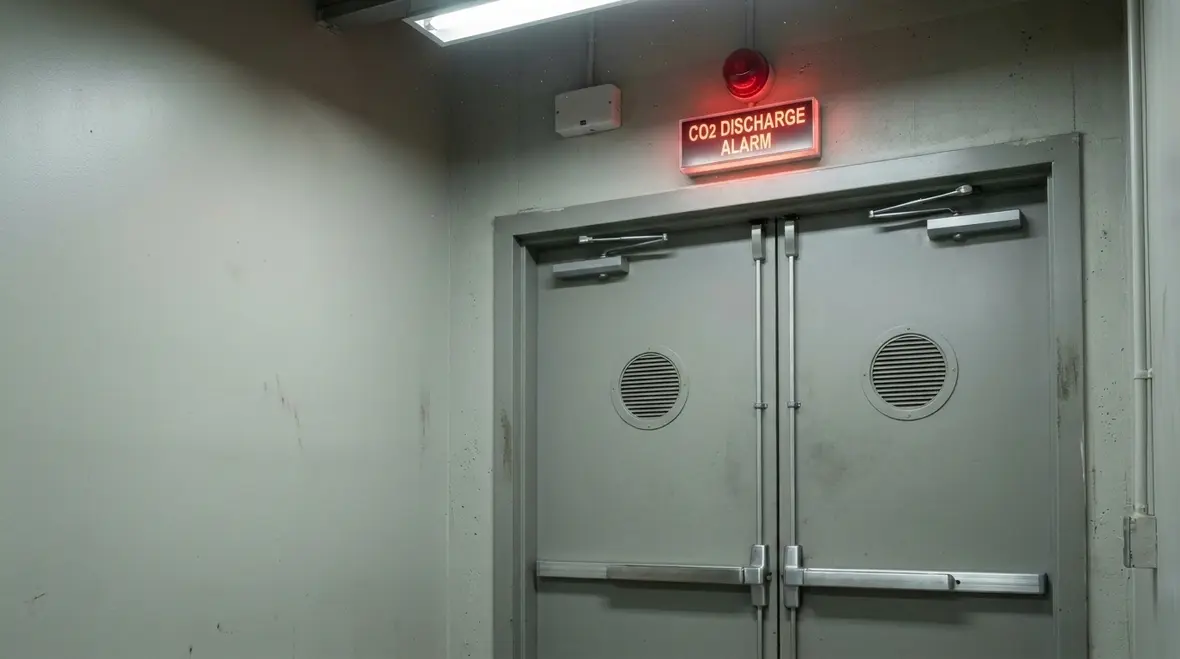
A safe discharge sequence should feel predictable to trained staff. Detection initiates the process, alarms communicate the hazard, time delays allow evacuation, and manual controls provide supervised intervention where approved by design. If one of those steps is vague, poorly labeled, or out of sync, confusion rushes in faster than anyone wants. Kord’s article on CO2 fire suppression activation in emergencies adds helpful context for how these pieces fit together during an actual event.
What installation checklists should include
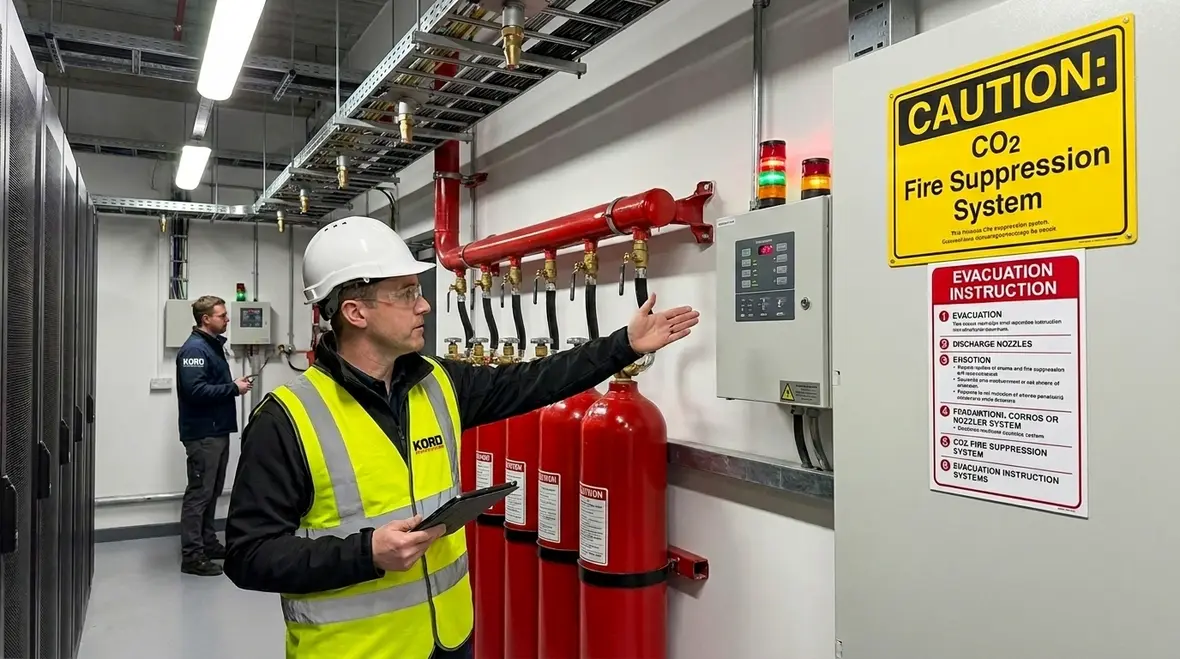
Even a well designed system can fail to perform if installation quality slips. Thus, installation checklists should cover more than “everything is connected.” Teams should verify detection coverage, mounting positions, system labeling, and discharge pathways. They should also confirm that release hardware and safety interlocks work correctly.
Then, crews must test key functions. For example, the system should produce the correct alarm sequence and implement any pre discharge delays or occupant warning steps. Also, they should verify that manual release controls and emergency shutdown procedures match the approved design.
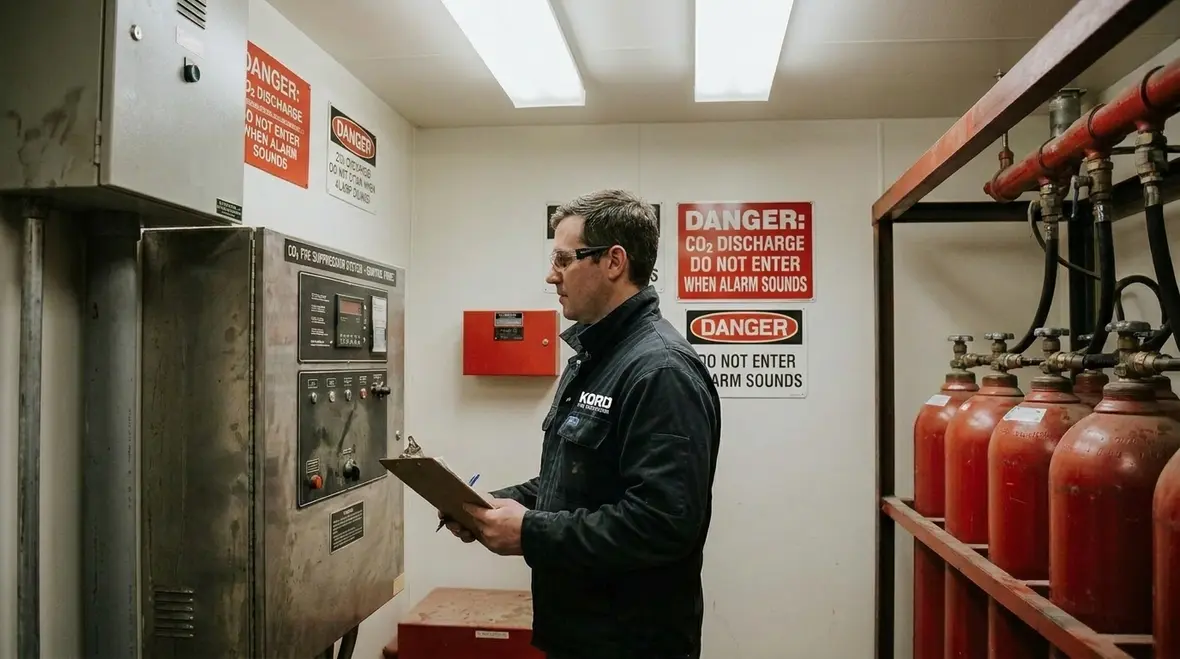
Because CO2 is a gas system, visual cues and signage also play a role in safety. Therefore, facilities must ensure that areas are marked clearly, instructions are readable, and staff training materials match the actual site layout. Kord Fire Protection can help ensure the installation is not only correct on paper, but also practical for day to day operation.
A checklist should verify the site, not flatter the installer
The best installation checklist asks uncomfortable questions on purpose. Are doors swinging the right way for exit? Are warning devices audible over equipment noise? Are control labels legible from the angle where a person would actually stand? Does the emergency shutdown procedure still make sense after three renovation phases and one mysterious panel relocation? A system can be technically installed and still be functionally messy. Strong commissioning closes that gap.
Maintenance and inspection tasks that prevent future problems
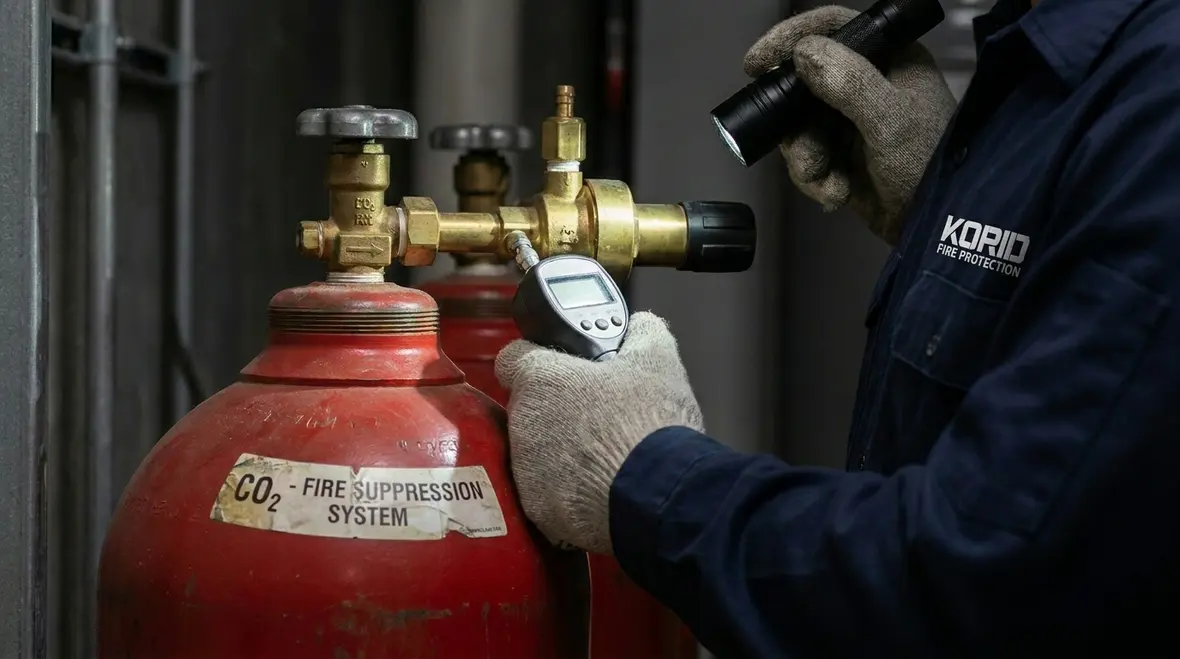
After installation, time does what time does. Connections loosen, labels fade, and components wear. Consequently, a strong inspection program is essential for CO2 fire suppression safety. Maintenance should include checks of cylinders, regulators, valves, piping integrity, and detection system health.
Service teams should also verify that any actuating circuits remain reliable and that control panels show no fault conditions. In addition, they should confirm that warning devices operate as expected during testing. Because these systems can sit quietly until the worst day, inspections must treat readiness like a living process, not a yearly formality.
Moreover, recordkeeping supports operational confidence. Therefore, Kord Fire Protection can maintain service documentation and help organizations keep a clear history of testing results, part replacements, and corrective actions.
Safety item
- Alarm and warning sequence verification
- Detection system function checks
- Cylinder, valve, and regulator inspection
- Piping and distribution hardware review
Why it matters
- Ensures people get time to exit
- Improves accuracy before discharge
- Maintains proper flow and pressure
- Supports correct coverage in the hazard
Organizations that already run broader inspection programs may also want to review Kord’s full fire protection services page. It helps connect CO2 system upkeep to the larger picture of alarms, sprinklers, extinguishers, and coordinated compliance support. Because if the rest of the life safety program is organized but the gas suppression room is running on crossed fingers and old binders, that is not exactly a victory lap.
Training, signage, and emergency planning that actually work
Safety is not only hardware. It is also behavior. Therefore, teams must train staff on what happens during a CO2 discharge event, what actions they must take, and what they must never do. They should cover evacuation routes, alarm meanings, and room access rules during an alarm condition. Also, staff should understand that “resetting” the system without authorization can create a dangerous delay.
Then, facilities must maintain clear signage. If a person can walk into a protected space without noticing the warning labels, the system becomes a trap instead of protection. Hence, signage should be placed where people will see it, not where it looks good for the contractor’s photo shoot.
Emergency planning also includes coordination with the fire department and internal leadership. If responders do not understand the CO2 discharge behavior, they may needlessly delay ventilation or access. Kord Fire Protection helps clients align training and documentation so emergency plans match what the system can do, and what it should never do.
Good signage is boring in the best possible way
The ideal sign is not clever. It is not subtle. It is not trying to win design awards. It is immediate, readable, and impossible to misunderstand during a stressful moment. Training should work the same way. If employees need a five minute debate to remember whether the flashing strobe means evacuate now or call a supervisor first, the process needs work. Kord Fire Protection helps simplify those moments before they become expensive lessons.

FAQ: CO2 fire suppression safety requirements
Final thoughts and next steps with Kord Fire Protection
CO2 fire suppression safety requirements protect people, not just equipment. When a facility follows design controls, installation checks, maintenance routines, and staff training, the system performs when it matters. Kord Fire Protection can support this process from plan review through ongoing inspections, so compliance stays clear and readiness stays real. If CO2 systems already exist, they should be audited and verified. If one is planned, get the safeguards right early.
To move from good intentions to an actual action plan, visit Kord Fire Protection’s CO2 fire suppression systems service page or explore their broader fire protection services for coordinated support. That way, the next step is not vague, delayed, or buried in somebody’s inbox under “circle back later.” It is scheduled, documented, and a lot more useful than hoping the system figures everything out by itself.

Join Our Newsletter!
Get the latest fire safety tips delivered straight to your inbox From our Newsletter.