Clean Agent Fire Suppression for Electrical Rooms
When a facility faces the risk of fire inside an electrical room, it needs fast control and clean results. That is exactly what clean agent fire suppression delivers for electrical rooms. It protects critical equipment while reducing residue that can interrupt operations and cleanup. In other words, it helps keep the power system from turning into a fire drill, and it keeps the building from looking like a science experiment after the response.
Clean agent systems work by suppressing the fire without flooding areas with water or leaving messy byproducts. And even though electrical rooms can feel “small” compared to warehouses, the consequences of downtime are often massive. So, the right design, proper installation, and responsible service matter. Kord Fire Protection can become a vital partner by bringing hands on expertise to the full lifecycle of the job, from planning to testing and ongoing support.

What is clean agent fire suppression for electrical rooms
Clean agent fire suppression is a method that releases a special fire extinguishing agent into a protected space to stop combustion. Unlike wet methods, it does not soak equipment and it does not create the kind of cleanup that delays repairs. As a result, electrical room fire suppression supports both safety and operational continuity.
In electrical rooms, the design usually targets the fastest path to control fire growth while protecting sensitive components. The system uses detection and release controls so it can respond quickly. However, speed alone does not solve everything. The system also must match the room layout, ceiling height, ventilation behavior, and door position, because those factors affect how the agent moves through the space.
Why precision matters in small, high consequence spaces
Electrical rooms may not cover a huge footprint, but they often support panels, breakers, controls, feeders, and infrastructure that keep an entire facility functioning. That means a relatively small fire can create a giant operational headache. Clean agent protection is often chosen because it acts fast and avoids turning an equipment problem into a water damage problem too. If you want a broader look at how these systems protect sensitive assets, Kord Fire also covers the topic in clean agent fire suppression for critical equipment.
How electrical room hazards affect system design
Electrical rooms hide a range of fire drivers. Loose connections, overheated breakers, damaged insulation, and dust buildup can all contribute. Then, heat can spread to cable trays and control panels. Consequently, the fire behavior can change quickly, which means the suppression strategy needs precision.
Designers typically evaluate where the heat will develop first and where the flame will spread. They also check ventilation systems that might pull agent away from the protected area. For example, if a door opens during a release, the discharge patterns can shift. Therefore, the system needs correct zoning, correct nozzle placement, and correct control logic to ensure the agent concentration reaches the target level.
And yes, sometimes facilities treat electrical rooms like storage closets for random things they swear they will organize later. When that happens, airflow changes and the protected volume becomes less predictable. That is not just messy, it complicates electrical room fire suppression performance.
Room integrity and airflow are not side notes
A clean agent system depends on the protected room behaving the way the design expects. That is why enclosure conditions, penetrations, leakage paths, and airflow matter so much. If the room cannot hold the required concentration long enough, the system may look great on paper and still underperform when it counts. Kord Fire discusses that in more detail in room integrity testing for clean agent systems and also in clean agent suppression system and room integrity testing.
Why clean agents reduce downtime after discharge
After a fire suppression event, organizations usually want two outcomes: safety first, and minimal disruption next. Clean agent systems help support that second goal. Many clean agents leave little to no residue, which helps reduce downtime for switchgear rooms, servers, and life safety interfaces.
In practice, that means technicians can assess damage without spending hours cleaning powdery debris or drying out electrical cabinets. Additionally, the facility may preserve “as received” conditions for certain components, so root cause investigations become faster.
Of course, cleanup never equals zero work. There will still be inspection, system reset, and verification. Still, clean agent systems generally reduce the “aftermath workload,” which matters when the facility is trying to return to normal operations before the next shift.
Less cleanup means faster decisions
That reduced cleanup burden is one reason clean agent systems are used in technology rich environments. Teams can evaluate damage, review alarms, verify release events, and begin recovery without first battling soaked enclosures or lingering residue. Kord Fire’s related article on clean agent vs traditional fire suppression systems helps frame why these systems are often favored where continuity matters just as much as extinguishment.
Installation and inspection steps that keep systems reliable
A clean agent system does not become dependable just because the equipment looks polished. To perform during an emergency, it needs correct installation and ongoing inspection.
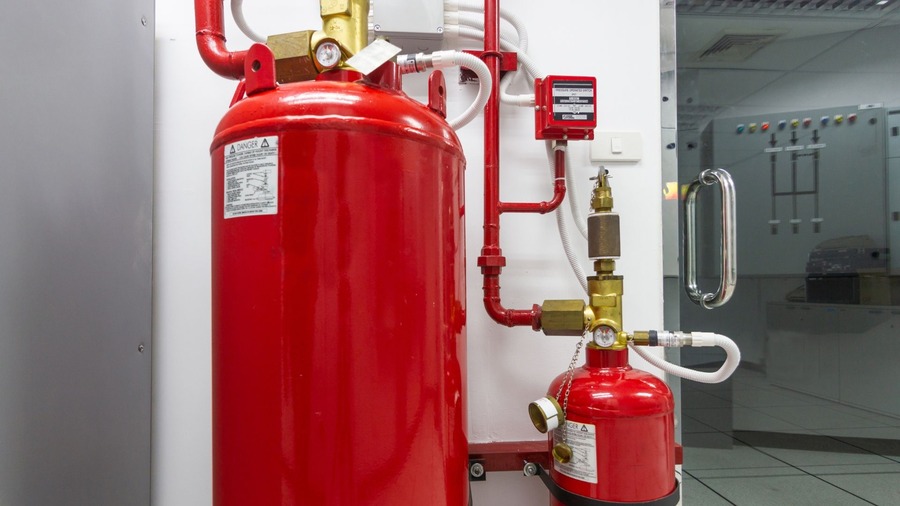
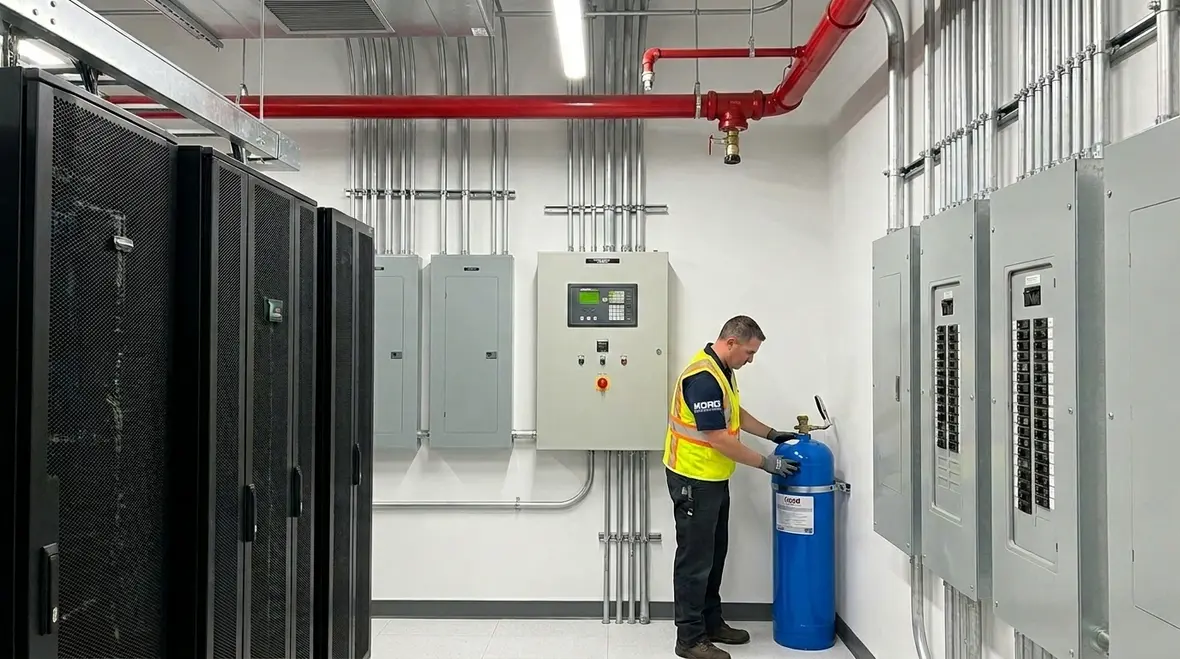
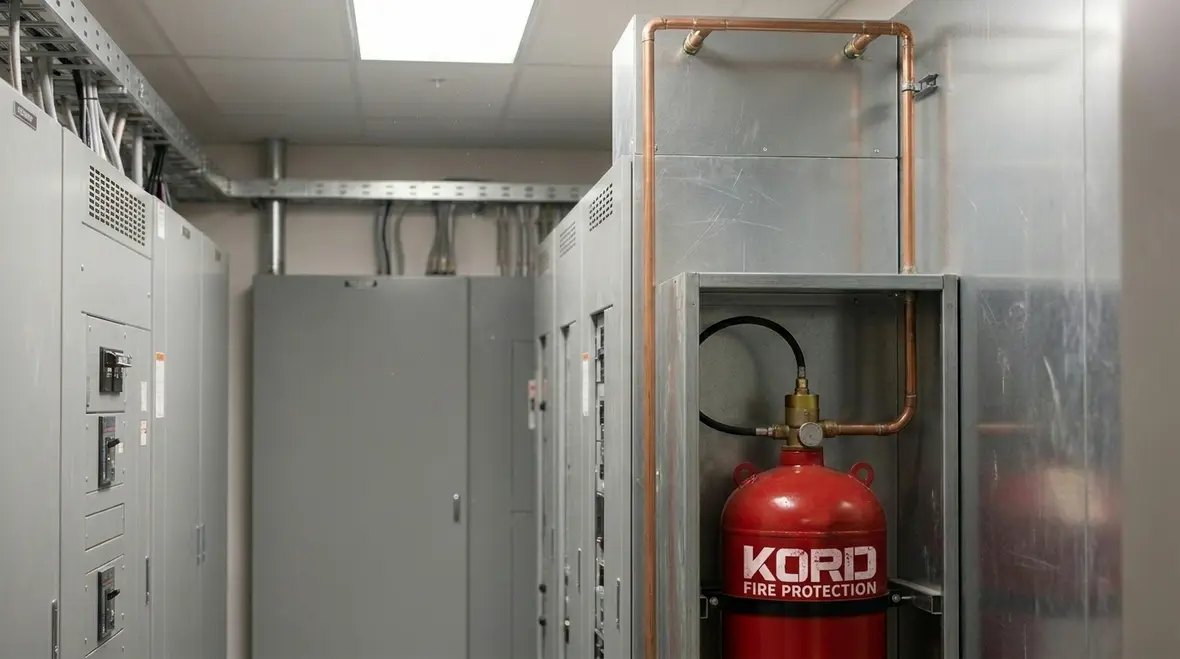
First, teams should confirm the protected space boundaries. Then, they should verify the detection devices, control panel settings, and release timing. Next, they should check cylinder placement, piping runs, agent type compatibility, and discharge hardware to confirm they match the engineering design.
After installation, the service plan matters as much as the initial work. Regular inspections verify detection health, control panel diagnostics, tamper status, and agent pressure or condition. Furthermore, testing should follow the system manufacturer requirements and applicable fire codes so the facility does not learn about problems during the worst possible moment.
Because electrical systems age, components can drift out of spec. Therefore, the inspection process should include checks for changes in room layout, new cable runs, upgraded equipment, and modified ventilation that might impact discharge conditions. That is where careful support turns into a long term advantage.
Testing should evolve with the room
Electrical rooms are rarely frozen in time. New panels get added. Cable routes change. Ventilation gets adjusted. Each of those changes can affect suppression performance, which is why documentation and retesting matter. Kord Fire’s article on clean agent standard for fire suppression systems offers helpful context on why design, installation, testing, and maintenance all have to stay aligned.
Why Kord Fire Protection can be a vital partner
Many facilities hire a contractor for the installation and move on. That can work for a minute, but fire protection is not a one time tattoo. It is a long term responsibility. Kord Fire Protection can support clean agent fire suppression for electrical rooms by treating the job as a complete program rather than a single event.
They help facilities align design, installation, commissioning, and documentation. Then, they support ongoing service so the system stays ready. In addition, their team can coordinate with facility operations so testing and maintenance cause less interruption. This partnership mindset matters because the real enemy is not only fire, it is neglect.
Also, when the team manages the process end to end, the facility avoids gaps like missing records, unclear baselines, and “someone will handle it later” decisions. That later is always louder, like a villain arriving right after the credits theme.
In short, Kord Fire Protection helps the facility keep confidence in the system, which is what electrical room fire suppression is really for.
Costs, compliance, and performance factors that matter
Cost varies based on protected volume, agent design, detection layout, and system complexity. However, the decision should not chase lowest price alone. The best value usually comes from a system that performs correctly, then stays reliable over time.
Compliance also affects planning. A clean agent system must meet applicable local codes, and it must integrate with fire alarm and monitoring needs. Therefore, teams should budget for commissioning, documentation, and periodic checks. When these steps stay on schedule, the facility reduces the risk of failing inspections.
Performance depends on details like room tightness, airflow, and the presence of HVAC cycles. If ventilation fans kick on during a discharge, the agent concentration might not hold. Likewise, if the protected space is not treated consistently, the system may not achieve designed effectiveness. Consequently, facilities should control changes to electrical room layouts and communicate upgrades so the system can be adjusted when needed.
Finally, training matters. Personnel should understand what the system does, what to expect during release events, and how to start post discharge procedures safely. That helps the facility avoid chaos, and it helps ensure the response remains calm instead of a frantic rerun of a disaster movie.
FAQ
Final call for safe, clean protection in electrical spaces
Clean agent fire suppression can protect electrical rooms while reducing messy cleanup and downtime. Still, success depends on smart design, correct installation, and steady service that keeps the system ready. Kord Fire Protection can serve as a vital partner to help facilities plan the job, commission the system, and maintain it over time.
If the facility wants protection that stays calm during emergencies and practical afterward, it should schedule an assessment with Kord Fire Protection today. To explore broader solutions, visit Kord Fire’s fire suppression services. For readers comparing approaches and applications, fire suppression system types explained is also a useful next step.

Join Our Newsletter!
Get the latest fire safety tips delivered straight to your inbox From our Newsletter.