Commercial Fire Extinguisher Placement Strategy for Coverage
Quick Answer: The right extinguisher locations come from a commercial fire extinguisher placement strategy that matches hazards, travel distances, access paths, and visibility. When units are mounted where people can reach them fast, response times drop and coverage improves. For many commercial facilities, Kord Fire Protection helps plan and deliver compliant, practical layouts.
Fire safety looks simple from a distance. A red cylinder here, a pin there, and everyone feels safer. In reality, the difference between “we have extinguishers” and “we can actually use them” often comes down to placement. To support that, Kord Fire Protection uses a commercial fire extinguisher placement strategy that maps risk, movement, and access before anything gets mounted. Then, as the rest of the site design fills in the details, extinguishers end up where staff can grab them under pressure, not where they were easiest to install. Because in an emergency, “close enough” is not a plan.
If your facility is reviewing equipment, inspections, or layout support, it helps to pair placement planning with fire extinguisher service and certification so the units on the wall are both well positioned and ready to perform.
Why placement drives real-world coverage
Strategic placement matters because people rarely move like they do during training. They hesitate, they detour, and they may approach from the wrong side. Therefore, extinguishers must sit along predictable escape and response routes, where a person can reach them even if one path is blocked.
In industrial, retail, and commercial facilities, hazards vary by zone. A showroom may look tidy, but behind the counters, electrical risks and packaging storage can shift quickly. Meanwhile, workshops, loading areas, and plant rooms often contain fuels, vapours, and hot surfaces that demand faster action. When extinguishers align with those zones, the business gets better coverage without multiplying equipment just for the sake of it.
Also, visibility plays a role. If an extinguisher blends into a doorway shadow or hides behind a pallet rack, it is basically playing hide-and-seek during the worst possible moment. Nobody wins that game, except the fire.
Coverage works better when it follows behavior
That is one reason Kord Fire articles like Strategic Fire Extinguisher Placement for Faster Response Times and Proper Placement of Extinguishers Saves Seconds fit naturally into the conversation. They reinforce the same practical point: people reach for what they can find quickly, not what looked nicely centered on a plan sheet.
Identify hazards, then position equipment like a system
Most facilities handle extinguishers like a checklist item. A better approach treats placement as a linked system of risk and response. First, the team identifies likely fire sources: electrical panels, switchboards, fryer areas, solvents, compressed gas cylinders, biomass or dust loads, and waste accumulation points. Then, they consider ignition sources and how quickly fire could grow.
Next, the method looks at the “person’s view.” Where does staff naturally walk? Where do delivery drivers stand? Which doors open during shifts? And where do aisles narrow when stock is staged? From there, the installation plan supports the path a person would take during an alarm.
In practice, this means extinguishers do not simply get placed at the most convenient corner. They get placed to support the coverage of a specific hazard zone and to reduce the maximum travel needed to reach help.
Think in zones, not random red cylinders
This is also where related Kord Fire resources can strengthen internal planning. A team comparing layouts may want to review Fire Extinguisher Placement for Complete Safety Coverage or Fire Extinguisher Placement and Accessibility by Kord for a broader look at visibility, access, and consistency. The basic idea stays the same: placement should behave like a system, not like a scattered collection of “well, we put one over there.”
Use correct mounting locations and access rules
Placement includes more than just distance. It also includes mounting height, signage, and clearance so a person can grab and operate the extinguisher quickly.
Key placement rules usually include:
Install so the operating handle and access are reachable from normal standing height.
Keep clear paths to the unit with no blocking by pallets, bins, or stacked stock.
Use consistent signage so occupants spot locations under stress.
Ensure units are not placed where hoses, cords, or dock equipment could interfere with approach.
In retail and commercial fit-outs, those clearances often get ignored because the floor plan changes every few weeks. Stock turns, seasonal displays appear, and “temporary” barricades become permanent. Therefore, a placement plan should consider how the site behaves on a normal day, not how it looks during a walk-through for inspection season.
For teams focusing on visibility, Fire Extinguisher Signage Requirements Guide is a useful companion resource, especially when signage has to do more than technically exist. It has to be obvious before the room starts acting dramatic.
Balance travel distance and real evacuation routes
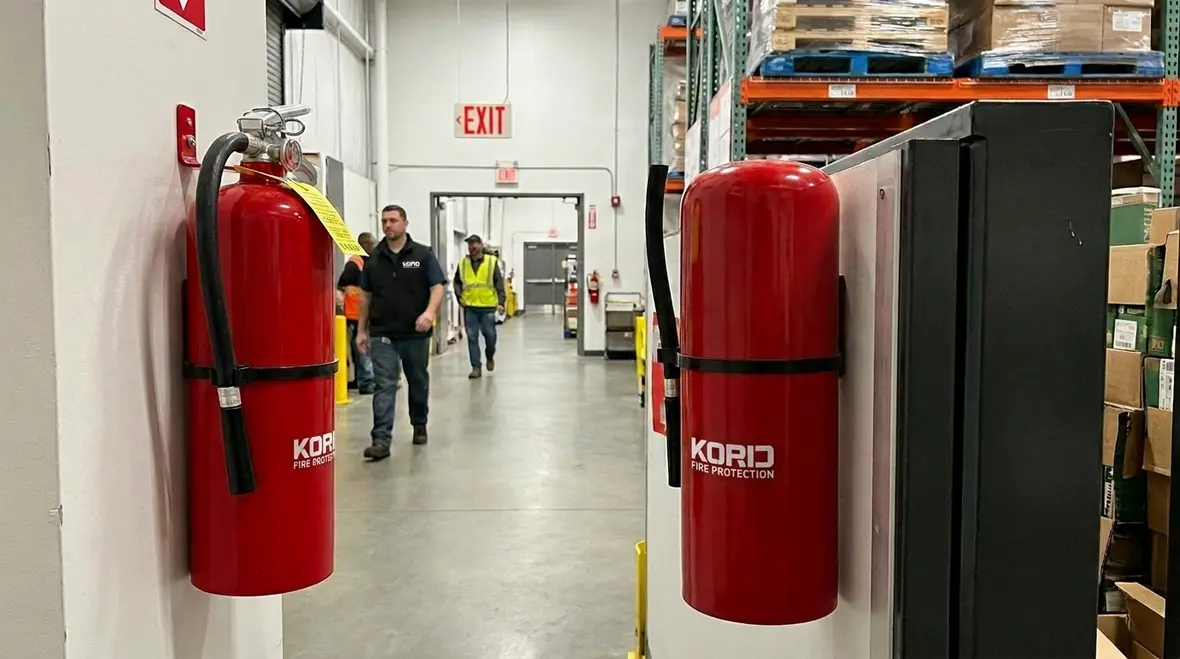
Facilities should place extinguishers to reduce travel distance to a hazard while also respecting evacuation routes. That means extinguishers often go near exits or along safe corridors, but they should not obstruct exit paths. In other words, the extinguisher should help someone fight early, yet never slow down escape.
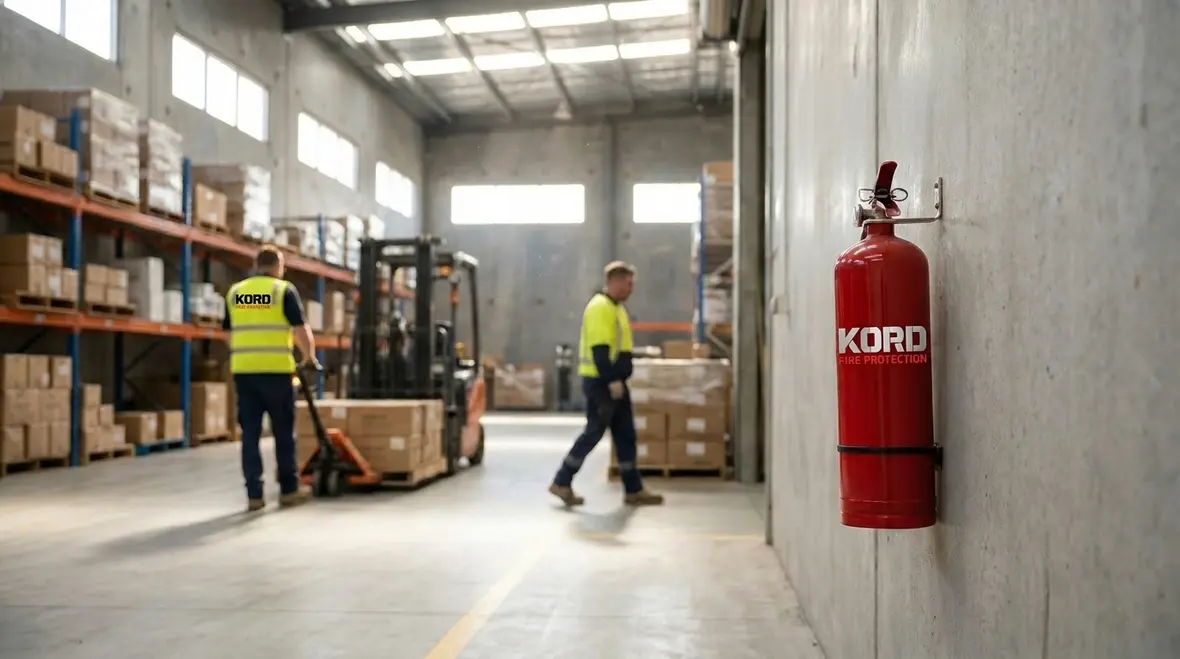
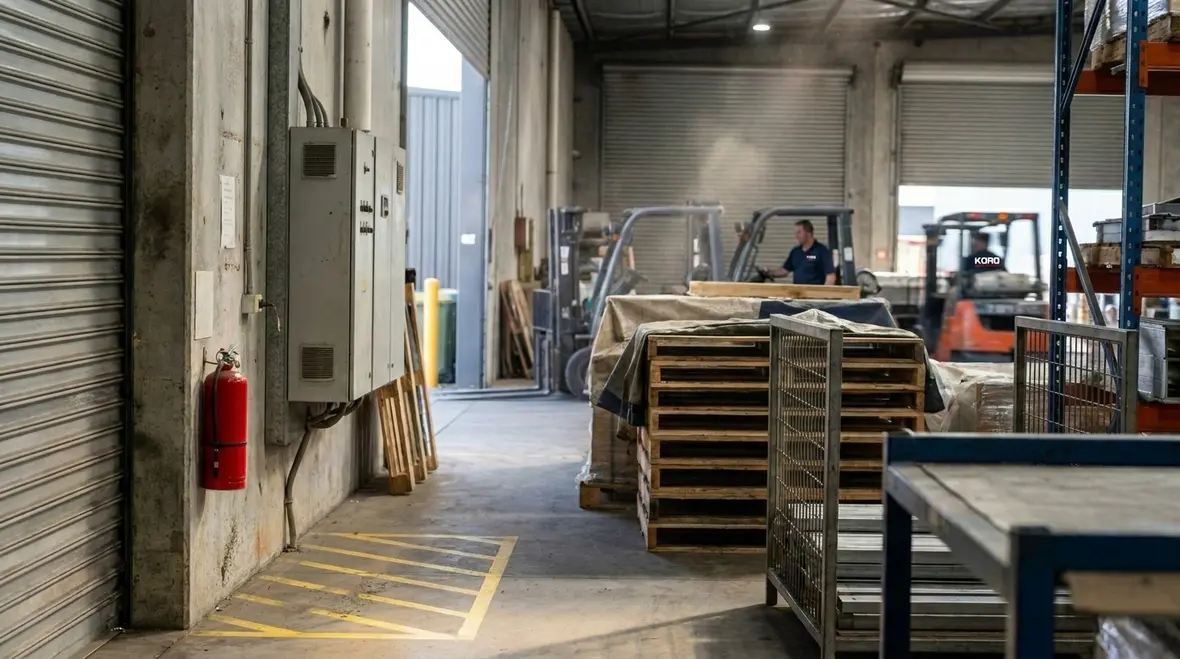
For warehouses and industrial spaces, the layout is the enemy of good intentions. Forklifts move, racks create blind spots, and smoke spreads where you do not expect it to. So the plan uses multiple points of access rather than relying on one “hero” extinguisher placed like Excalibur in a stone. If the fire blocks one approach, another unit remains reachable.
Meanwhile, in larger retail stores, customer movement creates its own challenge. People form lines, pause in aisles, and follow staff toward service points. Therefore, extinguishers placed at consistent, high-visibility landmarks tend to be found more quickly. In short, placement has to match how humans actually behave, not how diagrams behave.
Route planning beats wishful thinking
For deeper reading on warehouse-specific layout concerns, Fire Extinguisher Placement Safety Standards in Warehouses adds context that fits naturally with multi-access planning and blocked-route scenarios.
Pick the right extinguisher type for the job
Placement and extinguisher suitability work together. A well-located unit still fails if it uses the wrong agent for the hazard. Therefore, Kord Fire Protection typically aligns extinguisher selection with fire classes likely to occur in each area.
Examples of how this plays out in commercial workplaces include:
Electrical risks: Units selected for energized equipment so staff can act before the system fully de-energises.
Flammable liquids: Areas with solvents, fuels, or oils get solutions that control flammable liquids effectively.
General combustibles: Stockrooms, cardboard storage, and packaging zones need the right coverage for ordinary combustibles.
Also, many facilities have mixed hazards. A workshop might include both hot equipment and flammable cleaning agents. Therefore, placement often uses a nearby combination approach so staff can choose the correct response without rushing to guess. And while guessing is a fun activity in trivia night, it is not a fire safety strategy.
Kord Fire’s related resources on extinguisher categories, including Class A Fire Extinguisher Used For and Placement and Fire Extinguisher Placement Safety Near Electrical Panels, can help teams connect hazard type to actual placement decisions.
Installation planning for multi-site businesses
For industrial, retail, and facility operators across multiple locations, placement becomes more complicated than one building at a time. A chain might have common store layouts, but unique risk items still show up. One site might store more stock near service counters. Another might have upgraded equipment that changes hazard profiles. Then, a third might undergo refurbishment and move the same hazards into brand-new corners.
That is where a consistent methodology matters. Kord Fire Protection can help standardise how the commercial fire extinguisher placement strategy gets applied across sites, while still allowing site-specific adjustments. The result is not just compliance. It is a safer and more predictable response for staff, contractors, and visitors.
Dual column site planning snapshot
To make decisions fast, many teams use a simple comparison view before finalising a layout. Below is an example of how hazards and placement considerations connect:
Hazard zone
Electrical cupboards and switchboard areas
Loading docks and waste staging
Kitchenettes or staff break rooms
Placement priorities
Near access routes and visible from normal approaches
Along safe corridors, not in forklift choke points
Close to likely ignition sources, yet not blocking egress
FAQ for extinguisher placement in commercial sites
Conclusion and next step with Kord Fire Protection
A strategic placement plan turns extinguishers from “installed items” into real emergency tools. When locations match hazards, access paths, and how people move, coverage improves and response gets faster.
Kord Fire Protection can help commercial, industrial, and facility teams assess risk, design a practical layout, and deliver a commercial-ready outcome. If this is on the list, now is the time to make it real.

Join Our Newsletter!
Get the latest fire safety tips delivered straight to your inbox From our Newsletter.