Fire Extinguisher Placement for Complete Safety Coverage
When a facility maps out fire safety equipment placement, it should not feel like a scavenger hunt for someone in a hurry. The goal is simple: protect people, reduce damage, and make sure the right extinguisher gets used quickly. And yes, the best time to plan this is before an alarm turns the building into a real life action movie. Kord Fire Protection technicians explain it clearly: placement is part engineering, part human behavior, and part “please, don’t make responders work too hard.”
A strong placement plan also does something underrated: it makes the entire building feel more understandable under pressure. People move better when the layout makes sense. They respond better when safety tools are visible, mounted consistently, and kept where common sense says they should be. That means extinguisher placement is not some tiny line item at the end of a checklist. It is a practical decision that shapes whether someone acts quickly or loses precious seconds wondering if the nearest unit is around the next corner, behind a stack of boxes, or apparently on a spiritual journey.
Why extinguisher placement decisions change outcomes
Fire growth happens fast. Therefore, the location of an extinguisher matters just as much as its rating. If extinguishers sit behind locked doors, behind stacked inventory, or in corners people rarely walk past, response times stretch. That delay can turn a small fire into a problem that needs more water, more people, and more paperwork.
Proper placement also supports calm decision making. During an emergency, people do not want to think. They want clear guidance, visible signs, and equipment that is reachable without climbing over obstacles. Kord Fire Protection technicians often point out that if the extinguisher is “technically there” but practically hidden, the facility still loses.
In other words, bad placement does not just reduce convenience. It increases risk, and risk has a habit of showing up uninvited. That is one reason facilities often benefit from reviewing placement as part of a broader full fire protection services strategy instead of treating extinguishers like separate little islands on the wall.
The first few seconds are rarely graceful
Real emergencies are messy. Someone hesitates. Someone else heads the wrong direction. A door opens into the path. Smoke changes visibility. The nearest extinguisher suddenly feels much farther away than it looked on paper. That is why thoughtful placement must reflect how people actually move in a building, not how a clean blueprint imagines they move. If staff have to stop and puzzle out where the unit might be, the layout is already asking too much from people who have better things to do, like not standing near a fire.
Determine routes people can reach under stress
First, facility leaders should plan for the path an employee will take while visibility drops and smoke rises. Then, they should check that the extinguisher sits where a person can reach it from a normal walking route, not from a maze of pallet racks and office clutter.
Next, coordinators should account for common real world issues: doors that swing into the discharge space, equipment stored too close to the wall, and high traffic areas where pallets drift like they own the place. Kord Fire Protection technicians recommend a quick walk through with a stopwatch mindset. If a person cannot reach the extinguisher in a few seconds in a staged scenario, the placement plan needs adjustment.
Also, they remind teams to consider the “both directions” problem. Some buildings only work one way when things are calm. In a true event, movement shifts, and people may approach from different sides. This practical mindset pairs well with the guidance in Kord Fire Protection’s article on proper placement of extinguishers saves seconds, because speed only counts when access stays simple under stress.
Access route questions worth asking
- Can a person reach the unit without cutting through a hazard area?
- Will a swinging door block the extinguisher when opened?
- Could stored materials crowd the wall during busy weeks?
- Can staff approach from more than one direction?
Common route failures
- Extinguishers hidden at the end of cluttered aisles
- Units placed behind temporary displays or staging carts
- Coverage designed for a calm layout, not an emergency flow
- Pathways that work on paper but not in actual daily operations
Balance visibility, height, and wall mounting rules
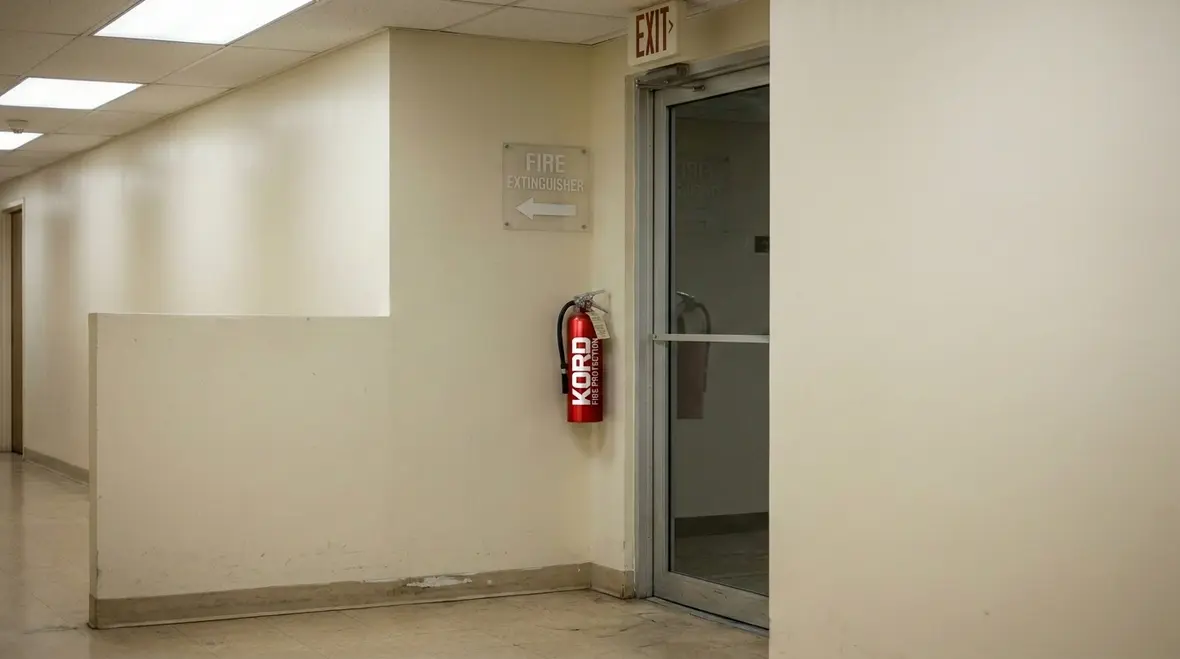
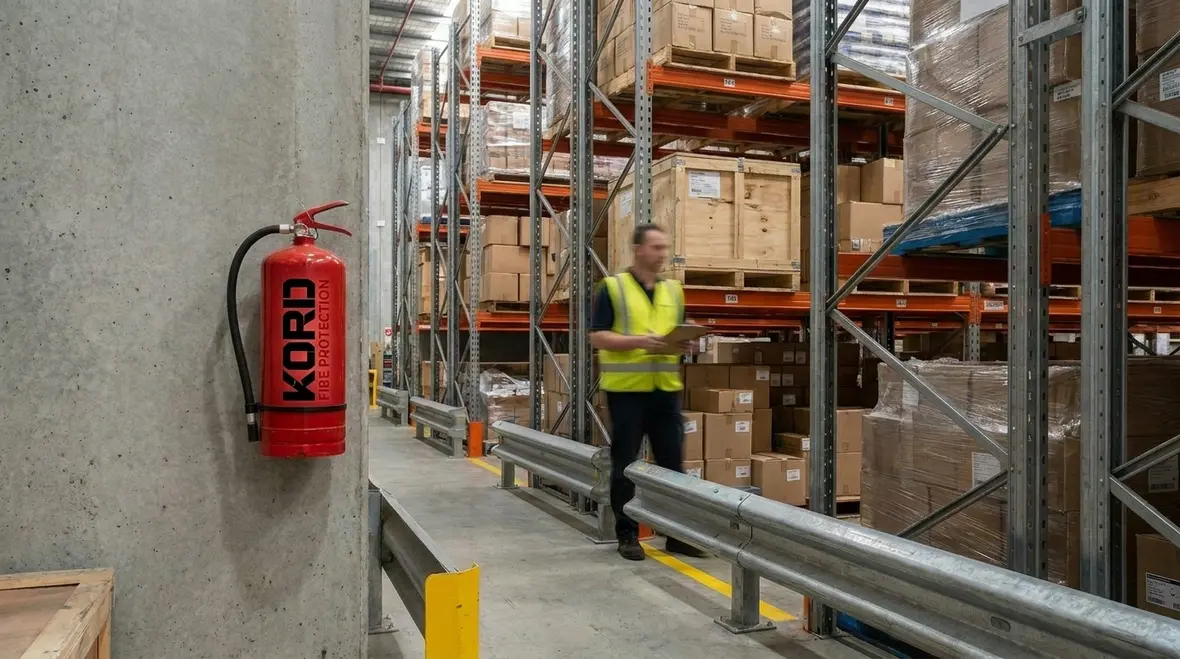
Clear sight lines and consistent mounting help. If an extinguisher blends into a wall or hangs too high, the first response becomes harder. However, if it mounts too low, vehicles and carts may bump it, and that damage can go unnoticed until inspection day.
Kord Fire Protection technicians emphasize that mounting height should follow local codes and manufacturer guidance, and it should keep the handle reachable without tools. They also note that the best placement includes space around the extinguisher so no one must step into an unsafe area to grab it. In many facilities, “near the door” sounds smart until the door opens and blocks access.
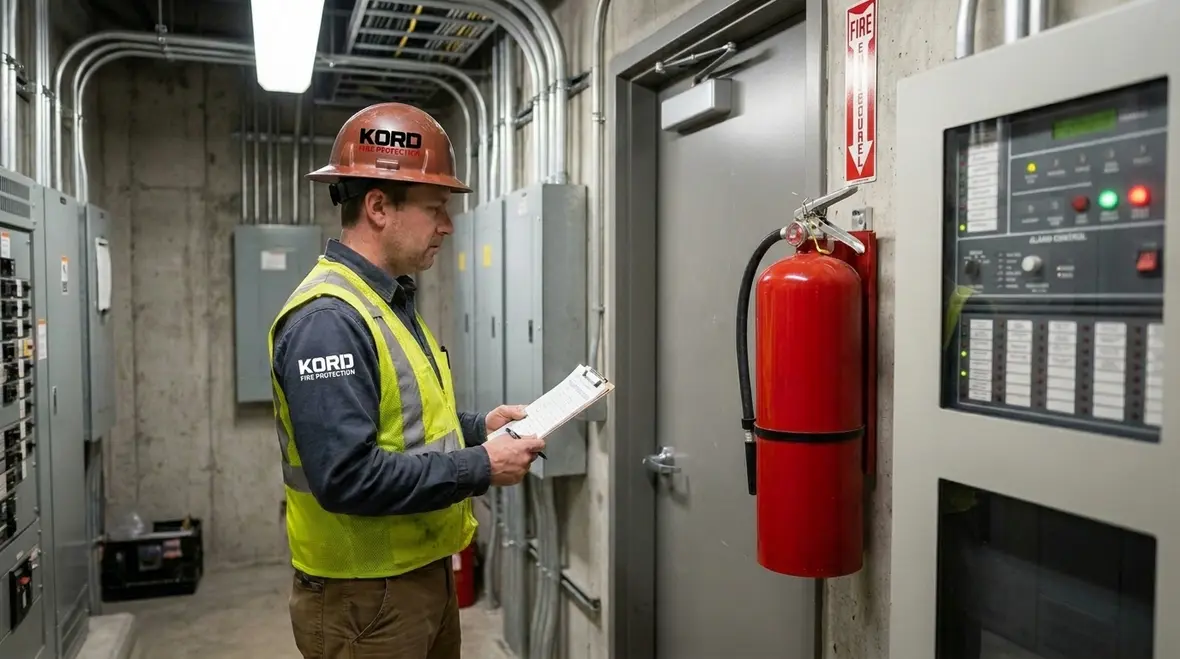
And because reality enjoys humor, some extinguishers get mounted where the fire alarm panel covers them during routine work. The panel looks helpful. In a fire, it is just a wall with opinions.
Make visibility obvious, not theoretical
A reliable rule of thumb is that staff should be able to spot the unit naturally from the routes they already use. If the extinguisher depends on memorization alone, the setup is fragile. Strong placement uses visual cues, open wall space, signage, and consistent mounting so people are not forced to translate the environment while under stress. The less mental work required, the better the outcome tends to be.
Match extinguisher type and hazard location
Placement is not only about distance and reach. It also depends on what the extinguisher can actually handle. Different areas produce different risks. Therefore, a one size fits all strategy fails over time.
For example, electrical rooms, data closets, and server areas need coverage that fits Class C hazards. Kitchen areas often need training for Class K situations. Storage rooms and workshops may involve ordinary combustibles or flammable liquids depending on workflow. Kord Fire Protection technicians typically recommend matching hazard level to extinguisher rating, and then placing the unit close enough to address the earliest stage of the incident.
Then they advise doing a hazard walk that follows actual processes, not just room names. A “break room” that includes microwave storage, cleaning chemicals, and trash pullouts might behave like a different hazard category on busy weeks. For organizations reviewing replacement, testing, and training needs at the same time, Kord Fire Protection also offers dedicated fire extinguisher service and certification support.
Install signage and ensure unobstructed access
Visibility does not happen by accident. It comes from signage, lighting, and clear access routes. Many facilities place extinguishers on the correct wall but forget the supporting details that make them usable.
So the facility should check that extinguishers have clear labels, are not covered by posters or signage, and sit where the discharge path is not blocked by shelving. Additionally, if the area uses low lighting, the organization should consider whether surrounding illumination supports quick recognition.
Here is a practical way Kord Fire Protection technicians approach it: they inspect the area like a new employee who has never heard the building’s nickname. If a visitor would miss it, the next drill will too.
A simple visibility test
Stand at a normal approach point and ask a very basic question: without already knowing the answer, could someone identify the extinguisher immediately? If not, improve the sign, clear the obstruction, adjust the mounting zone, or reconsider the location. The goal is not merely to have an extinguisher somewhere in the building. The goal is to make its presence unmistakable when every second feels shorter than usual.
Use dual column planning to document placement decisions
Smart facilities document decisions so changes do not break the system. For example, during renovations or warehouse expansion, teams can accidentally move hazards and forget to relocate extinguishers. Below is a clean planning format technicians use to keep everything straight.
Maintain placement through inspections, drills, and changes
After installation, the work does not end. Fire safety equipment placement must survive the real life cycle of a building. Storage shifts. Equipment moves. Temporary barriers appear. A contractor rents a room for two months and somehow leaves the new normal behind.
Kord Fire Protection technicians recommend treating placement like a living plan. During inspections, teams should confirm the extinguisher still sits where staff can reach it. After renovations, they should recheck hazard match and access routes. During drills, they should ask staff to locate units fast without guidance.
And yes, they also remind facilities to check maintenance records. An extinguisher that is correctly placed but not serviced does not help. It just becomes a wall decoration with high expectations. That ongoing follow-up is exactly why many businesses use recurring monthly inspection and annual service support to keep placement and readiness aligned.
What changes should trigger a review
- Renovations, tenant improvements, or remodels
- Warehouse reconfiguration or added shelving
- Process changes that introduce new fuels or equipment
- Traffic pattern shifts, staffing changes, or new occupancy areas
- Repeated drill confusion about where extinguishers are located
FAQ: Fire extinguisher placement for facility coverage
Conclusion
Optimizing extinguisher placement protects people and limits damage, and it only takes smart planning plus consistent follow up. Kord Fire Protection technicians help facilities review visibility, access routes, hazard matching, and mounting details so the equipment stays usable when it counts. If your building has moved things, expanded storage, or changed workflows, now is the right time to reassess coverage.
Request a site review today and let your fire safety plan work like it is supposed to, not like it hopes. For teams ready to tighten coverage, maintenance, and compliance together, explore Kord Fire Protection’s fire extinguisher services for a direct next step and practical support.

Join Our Newsletter!
Get the latest fire safety tips delivered straight to your inbox From our Newsletter.