
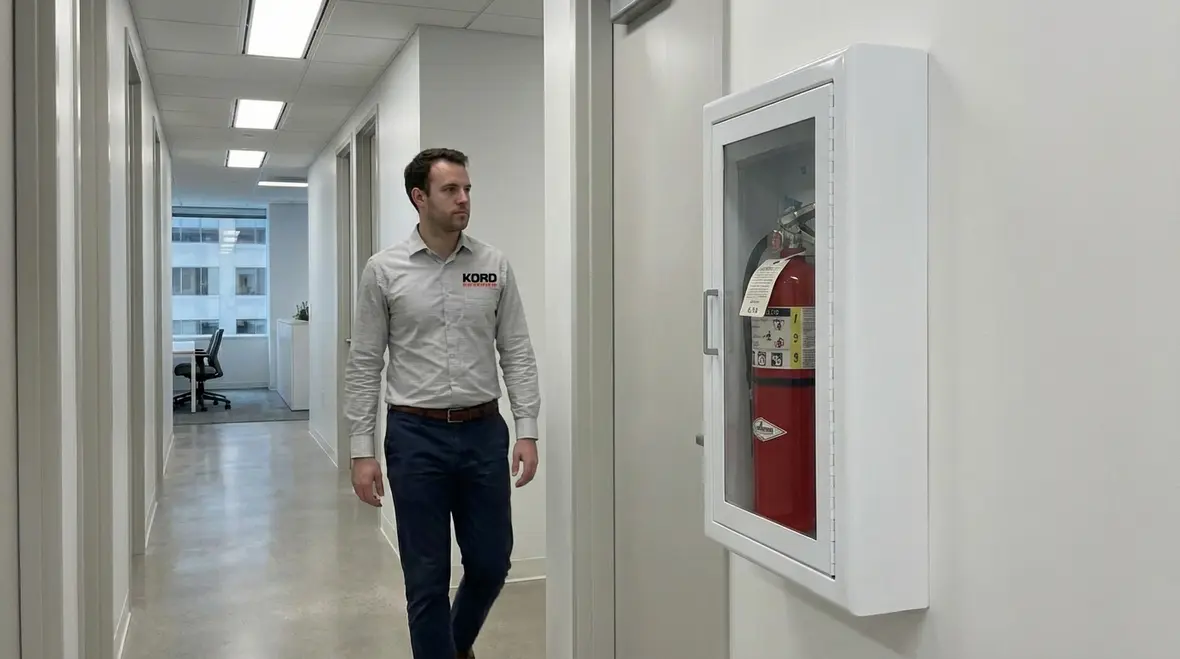
Proper Placement of Extinguishers Saves Seconds
In any emergency, seconds matter. A small flame can grow into a full scale disaster faster than someone can say “Where’s the extinguisher?” That is why Proper Placement of Extinguishers plays such a vital role in safety planning. When fire protection equipment sits exactly where people expect it to be, response time shrinks, damage decreases, and lives stay protected. Kord Fire Protection technicians often explain that the right extinguisher in the wrong spot is almost as useless as having none at all. Fortunately, with thoughtful positioning, clear planning, and professional guidance, businesses can turn panic into action with calm precision.
The Science Behind Faster Emergency Response
Fire does not wait for anyone. It feeds on oxygen, spreads through heat transfer, and doubles in size in a matter of moments. Because of this, the first sixty to ninety seconds are critical. When an extinguisher sits within clear sight and easy reach, someone can act immediately. However, if it hides behind storage boxes or sits at the far end of a warehouse, precious time disappears.
Kord Fire Protection technicians explain that accessibility reduces hesitation. When people know exactly where equipment is located, they move with purpose. Moreover, visible placement triggers awareness. Staff who regularly see extinguishers mounted at eye level subconsciously remember their location. Therefore, in an emergency, their reaction becomes almost automatic.
In contrast, poor placement creates confusion. People may run in circles searching for help. Unfortunately, fire rarely rewards indecision. Proper extinguisher positioning shortens the gap between ignition and suppression, and that gap can mean everything.
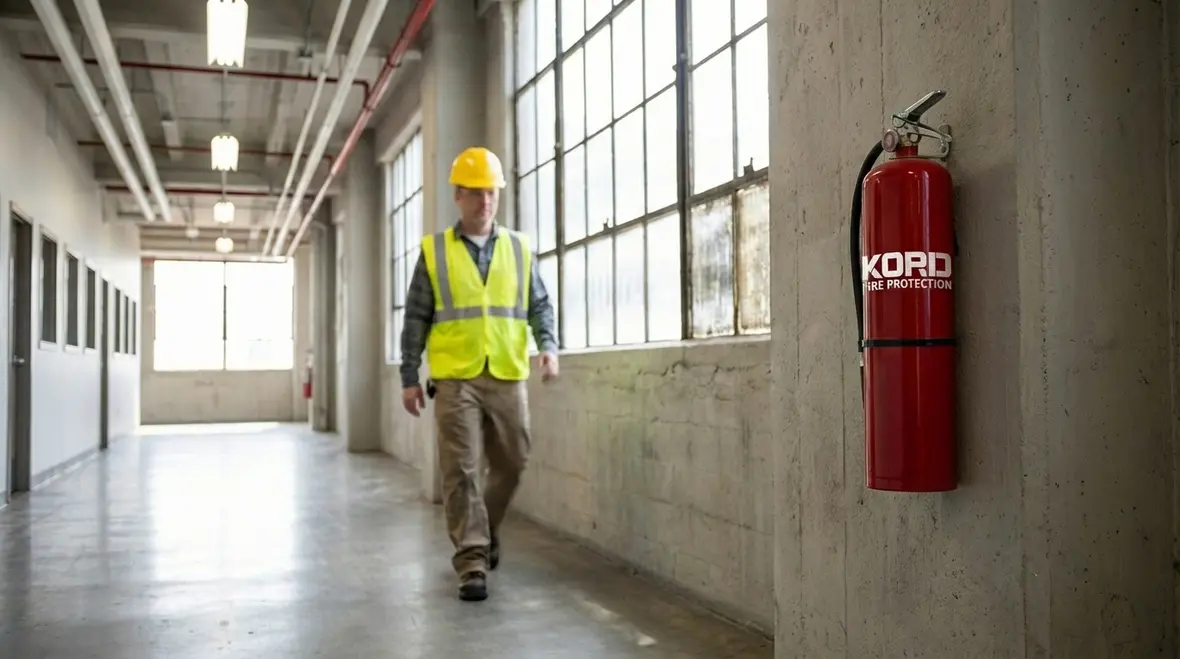
Where Should Fire Extinguishers Be Placed for Maximum Efficiency?
This question often sounds simple. Yet the answer requires strategy. Fire codes provide baseline requirements, but experienced technicians go further than minimum standards.
Kord Fire Protection technicians typically recommend placement based on three core factors:
1. Travel distance
Extinguishers should sit within a reasonable walking distance from any point in a building. The shorter the distance, the faster the response. For deeper guidance on NFPA 10 travel distance rules, many safety teams also review Kord Fire’s NFPA 10 portable fire extinguisher guidelines.
2. Hazard level
Areas with higher fire risk, such as commercial kitchens or mechanical rooms, require closer and sometimes specialized units.
3. Line of sight
Units should remain visible and unobstructed. Clear signage above each extinguisher increases recognition. Kord Fire’s article on where to mount fire extinguishers and height guidelines dives deeper into how visibility, height, and sightlines work together.
Additionally, mounting height matters. When units sit too high or too low, accessibility drops. Technicians aim for a height that allows quick removal without strain. After all, no one wants to wrestle with equipment while flames are rising.
How Proper Placement of Extinguishers Reduces Response Time in Emergencies
Strategic extinguisher positioning directly impacts the speed of action. First, it eliminates searching. Second, it prevents bottlenecks. Third, it empowers trained staff to respond with confidence.
Consider a busy office. If extinguishers sit near exits and high risk areas, employees can grab one without cutting through crowds. In contrast, a poorly placed unit might require someone to run deeper into danger to retrieve it. That delay increases risk.
Kord Fire Protection technicians often share a simple analogy. Imagine keeping a seatbelt locked in the trunk instead of across your chest. Technically, you have one. Practically, it does not help when you need it. The same logic applies to extinguisher accessibility.
Furthermore, proper positioning supports evacuation flow. When extinguishers align with exit paths, trained individuals can attempt suppression while others move safely out. Consequently, chaos decreases and coordination improves.
Common Placement Mistakes That Cost Precious Seconds
Even well intentioned businesses make errors. However, small missteps can create big consequences.
Blocked Access
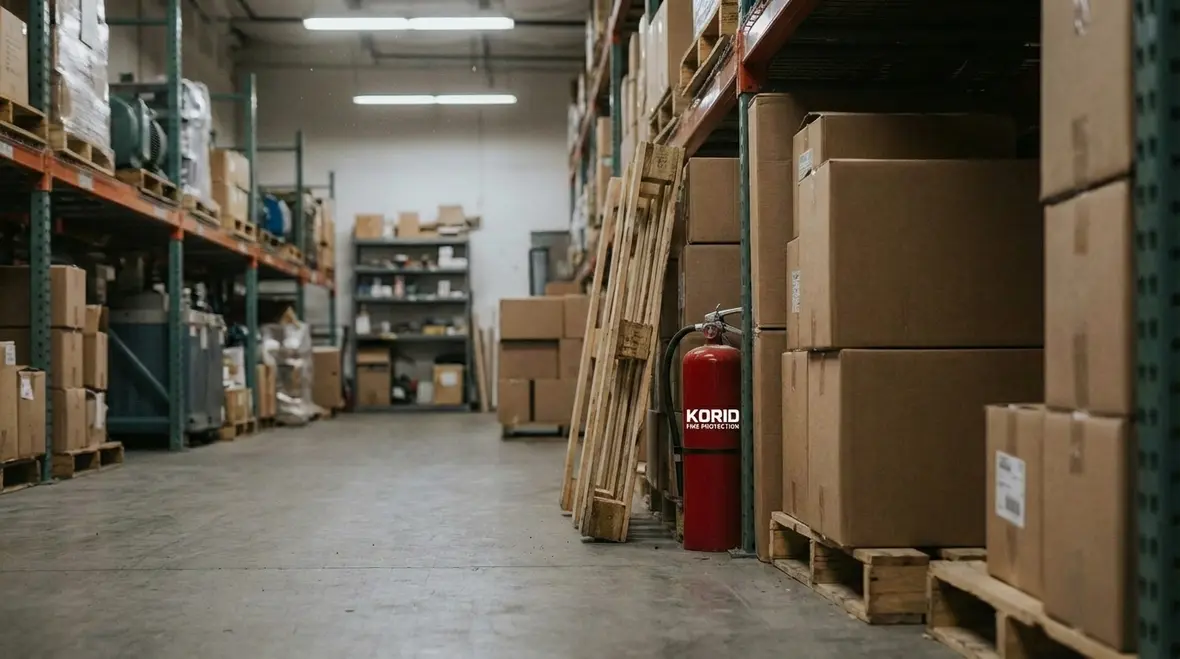
Storage items placed in front of extinguishers turn safety tools into decorations. Regular inspections prevent this issue.
Hidden Locations
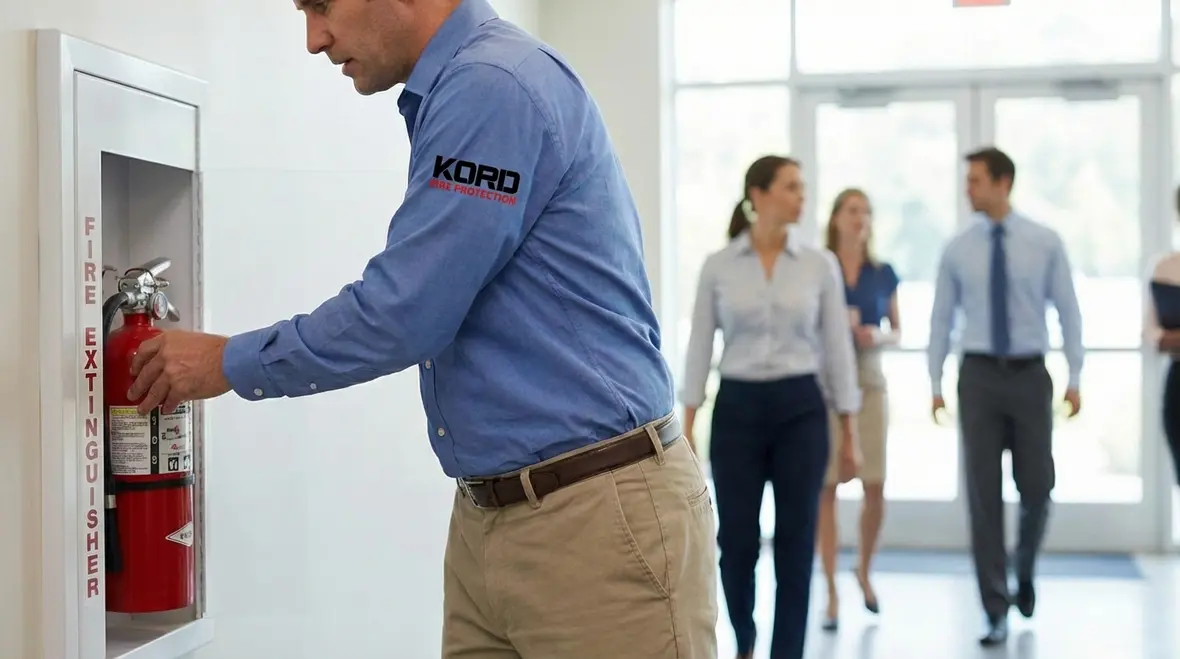
Mounting units inside cabinets without clear labels reduces visibility. In emergencies, people look for obvious solutions.
Ignoring Layout Changes
When offices renovate or warehouses rearrange shelving, extinguisher locations must adapt. Otherwise, coverage gaps appear.
Improper Unit Type
Different hazards require different extinguishers. Placing a water based unit near electrical panels invites trouble rather than solving it.
Kord Fire Protection technicians frequently conduct walkthroughs after layout changes. Because businesses evolve, safety plans must evolve as well. It is not dramatic. It is simply responsible.
Strategic Placement by Area Type
Different environments demand different approaches. Therefore, extinguisher placement should reflect the specific risk profile of each space.
Office Environments
In offices, general purpose extinguishers often suffice. Technicians typically position them near exits, break rooms, and copy areas where electrical equipment clusters.
Commercial Kitchens
Kitchens require specialized units for grease fires. Placement near cooking stations ensures rapid access without forcing staff to cross active flames.
Warehouses
Large storage spaces need evenly spaced coverage. Because shelving can obstruct visibility, additional signage becomes essential.
Industrial Facilities
High hazard zones demand close proximity and sometimes larger capacity units. In these cases, technicians calculate placement carefully to meet strict safety codes. For teams building out more complex layouts, pairing this article with Kord Fire’s guide on proper extinguisher placement that saves critical seconds gives a strong one-two punch of strategy and code insight.
Although each environment differs, the principle remains the same. Accessibility equals speed. Speed reduces damage.
Dual Focus Approach to Placement and Training
Strategic Placement
• Position units along natural walking paths
• Keep equipment visible and labeled
• Adjust locations after renovations
• Match extinguisher type to hazard
Staff Preparedness
• Conduct hands on training sessions
• Review PASS technique regularly
• Assign fire wardens for large facilities
• Reinforce awareness during safety meetings
As shown above, placement alone cannot carry the entire burden. However, when combined with training, it forms a powerful defense. Kord Fire Protection technicians often demonstrate the PASS method, pull, aim, squeeze, sweep, while explaining that confidence comes from repetition. Moreover, they remind teams that extinguishers serve for small, contained fires only. Safety always comes first.
Compliance, Inspections, and Ongoing Evaluation
Meeting fire code requirements is not a one time event. Instead, it requires ongoing attention. Regulations outline minimum travel distances, mounting guidelines, and signage standards. Yet smart businesses go beyond compliance.
Routine inspections confirm that extinguishers remain charged, accessible, and undamaged. Additionally, annual professional servicing ensures functionality. Kord Fire Protection technicians emphasize documentation because records demonstrate accountability and preparedness. Their dedicated fire extinguisher service & certification page outlines how testing, tagging, and maintenance all fit together.
Furthermore, building usage can shift over time. A storage room may become a server room. A quiet office corner may transform into a break area with added appliances. When risk changes, placement must adjust accordingly.
In many ways, extinguisher positioning mirrors good storytelling. Every element must appear exactly where the audience expects it. Otherwise, the plot falls apart. And in this case, the stakes are far higher than a disappointing movie ending.
Why Businesses Trust Experts for Extinguisher Placement
Although some managers attempt to handle safety planning alone, expert guidance brings clarity. Kord Fire Protection technicians combine code knowledge with real world experience. They evaluate floor plans, identify hazard concentrations, and calculate optimal coverage zones.
Moreover, professionals consider human behavior. In stressful situations, people follow instinct. Therefore, technicians place extinguishers where natural movement occurs. They anticipate bottlenecks, visibility challenges, and high traffic areas.
This thoughtful approach transforms fire protection from a checklist item into a living safety system. And while no one enjoys thinking about emergencies, preparation delivers peace of mind. As the saying goes, hope for the best, but plan like a realist.
Frequently Asked Questions
Conclusion and Next Steps
Every second counts when fire strikes. Through Proper Placement of Extinguishers, businesses reduce response time, limit damage, and protect lives with calm precision. Kord Fire Protection technicians stand ready to evaluate layouts, adjust positioning, and guide teams toward smarter safety strategies. Do not leave protection to chance. Schedule a professional assessment today and ensure every extinguisher stands exactly where it should, ready when it matters most.
If you are ready to move from theory to action, connect with Kord Fire’s fire extinguisher training, inspection, testing, & maintenance services or explore their full fire protection services for sprinklers, alarms, and more. One coordinated plan covers extinguishers, detection, and suppression together, so your building is prepared long before the first wisp of smoke ever appears.
Know Your Weapon Before You Fight the Flame
Kord Fire Protection is your go-to when it comes to all things fire protection. For over 20 years, we’ve been serving Southern California with the quality service and equipment to keep your home or business safe at all times. Our competitive prices reflect our unwavering commitment to protecting what matters most in the event of a fire emergency. Give us a call, send an email, or use that form!

Join Our Newsletter!
Get the latest fire safety tips delivered straight to your inbox From our Newsletter.


