Fire Extinguisher Placement Safety Standards in Warehouses
In warehouses, the right fire extinguisher placement safety standards decide whether a small incident stays small. Kord Fire Protection Technicians follow key rules such as proper travel distance, clear access, correct mounting height, and visible, unobstructed locations so staff can find equipment fast under stress. In other words, this is not the time for “it should be somewhere around here” logic. Instead, teams use documented locations, consistent signage, and placement that matches the hazards in each aisle, dock area, and storage zone. When the plan is done right, firefighters and first responders waste less time, and everyone else gets to keep breathing a little easier.
Now, let’s set the stage for placement that actually works, not placement that looks good on paper. Because in a warehouse, smoke does not care about your paperwork, and neither do sprinklers when people block the access. Kord Fire Protection Technicians explain the process in a way that makes the standards practical and measurable. If your facility needs a broader compliance strategy, Kord also offers full fire protection services that connect extinguisher coverage with your larger life safety plan.
Assess warehouse layout and hazards before placing anything
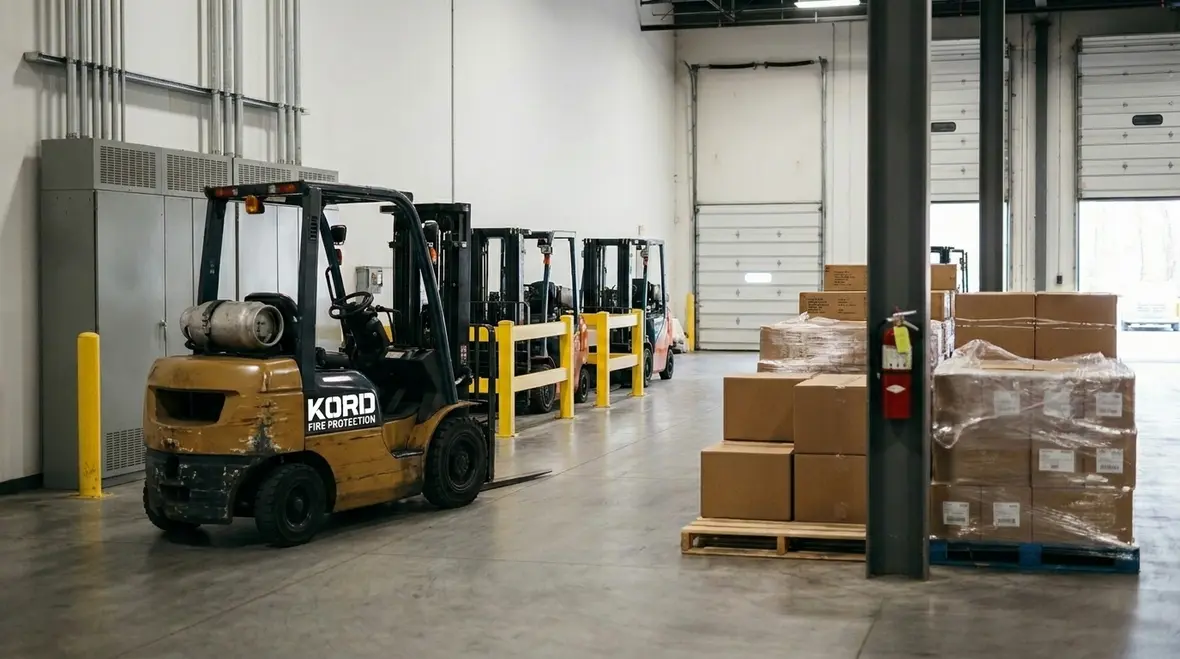
Fire risk in a warehouse depends on how materials move and how they burn. Therefore, Kord Fire Protection Technicians start with the building layout and the specific hazards in each area. They walk the site and map likely ignition sources like electrical panels, battery charging zones, heaters, and dock doors. Then they consider fuel loads such as cardboard stacks, plastic packaging, textiles, pallets, and solvent based cleaners.
Next, they evaluate how people actually work. For example, if forklifts routinely cut across aisles, then extinguishers must remain easy to reach. If pickers crowd one end of a bay during peak shifts, that area needs clear access paths. After that, they align extinguisher locations with staff routines so the equipment feels “obvious” in an emergency, like a well known theme song you can’t forget. That is the goal: fast recognition, not a scavenger hunt.
This kind of up front review supports broader warehouse readiness too. Kord’s Warehouse Fire Safety Regulations Guide also reinforces the idea that layout, storage practices, and emergency equipment should work together rather than exist as separate checkboxes.
Why hazard mapping matters before hardware goes on the wall
A warehouse can look neat and still hide trouble spots. One corner may hold extra packaging, another may host charging equipment, and another may become the unofficial home of every temporary pallet in the building. Without a hazard map, extinguisher placement becomes guesswork with a clipboard. With one, every unit has a reason for being exactly where it is.
Match extinguisher location to fire class and likely fuel
Placement and extinguisher type go together. So Kord Fire Protection Technicians ensure that the extinguisher near a hazard matches the fire class and fuel characteristics. For instance, a loading dock may present different risks than a packaging line or a stockroom.
Then they consider equipment near the hazard. A battery charging area needs equipment that supports the expected fire risk, while areas with ordinary combustibles may rely on multipurpose or appropriate ratings based on the site analysis. Also, they look at whether water might create extra problems. In some settings, water can spread certain fuels or worsen conditions.
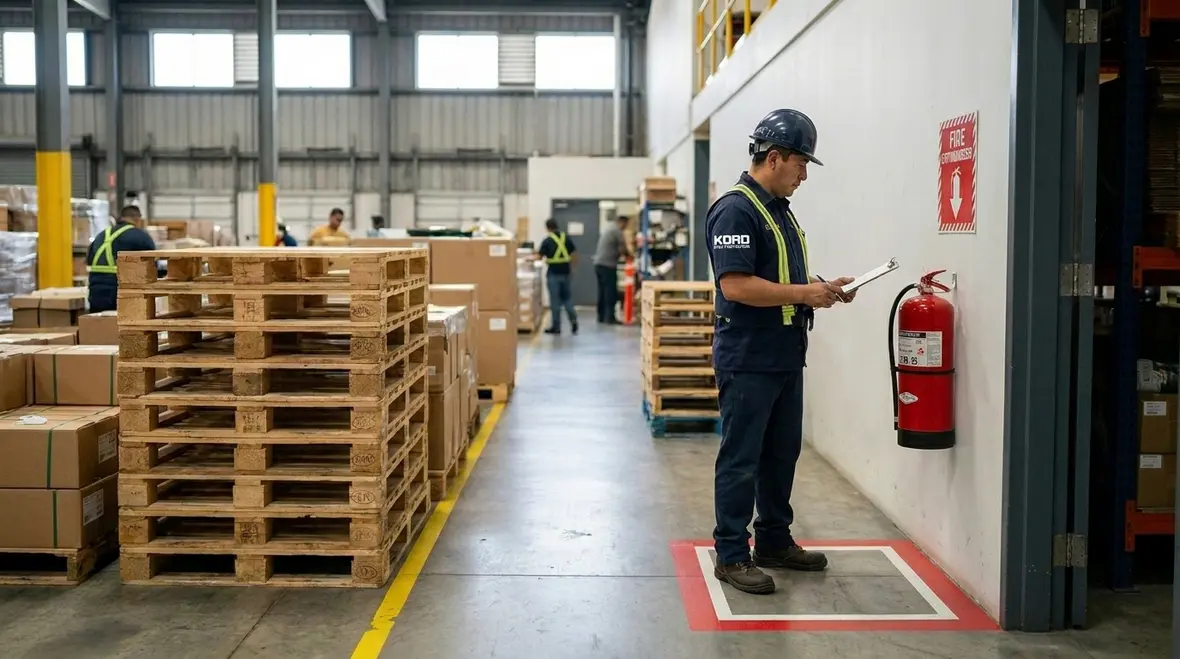
After identifying hazards and equipment, they decide where people can reach an extinguisher safely. If a location sits behind a locked gate, too high on a racking wall, or tucked behind a pallet, then it defeats the purpose. In the warehouse, the fastest extinguisher is the one you can grab without thinking.
The placement rule nobody should learn the hard way
A correctly rated extinguisher loses all its value if staff need to dodge shrink wrap, hunt for keys, or squeeze around parked equipment just to reach it. Matching the hazard is only half the job. The other half is making sure a trained employee can get to it before the situation upgrades from “manageable” to “call everyone right now.”
How Kord technicians set travel distance and access routes
Even the best extinguisher in the wrong spot fails when seconds matter. Therefore, Kord Fire Protection Technicians use the fire extinguisher placement safety standards approach that focuses on travel distance and unobstructed paths. They do not just measure from the extinguisher to a doorway. Instead, they estimate how staff would move under real conditions with low visibility, panic, and obstacles.
They map access routes along natural walking paths and also along emergency paths where possible. For example, if a bay has narrow shelving, they confirm the extinguisher sits where someone can reach it while moving through that aisle. Additionally, they ensure that doors, gates, and dock curtains do not block access when they are in typical operating positions.
To keep the system realistic, they also account for practical constraints. A warehouse has carts, staging areas, and seasonal clutter. So, Kord technicians plan placement and then recommend layout controls that keep the extinguisher accessible during normal operations. Because “we’ll move the pallets if something happens” is a plan that usually shows up in interviews after the incident.
Real travel paths beat perfect floor plans
A taped drawing can make access look effortless. Actual operations tell a different story. Busy dock doors, temporary staging, and seasonal overflow all change how people move. That is why placement should follow the path employees really take, not the path a floor plan politely suggests.
Mounting height and visibility rules that staff can trust
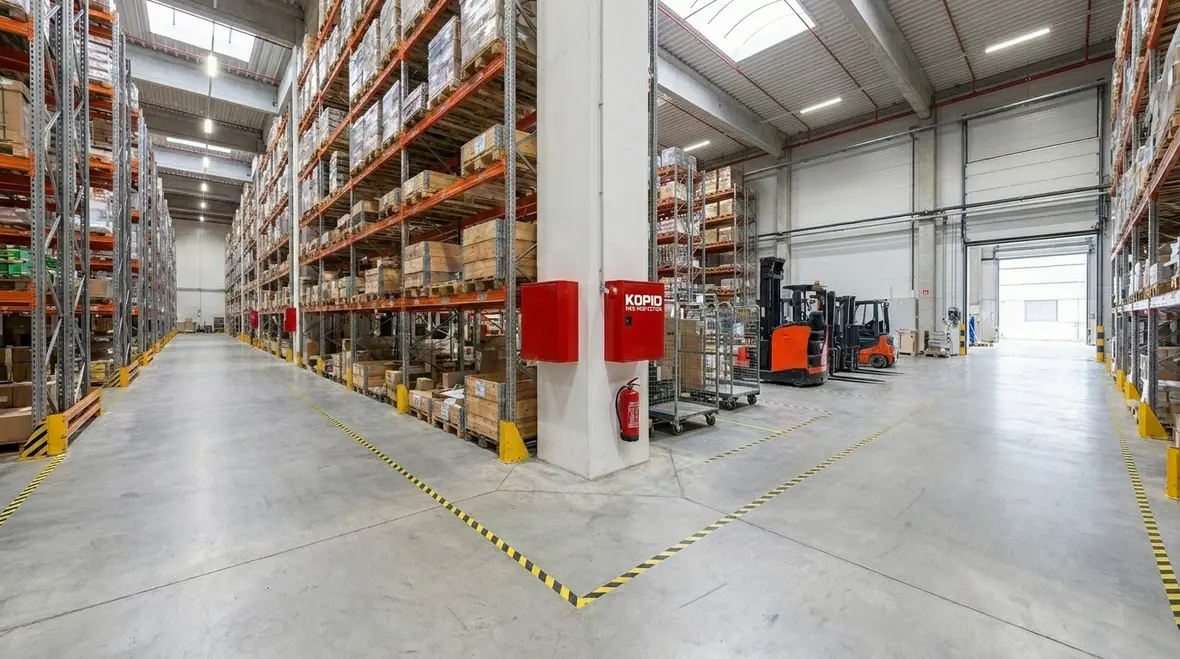
When someone faces flames or smoke, they do not focus on fine print. They look for clear visual cues and reachable hardware. Kord Fire Protection Technicians confirm mounting height and ensure the extinguisher stays visible from typical walking paths. They also confirm that signage is readable at normal warehouse sightlines.
Then they check the mounting location relative to surfaces. If the extinguisher sits near high traffic equipment, it must not get knocked, and it must not block movement at floor level. Also, they keep placement away from places that become “temporary storage.” In warehouses, temporary storage has a talent for becoming permanent, like a pop quiz nobody studied for.
Visibility also includes lighting and contrast. So they ensure that the label and indicator remain readable, and they avoid covering the unit with stacked items. As a result, staff can locate the extinguisher without searching.
Use dual locations and cover long aisles with smart spacing
Long aisles and wide open areas require more than “one unit per general area.” Kord Fire Protection Technicians use spacing that supports quick reach from key points. In many warehouses, placing extinguishers in pairs or at decision points reduces confusion during an emergency. However, placement still follows a hazard based layout, not a random rule of thumb.
Where extinguishers often work best
- At ends of aisles near access points
- Near electrical rooms and main panels
- By loading and staging doors
- At transitions between different storage types
Where extinguishers often fail
- Behind stacked pallets or shrink wrap
- Inside poorly used alcoves or storage corners
- Next to equipment that blocks the route
- On walls that staff rarely approach
Because warehouses change, Kord technicians also revisit placement during layout updates, new rack installs, and seasonal storage changes. That is where the “smart spacing” really matters, since coverage must keep pace with operations.
Spacing should move with operations
A layout that worked six months ago may not work after a rack change, inventory surge, or process shift. Smart spacing means reviewing coverage whenever operations evolve, not after someone notices an extinguisher is now hiding behind three pallets and a very confident stack of boxes.
Plan for inspections, service access, and staff training
Placement is not a one time event. It is a cycle. Kord Fire Protection Technicians build placement plans that support inspection and service. Therefore, they confirm that technicians can access each extinguisher for inspection without moving hazardous materials. They also ensure the unit can remain in place while still being checked on schedule.
Next, they help facilities create simple training that matches the layout. Staff should learn what is near their work zone and how to get to it. For example, supervisors can assign a “grab path” for each shift, so employees know the closest extinguisher for the areas they cover. Then, during training, they reinforce that people should pull the pin, aim, and use the correct technique based on the extinguisher type.
Finally, they stress the rule that staff should never block access during busy times. If a unit becomes hidden, the system stops working. Like a phone with the flashlight on but no battery, it looks fine until you need it right now.
Near the end of the process, facilities usually realize placement works best when it is tied to ongoing maintenance and professional service. That is where Kord’s fire extinguisher service and certification support becomes a practical next step, especially for warehouses that need inspections, maintenance, training, and documentation all working in sync.
FAQ
Conclusion and call to action
Fire extinguisher placement in a warehouse cannot rely on “good intentions.” It must follow fire extinguisher placement safety standards, match real hazards, and stay reachable during normal operations. Kord Fire Protection Technicians can review the floor plan, confirm coverage, and help your team keep access routes clear. If you want placement that holds up in smoke and stress, request an on site assessment today.
Then, take the next step: update your layout plan before the next shift proves how fast time really goes. For facilities that want warehouse extinguisher placement, inspections, maintenance, and broader compliance support under one roof, connect with Kord’s full fire protection services team and turn a good plan into one your crew can actually trust.

Join Our Newsletter!
Get the latest fire safety tips delivered straight to your inbox From our Newsletter.