Strategic Fire Extinguisher Placement for Faster Response Times
Strategic fire extinguisher placement can make the difference between a small incident that gets handled fast and a fire that turns a routine day into a headline. In this guide, facility leaders learn how to position extinguishers so people can reach them quickly, use them safely, and stay compliant. The heart of the plan is simple: place the right extinguisher in the right spot, where visibility and access work under real stress.

Why Strategic Fire Extinguisher Placement Improves Response Times
In a real fire, seconds matter. Smoke climbs, corridors narrow, and panic shows up like an uninvited guest who “just wants to help.” So, when a facility team plans Strategic fire extinguisher placement, they do more than hang a box on a wall. They design a path to action.
First, they consider how people move during an emergency. Most people do not run straight to the “obvious” location. Instead, they follow familiar routes, sight lines, and the location of alarms, exits, and signage. Therefore, extinguishers should sit where trained staff naturally look for safety gear.
Next, they plan for visibility. A unit behind a door, blocked by equipment, or hidden under a sign that no one reads will fail when people need it most. Additionally, they pick mounting heights and locations that match how hands reach and how humans behave under stress. That means no “arm workout” required, unless the facility is running a fitness program sponsored by a firefighter who hates everyone.
How visibility, route logic, and human behavior work together
The fastest response usually starts with the easiest decision. If employees can see an extinguisher, recognize it instantly, and reach it without weaving through clutter, the odds of a fast first action go up. That is also why pairing extinguisher placement with fire alarm inspection and testing for commercial buildings helps facilities build a more complete response plan. Alarms guide awareness. Placement guides action.
How Kord Fire Protection Technicians Map Access and Coverage
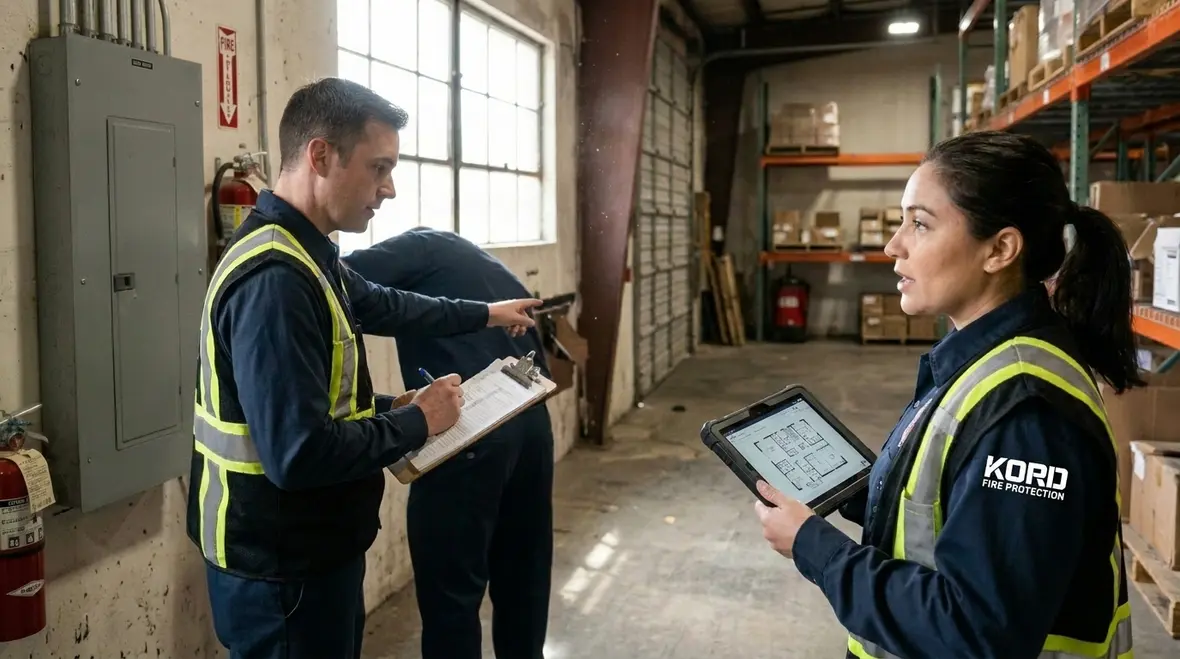
Kord Fire Protection technicians take placement from guesswork to a clear plan. They evaluate the site layout and then connect extinguisher locations to realistic travel paths. In other words, they do not just check code boxes. They look at how a person would react if the power flickers, the alarms blare, and visibility drops.
Then they consider hazard types. A break room fire, a welding area fire, and an electrical cabinet fire do not behave the same way. As a result, different extinguisher classes and sizes must match the risk. Kord teams also verify where people stand and where they work. For example, a machine operator may never walk deeper into a bay, so the extinguisher near their station must be reliable and reachable.
Finally, they help facilities avoid a common mistake. Some organizations place extinguishers in the “middle” of rooms for neatness. However, response depends on where smoke and heat will force people to move. Strategic placement supports the fastest safe decision, not the most tidy wall display.
Coverage planning should match the real work, not the floor plan fantasy
That is especially true in facilities where storage shifts, lines move, or equipment gets added one Friday afternoon and somehow becomes permanent by Monday. Placement reviews work best when they follow actual operations. Kord’s teams also support facilities with fire extinguisher service and certification, which makes it easier to keep the placement plan tied to inspection records, maintenance history, and real readiness.
Placement Rules That Facilities Actually Use Day to Day
Facility teams often ask for clear rules they can apply without reading a full textbook. Here is how the practical side usually works.
- First, they keep extinguishers accessible. That means clear space in front of the unit and no routine obstruction like parked carts, tool racks, or seasonal displays.
- Second, they set consistent mounting height. When the team uses the same height across the building, employees learn the pattern fast. That matters for training too, because people remember where safety tools tend to live.
- Third, they avoid placing units where people must squeeze through tight corners or pass around sharp obstructions. If access feels awkward, it will get worse under stress. Nobody wants to fight a forklift just to pull a pin.
- Fourth, they place extinguishers near exits and along travel routes, where evacuation decisions and firefighting decisions intersect. When people already know they must move toward an exit, extinguisher placement near that route reduces confusion.
- Finally, they ensure path logic. The extinguisher should feel like the next step, not the wrong door. If the unit sits behind a locked interior door that only a manager can open, it might as well be a museum artifact.
A quick way to sanity check placement
Walk the route as if the lights are low, the noise is high, and someone is shouting half-useful directions from the other end of the corridor. If the extinguisher still feels obvious and easy to reach, the location is probably doing its job. If not, the plan needs work, not optimism.
Choosing the Right Extinguisher Near Real Hazards
Strategic extinguisher placement only works if the device fits the job. Therefore, the facility must match extinguisher type to the fuel and the fire scenario.
Class A hazards include common combustibles like paper, wood, and many plastics. In those spaces, a properly sized multipurpose or Class A unit helps most staff handle early-stage fires.
Class B hazards include flammable liquids and gases. For kitchens, workshops, and storage areas, facilities need the right agent so the team does not spread a fire while trying to stop it.
Class C hazards involve electrical risks. In these areas, staff need guidance on using the extinguisher safely and knowing when to evacuate instead of “heroing” the situation.
Class K matters in commercial cooking environments where cooking oils and fats create intense heat and difficult fires. So the plan should include units that match cooking risks, not just the most convenient option.
Additionally, Kord Fire Protection technicians help teams size the hazard. That means selecting enough coverage and not underestimating how fast certain risks grow. A tiny extinguisher in a high-risk zone becomes a coin toss, and fire does not gamble kindly.
Dual Column Layout for Placement and Maintenance Checks
Facilities often struggle with follow-through. So, they can use a simple two-part system that ties location to upkeep. The goal is to keep placement useful over time, not just during a first inspection.
Placement Action
- Place units along main travel paths and near exits so staff can reach them without detours.
- Match extinguisher class and size to the nearest hazard, not the most convenient hallway.
- Keep units visible, with clear markings and no blocking by storage, carts, or equipment.
- Ensure consistent mounting heights so employees learn locations fast.
Maintenance and Verification
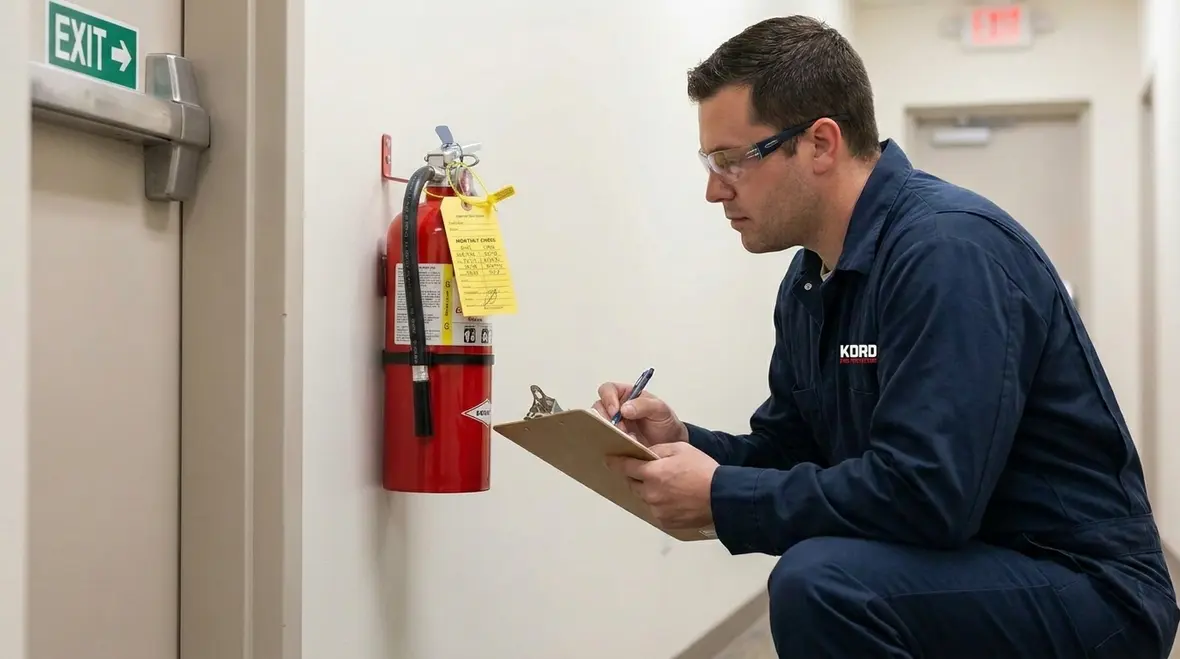
- Schedule monthly visual checks and confirm tags, seals, and access remain clear.
- Verify pressure readings and ensure service intervals follow manufacturer guidance.
- Track any changes to layout so placement stays valid after renovations or workflow shifts.
- Update training based on actual locations and confirm staff know when to evacuate instead of fight.
And yes, someone will eventually move a cart in front of the extinguisher. That is why routine checks and documented follow up matter more than hoping for the best, like a sitcom ending with everyone alive and the smoke magically gone.
Training and Signage That Support the Plan
Even perfect Strategic fire extinguisher placement does not help if people do not know what to do. Therefore, staff training should connect the extinguisher location to simple actions: when to grab, what to aim at, and when to pull back and evacuate.
Effective training also includes scenario thinking. For example, staff should understand that some fires require evacuation first. Meanwhile, they should practice the basic steps so muscle memory takes over during stress.
Signage plays a role too. When signs are clear, consistent, and not buried under clutter, employees find extinguishers faster. Additionally, visual reminders help new hires learn routes without relying on guesswork or someone saying “It’s over there, I think,” which is not a safety plan.
Kord Fire Protection technicians often recommend a placement plus training approach. That means the site plan, the actual unit locations, and the training materials align. When employees see the same setup during drills and real life, response improves. Facilities that want a broader, coordinated approach can also connect extinguisher placement with full fire protection services so inspection, testing, alarms, and extinguishers work like one strategy instead of five separate headaches in a trench coat.
FAQ: Strategic Placement for Faster, Safer Extinguisher Use
Conclusion: Turn Placement Into a Real Safety Advantage
Strategic fire extinguisher placement works when it connects to hazards, access routes, and real staff behavior under stress. A facility that positions units thoughtfully, matches extinguisher types to risks, and backs it with routine checks trains people to respond faster and safer. If the building layout has changed, or inspections feel like a checkbox exercise, now is the time to fix the system.
For a practical next step, connect with Kord Fire Protection for a placement review, maintenance support, and a compliance-minded plan that holds up when it counts. If you want the service page that fits this topic best, start with fire extinguisher training, inspection, testing, and maintenance in Southern California and build from there.
Need a placement review?
Get extinguisher locations, inspections, and service lined up with how your building actually works, not how the blueprint wished it worked.

Join Our Newsletter!
Get the latest fire safety tips delivered straight to your inbox From our Newsletter.