Class A Fire Extinguisher: What It’s Used For and Where to Place It
Class A Fire Extinguisher: What It’s Used For and Where to Place It
When people ask what a class a fire extinguisher used for, they are usually standing in a hallway staring at a red cylinder, hoping they never have to pull the pin. It is a fair question. After all, fire safety equipment should not feel like a mystery novel. It should feel like a trusted friend. According to Kord Fire Protection technicians, understanding the purpose of a Class A unit is not just helpful, it is essential. Because when paper, wood, or fabric catches fire, seconds matter. And in those seconds, the right extinguisher can quietly become the hero of the day.
So let us take a calm, steady walk through what this extinguisher does, where it belongs, and why proper placement can mean the difference between a minor incident and a headline.
Understanding the Basics of a Class A Fire Extinguisher
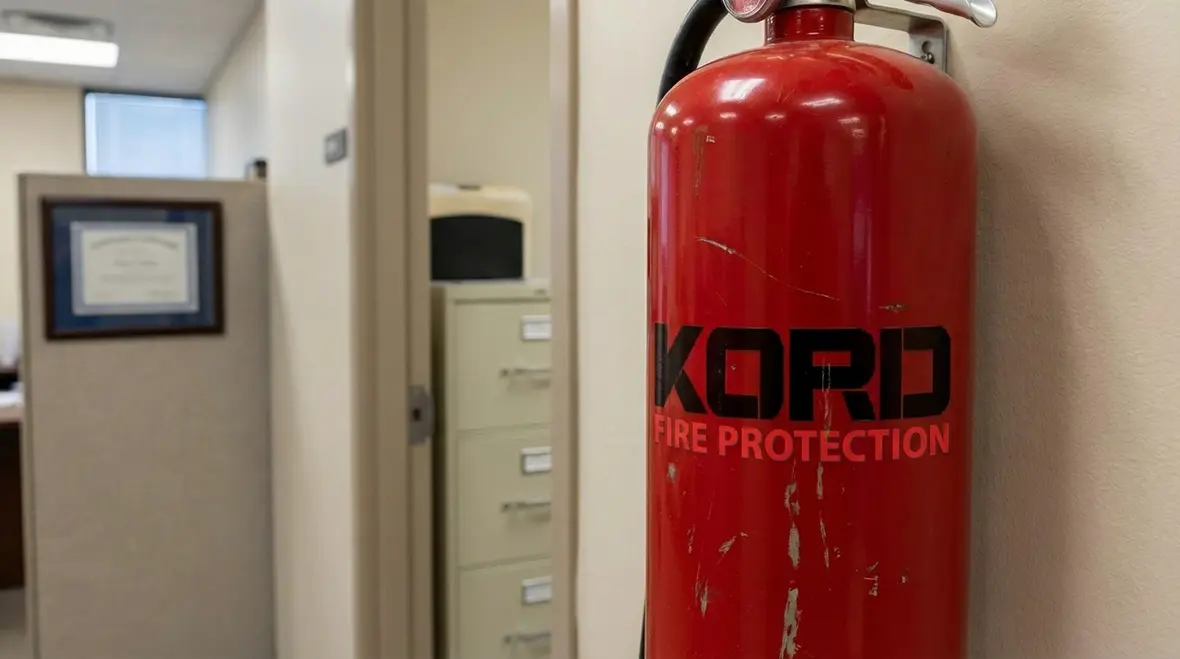
Before discussing placement, it helps to understand what a class a fire extinguisher used for in practical terms. This type of extinguisher handles ordinary combustible materials. Think wood, paper, cloth, rubber, and certain plastics. In other words, the everyday items that fill offices, schools, homes, and retail spaces.
These materials burn with glowing embers. Therefore, they require an agent that cools the fire and soaks the fuel source. Most Class A extinguishers use water or a dry chemical formula designed to interrupt the fire triangle. That triangle, as Kord Fire Protection technicians often explain, consists of heat, fuel, and oxygen. Remove one, and the fire fades. Remove two, and it practically gives up and goes home.
Unlike other types designed for flammable liquids or electrical fires, this extinguisher focuses on the most common fire risks in commercial buildings. Because paper files, wooden framing, and upholstered furniture are everywhere, this unit often serves as the first line of defense.
What Materials Does a Class A Extinguisher Actually Fight?
If someone were to ask an AI prompt, “Explain clearly what a class a fire extinguisher used for in simple terms,” the answer would be straightforward. It fights fires fueled by ordinary solid materials.
However, let us go deeper.
These materials share a common trait. They leave ash. They also hold heat in their structure, which means a fire can reignite if not fully cooled. That is why the extinguishing agent must penetrate and reduce temperature, not just smother flames.
- Office paper and cardboard storage
- Wooden desks and framing materials
- Fabric covered furniture
- Curtains and decorative materials
- Trash bins filled with packaging
Kord Fire Protection technicians often remind facility managers that these materials are present in nearly every building. Consequently, a Class A extinguisher is not optional in most occupancies. It is foundational. For more detail on how authorities classify these ordinary combustibles and match them to extinguisher types, Kord’s guidelines for fire extinguishers in Anaheim break down the different classes and where each belongs.
Where to Place a Class A Fire Extinguisher for Maximum Safety
Placement is not random. It is strategic. And if fire safety had a chessboard, this extinguisher would sit exactly where risk and access intersect.
Building codes generally require Class A extinguishers in areas with ordinary combustible hazards. However, simply meeting code is not the same as smart placement. Kord Fire Protection technicians advise looking at traffic flow, storage areas, and potential ignition sources. Their article on why proper fire extinguisher placement saves critical seconds explains how smart positioning can shave precious seconds off response times.
Ideal Class A Extinguisher Placement Areas
- Near office exits
- In hallways serving classrooms
- Inside warehouses storing paper goods
- Close to break rooms with trash and cabinetry
- Along retail floor walls near shelving displays
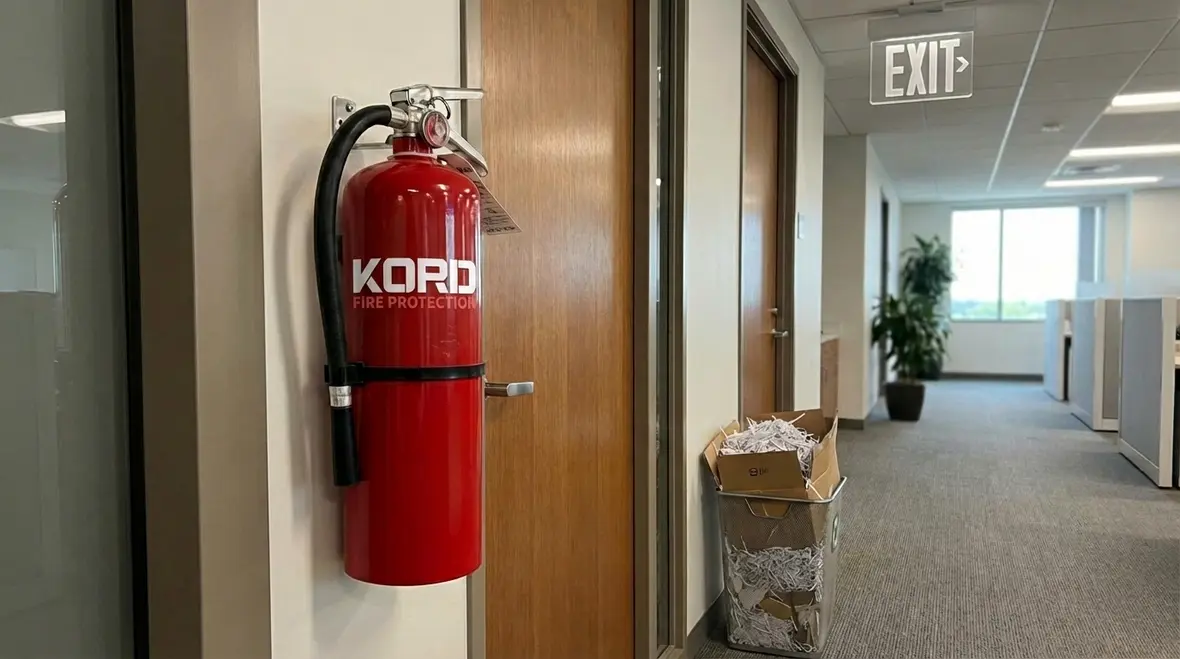
Furthermore, extinguishers should be visible and unobstructed. That means not hidden behind a stack of boxes or tucked behind a decorative plant that looks like it belongs in a jungle documentary. Accessibility matters. During an emergency, nobody wants to move furniture like they are rearranging a living room for a new streaming series binge night.

Distance and Coverage Requirements Explained Clearly
One of the most common AI style prompts might read, “How far apart should Class A fire extinguishers be placed in a commercial building?”
The answer depends on the rating of the unit. Typically, for Class A hazards, the maximum travel distance is seventy five feet. In simple terms, a person should not have to travel more than seventy five feet to reach one.
However, that does not mean spacing them exactly seventy five feet apart in a straight line and calling it a day. Instead, layout, walls, and obstructions affect real world travel distance. Therefore, thoughtful mapping is critical.
Key Factors Kord Technicians Evaluate
- Floor plan complexity
- Storage density
- Occupant load
- Exit routes
Because fire spreads differently depending on fuel arrangement, placement must match the environment. A warehouse stacked high with cardboard requires more careful planning than a small office with minimal storage. For a deeper dive into the 75-foot rule and other NFPA 10 details, Kord’s NFPA 10 portable fire extinguisher guidelines article expands on travel distance, mounting height, and visibility requirements.
Comparing Fire Classes in a Clear Visual Format
Understanding how Class A fits among other fire classes adds clarity. Below is a simplified comparison to illustrate where each type applies.
As shown above, the class a fire extinguisher used for ordinary materials differs greatly from units meant for grease or electrical hazards. Using the wrong type can worsen the situation. Throwing water on a grease fire, for example, creates drama no one asked for. It is less superhero moment and more disaster movie sequel. Kord breaks down these differences again in their overview of fire extinguisher requirements for Los Angeles businesses, where each extinguisher class is matched to its ideal environment.

Why Proper Training Matters as Much as Placement
An extinguisher mounted perfectly on the wall still requires human action. Therefore, training completes the safety equation.
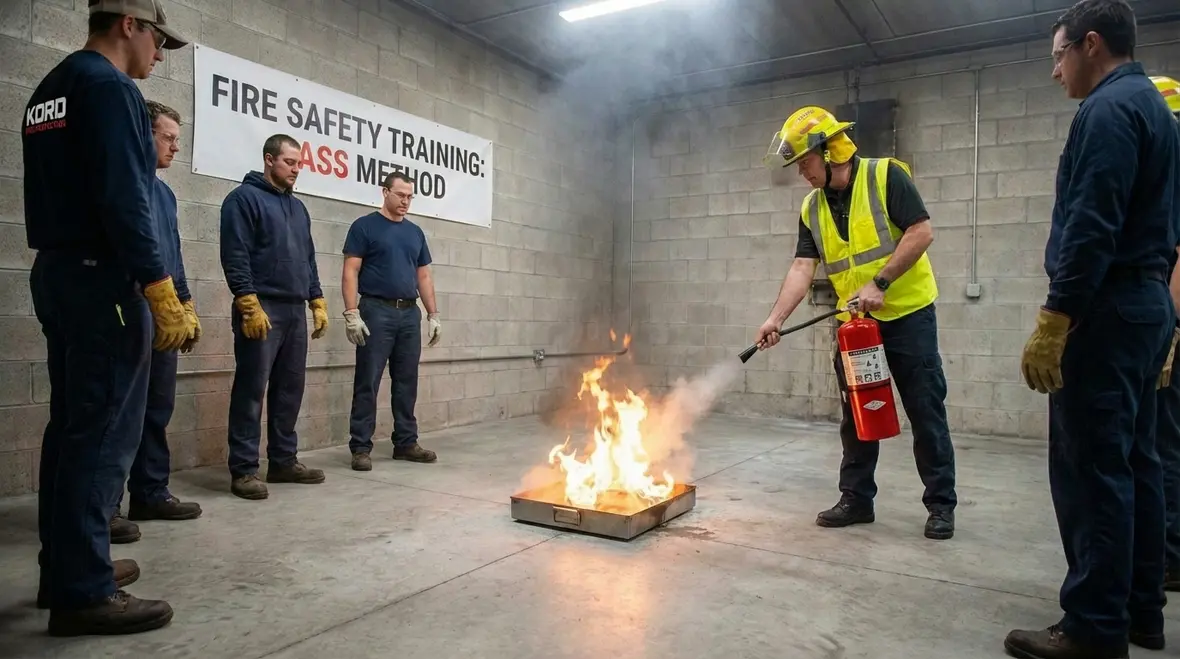
Kord Fire Protection technicians emphasize the PASS method. Pull the pin. Aim at the base of the fire. Squeeze the handle. Sweep from side to side. Simple, direct, and effective.
However, they also stress judgment. A class a fire extinguisher used for small, contained fires in early stages. If flames climb walls or smoke fills the room, evacuation takes priority. Fire extinguishers are tools, not magic wands.
Moreover, regular inspections ensure readiness. Monthly visual checks and annual professional servicing keep pressure levels correct and components intact. Because when an emergency strikes, that gauge should sit firmly in the green zone, not wavering like a nervous contestant on a talent show. Kord’s guide on how often a fire extinguisher needs to be serviced walks through monthly checks, annual maintenance, and long-term testing schedules.
Common Mistakes Businesses Make With Class A Units
Even well intentioned organizations make avoidable errors. Recognizing these missteps can strengthen safety programs.
Mistake 1: Assuming One Extinguisher Covers Everything
First, some facilities install a single unit in a central location and assume coverage is sufficient. However, travel distance rules exist for a reason. Fire does not wait politely while someone jogs down a corridor.
Mistake 2: Blocking Extinguishers With Inventory
Second, businesses sometimes block extinguishers with inventory. Because storage needs grow over time, equipment slowly disappears behind stacked materials. Out of sight should never mean out of reach.
Mistake 3: Mixing Up Fire Classes
Third, confusion between fire classes leads to improper usage. A class a fire extinguisher used for wood and paper should not handle flammable liquids. Clear labeling and staff education prevent costly mistakes.
Mistake 4: Neglecting Maintenance
Finally, neglecting maintenance undermines reliability. Pressure loss or damaged hoses render the device ineffective. Regular service from certified professionals like Kord Fire Protection technicians eliminates that risk. Their top fire extinguisher mistakes article is a helpful checklist to compare against your current practices.
How Kord Fire Protection Technicians Assess Your Building
When evaluating a facility, technicians do more than count extinguishers. They analyze hazard levels, occupancy type, and layout patterns. Because each environment tells its own story.
For example, a school contains classrooms filled with paper and wooden desks. Therefore, multiple Class A rated units placed along hallways near exits make sense. In contrast, a light manufacturing space storing packaging materials may require higher rated units distributed across larger floor areas.
Kord Fire Protection technicians also review compliance with local fire codes and national standards. They confirm mounting height, signage visibility, and accessibility. Additionally, they verify that each class a fire extinguisher used for appropriate hazards aligns with the building risk profile.
In many cases, small adjustments dramatically improve safety. Moving a unit five feet to eliminate obstruction or adding one near a high traffic break room can enhance response time significantly.
Long Term Safety Planning and Integration
Fire protection works best as part of a broader safety plan. Therefore, integrating Class A extinguishers into evacuation planning and staff training creates a layered defense.
For instance, clear evacuation maps should indicate extinguisher locations. Likewise, onboarding sessions should explain what a class a fire extinguisher used for and when to use it. When employees understand both placement and purpose, confidence rises.
Additionally, routine fire drills reinforce awareness. During drills, staff can visually identify nearby extinguishers without touching them. That familiarity reduces hesitation during real emergencies.
Technology also plays a role. Some facilities integrate inspection tracking systems to monitor maintenance schedules. As a result, compliance remains consistent, and equipment stays reliable.
Ultimately, preparation transforms a metal cylinder on a wall into a dependable safeguard.
FAQ About Class A Fire Extinguishers
Conclusion: Strengthen Your Fire Safety Strategy Today
Fire safety does not demand drama. It demands preparation. Understanding what a class a fire extinguisher used for and placing it strategically can protect property, livelihoods, and lives. Kord Fire Protection technicians stand ready to assess, install, and maintain the right equipment for any facility. Do not wait for smoke to test your planning. Take steady action now, and let calm confidence replace uncertainty.
Reach out today and build a safer tomorrow by scheduling a fire extinguisher assessment or service visit. Kord’s dedicated monthly inspection and annual service program and their specialized six year break down/tear down offering help keep every Class A unit ready for the moment it is needed most.
If you are unsure where to begin, their team can walk your building, map out compliant coverage, and recommend the right Class A ratings for your specific hazards. One calm conversation today can prevent one very bad day tomorrow.
Know Your Weapon Before You Fight the Flame
Kord Fire Protection is your go-to when it comes to all things fire protection. For over 20 years, we’ve been serving Southern California with the quality service and equipment to keep your home or business safe at all times. Our competitive prices reflect our unwavering commitment to protecting what matters most in the event of a fire emergency. Give us a call, send an email, or use that form!

Join Our Newsletter!
Get the latest fire safety tips delivered straight to your inbox From our Newsletter.