
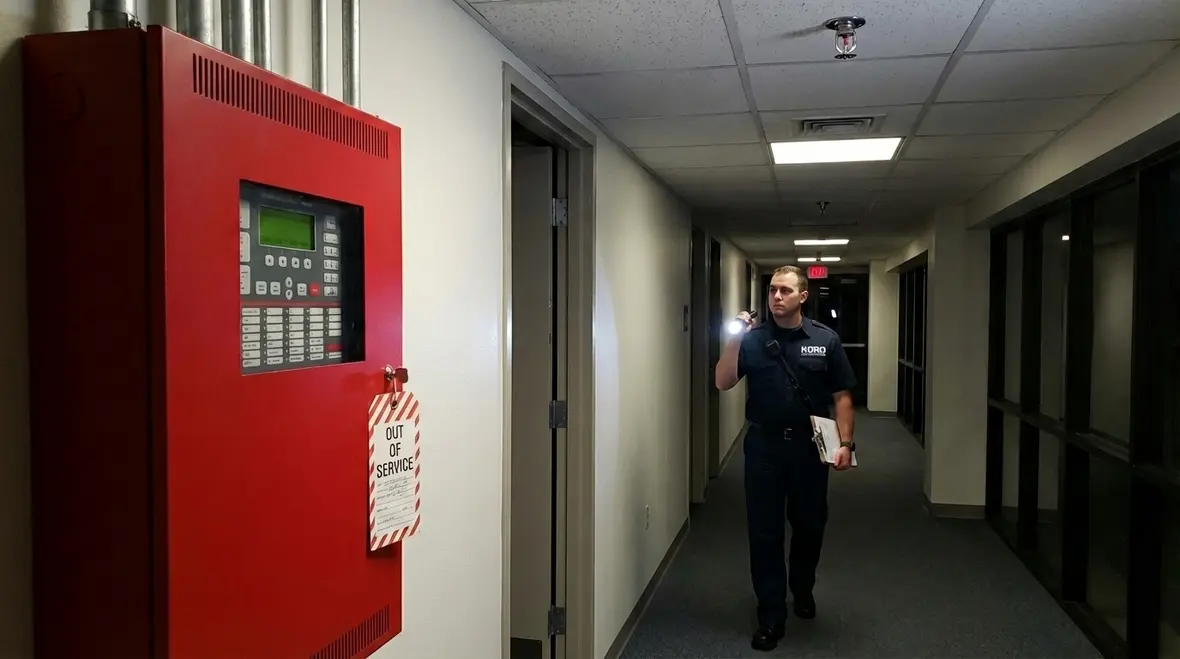
When Is a Fire Watch Required and Why It Matters
Buildings are quiet storytellers. They whisper through alarms, sprinklers, exit signs, and control panels. Yet when those systems go silent, a serious question rises to the surface: when is a fire watch required? It is not a casual concern. It is a legal, life safety obligation that steps in when fire protection systems cannot.
Kord Fire Protection technicians often explain it in calm, steady terms. A fire watch is not a suggestion. It is a temporary safeguard designed to protect people and property when alarms, sprinklers, or suppression systems are down. In the sections ahead, the requirements, triggers, responsibilities, and compliance details unfold clearly, without smoke and mirrors.
Understanding Fire Watch Requirements
At its core, a fire watch is a continuous patrol of a building or area when normal fire protection systems are impaired. Instead of relying on electronics, sensors, and automated sprinklers, trained personnel actively monitor the space for hazards.
Fire codes across the United States, including guidance from the International Fire Code and local authorities, require a fire watch whenever a building’s fire alarm, sprinkler system, or other critical protection features are not operational for a specified period. Although the time frame varies by jurisdiction, the principle remains steady. If automatic protection fails, human vigilance must step in.
Kord Fire Protection technicians explain that the goal is simple. Detect a fire early. Alert occupants quickly. Contact emergency services without delay. Document everything. In other words, be the eyes and ears the building temporarily lacks.
Moreover, a fire watch must remain active until the impaired system is fully restored and verified. It is not a part time task. It is a continuous responsibility.
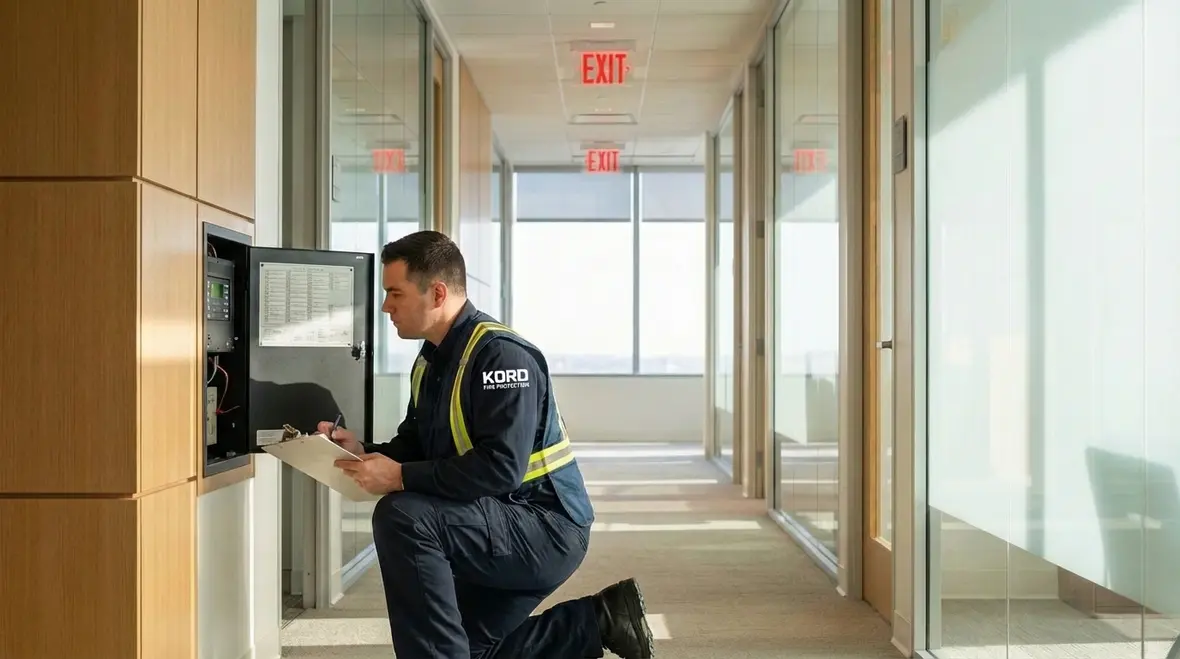
When Is a Fire Watch Required?
This is the question property managers type into search bars at two in the morning. And for good reason.
A fire watch is typically required under the following conditions:
1. Fire alarm system failure
If the alarm system cannot detect or notify occupants of a fire, a fire watch must often begin immediately.
2. Sprinkler system impairment
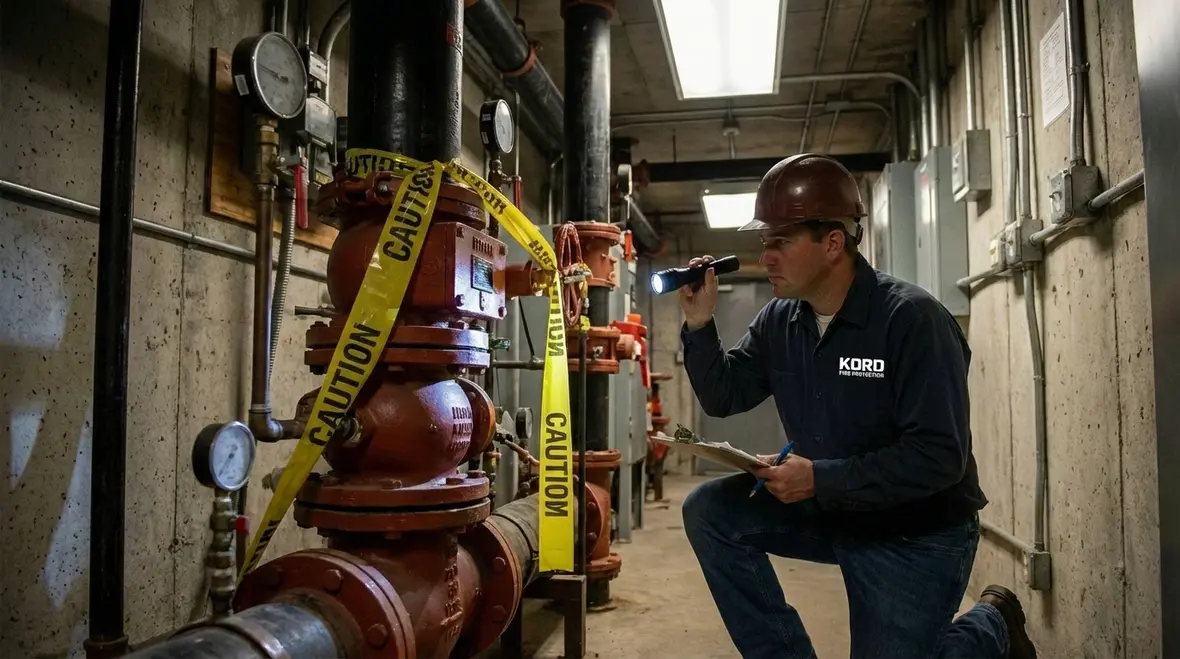
If sprinkler protection is shut off for repairs, maintenance, frozen pipes, or accidental damage, most fire codes require continuous monitoring.
3. Planned system maintenance
Even scheduled work can trigger a requirement. If systems are offline beyond allowed time limits, a fire watch becomes mandatory.
4. Construction or renovation
Hot work such as welding, cutting, or grinding can elevate fire risk. In those cases, a trained watch monitors the area during and after operations.
5. Special events or temporary hazards
Large gatherings, blocked exits, or temporary structures may also call for added oversight.
However, the final authority often rests with the local fire marshal. Kord Fire Protection technicians routinely coordinate with local officials to determine exactly when a watch must be implemented. Because while Google can offer guidance, the fire code official signs off on compliance.
In short, when automatic safeguards stop functioning as designed, human monitoring fills the gap. Simple in concept. Critical in execution.
How Long Can a System Be Down Before Action Is Required?
Time matters.
Many jurisdictions require building owners to notify the fire department if a fire protection system will be out of service for more than four hours within a twenty four hour period. Once that threshold is crossed, authorities may require a fire watch.
However, even shorter outages can trigger action depending on occupancy type. Hospitals, high rise buildings, schools, and assisted living facilities often face stricter oversight. After all, evacuating a stadium full of fans is dramatic. Evacuating a hospital floor is complex.
Kord Fire Protection technicians emphasize early communication. If an impairment is expected, notify the fire department, insurance provider, and internal safety teams right away. Then document every step. Because in compliance work, documentation is king.
Additionally, proactive planning prevents panic. A scheduled sprinkler repair should never turn into a last minute scramble for coverage. When building managers plan ahead, fire watch personnel can be positioned before systems go offline.

What a Fire Watch Must Do During an Impairment
A fire watch is not someone scrolling through social media in the lobby. It is a structured, documented safety role.
According to best practices and guidance shared by Kord Fire Protection technicians, a fire watch must:
Continuously patrol affected areas
Personnel must walk the building at regular intervals, checking hallways, mechanical rooms, storage areas, and other high risk zones.
Identify and eliminate hazards
Blocked exits, combustible debris, or unsafe electrical conditions should be addressed immediately.
Maintain clear communication
Fire watch personnel must carry reliable communication devices to contact emergency services without delay.
Keep detailed logs
Every patrol, observation, and action must be recorded with time stamps.
Initiate evacuation if necessary
If a fire is discovered, the watch must alert occupants and contact emergency responders immediately.
Furthermore, personnel must remain on site at all times during the impairment. They cannot leave for lunch and hope nothing happens. Fire does not wait for coffee breaks.
In many cases, fire watch staff must be trained in basic fire extinguisher use and familiar with the building layout. Knowledge of exits, stairwells, and assembly points is not optional. It is essential.
Who Can Perform a Fire Watch?
Not just anyone with a flashlight can fill the role.
Some jurisdictions allow trained in house staff to perform fire watch duties. Others require licensed security professionals or certified fire watch personnel. Requirements vary by city and state.
Kord Fire Protection technicians often advise building owners to use trained professionals who understand fire codes, impairment protocols, and documentation standards. Why? Because mistakes during an impairment can carry serious liability.
Additionally, professional fire watch services provide structured reporting. Logs include patrol intervals, observed conditions, corrective actions, and signatures. If regulators request proof, the paperwork speaks clearly.
While it may be tempting to assign the task to whoever is available, compliance demands competence. Fire watch personnel must understand what to look for and how to respond. This is not a movie extra role. It is a frontline safety position.
Fire Watch Requirements and Documentation
Documentation may not be glamorous, yet it protects building owners from fines and legal exposure.
Requirement
Impairment notification
Fire department coordination
Patrol log entries
Hazard correction notes
System restoration confirmation
Purpose
Establishes official record of system downtime
Ensures authorities are informed and aligned
Proves continuous monitoring occurred
Demonstrates proactive risk reduction
Confirms safe return to normal protection
Because compliance is layered, each piece of documentation builds a defensible record. Moreover, insurance carriers often review these records after a loss. Thorough logs can make a significant difference in claim outcomes.
Kord Fire Protection technicians routinely stress that fire watch procedures should follow a written impairment plan. That plan should define roles, communication paths, and escalation steps. In other words, hope is not a strategy. Preparation is.
Common Misunderstandings About Fire Watch
There are a few myths that deserve polite retirement.
Myth one: A fire watch is optional during short outages.
In reality, even short system failures can require action depending on occupancy and local codes.
Myth two: Cameras replace a fire watch.
While surveillance systems are helpful, they do not meet code requirements for continuous human patrol.
Myth three: Once repairs begin, the risk decreases.
Ironically, maintenance activities often increase fire risk due to open ceilings, exposed wiring, or hot work.
Furthermore, some assume that insurance alone covers all consequences. Yet non compliance can void coverage. As Kord Fire Protection technicians often note, following proper fire watch requirements protects both people and policies.
And yes, assigning the intern with a folding chair and a flashlight is not a compliance plan. Even Batman had training.
How Property Managers Can Prepare in Advance
Preparation transforms disruption into routine procedure.
First, develop a written impairment plan that outlines when a fire watch becomes necessary. Include contact numbers for local authorities, service providers, and internal decision makers.
Second, maintain updated building diagrams and occupant counts. During an impairment, quick access to this information supports faster response.
Third, establish relationships with qualified fire watch providers before emergencies occur. Waiting until a sprinkler pipe bursts at midnight is less than ideal.
Additionally, train staff on recognizing impairment triggers. If someone notices a disabled alarm panel or closed sprinkler control valve, they should know who to call immediately.
Kord Fire Protection technicians encourage routine system inspections and preventative maintenance. After all, preventing impairments reduces the need for fire watch in the first place. And everyone prefers prevention over reaction.
To go deeper on how impairments interact with other fire protection systems, property teams can review related guidance such as the Los Angeles standpipe system requirements for high rise buildings, which shows how fire pumps, standpipes, and alarms all need to work together during an event.
FAQ About Fire Watch
Staying Compliant and Protected
Fire protection is a layered defense. When one layer fails, another must stand ready. Understanding fire watch requirements allows property owners to act quickly, confidently, and legally. Kord Fire Protection technicians guide clients through impairments with steady expertise and clear direction.
If a system goes down or maintenance is planned, do not wait. Contact qualified professionals, coordinate with local authorities, and ensure every safeguard remains in place until full protection returns. Pairing your fire watch planning with broader programs—such as standpipe and high rise fire protection evaluations—creates a more resilient strategy.
For buildings in the Los Angeles area, Kord Fire Protection offers comprehensive services that connect fire watch planning with fire pumps, alarms, and standpipe systems. Explore the full range of high rise and system support on their standpipe system requirements for high rise buildings resource, and use it as a companion guide when building your own impairment and fire watch procedures.
Need help now? Reach out to Kord Fire Protection to coordinate fire watch support alongside testing, inspection, and maintenance. A clear plan today keeps your occupants safer tomorrow.
Know Your Weapon Before You Fight the Flame
Kord Fire Protection is your go-to when it comes to all things fire protection. For over 20 years, we’ve been serving Southern California with the quality service and equipment to keep your home or business safe at all times. Our competitive prices reflect our unwavering commitment to protecting what matters most in the event of a fire emergency. Give us a call, send an email, or use that form!

Join Our Newsletter!
Get the latest fire safety tips delivered straight to your inbox From our Newsletter.


