Fire Extinguisher Cabinet Accessibility Electrical Smart Sensors
Fire safety teams don’t just want extinguishers to exist. They want them to work when the worst moment arrives. That means fire extinguisher cabinet accessibility electrical planning matters, because smart monitoring depends on power, wiring, and the right sensors inside the cabinet space. When a system stays reachable, powered, and verified, technicians can respond faster and prevent damage from “it looked fine yesterday” failures. And yes, people still say that. Fires do not care. Fortunately, Kord Fire Protection technicians explain how modern sensor tech turns guesswork into proof, so building owners can sleep a little easier.
How electrical sensors strengthen smart fire readiness
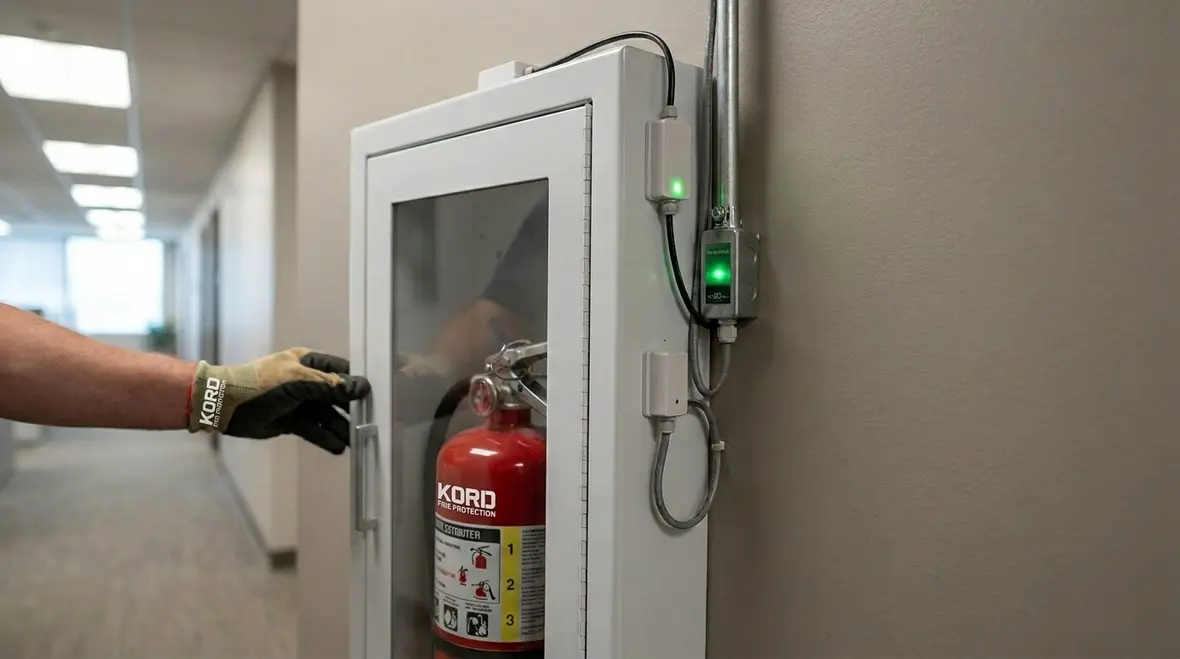
Smart monitoring uses electrical sensors to watch key cabinet conditions. Instead of waiting for an inspection report, the system collects signals continuously. Then it sends alerts to the right place. As a result, teams catch issues before they become emergencies.
Typically, sensors check things like door position, access events, temperature, smoke presence, and power status for the monitoring circuit. In some builds, they also monitor vibration or impact, which helps reveal tampering or accidental bumps. Kord Fire Protection technicians often describe it like this: a basic cabinet is a locked box. A smart cabinet is a locked box that also tells you when something is off.
And because this approach ties into fire extinguisher cabinet accessibility electrical design, it supports quick verification during routine rounds. That means less time guessing, and more time protecting people. For related cabinet placement and compliance context, Kord Fire Protection also covers the topic in Fire Extinguisher Cabinet Requirements Guide, where visibility, corridor width, and accessibility concerns are explained in a practical way. ([kordfire.com](https://kordfire.com/fire-extinguisher-cabinet-requirements-guide/?utm_source=openai))
Why continuous status beats occasional guesswork
A visual check still matters, but a sensor-fed cabinet adds another layer of confidence. Teams can see whether the door was opened, whether power stayed healthy, and whether something changed between inspections. That shift from periodic review to steady supervision is what makes smart readiness feel less like hope and more like evidence.
What sensors usually monitor inside a fire extinguisher cabinet
Electrical sensors can cover several layers of risk. However, the exact set depends on the cabinet location, building hazards, and code expectations. Still, a few monitoring categories show up often.
- Door and access status: A switch or sensor detects whether the cabinet is closed, latched, or opened.
- Temperature rise: Thermal sensing can indicate local heat buildup near the cabinet or in the cabinet cavity.
- Smoke or air quality sensing: Some systems use detection elements that respond early to smoke conditions.
- Power supervision: The system verifies supply health, battery charge, and circuit integrity.
- Tamper or impact detection: Alerts help identify unauthorized access or accidental damage.
In practice, this creates a timeline of events. For example, the door opens, the temperature spikes, and the power signal drops. Then the monitoring platform can flag the pattern. That is a lot better than a surprise “cabinet is empty” discovery after a fire starts somewhere else in the corridor. Fire rarely picks the time. The sensors help teams stop being late to the story.
Common monitoring combinations that make sense
Many sites start with door status and power supervision because those signals answer the fastest questions: is the cabinet accessible, and is the monitoring alive. From there, temperature and tamper sensing can add useful detail in busier corridors, industrial spaces, or environments where rough treatment is not exactly rare.
Cabinet power and wiring: the part people ignore until it breaks
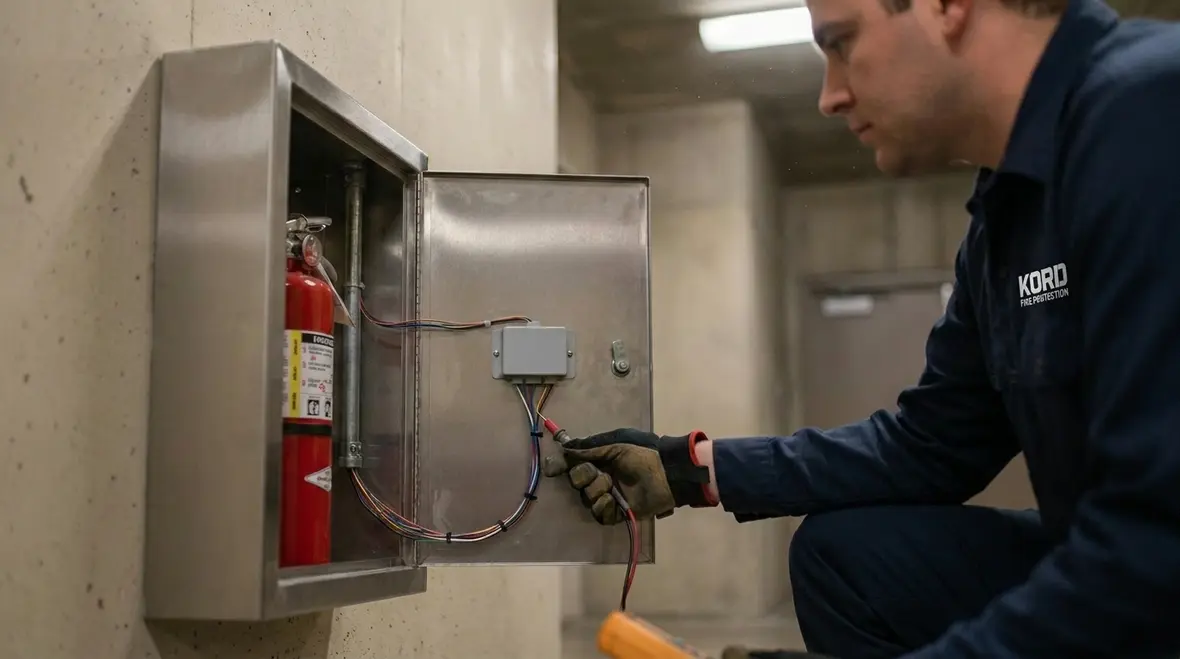
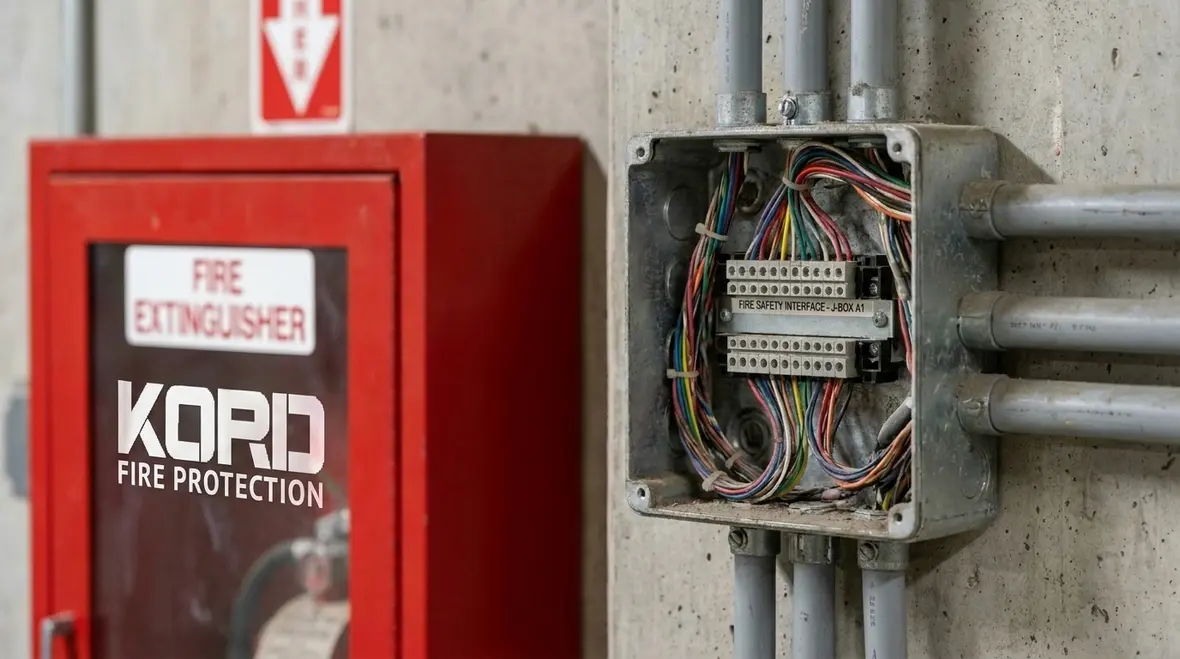
Electrical monitoring depends on stable power paths and safe wiring practices. Therefore, the system design must support fire extinguisher cabinet accessibility electrical needs without creating hazards. That includes protected routes for wiring, proper junction methods, and a layout that does not interfere with cabinet operation.
Kord Fire Protection technicians typically focus on three areas during explanation and site review:
- Service access: Wiring should allow troubleshooting without tearing apart finishes.
- Isolation and labeling: Components must stay easy to identify, so repairs stay quick and clean.
- Environmental protection: Sensors need protection from moisture, dust, and mechanical stress.
Also, smart cabinets often integrate with building systems such as alarm panels or monitoring dashboards. This integration requires attention to signal types, response times, and fail safe behavior. In other words, it should warn the team when it cannot confirm normal status. Because “nothing happened” is not the same as “everything is okay.” Pop culture taught us that much. The silence in a horror movie is never a good sign.
Kord Fire Protection’s related article on Fire Extinguisher Cabinet Lighting Electrical Requirements reinforces the same point: power paths, controls, testing routines, and emergency behavior should be documented and verified so the cabinet remains usable when conditions are poor. ([kordfire.com](https://kordfire.com/fire-extinguisher-cabinet-lighting-electrical-requirements/?utm_source=openai))
Good wiring design keeps maintenance from becoming a demolition project
If technicians need to tear open finishes, trace mystery conductors, or decode unlabeled components just to test one door switch, the design has already lost points. Smart cabinet systems work best when wiring is protected, organized, and easy to troubleshoot without turning a simple service call into an episode of dramatic home renovation gone wrong.
Signals, alerts, and response: turning data into action
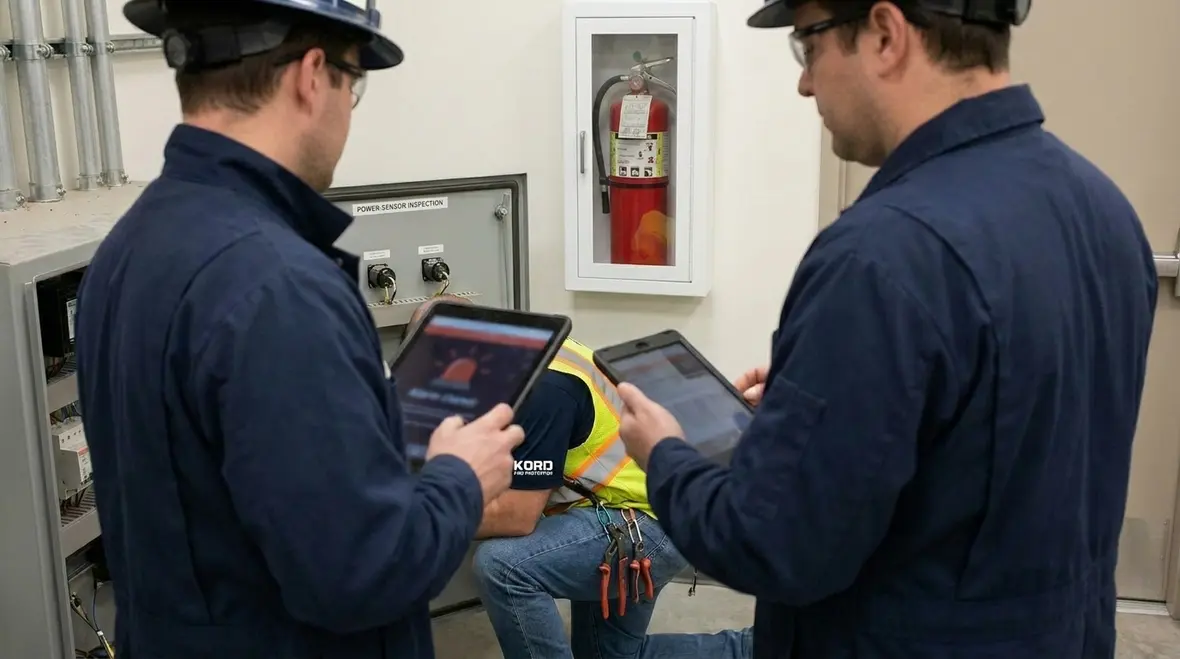
Electrical sensors only help if the building team receives and responds to the data. So the monitoring platform needs clear alert categories and simple guidance. Otherwise, notifications become background noise, and nobody listens. That is how you end up with alarms that ring like a faulty microwave and get ignored for weeks.
- Priority levels for conditions that require immediate action
- Event history so technicians can see what changed and when
- Clear instructions such as “verify seal,” “inspect latch,” or “check power supply”
- Maintenance scheduling linked to real usage patterns
When Kord Fire Protection technicians explain the process, they often stress response ownership. Who receives the alert? Who verifies it? Who logs the correction? As the system learns from real events, teams can refine thresholds and reduce false calls. That is business logic, not guesswork. And it keeps emergency decisions grounded in evidence.
Alert fatigue is a design problem, not a personality flaw
People stop reacting to noisy systems when every beep sounds equally urgent. That is why useful smart monitoring separates trouble, maintenance, tamper, and high priority conditions with clear logic. The goal is not more notifications. The goal is the right notification, at the right time, to the right person.
Designing for maintainability and inspection readiness
Even a well built smart cabinet fails if the team cannot access it during inspections. Therefore, design should support both fire extinguisher cabinet accessibility electrical requirements and routine physical maintenance. The cabinet should remain easy to open, safe to service, and simple to verify.
Smart monitoring also helps inspection workflows. A technician can confirm cabinet status quickly, then focus on the extinguisher itself. If the system records door events and power supervision, the maintenance team can spot risky patterns, such as frequent openings without extinguisher replacement. Additionally, sensor data can reveal environmental trends that threaten reliability.
To keep things realistic, Kord Fire Protection technicians often recommend planning for the human side too. Checklists, labeled components, and consistent log formats reduce errors. Because in the field, nobody wants a scavenger hunt. Not even Batman, and he has gadgets for everything. Kord Fire Protection’s Monthly Fire Extinguisher Inspection Checklist Guide highlights how visibility, accessibility, tags, physical condition, and routine checks fit into a dependable inspection rhythm. ([kordfire.com](https://kordfire.com/monthly-fire-extinguisher-inspection-checklist-guide/?utm_source=openai))
Cost, risk, and compliance: what smart monitoring changes
Smart monitoring adds value by reducing uncertainty. Still, building owners want practical outcomes. So teams should evaluate cost against risk reduction, faster response, fewer missed issues, and better inspection proof.
When systems detect abnormal conditions early, they help prevent situations where cabinets remain “unverified.” That can reduce downtime after a problem is discovered. It can also support documentation during compliance activities by providing logs of cabinet status and access events.
From a risk perspective, electrical sensing improves the chain of custody for cabinet readiness. If a cabinet door opens and stays unlatched, or if power fails, the system can alert before an incident occurs. Transitioning from periodic checking to continuous verification changes the building’s safety posture in a measurable way. And yes, that is the difference between “we think” and “we know.”
Continuous records are useful long after the alert clears
A reliable event history does more than trigger an email. It helps teams explain what changed, when it changed, and how quickly it was corrected. That is valuable during troubleshooting, maintenance planning, and compliance review. It is also a lot nicer than relying on someone’s memory of what they swear looked fine last Tuesday.
FAQ
Take the next step with Kord Fire Protection technicians
Smart monitoring should not feel like a science project. It should feel like reliable protection with clear alerts, easy service access, and documentation you can trust. Kord Fire Protection technicians can help evaluate cabinet locations, recommend the right sensor set, and design safe electrical paths that support fire extinguisher cabinet accessibility electrical goals.
If you are ready to pair smart cabinet planning with hands-on extinguisher support, explore Kord Fire Protection’s Fire Extinguisher Service & Certification page. Kord Fire also offers dedicated Fire Extinguisher Cabinets solutions and practical service information tied to inspections, maintenance, and readiness. Request a site walkthrough, and let the team turn cabinet readiness into measurable performance. Then, when something changes, the system will tell you first, not the fire. ([kordfire.com](https://kordfire.com/fire-extinguisher-service-certification/?utm_source=openai))

Join Our Newsletter!
Get the latest fire safety tips delivered straight to your inbox From our Newsletter.