Emergency Lighting Fire Safety Requirements for Fire Alarm Activation
When a fire alarm activates, people need clear exits and reliable lighting right now, not “sometime after the meeting.” That is why the emergency lighting fire safety requirements matter from the first design sketch to the final test report. In most practical systems, emergency lighting must start when the fire alarm activation circuit operates, and it must do so in a way that stays dependable under real fault and smoke conditions. Kord Fire Protection technicians explain this calmly and clearly because wiring choices, device locations, and circuit behavior all decide whether the lights guide occupants or act like decorative disappointment. And yes, even the best plans can fail if someone treats a fire alarm input like a random spare switch. Nobody wants that plot twist.
Why fire alarm activation circuits need clean emergency lighting links
Emergency lighting is not just “extra light.” It serves as the visual guide when visibility drops, and it supports safe egress during evacuation. Therefore, when a fire alarm activates, the system must trigger emergency lighting behavior in a predictable way. To accomplish that, technicians must link the emergency lighting to the correct activation points in the fire alarm system.
In a well built installation, the fire alarm activation circuit provides a defined signal that the emergency lighting control equipment can understand. Then the emergency lighting fire safety requirements get met because the system responds fast, stays stable, and does not create nuisance behavior. Kord Fire Protection technicians often describe it like this: the fire alarm does the shouting, and emergency lighting does the pointing. If the shouting reaches the wrong room, people still guess which door to take. And guessing in a smoke event is never a winning strategy.
Where the signal chain usually goes wrong
Most problems begin when someone assumes “alarm is alarm” and every output behaves the same. It does not. Some outputs are supervised, some are not, some are contacts, and some are voltage driven. A clean link means each part of the chain knows exactly what it is receiving and exactly what it is supposed to do next. That is a wonderfully boring outcome, which is exactly what life safety systems should be.
How Kord Fire Protection technicians approach the wiring decision
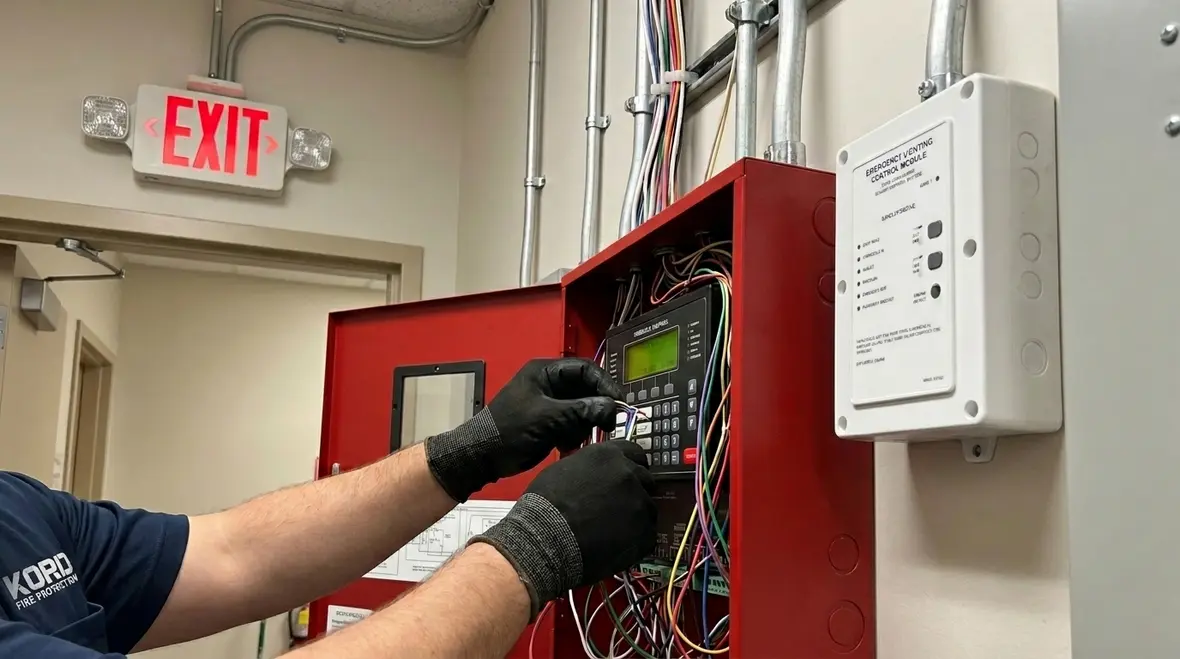
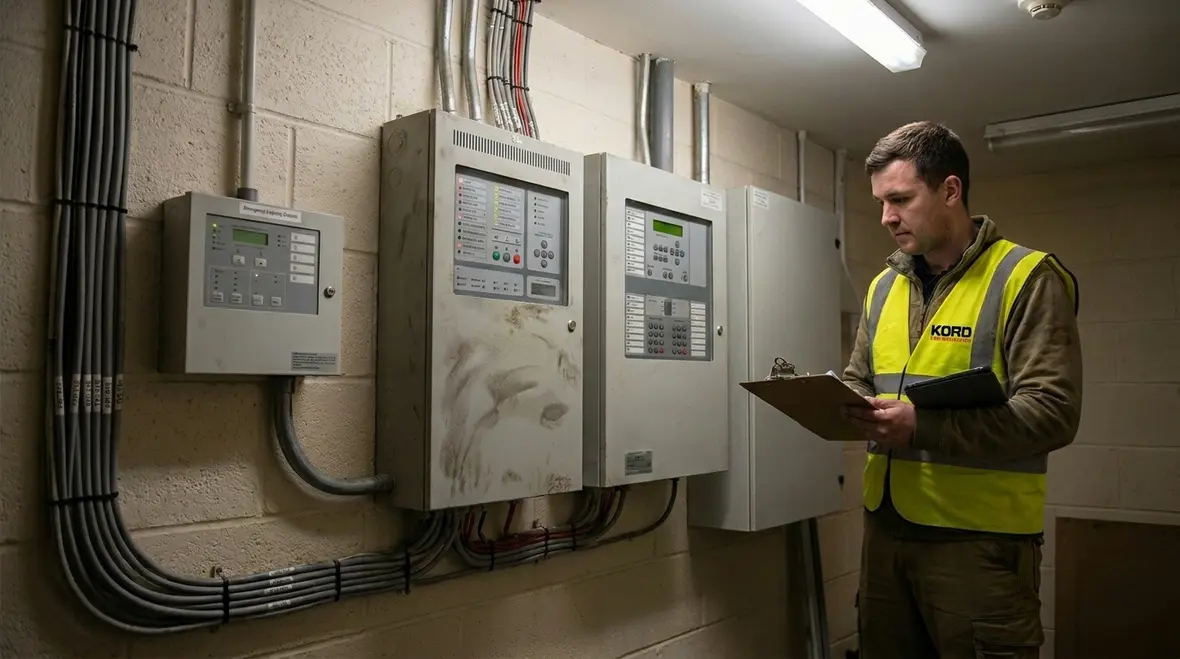
Kord Fire Protection technicians typically start with the control philosophy. That means they confirm whether the building uses an interface, a monitored output, or a dedicated control panel function. Then they verify the emergency lighting equipment type, including whether it is maintained, non maintained, or self contained.
Next, they check how the fire alarm activation circuits behave. Some panels provide voltage outputs that follow alarm status. Others provide dry contacts that require specific supervision methods. At this point, good technicians avoid assumptions, because a signal that looks “close enough” can still cause failure during testing. After all, a circuit that passes on a sunny day can fail the moment smoke, voltage drop, or a single device fault appears. Transitioning from “it works” to “it will work under stress” is where the real value sits.
Then they coordinate documentation. They mark circuits clearly, label interface points, and include verification steps. This matters later because inspection teams and maintenance staff need to understand what triggers what, and they need it in a way that does not read like a mystery novel.
Why equipment type changes the wiring plan
Maintained fixtures, non maintained fixtures, and self contained units do not all respond the same way. That is why technicians map the behavior before they pull a single conductor. If they do not, they can end up with a system that technically energizes a relay but still does not create the correct lighting response. That is the kind of technical success nobody celebrates for very long.
Choosing monitored versus unmonitored outputs for emergency lighting circuits
One of the biggest practical decisions involves whether the fire alarm system output driving emergency lighting control will be monitored. Monitored outputs allow the alarm panel to supervise the wiring path and detect open or short faults. Meanwhile, unmonitored outputs may still switch correctly, but they often cannot alert the panel when a wiring fault occurs.
From an operational standpoint, monitored output behavior supports reliability. For example, if a conductor breaks between the fire alarm interface and the emergency lighting control module, supervision can report a fault. Then maintenance can act before the next alarm event. As a result, the emergency lighting fire safety requirements get supported not only at commissioning, but across the building’s life.
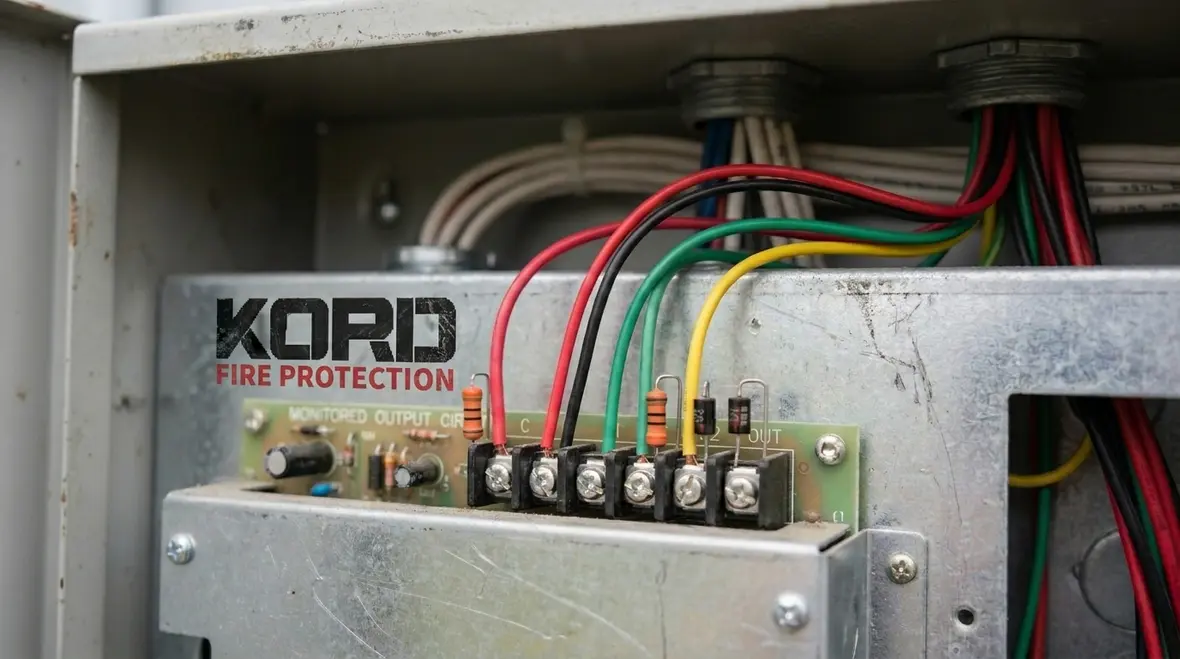
Kord Fire Protection technicians frequently stress that the panel’s supervision settings must match the interface hardware. If the system expects end of line supervision, the install must provide the correct resistor or monitoring method. Otherwise, the panel may flag trouble at random, or it might stay quiet when it should not. And yes, false trouble reports can be as annoying as a pop up ad that refuses to close.
For building teams that want a stronger grasp of inspection expectations and routine performance checks, Kord Fire’s Emergency Lighting Service: What a Proper Test Includes offers helpful context on how proper testing supports dependable operation.
Fire alarm activation timing and fail safe behavior
Timing can make or break the occupant experience. When the alarm activates, the system should transfer emergency lighting to the correct state immediately, or within the equipment’s specified response time. Therefore, the wiring link must drive the right control input, not just “any input that turns things on.”
Technicians also verify fail safe behavior. Fail safe means that under power loss or circuit interruption, the emergency lighting should still perform as required. That does not mean emergency lighting should run forever with zero support. It means the system design must ensure that an alarm condition triggers the correct outcome and that faults do not silently disable the lighting guidance.
To ensure this, Kord Fire Protection technicians test the chain end to end. They simulate alarm activation at the fire alarm panel, then verify the emergency lighting output, then check that the panel records the event as designed. This sequence creates confidence that the system does not depend on luck.
End to end testing beats hopeful wiring
A relay clicking is not the same thing as a compliant lighting response. Technicians need to confirm the alarm event, the interface action, the fixture behavior, and the reporting path. When all four line up, the system behaves like it was planned by professionals instead of assembled during a caffeine emergency.
Wiring method, segregation, and avoiding trouble during inspection
Even when the logic is correct, installation details still control performance. So technicians focus on wiring method and segregation rules. They route cables in a way that reduces risk of damage, keeps circuits organized, and supports inspection review. Additionally, they ensure that fire alarm wiring used for activation circuits and signaling functions stays within the right pathways and does not get mixed with unrelated power conductors.
Next, they control how devices connect. Terminations must be tight, polarity and contact types must match, and the interface must use the correct input format. If the emergency lighting control module expects a switch contact, the technician should not feed it a signal type it cannot read. In other words, the system cannot “interpret” a wrong format. It just fails, sometimes in the most inconvenient moment.
Then they verify labeling. Clear labeling shortens maintenance time and helps inspectors confirm that the emergency lighting fire safety requirements are actually implemented. When labels read like “do something with this,” the inspection process turns into guesswork. And nobody hired a fire safety team to guess.
For owners preparing for field reviews, the Kord Fire article on egress checklists for emergency lighting and exit signs pairs well with this topic because it shows how lighting, signs, and exit path visibility get evaluated together.
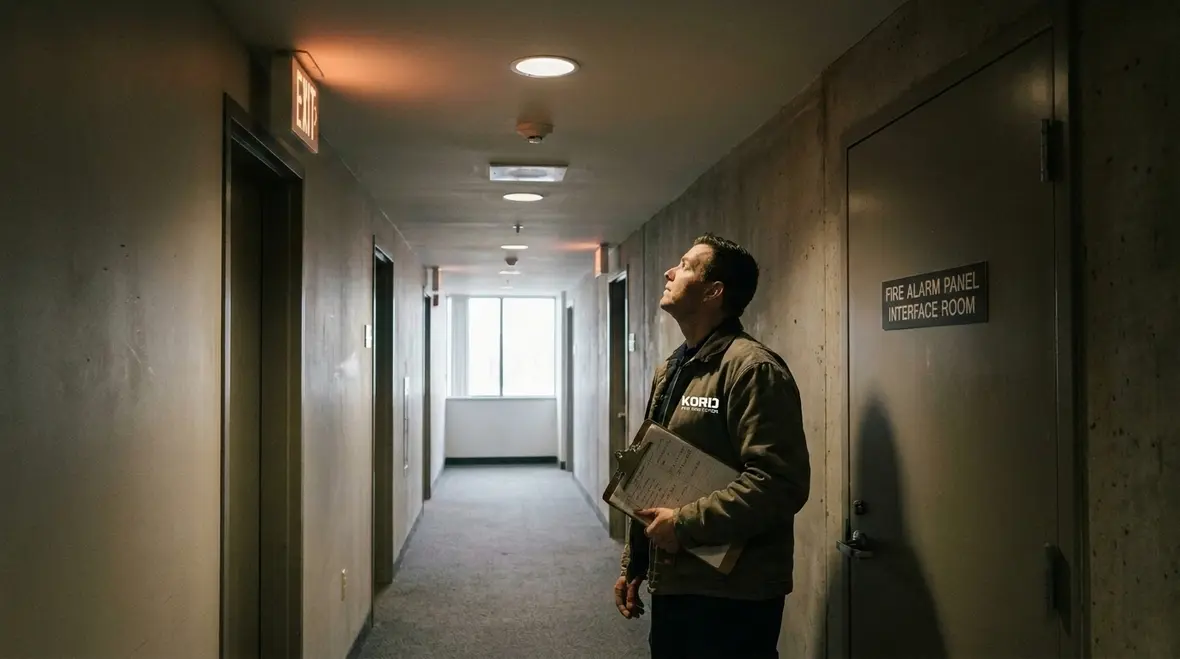
Testing, commissioning, and documenting the link
After wiring, technicians confirm that the link performs exactly as intended. They commission the fire alarm activation circuits first, then confirm the emergency lighting response. After that, they test under controlled conditions using the proper procedures, and they record the results.
During commissioning, Kord Fire Protection technicians often verify three core items. First, they confirm the interface trigger matches the correct alarm event. Second, they confirm the emergency lighting behavior matches the required mode, including maintained or non maintained operation where applicable. Third, they confirm supervision status when monitored outputs apply.
Then they document it in plain language and with accurate circuit references. This helps facilities teams during later inspections and service calls. It also helps when tenants complain that the lights blink “like they are haunted.” With proper documentation, the team can show what triggers behavior and whether it matches design intent.
Documentation is what keeps good work visible
A properly tested system without proper records still creates headaches later. Service teams need device references, trigger notes, test outcomes, and supervision details they can follow quickly. Kord Fire’s annual emergency lighting test documentation guide is a strong companion resource for teams that want their paperwork to be as dependable as the equipment.
FAQ about linking emergency lighting to fire alarm activation
Ready for a safer, cleaner emergency lighting interface
Linking emergency lighting to fire alarm activation circuits should feel structured, not improvised. Kord Fire Protection technicians help design, wire, and test the interface so the system meets emergency lighting fire safety requirements with real reliability. If a building needs an upgrade, a corrective fix after a failed test, or an inspection ready documentation package, they can help.
For direct support, explore Kord Fire Protection’s Fire Alarm Services and Emergency Exit Light Services to schedule a site review and move forward with confident egress lighting performance. That way, the next alarm event gets a system response, not a suspense scene.

Join Our Newsletter!
Get the latest fire safety tips delivered straight to your inbox From our Newsletter.