Water Mist Fire Suppression System Guide
Fire does not knock before it enters. It arrives loud, hot, and without apology. That is precisely why our water mist fire suppression system exists. Designed to control flames with precision and minimal damage, this technology has reshaped how buildings, equipment rooms, and high value assets stay protected. Yet despite its growing use, many still misunderstand what it can and cannot do.
In the calm, steady voice of experience, Kord Fire Protection technicians often explain that fire safety is not about panic. It is about preparation. And when preparation meets smart engineering, even something as fierce as fire can be managed with control and confidence. So let us take a deliberate walk through the best applications and the most common myths surrounding this remarkable system.
If you are exploring options for sensitive environments, you can also compare this guide with Kord Fire’s dedicated article on water mist fire suppression for sensitive environments to see how these systems behave in data centers, labs, and more.
Understanding How a Water Mist Fire Suppression System Works
At its core, this system uses very fine droplets of water to control and extinguish fire. Now, that may sound simple. After all, humans have been throwing water on fire since someone first discovered both elements. However, the magic lies in the mist.
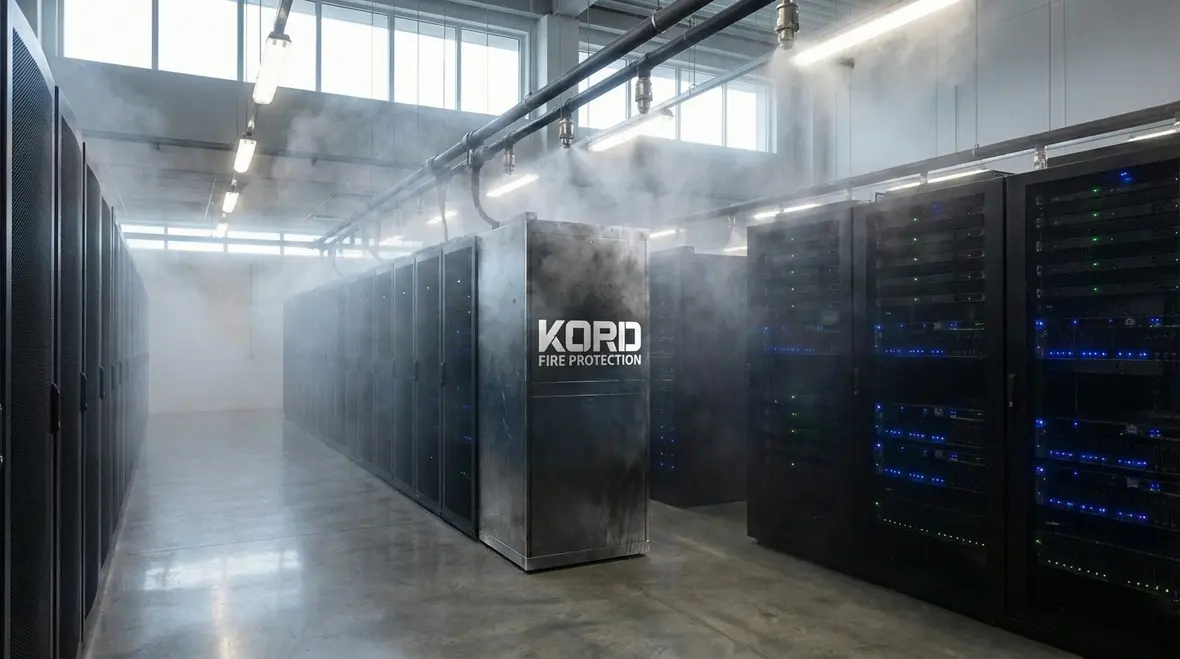
Because the droplets are microscopic, they create a larger surface area. As a result, they absorb heat quickly and convert to steam. This rapid heat absorption cools the flame while the steam displaces oxygen around the fire. Consequently, the fire loses both heat and the oxygen it needs to survive.
Kord Fire Protection technicians often compare it to a well choreographed dance. The droplets move in, take the heat, expand into steam, and gently suffocate the flames. It is less “fire hose chaos” and more “precision instrument.” Think orchestra, not marching band.
Moreover, the reduced water usage means less runoff and minimal damage to equipment and interiors. Therefore, facilities that once feared water damage can now consider a far more balanced approach.

Best Applications for Modern Water Mist Systems
Not every fire risk looks the same. A commercial kitchen behaves differently than a server room. Similarly, a marine engine compartment presents unique hazards compared to a hospital corridor. That is why choosing the right suppression solution matters.
Kord Fire Protection technicians typically recommend water mist technology in the following environments:
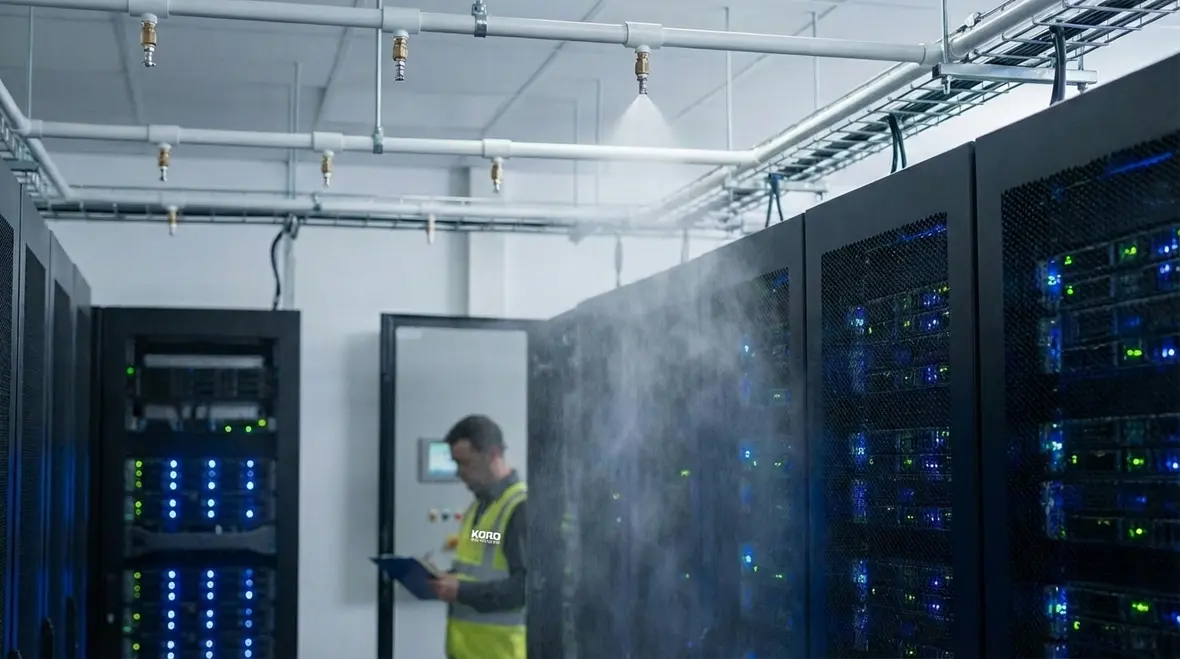
1. Data Centers and Server Rooms
Electronics dislike two things intensely: fire and excessive water. Fortunately, fine mist systems use far less water than traditional sprinklers. As a result, they reduce the chance of severe water damage while still controlling heat and flames effectively.
2. Healthcare Facilities
Hospitals cannot simply evacuate everyone at the first sign of smoke. Therefore, a suppression method that controls fire quickly and limits water spread becomes vital. Mist systems help contain incidents without turning hallways into shallow swimming pools.
3. Heritage Buildings and Museums
Historic structures and priceless artifacts require protection that does not trade one disaster for another. Excess water can ruin centuries of history. In contrast, a fine water spray can suppress flames with much lower overall impact.
4. Marine and Offshore Installations
Ships and offshore platforms operate in confined spaces with high risk equipment. Because mist systems are compact and efficient, they work well in engine rooms and machinery spaces.
5. Industrial Machinery and Turbines
High value mechanical equipment generates heat and carries fuel loads. Water mist cools surfaces rapidly, which helps prevent re ignition and protects critical components.
In each case, the decision is not random. Instead, it follows a careful hazard assessment. As Kord technicians like to say, fire protection should fit the space like a tailored suit, not like a borrowed jacket.
Water Mist Fire Suppression System vs Traditional Sprinklers
People often ask how this technology compares to conventional sprinklers. It is a fair question. After all, sprinklers have been around long enough to earn a place in pop culture. They show up in action movies, usually triggered by someone holding a lighter under a smoke detector. Real life, thankfully, is less dramatic.
Here is a simple comparison to clarify the differences:
Water Mist Systems
Use fine droplets
Require less water
Minimize water damage
Cool and displace oxygen
Often suited for high value assets
Traditional Sprinklers
Release larger water droplets
Use higher water volumes
Can cause significant runoff
Primarily cool surfaces
Common in general commercial spaces
Although both systems save lives and property, their methods differ. Consequently, selecting one over the other depends on building design, asset value, and risk profile.
Kord Fire Protection technicians stress that neither option is universally better. Instead, each has its place. Choosing wisely requires experience, engineering analysis, and sometimes a little humility. Fire does not care about ego.
Common Misconceptions That Refuse to Go Away
Despite growing adoption, myths about water based mist technology continue to circulate. Some of these misunderstandings likely started around a conference table. Others perhaps began with someone who watched one too many disaster films.
Myth 1: It cannot handle serious fires.
In reality, properly designed mist systems undergo strict testing for specific fire classes. When engineered for the hazard, they control and suppress flames effectively. However, like any system, they must match the risk.
Myth 2: It is just a fancy sprinkler.
Although both use water, their mechanics differ greatly. Droplet size, discharge pressure, and system design create distinct performance outcomes. Calling it “just a sprinkler” is like calling a smartphone “just a phone.” Technically correct, but wildly incomplete.
Myth 3: It will soak everything anyway.
Because it uses significantly less water, overall damage is often far lower. In many cases, cleanup proves faster and less costly than with traditional high volume systems.
Myth 4: It works the same everywhere.
This might be the most dangerous assumption. Design must reflect ceiling height, ventilation, fuel load, and enclosure characteristics. Therefore, expert evaluation remains essential.
Kord technicians often address these misconceptions during site visits. They walk clients through real world case studies and testing data. And yes, sometimes they do it with a gentle smile that says, “No, Hollywood did not get that one right either.”
How Technicians Assess If This System Fits a Facility
When evaluating a building, professionals do not rely on guesswork. Instead, they conduct a structured risk assessment. First, they identify potential ignition sources. Next, they analyze fuel types and load density. Then, they examine ventilation patterns and enclosure size.
Because mist systems interact with heat and oxygen differently than standard sprinklers, airflow plays a critical role. For example, strong ventilation can disperse droplets before they reach the flame. Therefore, nozzle placement and pressure settings must reflect those conditions.
Kord Fire Protection technicians also review regulatory standards and local codes. Compliance is not optional. It forms the backbone of responsible system design. Additionally, they coordinate with architects, mechanical engineers, and facility managers to ensure seamless integration.
In many cases, they use hydraulic calculations and computer modeling to simulate fire scenarios. This approach allows them to predict droplet behavior, heat absorption rates, and suppression times. Consequently, the final design is grounded in science, not optimism.
Is a Water Mist Fire Suppression System Safe for Occupied Spaces?
Yes, when designed and installed correctly, it is safe for occupied areas. That answer may seem simple. However, it deserves context.
Because the system uses water as its primary agent, it avoids many of the respiratory concerns linked to certain chemical suppressants. Furthermore, the fine droplets typically do not impair visibility as severely as heavy discharge systems. As a result, evacuation can proceed more smoothly.
That said, safety depends on proper engineering. Pressure levels, nozzle type, and activation methods must align with occupancy type. Kord technicians emphasize training and maintenance just as strongly as installation. After all, even the best technology fails if ignored.
Think of it like a smoke detector. It protects faithfully, but only if someone remembers to check the battery. Fire safety rewards attention to detail.
Maintenance, Testing, and Long Term Reliability
Installing a system marks the beginning, not the end, of fire protection. Regular inspection ensures valves operate correctly, nozzles remain unobstructed, and pumps function within specified ranges.
Over time, mineral buildup or corrosion can affect performance. Therefore, scheduled maintenance protects both compliance and reliability. Kord Fire Protection technicians conduct routine testing to verify pressure levels and discharge patterns. They document findings and address concerns before they escalate.
Additionally, facility managers receive guidance on monitoring alarms and control panels. Early detection paired with effective suppression creates a powerful defense strategy.
Reliability grows from consistency. And consistency, much like brushing one’s teeth, works best when practiced regularly. No one brags about it at parties, yet everyone benefits from the results.
Why Expertise Matters More Than Equipment Alone
Technology alone does not guarantee protection. Design, installation, and ongoing support shape real world performance. That is why experienced professionals remain central to successful fire safety strategies.
Kord Fire Protection technicians bring field knowledge, regulatory insight, and practical experience to each project. They do more than install hardware. They interpret building layouts, anticipate risks, and craft solutions tailored to each environment.
Moreover, they educate clients. When stakeholders understand how and why a system works, they maintain it with greater care. Consequently, the entire safety chain grows stronger.
Fire protection is not about fear. It is about foresight. And foresight thrives in the hands of those who respect both science and responsibility.
Frequently Asked Questions
Take the Next Step Toward Smarter Fire Protection
Fire will always demand respect. However, with the right strategy, it does not have to command fear. If a facility requires precise, efficient, and thoughtfully engineered protection, it may be time to explore a tailored solution. Speak with Kord Fire Protection technicians to assess risks, review options, and design a system built for long term confidence. Preparation today creates peace of mind tomorrow.
To go deeper into technical options, you can review Kord’s dedicated Water Mist System Service page, which breaks down nozzle types, system configurations, and testing considerations in more detail.
Ready to protect your facility?
Kord Fire Protection offers Water Mist System Services as part of a broader portfolio of fire suppression solutions. From design and installation to testing and maintenance, their team helps ensure your system is ready when you need it most.
Know Your Weapon Before You Fight the Flame
Kord Fire Protection is your go-to when it comes to all things fire protection. For over 20 years, we’ve been serving Southern California with the quality service and equipment to keep your home or business safe at all times. Our competitive prices reflect our unwavering commitment to protecting what matters most in the event of a fire emergency. Give us a call, send an email, or use that form!

Join Our Newsletter!
Get the latest fire safety tips delivered straight to your inbox From our Newsletter.